When you click on links to various merchants on this site and make a purchase, this can result in this site earning a commission. Affiliate programs and affiliations include, but are not limited to, the eBay Partner Network.
You can go up to 1/0 cable battery to battery, that's sized for cold weather, but a 2ga would be fine for lower demanding temps. Your call. End are right that worked in my truck.
The service manual shows access to those bolted frame locations through the fender liners. I've never gotten along with the fender liners very well and I don't have a stator on my motor so going in from the top for me was preferable. But as said, the manual has you go through the fender liners. The bolts are self threading and reusable. If you strip out the self made threads in the frame, a new hole can be drilled and the bolt reused.
I was taking pictures so I needed full access. Drivers side was air cleaner, battery, battery tray, and CAC tube. You might be able to get to it with just the air cleaner out.
Pass side was battery, battery tray and CAC tube. The cable connection for the pass negative cable to block was done from under the truck.
The one cable you are missing is a second (parallel) fused cable from your high output alternator to the passenger battery pos clamp. Jack (and others) are running 230A alts so he should be able to tell you the gauge and fuse size to use...
Thanks for bringing up the fender liner as I had given up on putting the ground to block down there due to access -- I can barely see the batt - frame ground! I'll take a second look at that now...
The one cable you are missing is a second (parallel) fused cable from your high output alternator to the passenger battery pos clamp. Jack (and others) are running 230A alts so he should be able to tell you the gauge and fuse size to use...
Is that required with a 200 amp alternator? Would I need to run another ground also?
I'm glad you pointed out he asked that, my mind is elsewhere.
People have squeaked by up to a 185a alternator with just the factory alternator wiring, but at full output it's pushing the envelope. You want to upsize with a parallel cable just to make sure there is no excessive voltage drop as well as if your running long term with other accessories like a snow plow, winch, etc.
My output is a little higher then yours and I'm a little excessive on the cable, but there are times when I disconnect the factory cable at the alternator for current measurements utilizing the 4ga for everything.
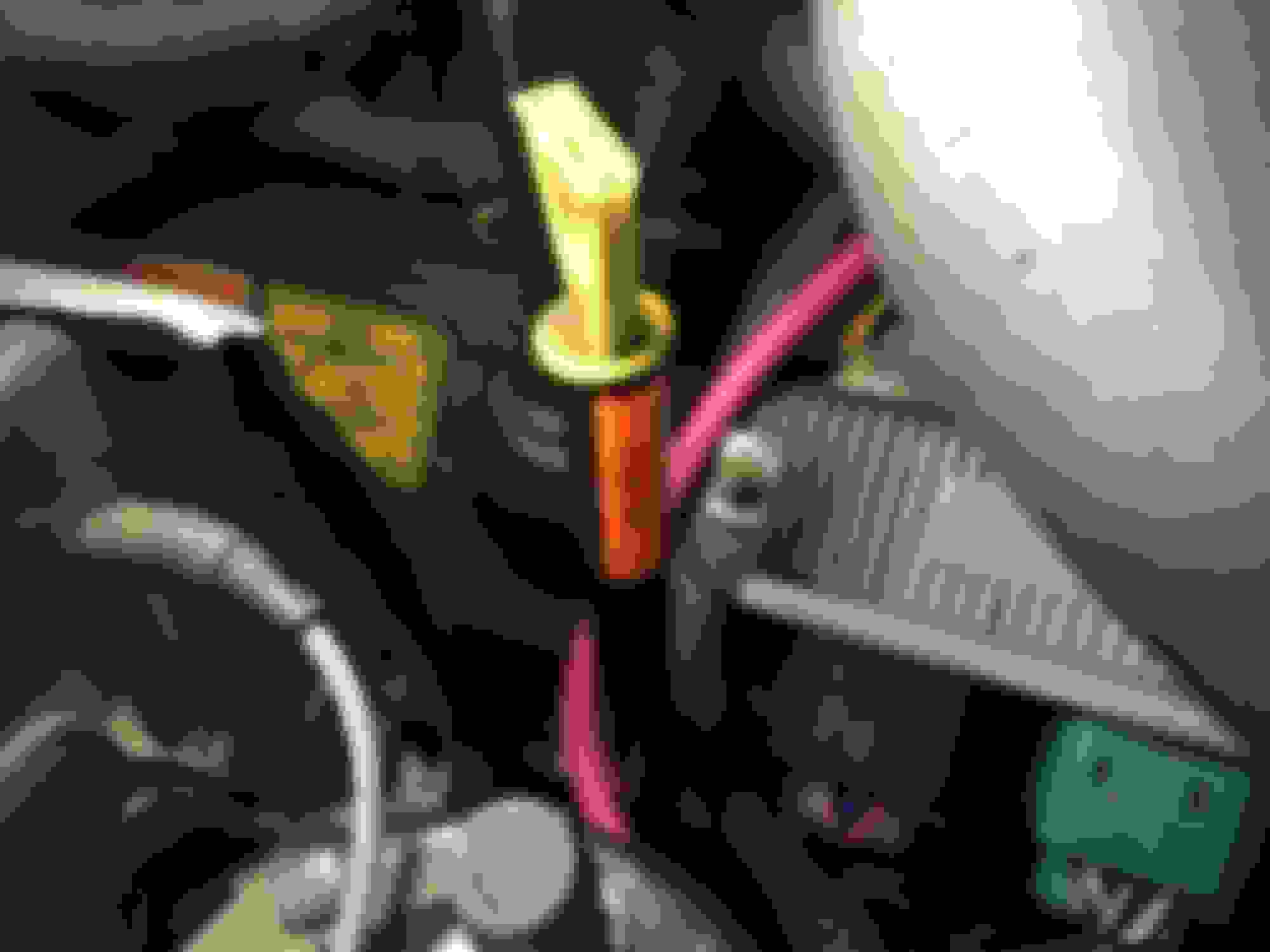
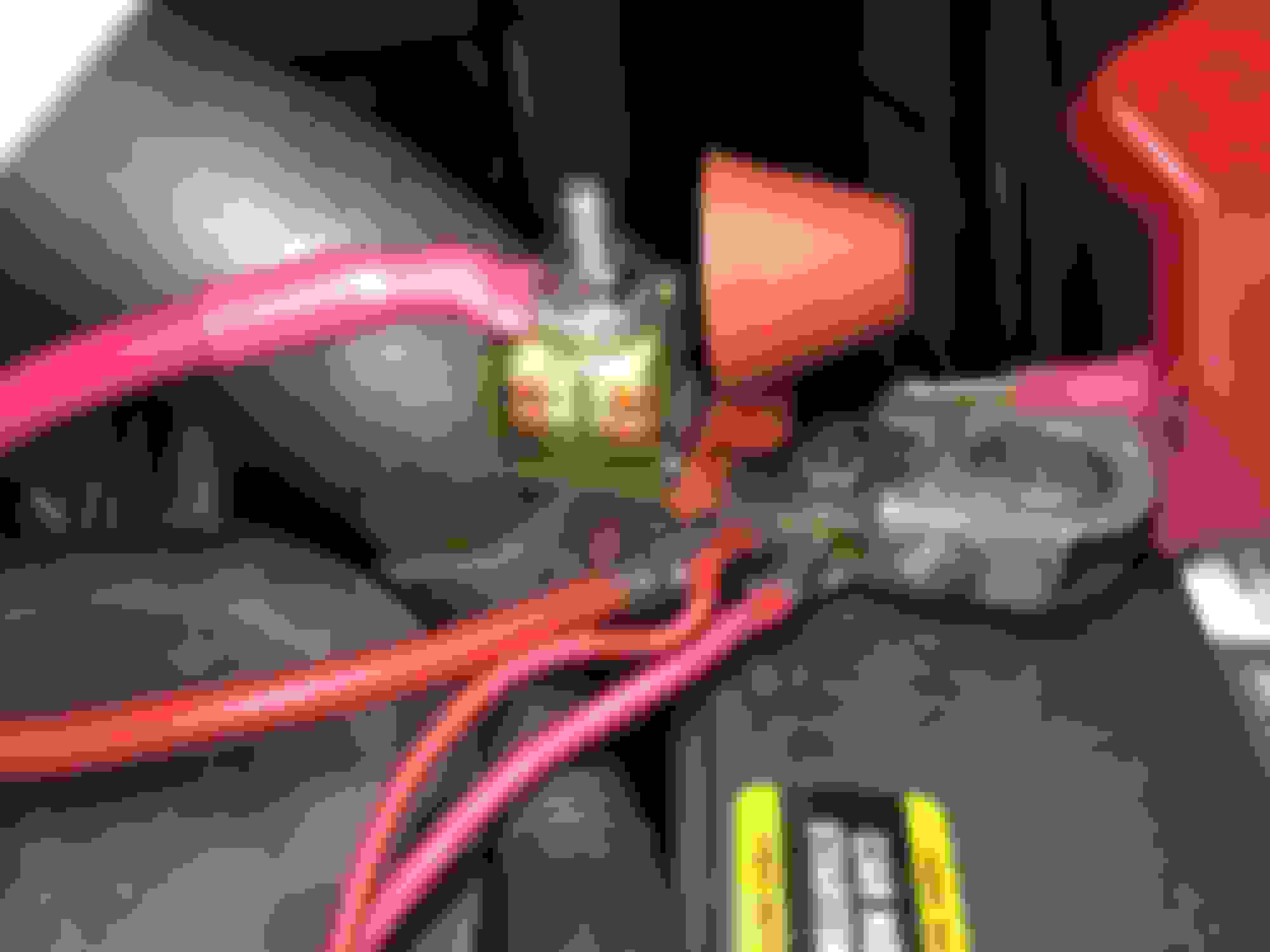
The factory cable is a 6ga interrupted by twin 12 ga fusible links. My parallel cable right now is a 4 ga 30" long, terminating on a Blue Sea fuse block, which typically runs a 100a fuse. you can go as short as a 24" cable, but I have mine longer to drop into a loop for movement.
With routing you just don't want to run on the glow plug module mounting screw, so I go behind the oil filler tube. I don't have convoluted protection tubing on mine right now as I keep moving cables, but you should.
No additional ground needed for the alternator. Just run an additional power wire from the new alternator to the battery. Make sure you include a fuse in line as well. The stock wire coming off the alternator stays in place you will just need to drill out the eyelet to 5/16"
I went with a 2ft 2awg with 5/16" on both ends and these two:
OK, I'm an electrical idiot. Please explain the fuse block and where it goes from there? Do you have another short cable running from the fuse block to the battery terminal? No need for another ground cable?
No need for another ground cable at the alternator.
Any connection to the alternator positive stud needs fused protection. Factory uses fusible links, pita for the average person to install, so we use fuses.
What Dr. H linked to are the easiest ones to install, are Coast Guard approved so they work well in a vehicle. This block version bolts to the battery terminal where the other cable for the alternator and glow plugs connect. Depending on your layering, you may need to add a washer or two as the blocks mounting hole comes large. I've got other power connections located there too, so the extra wires.
The stock wire coming off the alternator stays in place you will just need to drill out the eyelet to 5/16"
I went with a 2ft 2awg with 5/16" on both ends and these two:
What eyelet did you have to drill out to 5/16"? If I am getting this correct now, a 24"-30" 2-4 gauge wire with 5/16" on both end connected to the fuse block which is connected to the battery? My alternator has the same size connector as the factory alternator, so is that still 5/16"?
Does the factory alternator wire just stay connected to the same place it is now? Just wondering why you have to drill it out?
The drilling refers to the factory eyelet depending on the positive stud size on the alternator. Most of us talking about the 5/16" are doing so because our alternator stud is bigger then the factory one. If your alternator stud is factory sized, no drilling is needed of the factory cabling. You can still use the 5/16" lug on the additional cable as the nut and other eyelet will make full contact.
The factory wire/cable has to still be utilized. You are paralleling it, not replacing it.
Let me edit and also say that you may have to sand/file/nibble down the shoulder of the insulator around the factory sized lug so the parallel cable fits flush. It's not a big deal to do the work, but with the surrounding shoulder the new cable lug may be larger then the factory had designed to.
This Hennessey Takes the Expedition Tremor's Off-Roading Capability to the Next Level
Slideshow: The VelociRaptor Expedition gains a lift, upgraded suspension, Brembo brakes, and trail-ready equipment while retaining the stock 440-horsepower EcoBoost V6.
Rezvani's Latest Post-Apocalyptic Monster Is a Ford F-150 Raptor Underneath
Slideshow: Called the Fortress, the 850-horsepower pickup combines Raptor underpinnings with military-inspired features, survival equipment, and a starting price of $285,000.