


Stock cam install?

Thread Starter
|
Tuned

Joined: May 2009
Posts: 300
Likes: 5
From: Apex, NC
Stock cam install?
I've posted this over at the FordSix site also!
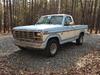
I have spent the last 7 years learning about my '85 F150 and its 6 cyl engine. The members of this forum and the folks at the Ford Six site have helped me tremendously in my attempts to fix the many, age related, problems and to upgrade various systems with an eye to reliability, safety and mild performance. First, a little bit about where I'm at and what I've done so far;
New brakes and soft lines
New brake booster and a '97 master cylinder
PMGR starter
DSII conversion
Rebuilt and modified YFA
Stock 3.08 rear
Stock NP435
P235/75-15
Having recently retired, I'm finally able to dig into the project that I've been planning for a long time. I acquired a '95 300 and after machining the opening for the mechanical fuel pump I stripped it down to take it to my machine shop. Magnaflux showed all good, had them check all tolerances and polish all journals. Reconditioned, rebalanced and resized the stock rods and pistons after having new ARP bolts and moly rings installed. Complete valve job w/ mild polishing of the intake runners and matched all profiles between manifolds, head and a Remflex gasket.
I will be installing an Autolite 4100 1.08 on Offy C, EFI manifolds into the Walker y-pipe and mating it all to a 4R70w that I rebuilt ( controlled by Bauman)The stock cam is in excellent condition and would like to reinstall but need good info about advancing it 4 degrees (straight up). I have the adjustable Cloyes set and know HOW to do it, but want to know if I SHOULD do it and what to expect if I do. I've heard about possibly needing to take some timing out of the dizzy, but that's all I know. How much? Just mechanical? Vacuum? Tell me more.
What can I expect out of advancing the stock cam ,for an EFI head, running a 4 barrel and an automatic w/ 3.08 gears?
I have spent the last 7 years learning about my '85 F150 and its 6 cyl engine. The members of this forum and the folks at the Ford Six site have helped me tremendously in my attempts to fix the many, age related, problems and to upgrade various systems with an eye to reliability, safety and mild performance. First, a little bit about where I'm at and what I've done so far;
New brakes and soft lines
New brake booster and a '97 master cylinder
PMGR starter
DSII conversion
Rebuilt and modified YFA
Stock 3.08 rear
Stock NP435
P235/75-15
Having recently retired, I'm finally able to dig into the project that I've been planning for a long time. I acquired a '95 300 and after machining the opening for the mechanical fuel pump I stripped it down to take it to my machine shop. Magnaflux showed all good, had them check all tolerances and polish all journals. Reconditioned, rebalanced and resized the stock rods and pistons after having new ARP bolts and moly rings installed. Complete valve job w/ mild polishing of the intake runners and matched all profiles between manifolds, head and a Remflex gasket.
I will be installing an Autolite 4100 1.08 on Offy C, EFI manifolds into the Walker y-pipe and mating it all to a 4R70w that I rebuilt ( controlled by Bauman)The stock cam is in excellent condition and would like to reinstall but need good info about advancing it 4 degrees (straight up). I have the adjustable Cloyes set and know HOW to do it, but want to know if I SHOULD do it and what to expect if I do. I've heard about possibly needing to take some timing out of the dizzy, but that's all I know. How much? Just mechanical? Vacuum? Tell me more.
What can I expect out of advancing the stock cam ,for an EFI head, running a 4 barrel and an automatic w/ 3.08 gears?

Lead Driver
Joined: Jul 2009
Posts: 6,477
Likes: 19
From: Sheffield, AL
Tarheel Blue, you sound disappointed. Sometimes others are busy and take a few days "off" from the forum. They will input, but sometimes not right away.
I run a pretty much stock 4.9L engine in a 1986 F150 and am happy with the performance, but read and absorb as much as I can regarding this engine, so will share what I have read and hopefully get the conversation going.
Advancing the stock cam can be a good thing if what you desire is for the available power to come in at a lower RPM range. With the head on my 1986 [not necessarily the same for your 1995 head], when the EGR is removed [mine is; do you plan on removing yours?], the fast burn design combustion chamber will necessitate that the ignition timing be less advanced or there will likely be pinging. The static timing can be retarded to help, but this will shift the whole curve and negatively affect the performance and fuel efficiency. There are fellow forum members who use SUN distributor machines to dial in the desirable advance curve [centrifugal and vacuum] for specific engines. They will ask things like: weight of vehicle, differential ratio, camshaft, compression, EGR or not?, carburetion, transmission, etc.
What you can expect is a nice boost in performance especially if you can clean up the valve pockets and back-cut the valves, for enhanced breathing. From what I have read, the fuel mileage will drop, but not too much if you can stay out of the secondaries.
I hope this will help. Perhaps AbandondedBronco or F-250 restorer can help you as they are quite well versed in performance variants of this engine.
I run a pretty much stock 4.9L engine in a 1986 F150 and am happy with the performance, but read and absorb as much as I can regarding this engine, so will share what I have read and hopefully get the conversation going.
Advancing the stock cam can be a good thing if what you desire is for the available power to come in at a lower RPM range. With the head on my 1986 [not necessarily the same for your 1995 head], when the EGR is removed [mine is; do you plan on removing yours?], the fast burn design combustion chamber will necessitate that the ignition timing be less advanced or there will likely be pinging. The static timing can be retarded to help, but this will shift the whole curve and negatively affect the performance and fuel efficiency. There are fellow forum members who use SUN distributor machines to dial in the desirable advance curve [centrifugal and vacuum] for specific engines. They will ask things like: weight of vehicle, differential ratio, camshaft, compression, EGR or not?, carburetion, transmission, etc.
What you can expect is a nice boost in performance especially if you can clean up the valve pockets and back-cut the valves, for enhanced breathing. From what I have read, the fuel mileage will drop, but not too much if you can stay out of the secondaries.
I hope this will help. Perhaps AbandondedBronco or F-250 restorer can help you as they are quite well versed in performance variants of this engine.
Thread Starter
|
Tuned
Joined: May 2009
Posts: 300
Likes: 5
From: Apex, NC
Thanks David,
Your Intel is very similar to mine. Maybe there is someone out there that has done this and can provide some pros and cons. My whole reason for thinking about this is to get the torque curve lower in the rpm range because of switching from manual to automatic. Maybe it's an issue that I'm over thinking?
Your Intel is very similar to mine. Maybe there is someone out there that has done this and can provide some pros and cons. My whole reason for thinking about this is to get the torque curve lower in the rpm range because of switching from manual to automatic. Maybe it's an issue that I'm over thinking?
Lead Driver
Joined: Jul 2009
Posts: 6,477
Likes: 19
From: Sheffield, AL
Follow this link and join: https://fordsix.com/index.php
On it, there is a forum member who goes by: Lazy JW. He is a forum moderator.
He has a 1974 F-350 with 300 engine that has been built specifically for low-down grunt. His truck's name is "White Ox" and he loving refers to it as a torque monster. I bet he can help you find the answers you are seeking.
On it, there is a forum member who goes by: Lazy JW. He is a forum moderator.
He has a 1974 F-350 with 300 engine that has been built specifically for low-down grunt. His truck's name is "White Ox" and he loving refers to it as a torque monster. I bet he can help you find the answers you are seeking.

Thread
Thread Starter
Forum
Replies
Last Post
texasyeti
Ford Inline Six, 200, 250, 4.9L / 300
8
Apr 25, 2010 11:55 AM
Motorhead351
Ford Inline Six, 200, 250, 4.9L / 300
47
Aug 27, 2008 05:34 AM
Motorhead351
Ford Inline Six, 200, 250, 4.9L / 300
36
Jun 26, 2008 05:29 PM


