When you click on links to various merchants on this site and make a purchase, this can result in this site earning a commission. Affiliate programs and affiliations include, but are not limited to, the eBay Partner Network.
They are a massive step up over the 2016 I was driving. I have not driven a 2017 with the quad halogens at night, so I cannot compare to those, but I imagine they are still considerably better.
...
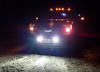
High beam seems to have a very wide and consistent spread of light, but maybe not quite as far a reach I was expecting. Low beam is perfect. All in all, a vast improvement. [...] I griped at first having to buy the Lariat Ultimate package to get the lights option, but it seems worth every penny now.
Some thoughts from a cheaper truck...
I have the halogen lights and have the exact same thoughts. The high beams are extremely uniform but not as far reaching as I'd like, and the low beams are very good. I don't miss the LEDs, while they would have been nice, I don't think they were enough improvement to justify the added expense, if they were an improvement. I think halogen and LED are both regulation-limited at this point, while I originally thought the LEDs would make it easier for them to get the nice diffuse we see in the high beam, clearly they worked it out.
Some thoughts from a cheaper truck...
I have the halogen lights and have the exact same thoughts. The high beams are extremely uniform but not as far reaching as I'd like, and the low beams are very good. I don't miss the LEDs, while they would have been nice, I don't think they were enough improvement to justify the added expense, if they were an improvement. I think halogen and LED are both regulation-limited at this point, while I originally thought the LEDs would make it easier for them to get the nice diffuse we see in the high beam, clearly they worked it out.
Thanks for observations, Archer. I'd love to try a halogen one at night to compare. I'm certain its much better than the previous gen, which was always fairly poor. I read the halogens light up four bulbs as well on high beam, which is probably pretty good.
I was driving again last night in the countryside, and the LEDs really are quite good. The reach is decent, and the lighting is very bright. Reduces stress from straining to see deer. This morning on the way to work was dense fog. The LEDs seem to work better here too, than halogens I've had in the past.
My only concern is winter driving. LEDs don't produce forward radiated heat like halogens do. Hopefully they don't get snow / ice covered while driving in snow. Same thing for taillights.
My only concern is winter driving. LEDs don't produce forward radiated heat like halogens do. Hopefully they don't get snow / ice covered while driving in snow. Same thing for taillights.
You have to think that with all that super cold testing that Ford has done that they thought about this. And the LEDs do produce a fair amount of heat. Not like halogens but high quality LED fixtures always have a heat sink. Has anyone seen how the housings are built? Obvious heat sink?
The NTSB has their nose in every corner of our trucks and I am sure something will come of lights not radiating enough heat to melt the ice and snow. In a big snowstorm the halogens will sometimes get covered. But my real pet peeve is the DOT being completely oblivious to the LED Traffic lights which get snow covered with the first 71 snowflakes which come to earth and then the traffic light may as well be off for those with the wind to their backs. I have watched several near accidents because idiots have not the common sense to come to a stop at a traffic control device which cannot be seen, which now happens on a regular basis. Shame on you if you don't have your headlights on in a light (or heavy) rain but allowing traffic control devices to "go invisible" on a regular basis all for the sake of a reduced carbon footprint should be criminal.
You have to think that with all that super cold testing that Ford has done that they thought about this. And the LEDs do produce a fair amount of heat. Not like halogens but high quality LED fixtures always have a heat sink. Has anyone seen how the housings are built? Obvious heat sink?
You can't see much, everything is internal. LED's typically produce all their heat at the rear, meaning in the past manufacturer's went so far as installing tiny fans to blow the heated air into the clear lens housing. You're correct, Ford probably has this squared away...but FMVSS has some minimal rules for melting snow and ice with headlights.
You can't see much, everything is internal. LED's typically produce all their heat at the rear, meaning in the past manufacturer's went so far as installing tiny fans to blow the heated air into the clear lens housing. You're correct, Ford probably has this squared away...but FMVSS has some minimal rules for melting snow and ice with headlights.
I've thought about that. I've wondered if/when we're going to start seeing heated lens grids like they use for rear windows / heated mirrors.
I'm going to switch my non-headlight bulbs to LED and am curious how it'll handle ice. I might actually try to stick in some defrost grids if I end up having issues on the back. We noticed that there's a lot of heat that accumulates under the light housings in the front with the engine on, I'm guessing that'll keep those lenses fairly clear and now wonder if it's intentional.
I am hoping that the new LED's are not horrible in the fog. My wife's Explorer has the LED's and we were caught in some dense fog and it was pretty much impossible to see...it sucked really bad. I was thinking about when the fog starts rolling in regularly to use some of that sticky window film and put it over the LED driving lights.
Looking on the net I found this that might be the best option. It is from Lamin-x and is removable. I have also seen videos of people spray painting their driving lights with yellow stain glass spray, however I want the option to remove it and have white lights in the summertime.
Here's a cool feature: when you remote start at night, and enter vehicle...all the ambient lighting goes to green. As soon as you hit the starter button...it changes to whatever color you have set for ambient lighting. When you open a door and the truck is running...the lighting in just that door turns to red, like a warning. Very nice little touch.
I am hoping that the new LED's are not horrible in the fog. My wife's Explorer has the LED's and we were caught in some dense fog and it was pretty much impossible to see...it sucked really bad. I was thinking about when the fog starts rolling in regularly to use some of that sticky window film and put it over the LED driving lights.
Looking on the net I found this that might be the best option. It is from Lamin-x and is removable. I have also seen videos of people spray painting their driving lights with yellow stain glass spray, however I want the option to remove it and have white lights in the summertime.
In the mornings when I drive to work, it has been dense fog for the past week. I find the standard white LED headlights and fog lamps work just fine...no high beams, obviously, but low beam seems fine. Look at the lighting elements on the Explorer compared to the Super Duty. The Explorer essentially is using a basic complex reflector lens, like a halogen light would. The Explorer is also LED on low beam only. The Super Duty and F-150 share LED elements. Each little rectangular element contains complex optics to provide one of the smoothest beams I have seen, although without the longest reach.
You can't see much, everything is internal. LED's typically produce all their heat at the rear, meaning in the past manufacturer's went so far as installing tiny fans to blow the heated air into the clear lens housing. You're correct, Ford probably has this squared away...but FMVSS has some minimal rules for melting snow and ice with headlights.
Something I've noticed is that my hood gets REALLY hot, even in fairly moderate temps like high 60s. During one of my normal garage sessions of molesting my truck I noticed that heat radiates well into the headlight fixtures and stayed hot literally hours after it had been driven. Is this an aluminum thing? My 7.3 seems to cool down faster.
Wonder if that added heat will affect snow melt-off.
Something I've noticed is that my hood gets REALLY hot, even in fairly moderate temps like high 60s. During one of my normal garage sessions of molesting my truck I noticed that heat radiates well into the headlight fixtures and stayed hot literally hours after it had been driven. Is this an aluminum thing? My 7.3 seems to cool down faster.
Wonder if that added heat will affect snow melt-off.
The extra heat could help. I swear the under-hood area of this truck is smaller than the 2016 style truck. There is also a hood pad, probably to further reduce noise, but at the cost of containing more heat. Aluminum should be quicker to heat but also quicker to cool.
On a side note, a co-worker's vehicle was being worked on. Only loaner remaining was a 2016 Silverado 2500 gas V8. We all checked it out yesterday. The amount of underhood space is incredible on that vehicle...everything is just so open. The 6.0L is very compact being OHV. It had dual battery boxes in place, and had hydroboost brakes. This truck is not remotely in the same league as the 2017 Super Duty.
We had several co-workers try my tailgate bed step and then the Chevy's corner step. The win definitely went to the Ford.
This Hennessey Takes the Expedition Tremor's Off-Roading Capability to the Next Level
Slideshow: The VelociRaptor Expedition gains a lift, upgraded suspension, Brembo brakes, and trail-ready equipment while retaining the stock 440-horsepower EcoBoost V6.
Rezvani's Latest Post-Apocalyptic Monster Is a Ford F-150 Raptor Underneath
Slideshow: Called the Fortress, the 850-horsepower pickup combines Raptor underpinnings with military-inspired features, survival equipment, and a starting price of $285,000.