When you click on links to various merchants on this site and make a purchase, this can result in this site earning a commission. Affiliate programs and affiliations include, but are not limited to, the eBay Partner Network.
I added coolant to my radiator and have found a leak. Leaking pretty steady dripping with no pressure. Just replaced intake manifold (please don't tell me I have to take it back off) and used a good bit of RTV around water ports. What is causing this?
A wild guess is the thermostat housing is leaking. It's very easy for the thermostat to slide down and get caught under the housing, then you tighten it down not knowing it. Problem is, when you take it back apart to fix it you find it still leaks and then you find that tightening it down the first time on top of the thermostat has cracked the thermostat housing.
Housing is a pretty thick housing (according to numbers it was for a '70 mustang) so I don't think it cracked, but it could be leaking. hate to take it apart. That bottom screw on a 302 is murder to get to.
Hard to look, but finally was able to get a camera up in there and it is the thermostat housing. I hope that is all it is. I used a lot of thermostat housing sealer, but it was hard getting the thermostat in because there didn't seem to be enough room to put the housing in after the thermostat was in. The gasket goes on first then the thermostat correct?
The thermostat is inserted into the housing; the correct thermostat has "tabs" as such allowing you to rotate it clockwise a bit, those tabs catch on some raised areas (as I remember it) and the thing locks into place. Then comes the gasket; the entire assembly is then fastened to the block.
About "correct" thermostats.... do some googling and you'll find lots of complaints about aftermarket thermostats not having the lock-in capability, and that OEM Motorcraft variants work well.
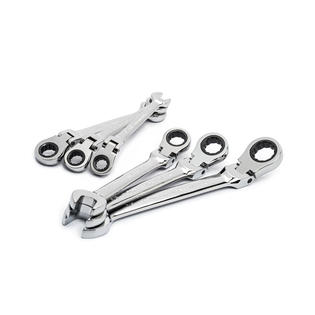
I don't remember the exact obstacles keeping one from getting at the attaching bolts, possibly a real long extension on a ratchet works? Else possibly those flex-head ratchets, e.g. these kinds of things:
Flex heads would work. I took it off (and have no idea how i'll get it back on, maybe flex heads. I sanded it to see high spots and got the below result. Do I need a new housing or do I need to keep sanding to complete coverage? I don't won't to buy a new one because they aren't as heavy duty as this one, but if I have to I will.
I got in the lower bolt on mine with a shorty wrench and a lot of patients going from the driverside over the timing cover.
Another thing be careful with the radiator hose, upper radiator hoses will leak if the clamp is not on square to the hose and will look like a leaking thermostat housing.
Like wise check the other side once you get the truck running Ive had mine when under pressure leak coolant on both sides of the timing cover to block gasket pushing coolant up into the timing cover valley where yours is holding coolant on the passengerside.
I got in the lower bolt on mine with a shorty wrench and a lot of patients going from the driverside over the timing cover.
Another thing be careful with the radiator hose, upper radiator hoses will leak if the clamp is not on square to the hose and will look like a leaking thermostat housing.
Like wise check the other side once you get the truck running Ive had mine when under pressure leak coolant on both sides of the timing cover to block gasket pushing coolant up into the timing cover valley where yours is holding coolant on the passengerside.
How wouldyou fix that? Replace the entire timing cover gasket?
that's the only way you can fix it cause if you try to glob RTV on it, the coolant once it gets under pressure will blow the RTV out. Only proper way to fix it is to pull the water pump, pull the balancer, pull the timing cover and replace the gasket. Its also adviseable to replace the timing cover while you have it off as they are aluminum and they do strip out. I didn't on mine and one of the bolts on my water pump to timing cover was stripped so I had to use a band aid of coating the threads with RTV before reinserting and lightly threading it to stop leakage.