When you click on links to various merchants on this site and make a purchase, this can result in this site earning a commission. Affiliate programs and affiliations include, but are not limited to, the eBay Partner Network.
I ran into a possible problem on my truck, but am wondering if it is normal and something I hadn't noticed before. What is considered normal for coolant in the overflow reservoir after working the engine hard?
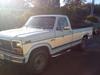
My '84 truck has a '84 351W, 8600 GVW, and a huge 4-row radiator. The truck has about 212k miles on it. Even fully loaded on a steep grade on a hot day, overheating has never been an issue. However, as long as I've owned the truck (20+ years), it has used coolant. Maybe once a month I've had to add a quart or two. Pressure test is fine. Cap tests good, too, and replaced several times as a precaution. Never a trace of coolant in the oil, no obvious external leaks, no combustion gasses present in the cooling system, etc. I've given up trying to figure it out, and just make sure the coolant level stays topped off. The engine runs great and there's never been a hint of overheating, so I was fine with that. And all those years, I never noticed any coolant in the overflow reservoir, but I wonder now if that was just an oversight by me.
Actually, there was one overheating episode several months ago, but that was caused by a complete loss of coolant after a heater shutoff valve broke:
Here's the new wrinkle. I just got back from a long camping trip (8 days, 1250 hard miles). After the first day, I noticed coolant dripping on the ground on the left side under the hood. The overflow reservoir was full and dumping overboard.
After letting everything cool, I noticed some crud under the cap's inner gasket, the part that seals before the overflow tube in the radiator neck. That alone may have been enough to let it leak. I replaced the cap (NAPA, 13 lbs) but wasn't able to drain down the reservoir.
The next few days, I kept getting a moderate overflow onto the ground if the engine was worked hard. I read up a little in the owner's manual and it said it was normal to have some coolant flow into the reservoir under certain conditions. Finally, out of desperation, I managed to siphon the reservoir nearly empty. I can confirm coolant no longer has that sweet taste, thanks to bittering agents. Yuck!
Starting with an empty reservoir when cold, there was no longer any spillage on the ground. The reservoir would fill up about 80-90% after working hard, and then get drawn back in after cooling off. Prior to this trip, I'd never seen anything in the reservoir, but then again i wasn't really looking when hot.
So several long-winded paragraphs later, am I okay? Is it normal for the overflow reservoir to fill up that much after the engine is worked hard? I'm pretty sure the initial overflow was caused by crud under the cap. The subsequent overflows were caused by leftover coolant in the reservoir, because nothing spilled after I syphoned it out. I just want to hear from others if it's normal for the reservoir to nearly fill up after a good workout. I'm still a little paranoid after the big overheat a few months ago when I thought the engine was toast.
It might be a few days before I can do any troubleshooting. I've got a week's worth of camping laundry to burn, etc.
My coolant overflow tank is so cloudy (old plastic) that I can't ever see anything in it. Still, you have a good question.
You were right to get a new radiator cap. While cheap, people often forget this important replaceable part. The radiator cap regulates the pressure in the coolant system. When the pressure rises due to increased temperature, the internal spring compresses and allows fluid or gasses to escape into the overflow reservoir.
If your temperature is rising causing the overflow reservoir to fill up, then you need to address the normal overheating issues.
Is the radiator full?
Does the radiator fan spin? (belts/temperature sensor/motor/etc)
Do you have the right water/antifreeze ratio?
Does the gauge register the increased temperature? (new temperature sensor)
Does the thermostat work properly? (another cheap fix)
Does the radiator cap hold the required pressure? (another cheap fix)
Do you see fluid moving around when the radiator cap is removed? (open cap when cold, allow to run until thermostat opens up)
could indicate bad water pump
Do you have an automatic transmission? (ATF circulates through the radiator and increases the temperature; this is usually due to worn/missing clutches and slipping when changing gears)
I can't keep coolant in my 460 overflow tank either.
I don't have leaks and the system holds pressure on test.
My truck is not overheating, the coolant is fresh.
Just a week ago I replaced my heater hoses.
I purged the system, filled the rad and added fresh 50/50 to the cold fill line.
It is empty again.
After all these years I have learned not to fret about it.
After all these years I have learned not to fret about it.
I'm in the same boat, or at least I was. The sudden change is what has me spooked. Or had the reservoir quietly been doing its job all these years and I just thought it was empty the entire time?
Here's the owner's manual saying "On a full system, it is normal to have coolant in the expansion reservoir when the engine is hot."
One of my favorite pastimes is to take a good book, venture out onto a nearby abandoned railroad, and read between the lines. How much coolant is normal in the reservoir? Remember, I was seeing about 80-90% full after starting with a completely empty reservoir. Does "hot engine" mean "still within normal range" or "overheated"?
Water does expand when it gets hot. It's normal for the reservoir to have coolant in it when the engine is hot. Actually it should have a little bit of coolant in it all the time, the radiator caps are recovery caps and with all the air purged out of the rubber line to the radiator cap, it will suck the coolant into the engine from the reservoir.
Emptying the reservoir of coolant is not normal, it's using coolant somewhere, but I have been in the same boat several times, some leaks are very hard to find.
As long as it sucks the coolant back in after a hard run it should be ok. If it overflows the reservoir, and keeps overflowing the reservoir, that's usually a head gasket problem.
I can't keep coolant in my 460 overflow tank either.
I purged the system, filled the rad and added fresh 50/50 to the cold fill line.
Our trucks must have different style reservoirs or something. There is no "cold fill line" on mine. The '84 owner's manual (see post #4 above) makes no mention of such a mark, no matter which engine. It just says to keep the coolant level within 1.5" of the filler neck.
Still hoping somebody can check their overflow reservoir after the engine has a good workout. I'd feel a lot better knowing the reservoir fills up to approximately 80% when hot and then drains nearly empty when cold.
Similar deal with my 351W. I usually keep about 2" worth of coolant in my reservoir, after a hot run it's about half full depending on how hot it got or how hot the outside air temp is contributing to the heat. I used to keep it about half full when cold, but found that wouldn't stay around for very long. From what I've found it will slosh out of the reservoir when driving once the level gets too high when hot. If I fill it anymore than about 2" full when cold it won't stick around for very long, maybe 200 miles IF that. No leaks, no coolant burning, pretty fresh engine. No problems there.
Our trucks must have different style reservoirs or something. There is no "cold fill line" on mine. The '84 owner's manual (see post #4 above) makes no mention of such a mark, no matter which engine. It just says to keep the coolant level within 1.5" of the filler neck.
Still hoping somebody can check their overflow reservoir after the engine has a good workout. I'd feel a lot better knowing the reservoir fills up to approximately 80% when hot and then drains nearly empty when cold.
Yes, I have a Bricknose truck where the radiator overflow tube connects to the bottom.
Mine will fill right up when hot but it all gets sucked back into the radiator when cold.
Maybe between the big block and the HD radiator there is so much volume there's not enough reservoir?
Even if your tube goes in through the top lid of the reservoir, it should then extend down to near the bottom of the reservoir. As long as the end of the tube is submerged in coolant, it also will suck it back into the engine.
I know a lot of these trucks do not have what I would call a "true reservoir" where you fill the radiator to the top, and then fill the reservoir about 1/4 to1/2 full. I say that because most of them have the top of the reservoir glued on. Even with those type I bust the lid off, or dig the little plug out of the lid and manually fill the reservoir myself, turning it into a more modern type reservoir.
P.S. I recommend digging the plug out and finding a suitable replacement plug rather than breaking the top off. It's hard to get the top to stay on afterward when you bust it loose.
Ive never really checked mine but when I did run to the parts store to get a part then pop the hood soon after getting home. Ive never noticed any coolant in my expansion bottle. I do tend to keep the coolant level between overflowing into the over flow hose with the cap off to about 2" below the radiator cap neck. I don't have any leaks that you see on the ground when sitting but the coolant level does go down and I find myself adding between 1/4 to 1/2 gallon of coolant or water probably once every 1 to 2 months. I figure this is just the water evaporating from the system due to heat than an actual leak.
As far as cloudy reservoirs goes, hit up ebay with the part number, I lucked out and found a NOS one with the Ford sticker still on it and picked it up for $20 I think it was for my '82.
Even if your tube goes in through the top lid of the reservoir, it should then extend down to near the bottom of the reservoir. As long as the end of the tube is submerged in coolant, it also will suck it back into the engine.
I know a lot of these trucks do not have what I would call a "true reservoir" where you fill the radiator to the top, and then fill the reservoir about 1/4 to1/2 full. I say that because most of them have the top of the reservoir glued on. Even with those type I bust the lid off, or dig the little plug out of the lid and manually fill the reservoir myself, turning it into a more modern type reservoir.
P.S. I recommend digging the plug out and finding a suitable replacement plug rather than breaking the top off. It's hard to get the top to stay on afterward when you bust it loose.
Ive always used the over flow hose to fill my jugs on my Mercury and on my truck. I have a small old red plastic funnel that the hose fits snugly into and I just pour slowly into funnel to fill the reservoir. Sure it takes a bit of time but much better to me than busting a hole in reservoir or trying to separate it.
I find myself adding between 1/4 to 1/2 gallon of coolant or water probably once every 1 to 2 months. I figure this is just the water evaporating from the system due to heat than an actual leak.
That could very well explain how the coolant is disappearing. Based on the comments here (and the owner's manual), it's normal to get some coolant in the overflow reservoir when hot. All that heat helps speed evaporation, and there you go. That's my TheoryDuJour(tm), and I'm sticking to it.
I had another hunch the replacement radiator cap wasn't up to snuff. I'm almost positive the original overflow was caused by crud under the cap. I replaced the cap, but it was the same brand. Remembering my own diatribe about new parts bad from stock, I got a third cap, a different brand.
In the interest of science, I ran an experiment to test all three caps, but with a twist. Rather than just pressure test the cap(s) cold, I also tested them hot. As my lovely wife would not understand why I was testing auto parts in our regular cooking pot, I had to pick up a used one from the thrift store. I filled it with water and heated it to about 190 degrees.
At first I thought I was on to something, as cap #1 vented at 10 psi when cold. Cap #2 was 12. Cap #3 was 13, right on the dot. However, when tested in 190 water, all three caps were right on the money at 13psi. So much for my theory the cap was releasing early when hot.
Since I'm not having actual overheating problems at all, I think I'll try running the coolant level slightly lower. Hopefully that will keep the overflow issue from ever returning.
Thanks again for all the help on a baffling problem, or non-problem as the case may be.
Our trucks must have different style reservoirs or something. There is no "cold fill line" on mine. The '84 owner's manual (see post #4 above) makes no mention of such a mark, no matter which engine. It just says to keep the coolant level within 1.5" of the filler neck.
Rezvani's Latest Post-Apocalyptic Monster Is a Ford F-150 Raptor Underneath
Slideshow: Called the Fortress, the 850-horsepower pickup combines Raptor underpinnings with military-inspired features, survival equipment, and a starting price of $285,000.