When you click on links to various merchants on this site and make a purchase, this can result in this site earning a commission. Affiliate programs and affiliations include, but are not limited to, the eBay Partner Network.
1977 302 – auto, with correct intake manifold and correct carburetor and carb spacer with EGR connected.
I installed the new carburetor and intake manifold about three months ago. I posted on the this site how I had the carburetor gasket and carburetor spacer gasket reversed which caused a major vacuum leak. I've since corrected that.
The engine timing has been set I am trying to get the engine running as it should. I have a vacuum gauge installed and I am reading about 15, I believe it should be at 22.
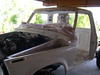
When I spray starter fluid or carb cleaner at the rear of the engine, the engine revs, so I am certain I have a vacuum leak. I have replaced most of the hoses, the two I have not replaced, I have shut off with a pair of Vice grips. I cannot seem to locate the vacuum leak. I have used 3 cans of spray and I still cannot find it. I have replaced the EGR gasket to the carb spacer which was leaking, but that did not do it. I have installed a new vac tree with sufficient plumbers white tape, this did not help. I am wondering if it could be the intake itself? It is very hard to pinpoint. Any tips would be appreciated. I am including a picture, but I don't think a picture matters in this case.
It's very easy to dislodge the front and or the rear gasket when you set the intake down. Many people will use silicone sealer instead of the one provided. I put a thick bead on the block and let it set for ten min. or so then set the intake straight down on the block being careful to not wiggle it around. I leave it sit for twenty min. or so then snug it down lightly and let it sit till the sealant sets up. I've even left it overnight. I like to clean the surface with alcohol before putting the sealer down.
I have sprayed fluid right around the EGR and nothing changes. But to be certain, do you suggest I remove the EGR and close off the whole was a block of wood or some other material? I have not started taking the intake off yet. And I am willing to do anything before I remove it as a test
Because I had a vacuum leak that I could not find. I took the intake off and put a straight edge on it. I noticed a bit of a bow. Slight.
I took the intake to a machine shop. This time, prior to installing the intake, I put some studs in the bolt holes to use as a guide while installing. I did not use the cork gaskets provided (as I have read in many places).
I put it all back together and started it up. At first, it ran rough. I then had a friend come over and tell me that I was off on my TDC by a bit. Once that was corrected, it seemed to idle high for a bit, then calm down. When I say a bit, I mean about 1-2 minutes. I hope this does not mean I did something wrong.
I just finished timing it and I was at about 20" of vacuum, I think from what I can remember. It was in the zone of a normal running engine.
I am excited to say the least. This is a big step for a "ham and egger".
I wish I could have figured out the TDC myself. It really would have built my confidence.
Thanks for all the help.
Edit-I just checked the vacuum and it is at 20 hg
Last edited by benbuilder; Jun 14, 2016 at 03:22 AM.
Reason: changed the spec at which i have vacuum
Rezvani's Latest Post-Apocalytic Monster Is a Ford F-150 Raptor Underneath
Slideshow: Called the Fortress, the 850-horsepower pickup combines Raptor underpinnings with military-inspired features, survival equipment, and a starting price of $285,000.