When you click on links to various merchants on this site and make a purchase, this can result in this site earning a commission. Affiliate programs and affiliations include, but are not limited to, the eBay Partner Network.
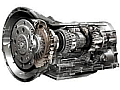
Hoping someone can lend a hand. Over the past two years I have picked up (2) core 4R100's from Craigslist. I have a total of $300 in both units. I'm planning on prepping this winter for a spring/summer rebuild.
I picked up this unit the other day for $100. It came w/o the TC. It has both sensors and a RF-F8IP 7A105-AA pump so def a 4R100. The PO had just purchased the truck with a rebuilt tranny and the original was included in the bed of his truck as a package when he bought it and he just wanted it gone.
I can't find anything on the net related to the numbers on the Reman tag. Anybody? Thanks!
I would imagine you need to find out who remanufactured it to know what there numbers mean. If ford did it you would be able to trace it by calling them. There are two different 4r100 trannys too. The early ones had diode issues or something, in 02 they fixed it.
thanks Absolute... the next step is to call Ford and see if they can come up with any info. It just seems like anytime I call a Co. anymore it's such a task trying to squeeze info out of them or find anyone that is actually interested in helping you. I'm just surprised these numbers yield nada on my google machine.
Just a shot, but can you call the guy you mentioned bought it. He might have there number still. Has a bar code? Can ford scan that?? Probably charge ya 100 to do it. Id drive to the nearest tranny shop, and say what the hell does this mean. Lol. They probably know the lingo. Mark might know, but he usually just knows the working stuff, not the serial numbers. But he might lead ya the right way.
I would imagine you need to find out who remanufactured it to know what there numbers mean. If ford did it you would be able to trace it by calling them. There are two different 4r100 trannys too. The early ones had diode issues or something, in 02 they fixed it.
Well, no, that isn't right. There was some differences in the early '99 4R100s. In 2001 the sprag one way clutch was replaced by a mechanical diode one way clutch only in the diesels (though I have heard of a handful of gas engine 4R100s that had one.) Ford went back to the sprag one way mid year 2001.
And sorry, I don't know anything about those tag numbers or where to go to find out.
Well, no, that isn't right. There was some differences in the early '99 4R100s. In 2001 the sprag one way clutch was replaced by a mechanical diode one way clutch only in the diesels (though I have heard of a handful of gas engine 4R100s that had one.) Ford went back to the sprag one way mid year 2001.
And sorry, I don't know anything about those tag numbers or where to go to find out.
Mark please correct me if I am wrong but on the E99 4R100 I had heard some of the early early E99's were Non PWM pumps and the later E99 had the PWM pumps. What other differences do you know about?
I concur on the tag.
Mark please correct me if I am wrong but on the E99 4R100 I had heard some of the early early E99's were Non PWM pumps and the later E99 had the PWM pumps. What other differences do you know about?
I concur on the tag.
Just in quick not form....
This is what I recall being some differences. I don't see anything onler than an early 2000 and sometimes a 98 or 99 anymore.
The Largest transmission manuafactured at the time by Ford. It is truley a work of art (and is huge) as the first completely electronic controlled unit. There are three Processors in the PCM. One dedicated to the Transmission itself. This is (was) a Great Transmission out of manufavturer and can take upwards of 1,000 FPT. Used exclusively behind the Diesels by Ford.
An engineering marvel if you will. The 1996 - mid year 99 4R100 were Non PWM pumps. and the later had the PWM pumps. Also, the # of Check ***** and Batth Tubs changed throughout 1989-1996 and again from 1997-1998 and 1999 to 1999.5, Anywhere from 4 to 18 depending on what yrar unit build.
Overdrive Brake Friction Pads have 3 and an updated Spiral Snapring which holds the overdrive clutch. You will have the TCIL Flash with no codes if it is dislodged (older). The Drum is very familiar to the the C-6 from the forward Clutch Drum Back. Diesels have 6 Pinion Planatary Gears (and are steel, not aluminum as the Gasoline Units) / Gasoline 4 and early models (and C-6) 3 ea.
Two types of pans. One deep. Two different filters.
2-3 upshift accumulator valve had manufacturing inconsistancies. the 2-3 Accumulator passage was not bored large enough to accomodate the piston used in the valve train.
The ETC releif spings were thought to have been an issue. I have not seen one. But, a weak one will cause low pressure.
Direct Drum 3/R share a circuit. There is no wavy washer on this drum. Some people may notice there is a "bump" going into reverse which can be considered normal with wear but not a concern.
The Low Reverse Clutch has something many people don't know, placing the Transmission in 1 rather than D when towing from a stop, the one way roller clutch also grasps and provides much less wear over time. Just remember to shift at or about 2,500.
The different color remanufactured transmissions I have tore down have no different parts than the OEM but cost twice as much. Hmmm. The HD has some differences but IMO not to the extent of additional $$$. Just peace of mind of the driver maybe.
My head now hurts from memory access.
Also, if you're in a bind.... The Solenoid Pack can be disconnected to enter a Fail Safe Mode into 4th Gear.
Mark please correct me if I am wrong but on the E99 4R100 I had heard some of the early early E99's were Non PWM pumps and the later E99 had the PWM pumps. What other differences do you know about?
I concur on the tag.
None. That's the difference.
Originally Posted by SMT_FORD
Used exclusively behind the Diesels by Ford.
Don't tell that to all the gas engine trucks that also had this transmission.
I made no inference that they were not used behind others. Quite the contrary as I outlined differences between applicable uses. I do however stand by my assertion Ford used no other AT behind the 7.3. And, that IMO perhaps the best in the industry at the time.The primary failure point of the 4R100 is the owner/operator.
Hope it clarified otherwise unintended overatures.
Hoping someone can lend a hand. Over the past two years I have picked up (2) core 4R100's from Craigslist. I have a total of $300 in both units. I'm planning on prepping this winter for a spring/summer rebuild.
I can't find anything on the net related to the numbers on the Reman tag. Anybody? Thanks!
Based on this 4r100hdapplicationschart (2).pdf, I would say it is a regular duty 4R100 4x4 Ford remanufactured unit for years 2001-2003. I have highlighted the numbers/letters on the chart that correspond to the ones on the last line of the tag. The "basic" number (portion that identifies part type) is not included on the tag and the "RM" would refer to it being a remanufactured part. The '99 4R100 remanned core that Matt and I used in his mueckster build had the complete number listed on the tag. It appears that later years use only the prefix and suffix numbers to identify it. Here is an example of a 1999-2000 4x2 reman tag.
I made no inference that they were not used behind others. Quite the contrary as I outlined differences between applicable uses. I do however stand by my assertion Ford used no other AT behind the 7.3. And, that IMO perhaps the best in the industry at the time.The primary failure point of the 4R100 is the owner/operator.
Hope it clarified otherwise unintended overatures.
I don't think so. I know to many guys with stock trucks, and trans that went out when they were not doing anything but driving. No towing at all. There was just some bad tran's out there. My brother in law had three go out in one hundred thousand miles. All replaced by Ford and only towed a 15 foot travel trailer couple times a year.
What your thoughts is doesn't include the fact that the 4R100 is the longest lasting unit behind ANY light duty pickup truck to date. 1.2 Mil produced behind both Gas and Diesel between 98 and 04. And, if it's an automatic behind a 7.3 it's a 4R100 (E40D).
In comparison to Engine Transmission Life is where it is considered the weak link. 2:1 to be exact. It's not that the 4R100 is a bad unit, it's that the 7.3 is such a superior unit.
Ford Engineering addressed every issue along the way to ensure its superiority. Some owners had no 1-2 up shift due to a piston, others lost 4th due to a snap ring, many overheated because of North insufficient pump housing. But, Ford fixed all of it and didn't bail along the way.
Since 98 I have seen only 10 or maximum of 20 that weren't attributed to the maintenance or operator. I would say more than 25% had some sort of "upgrade" done along the way which again, I attribute to the owner. It didn't do it by itself. Tuners and such just add to the overall degradation and deprivation due to coolers being blocked and such.
I have many customers I have rebuilt four or five as they pull 15k low boys daily with construction equipment from job site to job site. They understand you can't have your cake and eat it to.
Take the competitions unit and put it behind a 7.3 that works for a living and it won't be six months before it's towed.
The very reason parts are still available is not because they are not dependable. It's because the entire drive train is dependable and in use everywhere.
Rezvani's Latest Post-Apocalyptic Monster Is a Ford F-150 Raptor Underneath
Slideshow: Called the Fortress, the 850-horsepower pickup combines Raptor underpinnings with military-inspired features, survival equipment, and a starting price of $285,000.