


6.9l Performance Upgrades?
Thread Starter
|
New User
Joined: Dec 2015
Posts: 9
Likes: 0
From: Hanford, CA
6.9l Performance Upgrades?
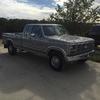
Hello everyone, will some of you idi gurus give me a hand? I got a 1984 F250 6.9 ext. cab long bed 2wd with 200-220,000 miles, banks turbo, 3" straight pipe side exit and just recently replaced the head gasket. Also its automatic with a gear vendor. I want to know if there's any real big power getters out there, but I heard there ain't much. Any suggestions?
Thanks, Jake.

Thanks, Jake.
Postmaster
Joined: Aug 2010
Posts: 2,554
Likes: 7
From: Northern Arizona
The big power getters out there are more fuel (higher output IP) and more air (better turbo set up and Intercooler). However to add much more than what you already have you are going to want to stud that 6.9. Check out http://www.idiperformance.com
Lead Driver
Joined: Apr 2008
Posts: 6,945
Likes: 13
Did you install headstuds when you did the gasket? If not there isnt alot you can do without adding them.
Which banks turbo? 90cc pump, and turned up wastegate should get you comfortably over 200whp, little more with an intercooler. In a perfect setup you can expect 240rwhp or approx. 300fwhp
Which banks turbo? 90cc pump, and turned up wastegate should get you comfortably over 200whp, little more with an intercooler. In a perfect setup you can expect 240rwhp or approx. 300fwhp
Thread Starter
|
New User
Joined: Dec 2015
Posts: 9
Likes: 0
From: Hanford, CA
Did you install headstuds when you did the gasket? If not there isnt alot you can do without adding them.
Which banks turbo? 90cc pump, and turned up wastegate should get you comfortably over 200whp, little more with an intercooler. In a perfect setup you can expect 240rwhp or approx. 300fwhp
Which banks turbo? 90cc pump, and turned up wastegate should get you comfortably over 200whp, little more with an intercooler. In a perfect setup you can expect 240rwhp or approx. 300fwhp

Fleet Mechanic
Joined: Oct 2012
Posts: 1,943
Likes: 21
Just remember you need enough air to burn the fuel. You may have to upgrade the turbo to match the fuel.
Not sure if the 5" exhaust will get you anything.
Not sure if the 5" exhaust will get you anything.

Cargo Master


Joined: Oct 2005
Posts: 2,303
Likes: 29
From: NJ
Indeed, that'll just be a nuisance to run and source pipe and clamps. Anything larger than the downpipe is a waste. 3" or 3.5" if you have more than one bend for a longer run over the axle is fine, more won't get you anything.

Cargo Master


Joined: Oct 2012
Posts: 3,072
Likes: 48
From: California
Agree with Jayro and cadunkle. I upgraded to a hi-flow Walker straight-thru muffler and that didn't really add any horse, but it brought my egt's down 200-300 degrees. But 5" exhaust seems ridiculous.
Trending Topics
Tuned
Joined: Apr 2014
Posts: 265
Likes: 1
From: Portland OR
i have heard good things about propane injection, someone else on here did a home-made setup for like $200 or something and had noticeably more power. but there are also kits for it that you can buy
FTE Stories
Ford Trucks for Ford Truck Enthusiasts

Top 10 Fords at 2026 Carlisle Ford Nationals
Joe Kucinski
3 Best / 3 Worst Parts of Modern Ford Ownership
Brett Foote
10 Amazing Upgrades That Solve Common Ford Truck Owner Headaches
Pouria Savadkouei
Every 2026 Ford Engine Explained
Brett Foote
10 Ugly Ford Trucks That We Still Kinda Love
Joe Kucinski
10 Things Every Truck Owner NEEDS (2026 Edition)
Michael S. Palmer
Rezvani's Latest Post-Apocalyptic Monster Is a Ford F-150 Raptor Underneath
Verdad Gallardo
Top 10 Most Expensive Ford Trucks Ever Sold on Bring a Trailer
Joe Kucinski
2027 Ford Super Duty Buyer's Guide (Every Model, Engine, & Package)
Brett Foote
Postmaster
Joined: Dec 2011
Posts: 3,860
Likes: 7
The /only/ time you will get a benefit out of propane injection is if you aren't giving it enough fuel. On a NA engine, you just need to adjust the IP to give yourself enough fuel.
On a turbo engine, it might be useful if your turbo can supply more fuel than your IP can deliver... but then you still have to worry about pinging, as you aren't direct injecting it*.
Really, though... just buy a bigger IP. Then you can control the timing correctly.
* Note: I'd be really interested in seeing a liquid-propane injected diesel engine. Chances are you could literally run it on straight propane, and I'll bet it would be awesome. Much faster burning than diesel.

Fleet Mechanic


Joined: Sep 2016
Posts: 1,519
Likes: 224
From: Nevada

Propane has around 110 octane, more than gasoline, but less BTU`s.
Diesel has more BTU`s than gas or propane.
Propane 91,000 BTU
Gasoline 124,000 BTU
Diesel 139,000 BTU
I have read on some Forum`s adding propane will help give the engine more oomph...
How ever, I have a 67 1 1/2 ton International Harvester truck. Back in the 70`s I had it on Propane. We were hauling a 2 Horse Trailer, two horses and camp gear from Sea Level ( which she ran pretty good ) up to the Dodge Ridge area of Calif. then back into the hills on dirt roads for 10 miles for a week long trip.
Climbing up to probably 3000 ft or more, that truck kept loosing power, and I kept shifting to a lower gear.
Thought I had a plugged filter or something...
It was just that the propane did not have the BTU`s to give the power I needed.
So running a Diesel engine on straight propane might not give the results you might hope for. Maybe the higher compression of the engine might make a difference...IDK.
Charlie
Diesel has more BTU`s than gas or propane.
Propane 91,000 BTU
Gasoline 124,000 BTU
Diesel 139,000 BTU
I have read on some Forum`s adding propane will help give the engine more oomph...
How ever, I have a 67 1 1/2 ton International Harvester truck. Back in the 70`s I had it on Propane. We were hauling a 2 Horse Trailer, two horses and camp gear from Sea Level ( which she ran pretty good ) up to the Dodge Ridge area of Calif. then back into the hills on dirt roads for 10 miles for a week long trip.
Climbing up to probably 3000 ft or more, that truck kept loosing power, and I kept shifting to a lower gear.
Thought I had a plugged filter or something...
It was just that the propane did not have the BTU`s to give the power I needed.
So running a Diesel engine on straight propane might not give the results you might hope for. Maybe the higher compression of the engine might make a difference...IDK.
Charlie
Postmaster
Joined: Dec 2011
Posts: 3,860
Likes: 7
I'm pretty sure that if you can get enough fuel in there and aren't leaning out, it'll do just fine.
Remember, though, that no matter what your BTU/gallon rating is, you can always add more air and fuel... in an engine like this, the limit is more how much force the connecting rods can take(or the headgasket in the case of a non-studded engine).
With a NA engine, you might lose a little performance due to the lower BTU rating, but I've heard it's like 10% if that(according to professional kit manufacturers).
I'm thinking that the main gain with propane vs diesel in a compression-ignition engine would be the faster burn time, so it would be able to rev higher with good torque, which equals more HP.
Remember, though, that no matter what your BTU/gallon rating is, you can always add more air and fuel... in an engine like this, the limit is more how much force the connecting rods can take(or the headgasket in the case of a non-studded engine).
With a NA engine, you might lose a little performance due to the lower BTU rating, but I've heard it's like 10% if that(according to professional kit manufacturers).
I'm thinking that the main gain with propane vs diesel in a compression-ignition engine would be the faster burn time, so it would be able to rev higher with good torque, which equals more HP.

Posting Guru
Joined: Sep 2011
Posts: 1,523
Likes: 5
The only way I would run propane on an IDI is as a supplement on an engine with a bigger turbo that will make use of the additional fuel. Overall, from what I have read, is that propane has a similar affect as water/methanol on an IDI. It also can cool egts and make more power as a supplement.
Due to the faster burn rate, like Macrobb mentioned, I would make sure an engine is timed ideally with the propane. That is unless it is a minimum amount and doesn't have that great of an affect on the injection event. IMO there is a similar issue with methanol but its affects are minimized due to the water being injected at the same time...
Due to the faster burn rate, like Macrobb mentioned, I would make sure an engine is timed ideally with the propane. That is unless it is a minimum amount and doesn't have that great of an affect on the injection event. IMO there is a similar issue with methanol but its affects are minimized due to the water being injected at the same time...

New User
Joined: Jun 2016
Posts: 13
Likes: 0
Propane is usually injected in addition to the diesel fuel that is already being provided by the injection pump. So if these numbers are correct, your total BTU's being supplied to the motor will be 230,000 BTU's. That is a considerable amount...
What propane does for diesel's is exactly what Nitrous does to a gas motor.
Propane 91,000 BTU
Gasoline 124,000 BTU
Diesel 139,000 BTU
What propane does for diesel's is exactly what Nitrous does to a gas motor.
Propane 91,000 BTU
Gasoline 124,000 BTU
Diesel 139,000 BTU
Postmaster
Joined: Dec 2011
Posts: 3,860
Likes: 7
BTU numbers are thermal energy per gallon. Good for comparing energy /density/, but not for engine power. Mainly because you aren't dumping a gallon of fuel into the engine at a time.
You are putting a measured amount of fuel per cylinder/injection cycle. Yes, if you inject the same exact amount of a different fuel, you may get different amounts of power.
But, you can always compensate by adding different amounts of fuel.
The problem is simple: Air. That's the limiting factor. Just adding fuel won't help you, it just creates smoke.
This applies no matter /what/ you add. Propane isn't an oxidizer.
Even with a gasoline engine, you don't just 'add nitrous'. You add nitrous(an oxidizer) AND spray a matching amount of gasoline down the throat. If you don't, you lean the engine out. This is what makes the power - not the nitrous, but the combination of gasoline plus nitrous(fuel + oxidizer).
On a diesel, you don't need to worry about leaning the engine out, so you can add more oxidizer if you want... but it won't help without extra fuel to burn. Conversely, you can turn your IP up as much as you want, add more fuel, or even add propane, gasoline or anything else, and all you will get is smoke. Because the limit is air(oxygen).
A good example of this is performance diesels. Watch the exhaust - They are blowing tons of black smoke(lots of extra fuel) until they hit the nitrous. Then, the extra oxidizer combines with the extra fuel creating lots of heat, power... and you'll see the exhaust clean up because of it.
Also, lets say you got a turbo(more oxidizer) that gives you the capability for more HP, but you don't have enough fuel. Sure, you could add propane... Or just add more diesel.
Plus, if you add enough propane to really make a difference, the heat from compression /will/ ignite it too early, and you will be putting a lot of shock into your connecting rods because of it... and probably not making much power.
BTW, I /have/ actually run an IDI on straight propane. I managed to get it to idle with a hose stuck down the throat with the IP /off/.
Problem is, even at that speed and relatively low heat, it was clattery due to the preignition.
There's a good /reason/ that gasoline engines(which inject the fuel in with the air charge) have to have a much lower compression ratio(which lowers efficiency) than a diesel engine which injects the fuel after the compression has already happened.
Propane on a diesel is basically just a stop-gap measure used when you have more air than fuel available from your IP. And I'd expect that it'd work better with a lower-compression DI engine than a higher-compression IDI due to less chance of preignition.

Thread
Thread Starter
Forum
Replies
Last Post
forddieseltech08
Pre-Power Stroke Diesel (7.3L IDI & 6.9L)
3
Nov 19, 2012 06:35 AM
hick51
1999 - 2003 7.3L Power Stroke Diesel
17
Nov 2, 2011 12:43 PM
FL-Mudd-Duck
Pre-Power Stroke Diesel (7.3L IDI & 6.9L)
3
Jul 29, 2009 07:32 AM
redneckmechnic
Pre-Power Stroke Diesel (7.3L IDI & 6.9L)
11
Oct 24, 2003 08:11 PM