


53 v-8 flathead

Thread Starter
|
New User
Joined: Jul 2015
Posts: 11
Likes: 0
53 v-8 flathead
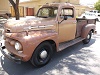
Hi, I have a 1948 F1 original truck with the exception that the previous owner removed the 6 cyl and replaced it with a 53 v-8 flathead, Merc I think, or maybe a Ford.
It runs pretty good, a little rough at idle, but i think it has three cylinders that are not firing at idle for sure and I think at high rpm also.
What I have done and confirmed.
I have replaced coil, points, cond, rotor, dist cap and plugs. I have set timing.
I have checked compression, all within 20 to 30 PSI.
There does not appear to be any arching from plug wires.
The spark in getting to the plug. I confirmed by moving the clamp from the timing light, I also switched plugs with a cyl that is firing and no change to either cylinder.
I have put STP with zinc into cylinders and let soak as I do have one noisey lifter.
Question: can a bad carb cause individual cylinders not to fire. the cyl I am concerned about are 2,6 and 8
Any ideas suggestions will be greatly appreciated.
It runs pretty good, a little rough at idle, but i think it has three cylinders that are not firing at idle for sure and I think at high rpm also.
What I have done and confirmed.
I have replaced coil, points, cond, rotor, dist cap and plugs. I have set timing.
I have checked compression, all within 20 to 30 PSI.
There does not appear to be any arching from plug wires.
The spark in getting to the plug. I confirmed by moving the clamp from the timing light, I also switched plugs with a cyl that is firing and no change to either cylinder.
I have put STP with zinc into cylinders and let soak as I do have one noisey lifter.
Question: can a bad carb cause individual cylinders not to fire. the cyl I am concerned about are 2,6 and 8
Any ideas suggestions will be greatly appreciated.

Fleet Owner


Joined: Jul 2004
Posts: 27,299
Likes: 1,059
From: NM
That's a pretty wide range, what kind of numbers did you get?
I'd be real careful using something as thick as STP in the cylinders, it isn't likely to work its way down very quickly at all. The zinc is a non-issue.
I have put STP with zinc into cylinders and let soak as I do have one noisey lifter
...
...
Cargo Master


Joined: Aug 2015
Posts: 2,076
Likes: 101
From: Marana, Arizona
You didn't mention your plug wires. I did all the normal tune up stuff when I got my truck. All the parts you listed. Spark still seemed weak to me. Plug wires looked ok but they were not solid core like original.
Some will argue they are not needed but, I still have a stock 6 volt system and thought the ignition could benefit from solid wires and it did.
It fires right up and runs pretty darn good. And that is with two low cylinders because of intake valves. It also probably has worn rings because it burns a little oil.
Before it often flooded and I'd have to pull the plugs and dry them off. If it did start it took a long time. Even after a carb rebuild and the tune up parts.
Some will argue they are not needed but, I still have a stock 6 volt system and thought the ignition could benefit from solid wires and it did.
It fires right up and runs pretty darn good. And that is with two low cylinders because of intake valves. It also probably has worn rings because it burns a little oil.
Before it often flooded and I'd have to pull the plugs and dry them off. If it did start it took a long time. Even after a carb rebuild and the tune up parts.
Fleet Owner
Joined: Jul 2004
Posts: 27,299
Likes: 1,059
From: NM
Those are high numbers, likely indicating carboned up cylinders (or with a lot of STP still in them). But that wouldn't likely cause misfiring. No need for hotter plugs, stick with Autolite 216's.
It could be that valves are sticking open once it warms up, but OK while just cranking for the compression test. Is there a lot of sludge in this engine? What is its history, was it running fine before?
Check your distributor for wobble in the shaft.
It could be that valves are sticking open once it warms up, but OK while just cranking for the compression test. Is there a lot of sludge in this engine? What is its history, was it running fine before?
Check your distributor for wobble in the shaft.
Trending Topics
Thread Starter
|
New User
Joined: Jul 2015
Posts: 11
Likes: 0
Thanks.
The compression check was back in July. I just recently tried I tried adding a little STP. Maybe I should do a compression after it is warmed up?
I don't think there is a lot of sludge, when I changed the oil it looked pretty decent plus when I look into the cylinder with the plug out it looks pretty clean.
I used a lead additive with each.
The plug wires are stranded, should I get a solid wire or
Graphite.
What do you think about he carb?
The compression check was back in July. I just recently tried I tried adding a little STP. Maybe I should do a compression after it is warmed up?
I don't think there is a lot of sludge, when I changed the oil it looked pretty decent plus when I look into the cylinder with the plug out it looks pretty clean.
I used a lead additive with each.
The plug wires are stranded, should I get a solid wire or
Graphite.
What do you think about he carb?
FTE Stories
Ford Trucks for Ford Truck Enthusiasts

Top 10 Fords at 2026 Carlisle Ford Nationals
Joe Kucinski
3 Best / 3 Worst Parts of Modern Ford Ownership
Brett Foote
10 Amazing Upgrades That Solve Common Ford Truck Owner Headaches
Pouria Savadkouei
Every 2026 Ford Engine Explained
Brett Foote
10 Ugly Ford Trucks That We Still Kinda Love
Joe Kucinski
10 Things Every Truck Owner NEEDS (2026 Edition)
Michael S. Palmer
Rezvani's Latest Post-Apocalyptic Monster Is a Ford F-150 Raptor Underneath
Verdad Gallardo
Top 10 Most Expensive Ford Trucks Ever Sold on Bring a Trailer
Joe Kucinski
2027 Ford Super Duty Buyer's Guide (Every Model, Engine, & Package)
Brett Foote
Cargo Master
Joined: Aug 2015
Posts: 2,076
Likes: 101
From: Marana, Arizona
The solid core wires are not literally solid. They are stranded wire, not carbon. When I changed mine the spark went from weak to a bright snappy sounding blue.
I also had pretty clean oil. Was surprised when I pulled the oil pan to find the amount of sludge I did. After cleaning the pan I pulled the intake and it had a ton of sludge. Scrapped out as much as possible then blew and flushed with solvent.
I realized the 2 intake valves were leaking by when the intake was off. I could hear a slight huff when cranking it over.
Rebuilding the carb helped as did flushing the 2 year old gas out and making sure the tank and lines were clean. Cleaned out fuel bowl and screen. Adjusted the carb screws with a vacuum gauge hooked up. I had to go to a slightly more aggressive accelerator pump setting or it would stumble off idle. One hole only.
Took the distributor out and cleaned it up. Made sure advance was working smoothly. I ended up switching to a slightly hotter set of NGK plugs because I have a little oily blowby.
It fires right up and sounds pretty darn good for an old worn engine. The more I drive it the better it seems to be getting. A lot less smoke. Barely noticeable now.
Sounds like you on the right track. The STP in the cylinders is a bit risky. You don't want to hydro lock your engine.
I also had pretty clean oil. Was surprised when I pulled the oil pan to find the amount of sludge I did. After cleaning the pan I pulled the intake and it had a ton of sludge. Scrapped out as much as possible then blew and flushed with solvent.
I realized the 2 intake valves were leaking by when the intake was off. I could hear a slight huff when cranking it over.
Rebuilding the carb helped as did flushing the 2 year old gas out and making sure the tank and lines were clean. Cleaned out fuel bowl and screen. Adjusted the carb screws with a vacuum gauge hooked up. I had to go to a slightly more aggressive accelerator pump setting or it would stumble off idle. One hole only.
Took the distributor out and cleaned it up. Made sure advance was working smoothly. I ended up switching to a slightly hotter set of NGK plugs because I have a little oily blowby.
It fires right up and sounds pretty darn good for an old worn engine. The more I drive it the better it seems to be getting. A lot less smoke. Barely noticeable now.
Sounds like you on the right track. The STP in the cylinders is a bit risky. You don't want to hydro lock your engine.

Senior User
Joined: Jul 2003
Posts: 322
Likes: 1
From: FL
If you're not running a radio, run the solid core wires.
No need on lead additive or zinc. A good quality oil is fine.
I like to run a little more advance than factory - 8-10* BTDC.
I can get a pretty decent tune with a vacuum gauge. I use that to adjust the carb idle mixture and the ignition timing. Adjust each, one at a time, to obtain the highest vacuum reading.
The vacuum gauge may also show sticking valves.
If you ever feel the need to run STP in your oil, only add it when the engine is hot, and drive it for several miles immediately after adding it. Otherwise, it collects in the lifter valley and pan and does nothing...might consider warming it up before adding it too.
The carb can cause specific cylinders to miss - on a dual plane intake like a stock Ford, if one side of the carb is acting up, all the cylinders fed by that barrel will not run correctly. I don't have a factory intake handy, nor do I have the runners memorized, but usually, it's two inner cylinders and two outer cylinders on the opposite bank. So, 1,4,6,7 or 2,3,5,8 - that's a generic assessment to give you the idea - look at your intake and see which cylinders are fed by which barrel. If your problem cylinders are all fed by the same barrel, it may well be the carb.
No need on lead additive or zinc. A good quality oil is fine.
I like to run a little more advance than factory - 8-10* BTDC.
I can get a pretty decent tune with a vacuum gauge. I use that to adjust the carb idle mixture and the ignition timing. Adjust each, one at a time, to obtain the highest vacuum reading.
The vacuum gauge may also show sticking valves.
If you ever feel the need to run STP in your oil, only add it when the engine is hot, and drive it for several miles immediately after adding it. Otherwise, it collects in the lifter valley and pan and does nothing...might consider warming it up before adding it too.
The carb can cause specific cylinders to miss - on a dual plane intake like a stock Ford, if one side of the carb is acting up, all the cylinders fed by that barrel will not run correctly. I don't have a factory intake handy, nor do I have the runners memorized, but usually, it's two inner cylinders and two outer cylinders on the opposite bank. So, 1,4,6,7 or 2,3,5,8 - that's a generic assessment to give you the idea - look at your intake and see which cylinders are fed by which barrel. If your problem cylinders are all fed by the same barrel, it may well be the carb.

Tuned

Joined: Mar 2014
Posts: 319
Likes: 18
Have to disagree about the Zinc additive. ANY motor with a Flat Tappet Cam needs zinc, since the EPA ordered it removed from motor oil. That's why all newer cars have roller lifters. Also, pull the plugs with the wire attached, place the plug near a solid ground, DON'T hold with your bare hand, and have someone pin the motor over. Easy to see if you have spark at plug.
Fleet Owner
Joined: Jul 2004
Posts: 27,299
Likes: 1,059
From: NM
It's been shown over and over again that any quality modern oil is completely adequate for flatheads, and usually acceptable for all but the wildest cam'd OHV engines. Messing with the additive package created by professionals at the oil companies can adversely affect the oil's performance.
Senior User
Joined: Jul 2003
Posts: 322
Likes: 1
From: FL
Have to disagree about the Zinc additive. ANY motor with a Flat Tappet Cam needs zinc, since the EPA ordered it removed from motor oil. That's why all newer cars have roller lifters. Also, pull the plugs with the wire attached, place the plug near a solid ground, DON'T hold with your bare hand, and have someone pin the motor over. Easy to see if you have spark at plug.
If you're running a modern OHV flat tappet engine, particularly a hi-po '60s-style engine, you may wish to invest in a zinc additive, or use an oil like Brad Penn or Redline or any other racing oil designed with the increased zinc still involved.
But modern oils that drop zinc from 1400+ppm down to 800ppm or so are still more than adequate for a flathead.

Thread
Thread Starter
Forum
Replies
Last Post
duracraft
Small Block V8 (221, 260, 289, 5.0/302, 5.8/351W)
10
Sep 8, 2020 05:19 PM
351Cleveland C4
1967 - 1972 F-100 & Larger F-Series Trucks
36
Oct 2, 2013 07:32 PM
cleanLX
FE & FT Big Block V8 (332, 352, 360, 390, 406, 410, 427, 428)
18
Dec 26, 2005 08:38 PM