When you click on links to various merchants on this site and make a purchase, this can result in this site earning a commission. Affiliate programs and affiliations include, but are not limited to, the eBay Partner Network.
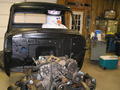
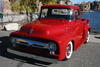
Not sure where to post this. I've got a 1956 panel truck with a 460 and mustang rack and pinion. I'm using the pump for a 1978 f150. I need to reduce pump pressure to rack. Anyone on here know how? I read articles on Saginaw pump kits to add shims to reduce psi, but found no articles on ford pump. Heard about cardone saginaw pump 20-6244, but it' s discontinued
Steering is way too sensitive.thanks,
James
Not sure where to post this. I've got a 1956 panel truck with a 460 and mustang rack and pinion. I'm using the pump for a 1978 f150. I need to reduce pump pressure to rack. Anyone on here know how? I read articles on Saginaw pump kits to add shims to reduce psi, but found no articles on ford pump. Heard about cardone saginaw pump 20-6244, but it' s discontinued
Steering is way too sensitive.thanks,
James
I bought a "Saginaw" pump that had been rebuilt by "Borgeson" to lower the pressure for the rack n pinion. I had it in my street rod but it was still to sensitive so i removed it all and am selling it now. My car is real light and you truck is probably heaver so it might work for you. The pump cost about $160.00 and i got it at Summit . You can get the mounting brackets for the 460 at extra cost .
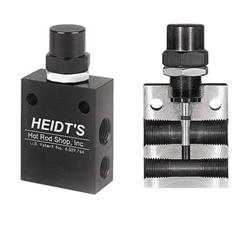
Thanks. Yep, the Heidts valve pops up in most every Google search. Biggest dislike for that is the associated plumbing. May have to go that route. For $250, there's a valve sold that mounts to a Saginaw pump with no extra plumbing. Actually considering going to manual and just suffer in parking lot maneuvers.....
Okay, it looks like the f150 pumps were the same 1978-89 model years...can anyone confirm? My rack is for a 1990 mustang. I looked up the 1990 mustang pump and it looks VERY much like my 1978 pump. I'm figuring pressures are close? I will go to parts store and compare side by side. If my v pulley fits, I may try to mount the 1990 pump. If successful, my pump would match the rack...then if still twitchy, I will most likely go with Heidts valve
Okay, it looks like the f150 pumps were the same 1978-89 model years...can anyone confirm? My rack is for a 1990 mustang. I looked up the 1990 mustang pump and it looks VERY much like my 1978 pump. I'm figuring pressures are close? I will go to parts store and compare side by side. If my v pulley fits, I may try to mount the 1990 pump. If successful, my pump would match the rack...then if still twitchy, I will most likely go with Heidts valve
I'm thinking finding a Ford pump for it would not be a problem. My problem was having a chevy engine and very little room for a pump other than one made for it , then i have the to much pressure problem. JIM
Okay, it looks like the f150 pumps were the same 1978-89 model years...can anyone confirm? My rack is for a 1990 mustang. I looked up the 1990 mustang pump and it looks VERY much like my 1978 pump. I'm figuring pressures are close? I will go to parts store and compare side by side. If my v pulley fits, I may try to mount the 1990 pump. If successful, my pump would match the rack...then if still twitchy, I will most likely go with Heidts valve
The Thompson PS pump was used from 1965 through 1977. It will have a stamped steel reservoir. In '65/'66, the pump housing had a large diameter filler neck and dipstick cap. In 1967, the diameter of the dipstick tube was greatly reduced and is when it got the nick name 'pencil neck' pump.
The Thompson 'pencil neck' PS pump will look like this (shown on an early Mustang but, it was also used on the trucks).
This is a '65/'66 version of the Thompson PS pump (notice the larger filler neck).
In 1978, Ford came out with the Corporate II PS pump (C-II or C-2) in the cars and trucks. It has a plastic reservoir with a large diameter filler neck and dipstick cap. It was produced through about 2003.
This is a C-2 PS pump I put on my '69 F100, on my 240 inline six. The pump, brackets and pulleys for this came from an '82 Bullnose F150 that had a 300 inline six in it.
The C-2 pump is less boosted than the Thompson pump and doesn't have as much propensity to whining like the Thompson PS pump.
There was also a C-2 PS pump designed for hydroboost brakes. It will have a 2nd return line port at the base of the filler neck.
The C-2 pump would have been available on a 460. You would just need the mounting brackets and pulleys from a donor 460 engine. --Thompson PS pump mounting brackets and C-2 pump mounting brackets are not interchangeable.
I have the same pump you have on your I6. It is a rebuilt unit with about 14k miles on it. It has whined since day one. I've read dozens of Internet posts about this apparently inherent Ford issue. My mustang rack, (same mileage),recently blew the passenger side seal out. Someone suggested maybe my pump pressure was too high. Perhaps it was spotty QC on the reman rack? I'm now trying to find the working psi on my 1978 pump and psi on a 1990 mustang pump. My suspension upgrades ,(tubular uppers, front sway bar, Bilstein shocks), will happen before working on this. Will be interesting to see if problem is more, or less pronounced. The 460/ C6 is fun BUT; in hindsight, I would've 1) kept stock suspension, 2) gone late model 351 with AOD, FWIW......in too deep now to go a different route
My C-2 PS pump setup came from an '82 Bullnose but, I turned the pump in as a core on a newly rebuilt PS pump.
I don't know if it's just the design of the Thompson pump that often makes them whine but whatever the case, they are too overly boosted for my tastes.
The PS pump is just a belt-driven hydraulic pump. The primary reason any hydraulic pump whines is due to cavitation --air bubbles trapped inside the pump. When you put a PS pump on, you can't just dump fluid over into it and then jump in the vehicle and bust the engine off. This will often result in burning up the PS pump or, causing damage to it before the pump can fully prime.
The PS system needs to be primed first, to purge the air from the pump and the system, BEFORE the engine is ever started. There is a 3/8" hex drive on the end of the pump shaft, where the pulley attaches. With the V-belt off, you can take a 3/8" hex bit chucked in a variable speed drill motor to slowly turn the pump to prime the PS system. The rotational speed of a variable speed drill will be much slower than the idling RPMs of a running engine.
If the air doesn't purge soon enough from the pump at installation, with the engine running, it will most likely burn the pump up or, damage it, before it can get sufficient fluid coverage on the pump. If the pump is damaged before all the air is evacuated, the pump will likely whine from then on.
When I put my pump on, I primed it and the PS system with a 3/8" hex bit and a variable speed drill motor. --slowly turn the pump with the drill motor, check the fluid level in the PS reservoir, slowly turn the wheels one direction, check the fluid level, slowly turn the pump with the drill motor, check the fluid level, slowly turn the wheels the other way, repeat, etc.
After I did this, I put the V-belt on and fired the engine up. The only time the C-2 pump on my truck makes any sort of noise is if I turn the wheels to full-lock (pressure relief valve kicking in). Anywhere else in between, it's as quite as a church mouse and has never whined since day one.
Priming the pump and the PS system PRIOR to putting the V-belt on and firing up the engine.
Thanks. I'll have to try that on my next pump if I stay power. I think it will be cheaper to go to a manual rack than the flow control valve from heidts. The valve is only $100., however, you have to add in the additional hoses to be made. As this is not a daily driver, and I never parallel park, I don't really see a huge downside to manual. I know I'm tired of the fast, twitchy steering at speed.
ultraranger,. is that pump bracket on the V-8 & 6 the same? Is that a stock Ford part? It appears to be aluminum? and another black bracket connects to the water pump. My Thompson pump has a large ugly bracket that I'd like to exchange for something like yours. I know this is an old post, I discovered it by accident.
jays '56 f-100






 JIM
JIM