



Tire Valve Extensions

Super Moderator


Joined: Dec 2011
Posts: 13,361
Likes: 6,152

There should be no problem on the steel wheels placing the valve stems 180* apart. With steel wheels, I would use one of the hose kits that puts hose on eat of the valve stems on both sides and mount the to the axle hub.
This is a kit I use on a 96 F350 and going to try on the 2015.
Dual Tire Inflators - Hub Mount Stainless Steel - 4 Hose Kit for 16"-19.5" Wheels - Wheel Masters 8001 AM4 - Wheel Accessories - Camping World
This is a kit I use on a 96 F350 and going to try on the 2015.
Dual Tire Inflators - Hub Mount Stainless Steel - 4 Hose Kit for 16"-19.5" Wheels - Wheel Masters 8001 AM4 - Wheel Accessories - Camping World
Post a pic of that fitment on your 2015.

Thread Starter
|
Tuned

Joined: Feb 2008
Posts: 329
Likes: 1
From: Full time RVer
No, I don't use extenders. Some extenders can present more risk to rapid deflation than I'm willing to live with. If I did use extenders, then I would make sure that:
1. The valve stems themselves were the all metal clamp in style
2. The extensions were not pressurized
Did you get a chance to read the suggestions I posted on your ABS thread? I was hoping they would lead you to a quick fix without having to hunt down a proper reader.
1. The valve stems themselves were the all metal clamp in style
2. The extensions were not pressurized
Did you get a chance to read the suggestions I posted on your ABS thread? I was hoping they would lead you to a quick fix without having to hunt down a proper reader.
 Mechanics is not my primary knowledge base. But I try as best I can.
 I am equally nervous about the DRW extensions. The problem I am running into is that it is such a pain in the *** to check the pressure that I tend to ignore it. Hoping it will be fine.
Super Moderator
Joined: Dec 2011
Posts: 13,361
Likes: 6,152
Well, at least you are aware of the danger of ignoring the inner dual.
I found that longer inflator extensions help a great deal. In other words, I added the long extension to the inflator tool, rather than having the long extension permanently flinging around with the wheel at some 650 times a minute.
You can see in the photo below the extensions I added (in yellow) to lengthen the reach of my inflator. I'm a bit like Noah, in that I tend to have two of everything, because invariably I misplace one after losing the other.
I also found that the straight foot dual tire inflator (as shown above) works better than the angle foot that originally came with these Milton inflators, which I replaced with the straight foot. The straight foot permits better aiming toward the inner dual tire valve stem through smaller clearance hand holes.
Also, the straight foot has two entirely separate inflator valves, each with their own seals. The problem with the angle inflator feet is that there is one valve piece that toggles back and forth between seals on either end of a common orifice. This design is cheaper to make, but more prone to failure. I've had four angle feet fail over the last 20 years or so.
Thread Starter
|
Tuned
Joined: Feb 2008
Posts: 329
Likes: 1
From: Full time RVer
Well, at least you are aware of the danger of ignoring the inner dual.
I found that longer inflator extensions help a great deal. In other words, I added the long extension to the inflator tool, rather than having the long extension permanently flinging around with the wheel at some 650 times a minute.
You can see in the photo below the extensions I added (in yellow) to lengthen the reach of my inflator. I'm a bit like Noah, in that I tend to have two of everything, because invariably I misplace one after losing the other.

I also found that the straight foot dual tire inflator (as shown above) works better than the angle foot that originally came with these Milton inflators, which I replaced with the straight foot. The straight foot permits better aiming toward the inner dual tire valve stem through smaller clearance hand holes.
Also, the straight foot has two entirely separate inflator valves, each with their own seals. The problem with the angle inflator feet is that there is one valve piece that toggles back and forth between seals on either end of a common orifice. This design is cheaper to make, but more prone to failure. I've had four angle feet fail over the last 20 years or so.
I found that longer inflator extensions help a great deal. In other words, I added the long extension to the inflator tool, rather than having the long extension permanently flinging around with the wheel at some 650 times a minute.
You can see in the photo below the extensions I added (in yellow) to lengthen the reach of my inflator. I'm a bit like Noah, in that I tend to have two of everything, because invariably I misplace one after losing the other.
I also found that the straight foot dual tire inflator (as shown above) works better than the angle foot that originally came with these Milton inflators, which I replaced with the straight foot. The straight foot permits better aiming toward the inner dual tire valve stem through smaller clearance hand holes.
Also, the straight foot has two entirely separate inflator valves, each with their own seals. The problem with the angle inflator feet is that there is one valve piece that toggles back and forth between seals on either end of a common orifice. This design is cheaper to make, but more prone to failure. I've had four angle feet fail over the last 20 years or so.
Now with my steel wheels, everything is on the inside. Guess I should just suck it up and change the caps to push through and deal with the PITA
Thread Starter
|
Tuned
Joined: Feb 2008
Posts: 329
Likes: 1
From: Full time RVer
Well, at least you are aware of the danger of ignoring the inner dual.
I found that longer inflator extensions help a great deal. In other words, I added the long extension to the inflator tool, rather than having the long extension permanently flinging around with the wheel at some 650 times a minute.
You can see in the photo below the extensions I added (in yellow) to lengthen the reach of my inflator. I'm a bit like Noah, in that I tend to have two of everything, because invariably I misplace one after losing the other.
I also found that the straight foot dual tire inflator (as shown above) works better than the angle foot that originally came with these Milton inflators, which I replaced with the straight foot. The straight foot permits better aiming toward the inner dual tire valve stem through smaller clearance hand holes.
Also, the straight foot has two entirely separate inflator valves, each with their own seals. The problem with the angle inflator feet is that there is one valve piece that toggles back and forth between seals on either end of a common orifice. This design is cheaper to make, but more prone to failure. I've had four angle feet fail over the last 20 years or so.
I found that longer inflator extensions help a great deal. In other words, I added the long extension to the inflator tool, rather than having the long extension permanently flinging around with the wheel at some 650 times a minute.
You can see in the photo below the extensions I added (in yellow) to lengthen the reach of my inflator. I'm a bit like Noah, in that I tend to have two of everything, because invariably I misplace one after losing the other.
I also found that the straight foot dual tire inflator (as shown above) works better than the angle foot that originally came with these Milton inflators, which I replaced with the straight foot. The straight foot permits better aiming toward the inner dual tire valve stem through smaller clearance hand holes.
Also, the straight foot has two entirely separate inflator valves, each with their own seals. The problem with the angle inflator feet is that there is one valve piece that toggles back and forth between seals on either end of a common orifice. This design is cheaper to make, but more prone to failure. I've had four angle feet fail over the last 20 years or so.
Super Moderator
Joined: Dec 2011
Posts: 13,361
Likes: 6,152
No... not steel valve stems... they are metal valve stems, made of brass.
Because of the reversibility of dished dual wheels, the valve stems always end up "inside" (or pointed between) the wheels within a dually pair. That is when the reverse foot (found on both angled and straight foot air chucks) comes in handy... to air up the inside facing valve stem of the outer dual.
Because of the reversibility of dished dual wheels, the valve stems always end up "inside" (or pointed between) the wheels within a dually pair. That is when the reverse foot (found on both angled and straight foot air chucks) comes in handy... to air up the inside facing valve stem of the outer dual.
Thread Starter
|
Tuned
Joined: Feb 2008
Posts: 329
Likes: 1
From: Full time RVer
No... not steel valve stems... they are metal valve stems, made of brass.
Because of the reversibility of dished dual wheels, the valve stems always end up "inside" (or pointed between) the wheels within a dually pair. That is when the reverse foot (found on both angled and straight foot air chucks) comes in handy... to air up the inside facing valve stem of the outer dual.
Because of the reversibility of dished dual wheels, the valve stems always end up "inside" (or pointed between) the wheels within a dually pair. That is when the reverse foot (found on both angled and straight foot air chucks) comes in handy... to air up the inside facing valve stem of the outer dual.
Super Moderator
Joined: Dec 2011
Posts: 13,361
Likes: 6,152
It did feel a little awkward explaining that, a bit like Captain Obvious, but because you said...
Originally Posted by glennemay
"Now with my steel wheels, everything is on the inside.
And my answer is: Neither.
I have solid brass valve stems, called "clamp in" style in the tire industry. They seal against the wheel via a ring grommet that is "clamped" by way of a nut that threads down the brass body of the valve stem.
Do your valve stems look like these? (TR-413... for cars and P metric tires, only rated to 60 psi, not rated for LT Load Range E tires)
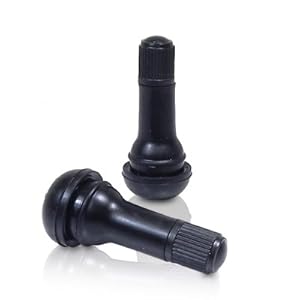
Or do they look like this... (TR-413C... same valve specs as above, only gussied up with chrome. Don't be fooled by the metal looking body of the valve in the photo below. It is a beauty sleeve only.)

Or do they look like this... (TR600HP... the HP stands for High Pressure, and unlike the TR413C valve with the chrome sleeve cover above, the TR600HP valve below has a brass tube set into a rubber snap in base, and is rated for 100 psi.)
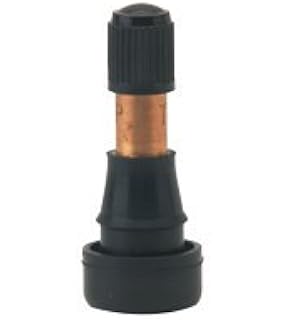
Below are a couple more shots of the TR600HP, in case a photo link breaks, because these are the rubber snap in valve stems I hope you have, at minimum. If you don't, and instead have stems like the TR413 tire valves first pictured, then change them out as soon as possible, regardless of whether or not you add extensions.


All the tire valves shown above are "snap in" rubber type, and all are designed to fit in a .453" diameter valve hole in the wheel. This is why it is possible for inattentive tire jockeys to mount TR-413 tire valves from their bulk bin at the tire machine, even though your application calls for TR600HP rubber snap in valve stems at minimum.
Besides the stem body seen from the outside of the wheel, one of the more important differences can be observed in the dimension and profile of the rubber snap in base. Higher pressure wheels are thicker, and once can see that the part of the rubber base that is exactly .453" in diameter on both styles of stems, is actually a bit wider (or taller, really) between the lands that seal against the wheel on the higher pressure version, to accommodate the thicker truck wheel rated for 80+psi. Also, the sealing lands are much thicker at the base, and wider flanged at the collar, on the TR600HP, compared to the TR-413.
I hope I've thoroughly convinced you to remove any TR413 rubber valve stems from your truck if you have them.
When the '99 up Super Duty was introduced in 1998, Ford originally installed TR600HP valve stems on the F-350 dually. Around 2003 or thereabouts, give or take a year, Ford upgraded the valve stems on the F-350 dually to an all brass clamp in style, which is what I use.
Here are a few examples of all brass clamp in tire valves:

The specific taper that I use looks like this:

If you are still considering adding extensions to your tire valves, then even if you have the TR600HP snap in rubber valve stems your F-350 is supposed to have at minimum, you still are strongly urged to change them to a clamp in style valve stem like these all brass babies in the two photos immediately above. The problem with adding an extension to a TR600HP is the rubber base... which can be strained to the point of failure by the centrifugal force that is generated at high speeds, compounded by the added length and weight of the extender. The rubber can crack, sever, or pop out of the rim hole altogether, leading to a rapid deflation event that ruins the day. The all metal base of the brass clamp in valve can tolerate more mechanical strain, as well as higher pressures, as well as wriggling around while trying to get an inflator on it.
FTE Stories
Ford Trucks for Ford Truck Enthusiasts

3 Best / Worst Features Of The 2025+ Ford Expedition
Brett Foote
10 Ways Ford is LOSING to the Competition
Joe Kucinski
Top 6 Best Deals Available on New Fords & Lincolns Right Now
Brett Foote
This Hennessey Takes the Expedition Tremor's Off-Roading Capability to the Next Level
Verdad Gallardo
Top 10 Fords at 2026 Carlisle Ford Nationals
Joe Kucinski
3 Best / 3 Worst Parts of Modern Ford Ownership
Brett Foote
10 Amazing Upgrades That Solve Common Ford Truck Owner Headaches
Pouria Savadkouei
Every 2026 Ford Engine Explained
Brett Foote
10 Ugly Ford Trucks That We Still Kinda Love
Joe Kucinski
Post Fiend
Joined: Nov 2001
Posts: 6,748
Likes: 119
From: Tallassee, ALabama
The Ford valve stems are made by Haltec.
Haltec | Product Listing | Haltec Standard Bore Valve Systems
Haltec | Product Listing | Haltec Standard Bore Valve Systems
Super Moderator
Joined: Dec 2011
Posts: 13,361
Likes: 6,152
The brass valves that came OEM on a 2003 F-550 I helped a friend order had Dill stamped on them. Dill is a very big in the tire valve business. I've also seen Ford tire valves available from Schrader as well as Myers.
These particular Haltec ones that Larry pointed out are better than any of the brass valves I previously posted in pictures, because they are nickel plated brass, which are even more corrosion resistant. Notice the bend too...

The valves I bought for my E-350 are nickel plated brass. I was not able to find nickel plated valves for my steel wheeled F-550. There are at least three different bend+length profiles for Ford dually tire valves...
These particular Haltec ones that Larry pointed out are better than any of the brass valves I previously posted in pictures, because they are nickel plated brass, which are even more corrosion resistant. Notice the bend too...
The valves I bought for my E-350 are nickel plated brass. I was not able to find nickel plated valves for my steel wheeled F-550. There are at least three different bend+length profiles for Ford dually tire valves...
- E-Series 16" (E-350, E-450 aka E-SuperDuty)
- F-Series 16" (F-350)
- F-Series 19.5" (F-450, F-550, and E-550)

Thread
Thread Starter
Forum
Replies
Last Post