When you click on links to various merchants on this site and make a purchase, this can result in this site earning a commission. Affiliate programs and affiliations include, but are not limited to, the eBay Partner Network.
Hello All,
Didn't know to put this here or under Electrical / Ignition. Put here because it's a 66. Just changed my 66 F-250, 240 engine to DSII. Wish I did it years ago. I'll give you all pertaining with a couple questions asked at end.
OE dizzy was full vacuum adv, only. Served well, then burned set of pts, then another burnt set 2 mos later. I did all my research, did conversion and it runs excellent. The donor dizzy is from a 1979 F-350, I had it in on an engine in a shed at my sons for about 10 yrs. Disassembled diz as centrifical was froze, freed it up and made note that the advance re-stricter slots were 10 and 15. It was/is using the 10 slot now. I understand dizz runs half engine speed and that crankshaft degrees is double dizz degrees.
The vacuum chamber is double ported, it works. I know I need a single ported chamber and that will be one of my questions. I ordered and installed the Mr Gasket spring kit and only replaced the lighter spring. The next step was to bend the post end of the heavy spring inward about 3/32". The post was already bent, I assume, because with the plate advanced maximum and the heavy spring never came into play.
Here come the questions.
1- At the crank there is 20 degrees from centrifugal, about 5 degrees from vacuum chamber and I set my initial timing at 10 degrees instead of 6 degrees which is the stock setting. So I have a total advance of 35 degrees. I thought I read once that the 240/300 engine should have a total of 30 degrees. Can some of you elaborate on total advance I should have? This is a stock 240 except for overbore and what may have been taken off the head at rebuild. It's an everyday driver on 87 octane. At present I have no spark knock/ping and I did not have to hook up the white wire that will retard the spark on cranking.
2- Can you recommend the vacuum chamber I should use? I'm thinking from 74 or 75 when DS first started being used. The Allen wrench adjustment in the chamber, does it adjust the travel of the diaphragm/link or the tension for more or less vacuum to move the diaphragm?
3- Can i open my plugs to .044 or greater?
Long winded post I know. Just thought I'd address things you might come back and ask me. Last comment, truck has 1 2 3 O trans from 86 F-150. You all told me years ago I would not like that trans, You were right, I hate it, but it's still in there. There are grades I travel over most days and would have to downshift O to 3 to get over. With the DSII conversion I walk the grade in O.
Thanks to you ALL, FTE is and has always been great, Cap
When I put DSII into my 66 F250 (300 I6) I set my timing to 10. My plugs were at .044.
Make sure you change your carb. Initially I was using the old autolite 1101. It worked better than the all load-o-matic setup but I could never get it to work quite right. Turns out the autolite only really works well with the load-o-matic dizzy (something to do with the spark control valve on it?)
Switched to a carter YF and it worked perfectly after that.
Best upgrade I ever did. Sorry I can't help with any of your other questions...
Thinlizzy13, thanks for your reply. Not sure at this time of Autolite or Carter carb, I'll check and let you know. I really am not having a problem performance wise, it is running great.
I have just borrowed a timing light with a degree thumb wheel and digital read out. I'll be able to get accurate individual readings on centrifugal, vacuum and total advance. I will set my plugs at .044. I just want to tweak the set up as best I can.
Was your DSII dizzy a take out or one you bought set up for your application?
If take out, do you recall what it came from? Just curious.
I don't remember the specifics, but it was out of a late 70's vehicle. I didn't have it tuned or tweaked or anything. I just got it and dropped it in.
The autolite 1101/1100 is the stock load-o-matic set up carb that would've come factory. When I used the autolite 1101 with the DSII it didn't have too much "oompf" at highway speeds. Poor response is the best way to put it I guess. It worked fine but there was a noticeable difference when I got a later carb on it.
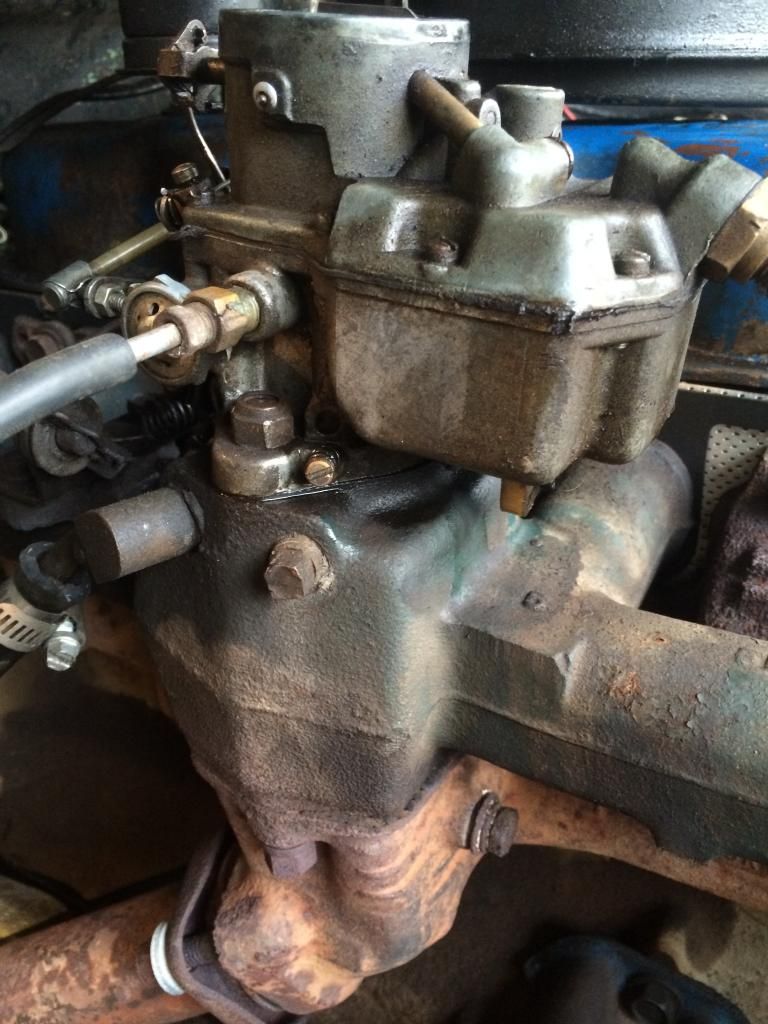
Apologies for the bad pic but the autolite looks something like this
I have a '69 F100 with a 240 and a C-4. I don't have the DSII distributor installed yet (still have to get a distributor to module harness) but, my Duraspark distributor came from an '83 Bullnose F150 that had a 300 in it.
This is the I.D. tag number on it.
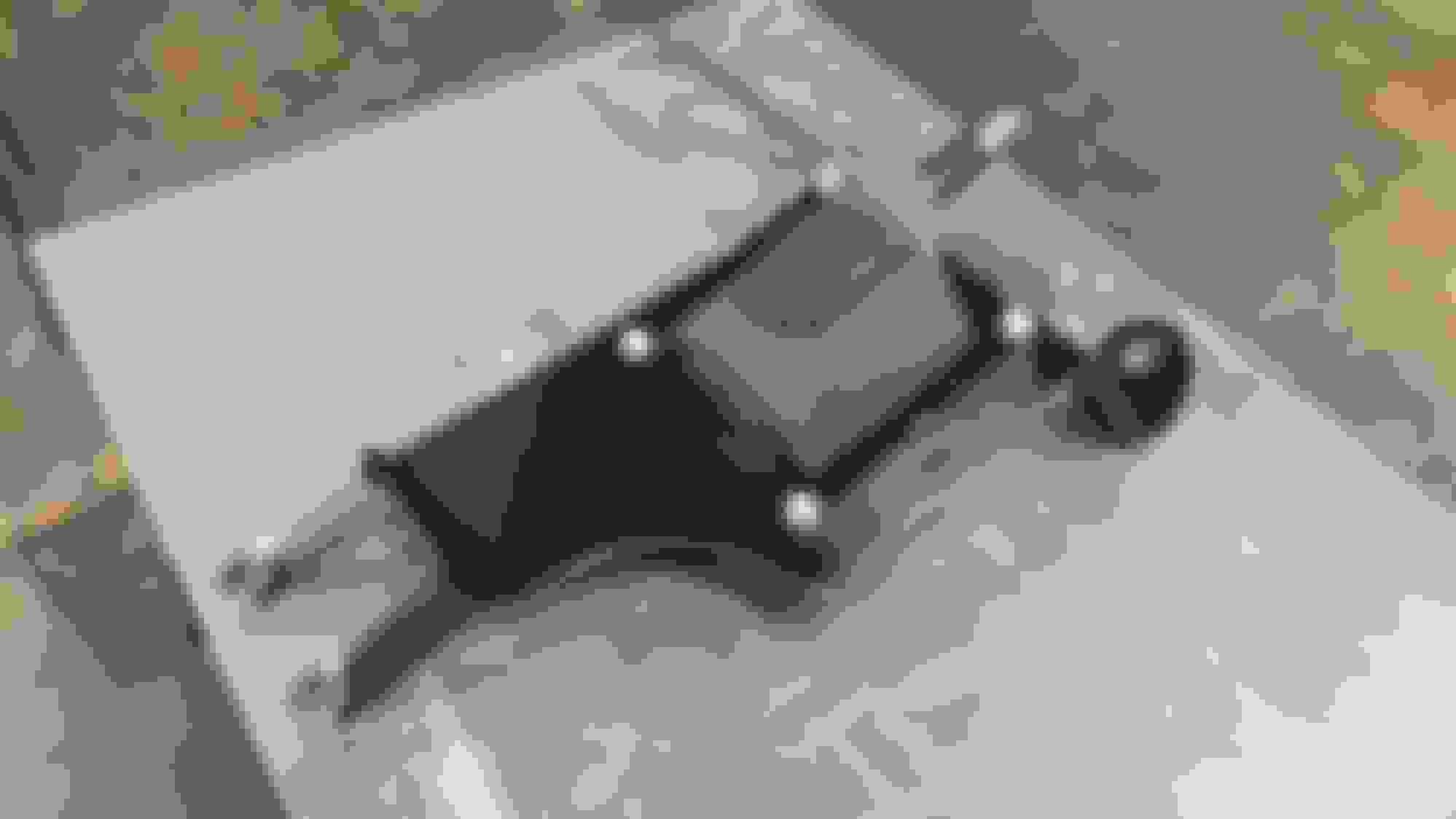
This is a factory E-core coil and bracket that came off of a 300 in an '84 F150. The bracket mounts to studs on the fuel pump. The E-core will have more fire power than an OEM cylindrical style oil-filled coil.
Your total advance is 30°. Vacuum advance is not figured into the total. 30° seems low but I don't know about 6cyl so someone else can elaborate on that.
You also don't operate that vacuum advance from the same vacuum source as the load-o-matic distributor. It needs either a ported or manifold vacuum source. Ported can only be provided by a proper carburetor. Manifold is pretty easy. There may already be a port in the manifold or carb. In lieu of that, there are carb spacers which can also provide a port.
Given the problems that vintage vibration dampers have it makes sense to set the initial timing with a vacuum gauge (certainly for test purposes) Put the timing light away for this.
Adjust for maximum vacuum at idle RPM and back off slightly from there, maybe 1" of vacuum, see how it runs at part throttle and highway cruise.
I don't remember the specifics, but it was out of a late 70's vehicle. I didn't have it tuned or tweaked or anything. I just got it and dropped it in.
The autolite 1101/1100 is the stock load-o-matic set up carb that would've come factory. When I used the autolite 1101 with the DSII it didn't have too much "oompf" at highway speeds. Poor response is the best way to put it I guess. It worked fine but there was a noticeable difference when I got a later carb on it.
Apologies for the bad pic but the autolite looks something like this
Thinlizzy 13, Thanks for pic of carb. I have an Autolite Carb and the tag reads Autolite DOPF E. It does NOT, look like your carb. My truck ran probably just as it should have with the original load-a-matic dizzy and carb. With the DSII, it runs better than ever, but, I did put in the Mr Gasket spring kit. I feel the spring kit was important as the the advance would not have started until way higher in the RPM range and it would have been very sluggish.
Given the problems that vintage vibration dampers have it makes sense to set the initial timing with a vacuum gauge (certainly for test purposes) Put the timing light away for this.
Adjust for maximum vacuum at idle RPM and back off slightly from there, maybe 1" of vacuum, see how it runs at part throttle and highway cruise.
Hey All, I don't understand how to respond to each in the thread without re posting everything. So I'll try here.
Tedster9, Thank You. I do have a reconditioned harmonic balancer. Added AC about 6 yrs ago and needed a 3 sheave balancer. I will try your vacuum gauge way of timing and compare to what I have now. Remember I have a stock engine, everyday driver (until the sand and salt hits the road). Cap
charleymccraney, Thank You. Interesting, remember the load-a matic dizzy was ALL vacuum advance and No centrifigal. The port has to be considered ported as it only advanced the spark as the throttle plate opened. I realize the little valve that looks like a power valve is call a spark advance valve and maybe it has manifold vacuum at it. Not sure just how it functions. With timing light hooked up and a slight crack of the throttle the vacuum chamber does advance the spark, tho be it ever so slightly, and I think about 5 degrees in my situation. That is why one of my questions was, does the allen wrench adjuster in the vacuum chamber adjust travel or the tension ( I know I should be able to test that question myself and I will) of the diaphragm? Vacuum advance not a part of total? It was the ONLY TOTAL with the Load-a-Matic. I appreciate your input and will consider all in your reply. Cap
ultraranger, Thank You. Great job on your cleanup and painting of components. I am using the 79 coil that came with the DSII dizzy and am very happy with the improved performance. Just to say, in CT you don't see many pic an pull junk yards, but we have one nearby, it's about time. I will be going for OEM blue grommet control box and I'll look for one of those coils. If reasonable I may try one.
Have you done anything with your advance springs or still stock. If still stock, when you do the conversion and if your using a timing light could you see at what RPM the centrifugal advance starts. That will be with vacuum line disconnected and plugged. Just curious. Cap
With your new distributor, which has mechanical and vacuum advance, if I'm understanding correctly, vacuum advance is not figured into the total. Load-O-Matic rules do not apply to the mechanical and vacuum distributor.
It does not matter if connecting to a particular port on that carb results in advance if that particular port does not produce the correct signal for the vacuum canister. You need ported or manifold vacuum. Whichever port you have it hooked to, you need to be sure that it is providing one or the other.
I don't know how the adjuster screw works. If I'm remembering correctly, it changes the amount of advance the vacuum chamber will provide.
OK Charlie, thanks for comeback. I will put a tee in the vacuum line from carb to dizzy, hook up to a test vac gauge in the cab and take a ride and see how and when the vacuum is applied. I'll also test to see what happens when I adjust the allen screw in the chamber.
On another note, I researched the tag on my carb. It is Autolite D0PF E
The D is Fords parts for the decade of 1970's
The 0 is for the year 1970
The P is for replacement part, meaning replacement of a previous part
The F is for Fuel system part/component
The E after space is probably applying to the 240 engine in trucks, as this carb was made to replace many in falcons, mustangs, other cars and trucks with different 6 cyl engines and all have different jettings and add ons.
So my truck appears to have a replacement carb and probably why it doesn't look like the one pictured by thinlizzy13.
Sorry about long delay getting back on this thread. Had to finish up black fishing season, pull the boat, and prep for winter. Then went hunting this past week. I took my truck for the week, about a 2 hr trip of highway and stop and go thru small towns and the same home again. The truck ran great. I have not changed anything since my last post, but hopefully I will do the testing mentioned in the previous post. I will say that on the highway it pulled the grades in OD with ease and previous I sometimes had to move over to slow vehicle lane.
Follow up. Tee in vac adv line, gauge on dash. Road test to see how the Load A Matic carb vac signal reacts. Accelerate it pulls 2"-3" vac, let engine speed catch up to throttle position and the signal gets stronger and will pull more and more inches as the RPMs go up. If you step down on accelerator for more power/speed, the vac signal drops instantly back to 2"-3". No wonder the L-A-M set up was lazy on grades, you lose a lot of advance immediately. I realize the springs in the L-A-M dizzy were quite light and probably kept some advance with 2"-3"of vac.
I could not do the testing with the advance timing light I borrowed, very old. When using the thumb wheel to roll the mark back to TDC the light flash became very erratic and made the mark jump around.
I understand the need to go to a newer carb with a true ported vacuum signal. The carb now with spark control valve, seems to modulate between ported and manifold vacuum. It dumps the ported, when you open throttle and loses the manifold vac. Before I go to a newer carb, I'm going to experiment with doing away with the spark control valve function. I'm not cheap but I don't like taking off this perfectly good performing carb and putting under the bench for my kids to throw away after I'm gone.
If you want to keep that carb, then simply use a manifold vacuum source.
Or leave the vacuum advance disconnected. In mechanical and vacuum distributors, the vacuum is an economy feature and is not an absolute necessity.
Thanks Charlie M. I will give manifold vac a try and with gauge still hooked up will also try initial timing by vac reading backing it down 1or 2 "s as mentioned by others.
One more question, has anybody installed an aluminum spacer plate between carb base and manifold to help prevent percolation of ethanol gas after hot shutdown? My float is at correct spec. I tried lowering the float but on long grades and pedal to the metal, stumble/power loss of power occurs. Setting float back to correct spec and no more stumble/power loss. It is a small opening thru the needle seat and I don't think the bowl fills fast enough. Fuel pump is fine, good vacuum and pressure test and holds its max after cranking.
This Hennessey Takes the Expedition Tremor's Off-Roading Capability to the Next Level
Slideshow: The VelociRaptor Expedition gains a lift, upgraded suspension, Brembo brakes, and trail-ready equipment while retaining the stock 440-horsepower EcoBoost V6.
Rezvani's Latest Post-Apocalyptic Monster Is a Ford F-150 Raptor Underneath
Slideshow: Called the Fortress, the 850-horsepower pickup combines Raptor underpinnings with military-inspired features, survival equipment, and a starting price of $285,000.