





When to Replace Injector Cups
Hotshot


Joined: Jan 2011
Posts: 18,849
Likes: 179
From: Puget Sound
This is my official test procedure - it has given instant results on more than one truck:
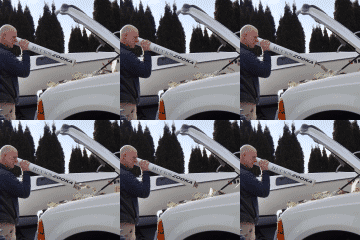
Here is an example with an inspection camera:
- With injectors out - drain the radiator, then drain coolant from the block (I pulled the plug-in heater next to the oil filter).
- Leaving the degas cap on - pull the small hose from the driver side of the degas bottle and cap the hose with a bolt or pen.
- Have a "volunteer" puff up the radiator with a rubber-tipped nozzle from an air compressor until the cap lets you know it's at max (it won't be subtle).
- Spray silicone spray (benign to the engine and sealant) into each cup and watch for bubbles. If the cup is at an odd angle, use a video camera (like your cell phone).
Here is an example with an inspection camera:

Post Fiend
Joined: Mar 2007
Posts: 26,966
Likes: 50
From: Texas
The cracked cups I've seen you could actually watch the water droplets form and then run down the cup with no additional pressure required.
Adding small amounts of pressure to the coolant system will help you see if there are any cup issues.
Adding small amounts of pressure to the coolant system will help you see if there are any cup issues.
Logistics Pro


Joined: Aug 2009
Posts: 3,609
Likes: 324
From: Arizona

I'd replace them when they fail (unless you have an early model engine and switched to ELC coolant, then I'd get out in front of it)
I replaced my factory injectors back around 300,000 miles. Left the factory cups in place. Now sitting over 515,000 miles and the factory cups are still doing just fine.
I replaced my factory injectors back around 300,000 miles. Left the factory cups in place. Now sitting over 515,000 miles and the factory cups are still doing just fine.
That is music to my ears. I have a 2002 as well with 163K on it right now and I am hoping to get the same life out of it as you. My miles are about 75% highway and I am meticulous about maintenance and fluid changes. My truck has never seen a programmer or chip either, what about yours? Not saying there's anything wrong with the right tunes but I figure if I am happy without them why do it?
Post Fiend
Joined: Mar 2007
Posts: 26,966
Likes: 50
From: Texas

Hotshot
Joined: Jan 2011
Posts: 18,849
Likes: 179
From: Puget Sound
I have the same experience, but I also had a bad cup seal that passed the pressurized coolant test... the air test caught it. Coolant is easier to seal than fuel or air. Think of it in terms of penetrating oil vs. 30 wt.
Post Fiend
Joined: Mar 2007
Posts: 26,966
Likes: 50
From: Texas
On factory cups, or cups that had been installed later? I wouldn't expect seal issues on factory cups unless it was an early truck that was running ELC.
FTE Stories
Ford Trucks for Ford Truck Enthusiasts

3 Best / 3 Worst Parts of Modern Ford Ownership
Brett Foote
10 Amazing Upgrades That Solve Common Ford Truck Owner Headaches
Pouria Savadkouei
Every 2026 Ford Engine Explained
Brett Foote
10 Ugly Ford Trucks That We Still Kinda Love
Joe Kucinski
10 Things Every Truck Owner NEEDS (2026 Edition)
Michael S. Palmer
Rezvani's Latest Post-Apocalyptic Monster Is a Ford F-150 Raptor Underneath
Verdad Gallardo
Top 10 Most Expensive Ford Trucks Ever Sold on Bring a Trailer
Joe Kucinski
2027 Ford Super Duty Buyer's Guide (Every Model, Engine, & Package)
Brett Foote
Top 10 Ford Truck Tragedies
Joe Kucinski
Thread
Thread Starter
Forum
Replies
Last Post
sand_fiend
1999 - 2003 7.3L Power Stroke Diesel
107
Sep 26, 2022 07:47 PM
queen of spades
1999 - 2003 7.3L Power Stroke Diesel
8
Apr 24, 2021 11:51 AM
brian42
1999 - 2003 7.3L Power Stroke Diesel
33
Jan 17, 2018 11:24 AM