





Father Son Project troubles

Thread Starter
|
Freshman User
Joined: Jul 2015
Posts: 31
Likes: 0
Father Son Project troubles
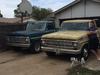
So me and my dad have been trying to rebuild this 72 f100 that we picked up in late April. When we got it the motor was pretty well shot and burned oil rather badly. The first thing we did was pull the stock 360 out of it and took it to a machine shop recommended to us by our neighbor (Has had a dozen or so motors through this shop with good luck on all of them) They tore the motor down and found that the heads were cracked and that most everything inside was pretty well worn out. So they started the rebuilding process to create a 390 out of the stock 360. They did everything top to bottom boring honing you name it. Once we finally got the motor back and everything installed back into the truck we got it running and followed the machinist's break-in procedures. The truck has run for about a total of 40-50 minutes at this point. It seemed like we had to advance somewhere in the neighborhood of 22-25 degrees BTDC(as indicated by the balancer) to get it to even run. We have had it running multiple times and now were trying to get it adjusted to where it would idle (would run good revved up but not near idle). It does not seem as though it wants to turn over at this point (have spark - not sure on fuel). Does anyone have base settings for the mastercraft 2 barrel that came on those trucks in 72? We have put a new distributor cap and wires on and have made sure that we have spark at approximately 0 on the balancer on the number one plug wire. Any suggestions would be greatly appreciated.

Cargo Master


Joined: Jul 2003
Posts: 2,730
Likes: 20
From: Four Oaks, NC
So me and my dad have been trying to rebuild this 72 f100 that we picked up in late April. When we got it the motor was pretty well shot and burned oil rather badly. The first thing we did was pull the stock 360 out of it and took it to a machine shop recommended to us by our neighbor (Has had a dozen or so motors through this shop with good luck on all of them) They tore the motor down and found that the heads were cracked and that most everything inside was pretty well worn out. So they started the rebuilding process to create a 390 out of the stock 360. They did everything top to bottom boring honing you name it. Once we finally got the motor back and everything installed back into the truck we got it running and followed the machinist's break-in procedures. The truck has run for about a total of 40-50 minutes at this point. It seemed like we had to advance somewhere in the neighborhood of 22-25 degrees BTDC(as indicated by the balancer) to get it to even run. We have had it running multiple times and now were trying to get it adjusted to where it would idle (would run good revved up but not near idle). It does not seem as though it wants to turn over at this point (have spark - not sure on fuel). Does anyone have base settings for the mastercraft 2 barrel that came on those trucks in 72? We have put a new distributor cap and wires on and have made sure that we have spark at approximately 0 on the balancer on the number one plug wire. Any suggestions would be greatly appreciated.

Fleet Owner
Joined: Dec 2009
Posts: 20,678
Likes: 82
From: NorCal
I'd verify TDC using a piston stop and reset the distributor. Note the timing pointer against the balancer... is it accurate? If not, the balancer could have slipped and that's what is giving a false timing reading. Either that or whomever set the timing chain lined it up incorrectly. Lightly mark TDC on the balancer otherwise..... now use 2 x pi x r to figure out the measurement of one degree of timing and mark 6 BTDC and 10 BTDC, respectively.
Second, rebuilding the carb requires setting the float level and then the idle mixture screws 2 to 2.5 turns out from bottomed (gently!). Set the cold choke at 1/8-inch from closed..... use a 1/8-inch drill bit on the forward wide of the choke horn. Of course, don't drop the bit! The instructions on base settings are in the rebuild instructions or a repair manual.
Verify the firing order and then fire it up with a tachometer, vacuum gauge, and timing light at the ready. Tune it.
Second, rebuilding the carb requires setting the float level and then the idle mixture screws 2 to 2.5 turns out from bottomed (gently!). Set the cold choke at 1/8-inch from closed..... use a 1/8-inch drill bit on the forward wide of the choke horn. Of course, don't drop the bit! The instructions on base settings are in the rebuild instructions or a repair manual.
Verify the firing order and then fire it up with a tachometer, vacuum gauge, and timing light at the ready. Tune it.
Thread Starter
|
Freshman User
Joined: Jul 2015
Posts: 31
Likes: 0
Thanks for the quick response everyone. I will be trying some of the suggestions in the morning. Would I be ahead to rebuild the carb? I haven't yet and I suppose that could be causing some issues? I will certainly get a vacuum gauge and find tdc on #1 again and check the balancer against that. The way we did it before was to have one of us put our thumb over the plug hole on 1 and then turn it over till it puffed air. We then used a plastic straw and hand turned the motor back and forth until we found tdc. Is that an accurate way to find the position of the piston? Thanks again everyone.

Laughing Gas

Joined: Mar 2013
Posts: 1,027
Likes: 5
From: Garner NC
Basic start settings are:
1. Lightly seat the mixture screws and then back out 1.5 turns.
2. Adjust Idle speed screw until it contacts the tab and then go an additional 1.5 turns.
Rebuilding the carb is a great idea. Use the Ford kit and not the repro stuff. The gaskets in the repro stuff are not right.
My first thought is you have a vacuum leak. Did you use new gaskets for the carb mount? (one above and one below the spacer)
1. Lightly seat the mixture screws and then back out 1.5 turns.
2. Adjust Idle speed screw until it contacts the tab and then go an additional 1.5 turns.
Rebuilding the carb is a great idea. Use the Ford kit and not the repro stuff. The gaskets in the repro stuff are not right.
My first thought is you have a vacuum leak. Did you use new gaskets for the carb mount? (one above and one below the spacer)
Trending Topics
Thread Starter
|
Freshman User
Joined: Jul 2015
Posts: 31
Likes: 0
I believe the stuff was a 5w30 race oil (br30 brand) that all the guys who dirt track race around here use for break-in/racing. I bought the oil from them in the amount they wanted me to put in. It's full on the dipstick as well.
FTE Stories
Ford Trucks for Ford Truck Enthusiasts

Top 10 Most Expensive Ford Trucks Ever Sold on Bring a Trailer
Joe Kucinski
2027 Ford Super Duty Buyer's Guide (Every Model, Engine, & Package)
Brett Foote
Top 10 Ford Truck Tragedies
Joe Kucinski
AEV FXL Super Duty - the Super Duty Raptor Ford Doesn't Make
Brett Foote
Lobo Vs Lobo: Proof the F-150 Lobo Should Be Even Lower!
Michael S. Palmer
Ford's 2001 Explorer Sportsman Concept Looks For a New Home
Verdad Gallardo
10 Best Ford Truck Engines We Miss the Most!
Joe Kucinski
2026 Shelby F-150 Off-Road: Better Than a Raptor R?
Brett Foote
2027 Super Duty Carhartt Package First Look: 12 Things You NEED to Know!
Michael S. Palmer
Thread Starter
|
Freshman User
Joined: Jul 2015
Posts: 31
Likes: 0
Basic start settings are:
1. Lightly seat the mixture screws and then back out 1.5 turns.
2. Adjust Idle speed screw until it contacts the tab and then go an additional 1.5 turns.
Rebuilding the carb is a great idea. Use the Ford kit and not the repro stuff. The gaskets in the repro stuff are not right.
My first thought is you have a vacuum leak. Did you use new gaskets for the carb mount? (one above and one below the spacer)
1. Lightly seat the mixture screws and then back out 1.5 turns.
2. Adjust Idle speed screw until it contacts the tab and then go an additional 1.5 turns.
Rebuilding the carb is a great idea. Use the Ford kit and not the repro stuff. The gaskets in the repro stuff are not right.
My first thought is you have a vacuum leak. Did you use new gaskets for the carb mount? (one above and one below the spacer)

Ford Parts Specialist
Joined: Nov 2006
Posts: 88,826
Likes: 785
From: Simi Valley, CA

So me and my dad have been trying to rebuild this 72 f100 that we picked up in late April. When we got it the motor was pretty well shot and burned oil rather badly. The first thing we did was pull the stock 360 out of it and took it to a machine shop recommended to us by our neighbor (Has had a dozen or so motors through this shop with good luck on all of them).
They tore the motor down and found that the heads were cracked and that most everything inside was pretty well worn out.
So they started the rebuilding process to create a 390 out of the stock 360. They did everything top to bottom boring honing you name it.
They tore the motor down and found that the heads were cracked and that most everything inside was pretty well worn out.
So they started the rebuilding process to create a 390 out of the stock 360. They did everything top to bottom boring
honing you name it.All it takes to convert a 360 to a 390, is to install the 390's crank, rods and pistons, everything else is the same.

Post Fiend
Joined: Apr 2002
Posts: 19,311
Likes: 97
From: Waterloo, Iowa
Hey Bubba, Welcome to FTE!
I also agree with the above advice. A vacuum gauge is a must for engine diagnostics. I screwed up years ago when I had my Y block rebuilt - threw a junkbox carb and distributor on. It ran but not very well. This was a big mistake. If an engine needs a rebuild it's guaranteed the distributor itself is shot, too.
20+ degrees initial timing seems unlikely, the starter would kickback. A slipped damper outer ring will cause a lot of confusion setting timing. A vacuum gauge works slick to set initial timing, no light required and the damper markings can be ignored. Damper will need replaced or rebuilt in this instance though. Vacuum gauge also excellent for carburetor tuning. Carbs can be rebuilt but there are some wear items that are overlooked or beyond the average mechanic to repair. Throttle plate shaft wears and the bores will get egg shaped and present a vacuum leak, impossible to tune right. Make sure it's a serviceable core to begin with. These can be drilled and bushings installed.
I also agree with the above advice. A vacuum gauge is a must for engine diagnostics. I screwed up years ago when I had my Y block rebuilt - threw a junkbox carb and distributor on. It ran but not very well. This was a big mistake. If an engine needs a rebuild it's guaranteed the distributor itself is shot, too.
20+ degrees initial timing seems unlikely, the starter would kickback. A slipped damper outer ring will cause a lot of confusion setting timing. A vacuum gauge works slick to set initial timing, no light required and the damper markings can be ignored. Damper will need replaced or rebuilt in this instance though. Vacuum gauge also excellent for carburetor tuning. Carbs can be rebuilt but there are some wear items that are overlooked or beyond the average mechanic to repair. Throttle plate shaft wears and the bores will get egg shaped and present a vacuum leak, impossible to tune right. Make sure it's a serviceable core to begin with. These can be drilled and bushings installed.
Thread Starter
|
Freshman User
Joined: Jul 2015
Posts: 31
Likes: 0
Hey Bubba, Welcome to FTE!
I also agree with the above advice. A vacuum gauge is a must for engine diagnostics. I screwed up when I had my Y block rebuilt - threw a junkbox carb and distributor on. It ran but not very well. This was a big mistake. If the engine needs rebuilt it's guaranteed the distributor itself is shot, too.
20 degrees initial seems unlikely, the starter would kickback. A slipped damper outer ring will cause a lot of confusion setting timing.
A vacuum gauge works slick to set initial timing, no light required and the damper markings can be ignored. Damper will need replaced or rebuilt in this instance though.
Carbs can be rebuilt but there are some wear items that are overlooked or beyond the average mechanic. Throttle plate shaft and bores will get egg shaped and present a vacuum leak, impossible to tune right. Make sure it's a serviceable core to begin with.
I also agree with the above advice. A vacuum gauge is a must for engine diagnostics. I screwed up when I had my Y block rebuilt - threw a junkbox carb and distributor on. It ran but not very well. This was a big mistake. If the engine needs rebuilt it's guaranteed the distributor itself is shot, too.
20 degrees initial seems unlikely, the starter would kickback. A slipped damper outer ring will cause a lot of confusion setting timing.
A vacuum gauge works slick to set initial timing, no light required and the damper markings can be ignored. Damper will need replaced or rebuilt in this instance though.
Carbs can be rebuilt but there are some wear items that are overlooked or beyond the average mechanic. Throttle plate shaft and bores will get egg shaped and present a vacuum leak, impossible to tune right. Make sure it's a serviceable core to begin with.
Thread Starter
|
Freshman User
Joined: Jul 2015
Posts: 31
Likes: 0
1968/76 F100/350 360/390 use the same cylinder heads and engine block. The bore (4.05") is the same, the stroke is different: 360 = 3.50" ~ 390 = 3.78."
All it takes to convert a 360 to a 390, is to install the 390's crank, rods and pistons, everything else is the same.
All it takes to convert a 360 to a 390, is to install the 390's crank, rods and pistons, everything else is the same.
Thread Starter
|
Freshman User
Joined: Jul 2015
Posts: 31
Likes: 0
Update: my neighbor who's good with hotrods finally had a chance to come and look at it. He said vacuum and everything else looks fine but that I'm definitely running out of fuel - have to keep pumping it to keep it running. Said timing seems in the neighborhood just by listening. And that the fuel pump is definitely getting good pressure to the carb because when we took that line off fuel came squirting out from the fuel pump side.