When you click on links to various merchants on this site and make a purchase, this can result in this site earning a commission. Affiliate programs and affiliations include, but are not limited to, the eBay Partner Network.
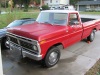
Got a 78 f150 with a 9in rear end not sure if it'd limited slip or open and I'm about to change the diff fliud and don't wanta p8t the wrong stuff in or leave out the additive for limit slip. How can I tell without jacking up the rear end and spinning the tires or finding ggravel and dropping the clutch? Only numbers I could find are on the diff cover as seen in picture
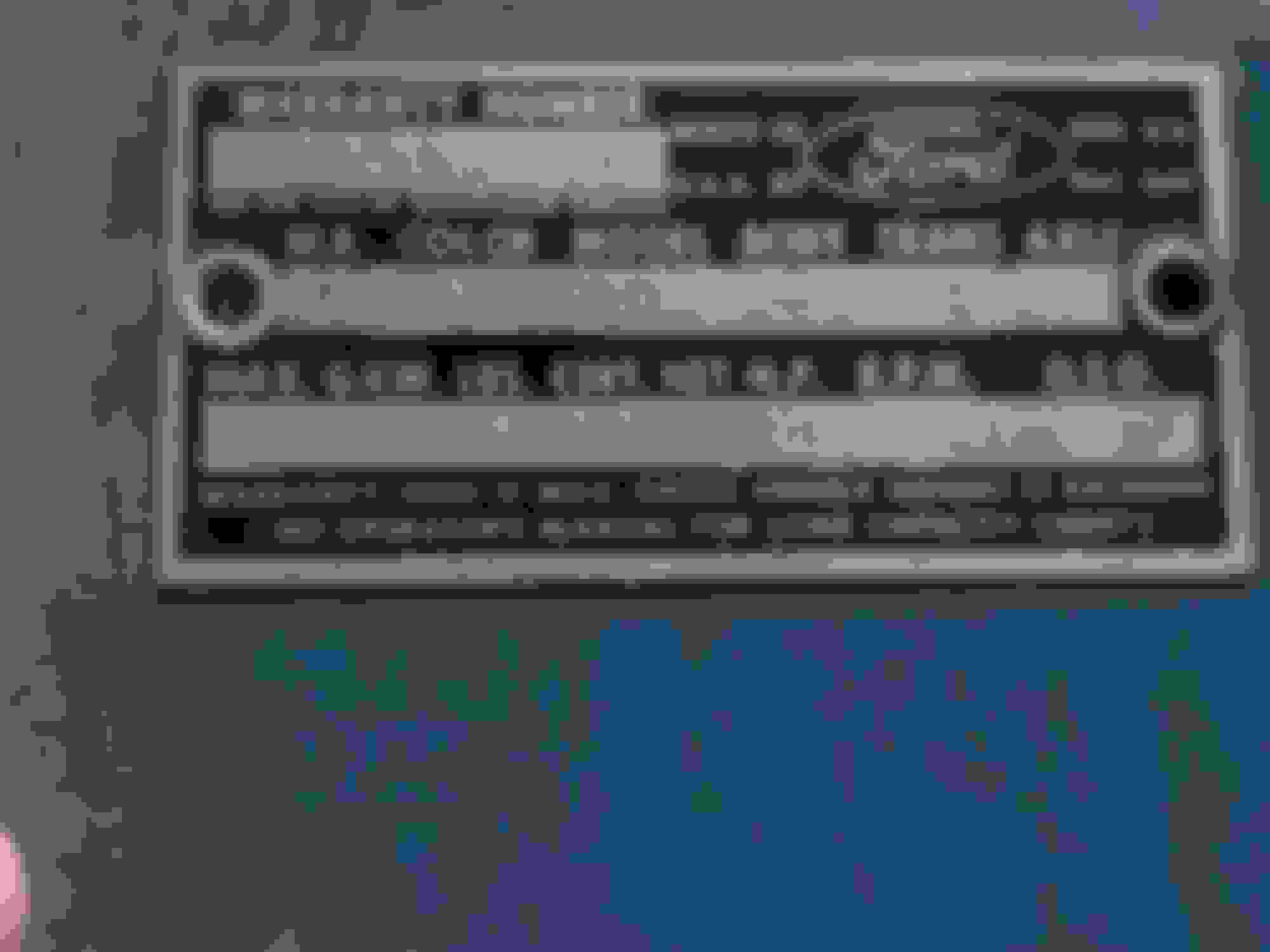
1. If the axle code on the warranty tag on your door starts with a letter, it's limited-slip; if with a number, it's not.
2. If you jack the rear end up with the truck in neutral and spin one wheel and the other spins the same direction, it's limited-slip; if opposite direction, it's not.
Also, if you put the fluid that includes friction modifiers for limited-slip axles in an open rear end, it won't hurt anything (other than costing an extra couple bucks); if you have a limited-slip rear end and don't use the friction modifier, the clutches won't work properly.
Before I change the fluid it's leaking from here. I'm guessing there's a seal in there that has to be changed? What's it called and how would I change it ?
1. If the axle code on the warranty tag on your door starts with a letter, it's limited-slip; if with a number, it's not.
2. If you jack the rear end up with the truck in neutral and spin one wheel and the other spins the same direction, it's limited-slip; if opposite direction, it's not.
Also, if you put the fluid that includes friction modifiers for limited-slip axles in an open rear end, it won't hurt anything (other than costing an extra couple bucks); if you have a limited-slip rear end and don't use the friction modifier, the clutches won't work properly.
There are exceptions to the turning the wheel/tire test to determine if limited slip or not. My truck is one of those exceptions. I have a Ford 9-inch Daytona N-case 31-spline 3rd member with a Traction-Lok differential in the 9-inch rear end of my '69 Ranger.
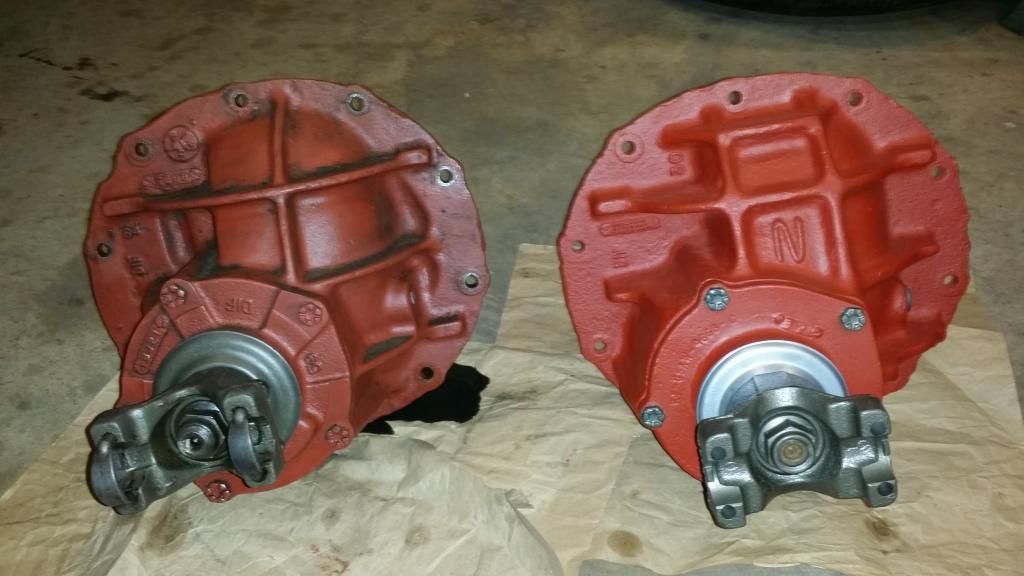
My stock '69 9-inch C7AW-E 3rd member casting with an open differential, 28-splines and 3.50 gears on the left. '75 Daytona N-case 9-inch 3rd member with 4-pinion, 31-spline, TL differential and 3.50 gears on the right.
I bought the N-case TL 3rd member years ago from a wrecking yard '75 F150 4x4. I recently installed the 3rd member when I swapped my truck from 28-spline axles to 31-spline.
I took a chance that the TL differential would work as it should. However, the clutches are apparently pretty worn since the wheels will spin in opposite directions, just like it has a single track (open) differential. This means I get to pull the 3rd member at a later date to rebuild the TL differential.
There are no drain plugs in the 9-inch rear end housings --Ford stopped putting drain plugs in the 9-inch rear end housings in 1959.
You could run a hose through the fill/sight plug on the left side of the 3rd member and suction the old gear oil out but, you won't get ALL the old gear oil or gunk out of the housing this way.
The best thing to do is to pull the axles out and then remove the 3rd member from the housing. This will allow you to swab all the old oil and debris out of the housing sump and get a good look at the condition of the teeth on the ring and driving pinion --while you're at it, you can count the number of teeth on the ring gear, divide it by the number of teeth on the driving pinion gear and you will know/verify your exact rear end ratio.
While you have the 3rd member out, you'll be able to actually see if it has an open (single track) differential or, whether it has a Traction-Lok differential.
If it's an open differential, there will be (10) ring gear bolt heads that would require a 3/4" wrench/socket to loosen/tighten. --not that you have to take the ring gear bolts loose, you would just see what size wrench/socket fits the bolt heads to determine what differential type it is.
If the differential is a TL, the ring gear bolts would require a 5/8" socket. The TL ring gear bolt heads are partially shrouded by the differential casting. You will not be able to get an end wrench on them, --only a socket.
9-inch Traction-Lok differential on left, open differential on right.
The fluid leak is likely from the pinion seal. The seal can be bought from your local parts store. --however, this is an area where you need to be careful since replacing it means taking the drive shaft yoke loose. Once you do this, the preload on the driving pinion bearings will be lost.
If you take the yoke off, first, take a paint pen and make a reference mark on one side of the tip of the driving pinion stem, across one side of the nut, onto the yoke and onto the 3rd member casting as a reference mark, so that everything can be lined back up when you reassemble.
You'll need a 1-1/16" socket to take the large nut loose from the stem of the driving pinion and you really need a beam-type torque wrench to read the amount of break away torque it takes to break the nut loose (write this figure down). Count the number of revolutions (referenced off the paint pen mark) it takes to remove the nut from the stem and write this figure down.
DON'T use an impact to remove or install the nut! The rapid vibrations can cause brinnelling (pitting/chips) on the roller bearings and race surfaces which will damage them.
Rezvani's Latest Post-Apocalyptic Monster Is a Ford F-150 Raptor Underneath
Slideshow: Called the Fortress, the 850-horsepower pickup combines Raptor underpinnings with military-inspired features, survival equipment, and a starting price of $285,000.