4th radiator

Official Ford Rep
Joined: Oct 2010
Posts: 3,123
Likes: 6
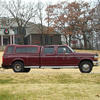
Just got the bad news pressure check failed radiator leaking lower driver side Wow who would have known. And the service rep acted like he has never heard of this problem before I will be messaging Crystal about this I guess in the meantime I'll pick it up and add antifreeze is needed
Crystal

Logistics Pro


Joined: Jan 2013
Posts: 3,778
Likes: 153
SOME engines have a mgt system that will auto shut down the engine at a certain temp or oil pressure in order to save the engine from catastrophic damage...this is a good thing, I KNOW for a fact, its saved me the cost of a new diesel, when mine shut down for low oil pressure due to a hole in a oil pan from hitting something on the highway.
Official Ford Rep
Joined: Oct 2010
Posts: 3,123
Likes: 6
Thanks for letting me know, dmdmace. I believe you may need to have at least 10 posts before you can PM. As a next step, you can contact the Customer Relationship Center at 1-800-392-3673; they have the same ability to assist that I do. If you'd prefer, you can send the details I requested to custserv@ford.com. This email address isn't actively monitored, so please put my name ("Crystal") in the subject line and post here once you've sent it. That's how I'll know to go and track down your message.
Crystal
Crystal
Official Ford Rep
Joined: Oct 2010
Posts: 3,123
Likes: 6
Crystal

New User
Joined: Jan 2016
Posts: 14
Likes: 0
Will this all of sudden just start gushing out or will it get worse over time? Mine is leaking and trying to get ahold of Crystal but can't pm yet. Sent email to Customer Service but have not gotten response.
FTE Stories
Ford Trucks for Ford Truck Enthusiasts

Top 6 Best Deals Available on New Fords & Lincolns Right Now
Brett Foote
This Hennessey Takes the Expedition Tremor's Off-Roading Capability to the Next Level
Verdad Gallardo
Top 10 Fords at 2026 Carlisle Ford Nationals
Joe Kucinski
3 Best / 3 Worst Parts of Modern Ford Ownership
Brett Foote
10 Amazing Upgrades That Solve Common Ford Truck Owner Headaches
Pouria Savadkouei
Every 2026 Ford Engine Explained
Brett Foote
10 Ugly Ford Trucks That We Still Kinda Love
Joe Kucinski
10 Things Every Truck Owner NEEDS (2026 Edition)
Michael S. Palmer
Rezvani's Latest Post-Apocalyptic Monster Is a Ford F-150 Raptor Underneath
Verdad Gallardo
Freshman User
Joined: May 2009
Posts: 34
Likes: 0
From: Stockton, CA
Stray Current / Electrolysis theory
Reading all the threads associated to this topic I'd agree there must be a common element causing the leaking that's not being addressed through the replacements. One or two posters mentioned stray current (which causes electrolysis) and wondering if the trucks having these failure have aftermarket electrical additions and or changes to the factory wiring/electrical systems?
I remember in the 90's GM had a really problem with intake manifolds leaking which they finally addressed through grounding straps, gasket material and probably other elements. The element causing the failures was stray current caused by grounding loops.
Anyone out there who may be in or around the marine industry, or may own a boat that sits --especially-- in saltwater knows the hazards and severe ramifications of electrolysis caused by stray voltage. If there is an electrical issue unresolved it will eat through large and expensive metal quickly and relentlessly.
Just wondering if something similar is going on, especially with two different radiator manufactures ending up with the same problem?
Do you have aftermarket electrical equipment and or wiring modifications?
I remember in the 90's GM had a really problem with intake manifolds leaking which they finally addressed through grounding straps, gasket material and probably other elements. The element causing the failures was stray current caused by grounding loops.
Anyone out there who may be in or around the marine industry, or may own a boat that sits --especially-- in saltwater knows the hazards and severe ramifications of electrolysis caused by stray voltage. If there is an electrical issue unresolved it will eat through large and expensive metal quickly and relentlessly.
Just wondering if something similar is going on, especially with two different radiator manufactures ending up with the same problem?
Do you have aftermarket electrical equipment and or wiring modifications?

New User
Joined: Jun 2017
Posts: 5
Likes: 0
Dang you stopped the video just when the good fishing hole was coming up. That's some good looking & pretty scenery. You are right it's rough & I'm not sure if I could drive it every day. I'd have to retire then drive in town when I wanted. 😁 Where's that at or what state.

Posting Guru
Joined: Dec 2015
Posts: 1,040
Likes: 9
I haven't read the entire thread, but I did read a Mishimoto representative who said that the problem is likely caused by the cab bushings becoming crushed into non-function. The cab then rests on the frame and exacerbates frame flex which in turn cracks the radiator. The solution is to replace the bushings with after market bushing (poly?) as the OEM can completely deteriorate after 5-7 years. If you look at videos on replacing the cab bushings, you will see how bad it is. Any cab off work should include bushing replacement.
Logistics Pro
Joined: Jan 2013
Posts: 3,778
Likes: 153
I haven't read the entire thread, but I did read a Mishimoto representative who said that the problem is likely caused by the cab bushings becoming crushed into non-function. The cab then rests on the frame and exacerbates frame flex which in turn cracks the radiator. The solution is to replace the bushings with after market bushing (poly) as the OEM can completely deteriorate after 5-7 years. If you look at videos on replacing the cab bushings, you will see how bad it is. Any cab off work should include bushing replacement.
I had an off road shop back then and was building a lot of rigs and I investigated poly and took a pass on it due to high durometer vs OEM Rubber.
On the frame to cab I would not use poly due to the vibration that is transmitted. Poly falls just short of Alum pucks (which I used instead of poly on body lifts, but what I did was mate an Alum puck with and OEM Bushing.
I could have used poly, but poly does bring with it some servicing such as greasing about every 4 years, this keeps them from drying out.
There is a place for poly on vehicles and you gain in longevity vs OEM, but if vibration is a concern and with a radiator it certainly is I would take a pass on poly...IMO!
Posting Guru
Joined: Dec 2015
Posts: 1,040
Likes: 9
I am sorry, but I have to disagree on that. Poly was the RAGE in the early 2000's and the off road crowd drank it up like beer coming out of a Kool Aid machine.
I had an off road shop back then and was building a lot of rigs and I investigated poly and took a pass on it due to high durometer vs OEM Rubber.
On the frame to cab I would not use poly due to the vibration that is transmitted. Poly falls just short of Alum pucks (which I used instead of poly on body lifts, but what I did was mate an Alum puck with and OEM Bushing.
I could have used poly, but poly does bring with it some servicing such as greasing about every 4 years, this keeps them from drying out.
There is a place for poly on vehicles and you gain in longevity vs OEM, but if vibration is a concern and with a radiator it certainly is I would take a pass on poly...IMO!
I had an off road shop back then and was building a lot of rigs and I investigated poly and took a pass on it due to high durometer vs OEM Rubber.
On the frame to cab I would not use poly due to the vibration that is transmitted. Poly falls just short of Alum pucks (which I used instead of poly on body lifts, but what I did was mate an Alum puck with and OEM Bushing.
I could have used poly, but poly does bring with it some servicing such as greasing about every 4 years, this keeps them from drying out.
There is a place for poly on vehicles and you gain in longevity vs OEM, but if vibration is a concern and with a radiator it certainly is I would take a pass on poly...IMO!
Logistics Pro
Joined: Jan 2013
Posts: 3,778
Likes: 153
No need to apologize, I don't mind learning something new. If you watch some of the bushing replacement videos, the OEM material just disintegrates after about 7 years. There has got to be something better than your cab riding on metal. Ford used something different up to around 2007 then switched to the crumbly stuff. I would love to know what both cushions and is durable. With the crew cab, I believe there are 6 or 8 bushings. The front bushings are probably responsible for radiator damage.
My bet, body pucks are all about the same size...BUT different durometers. In the case of Jeep, there are 3, Grand Cherokee, Cherokee, Jeep Wrangler, going form Soft, firm and extra firm respectively.
If radiator failure is an issue and it seems to be in this case I would talk with FORD and ask about the sizes and differences in durometers. If 4 radiators failed something is really wrong somewhere.
Here is a conversion I was doing. There are 4 pucks. 2 Alum stacked and on top (left arrow), then 2 OEM pucks, on top of the frame mount, one under (right arrow).
This is a 2" body lift on a TJ. I will cut off the body mount and raise it 1 in. I then remove 1 of the Alum pucks, put it back together again and still retain the 2 in body lift with out putting lateral stressors on the mounting bolt (possible failure) and moving up the body mount to clear rocks. Depending upon the client and their desires I might put on Grand Cherokee OEM rubber to get a smoother ride to mitigate suspension mods that gave a harsher ride.