


Code 173
Thread Starter
|
New User
Joined: Dec 2014
Posts: 14
Likes: 0
From: Buford, GA
Code 173
This is a great site. I have read a lot that has helped me get my $500 Ford back on the road after sitting for 10 years. Thanks for everyone's posts.
I have run into one little issue that I can't seem to resolve. In metro Atlanta, I have to pass an emissions test before I can get a tag. I failed the first one and just failed the second. The EEC test showed code 173, which I read is running rich and could be the O2 sensor. I disconnected the battery for 30 minutes, installed the new O2 sensor, failed the second time. What other things could cause 173?
Thanks
I have run into one little issue that I can't seem to resolve. In metro Atlanta, I have to pass an emissions test before I can get a tag. I failed the first one and just failed the second. The EEC test showed code 173, which I read is running rich and could be the O2 sensor. I disconnected the battery for 30 minutes, installed the new O2 sensor, failed the second time. What other things could cause 173?
Thanks
Logistics Pro
Joined: Mar 2005
Posts: 4,698
Likes: 47
From: Mexico, Missouri
Did you already perform a tune up?
I would be inclined to check both the ECT and ACT sensors. You should check both when cold and then when up to operating temp. The resistance for each sensor should be close to each other when cold and the same when hot. If either are not close to each other in value when cold and warm, then they should be replaced. They seldom throw a code unless the KOEO or KOER sees them cold when those tests are performed. When those tests are performed, engine should be at operating temp.
I would check those 2 sensors since they can have a negative impact on the engine and emissions, and they may never throw a code for either.
Also, when I mentioned tune up, when was the last time the air filter was changed?
Just a couple of ideas.
I would be inclined to check both the ECT and ACT sensors. You should check both when cold and then when up to operating temp. The resistance for each sensor should be close to each other when cold and the same when hot. If either are not close to each other in value when cold and warm, then they should be replaced. They seldom throw a code unless the KOEO or KOER sees them cold when those tests are performed. When those tests are performed, engine should be at operating temp.
I would check those 2 sensors since they can have a negative impact on the engine and emissions, and they may never throw a code for either.
Also, when I mentioned tune up, when was the last time the air filter was changed?
Just a couple of ideas.

Fleet Owner


Joined: Oct 2005
Posts: 20,789
Likes: 1,753
From: Kentucky
Did you already perform a tune up?
I would be inclined to check both the ECT and ACT sensors. You should check both when cold and then when up to operating temp. The resistance for each sensor should be close to each other when cold and the same when hot. If either are not close to each other in value when cold and warm, then they should be replaced. They seldom throw a code unless the KOEO or KOER sees them cold when those tests are performed. When those tests are performed, engine should be at operating temp.
I would be inclined to check both the ECT and ACT sensors. You should check both when cold and then when up to operating temp. The resistance for each sensor should be close to each other when cold and the same when hot. If either are not close to each other in value when cold and warm, then they should be replaced. They seldom throw a code unless the KOEO or KOER sees them cold when those tests are performed. When those tests are performed, engine should be at operating temp.
Warm the truck up then run the Key On Engine Off tests and stored (Continuous Memory) code display. If nothing is flagged as out of specification then it is HIGHLY advised to measure the sensors using voltage feedback or simple resistance checks.
I would also throw in measuring the MAP sensor and inspect the Fuel Pressure Regulator for signs of a leaking diaphragm, a very common failure mode. Cycle the key On/Off a few times, then pull the vacuum hose off the FPR. Look for signs of fuel leaking out the vacuum port by sight and smell. Replace if necessary.
Some good reference material here, be patient it may take a bit to load: http://oldfuelinjection.packrad.net/
Logistics Pro
Joined: Mar 2005
Posts: 4,698
Likes: 47
From: Mexico, Missouri
Take both an ECT and ACT sensor and lay them on the table. Each sensor will read within each other after a short while. I just happen to have one of each lying inside the house, next to the computer. The ACT read 31.40 k and the ECT read 31.30. Both are Motorcraft sensors. The exception to this, would be the IAT sensor which was implemented into the airbox on MAF equipped trucks and cars. The incoming air is cooler than the coolant, so the IAT will have a higher resistance versus the ECT. The IAT is the latter version of the ACT.
There may be a slight difference in the resistance values once warmed up, as coolant will hold heat. When the sensors heat up, the resistance starts to drop, but as the sensor's cool off, the resistance of the sensor increases. But the ACT sensor should read close to the ECT sensor when taking a cold, non-operating temp and then an operating temp. If the IAT sensor is being checked, then it would have a higher resistance, since its located in the air box and not originally in the intake manifold.
Hope that cleared the confusion, as I believe the OP has a MAF 5.0.
There may be a slight difference in the resistance values once warmed up, as coolant will hold heat. When the sensors heat up, the resistance starts to drop, but as the sensor's cool off, the resistance of the sensor increases. But the ACT sensor should read close to the ECT sensor when taking a cold, non-operating temp and then an operating temp. If the IAT sensor is being checked, then it would have a higher resistance, since its located in the air box and not originally in the intake manifold.
Hope that cleared the confusion, as I believe the OP has a MAF 5.0.
Fleet Owner
Joined: Oct 2005
Posts: 20,789
Likes: 1,753
From: Kentucky
resistance cold vs. warm....

Trending Topics
Thread Starter
|
New User
Joined: Dec 2014
Posts: 14
Likes: 0
From: Buford, GA

Thanks a lot. I'll check all this tomorrow. Hopefully, it will stop raining here.
It's getting there.......
FTE Stories
Ford Trucks for Ford Truck Enthusiasts

3 Best / 3 Worst Parts of Modern Ford Ownership
Brett Foote
10 Amazing Upgrades That Solve Common Ford Truck Owner Headaches
Pouria Savadkouei
Every 2026 Ford Engine Explained
Brett Foote
10 Ugly Ford Trucks That We Still Kinda Love
Joe Kucinski
10 Things Every Truck Owner NEEDS (2026 Edition)
Michael S. Palmer
Rezvani's Latest Post-Apocalyptic Monster Is a Ford F-150 Raptor Underneath
Verdad Gallardo
Top 10 Most Expensive Ford Trucks Ever Sold on Bring a Trailer
Joe Kucinski
2027 Ford Super Duty Buyer's Guide (Every Model, Engine, & Package)
Brett Foote
Top 10 Ford Truck Tragedies
Joe Kucinski
Post Fiend


Joined: Mar 2002
Posts: 19,402
Likes: 38
From: Bonita Springs FL
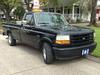
That's a really nice looking $500 truck. I hope you figure out what's going on.
For pulling codes, get an Innova 3145. They're $30 and they make reading codes much easier and more accurate. People trying to read codes with a paperclip misread them ALL the time and end up chasing a problem they don't have. Plus the book that comes with it is a trove of useful information.
Does this truck have mass air? If it is, there will be a sensor nearer the intake side of the air tube(s). That sensor can get dirty and throw off A/F ratios.
For pulling codes, get an Innova 3145. They're $30 and they make reading codes much easier and more accurate. People trying to read codes with a paperclip misread them ALL the time and end up chasing a problem they don't have. Plus the book that comes with it is a trove of useful information.
Does this truck have mass air? If it is, there will be a sensor nearer the intake side of the air tube(s). That sensor can get dirty and throw off A/F ratios.
Thread Starter
|
New User
Joined: Dec 2014
Posts: 14
Likes: 0
From: Buford, GA

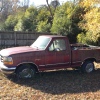
Thanks. It's cleaned up pretty well. It does have a mass air flow sensor. I've cleaned it, but I guess it could be bad. I may take your advice if that thing is only $30. This is how I found the thing.
Mountain Pass

Joined: Jun 2013
Posts: 113
Likes: 0
Sorry to bump an old thread, but how'd this work out for you OP? Hunting a code 173 gremlin myself.

Thread
Thread Starter
Forum
Replies
Last Post