When you click on links to various merchants on this site and make a purchase, this can result in this site earning a commission. Affiliate programs and affiliations include, but are not limited to, the eBay Partner Network.
Yeah the Torque App and an OBDII dongle, if you have a smart phone. Then with that you can start asking about why your ICP pressure drops off at the top end and you'll be able to say you know for sure it's not a fuel pressure problem because your new gauge says you're making XXpsi at WOT
I have an edge cts for gauges which I believe will monitor my icp and duty cycles. Could you go into a little depth as to what numbers I'm looking for?
Now that you have more than 20 posts you can fill out your signature in the "user CP" and your location. That way folks can better see your setup and help you out with the more specific questions & issues.
Now to get back on topic:
Basically there are two items that everyone thinks you should check.
1. fuel pressure
2. Your HPOP's health
1. The fuel pressure can easily be checked with a gauge plugged into one of the ports/plugs of the fuel bowl so you can see what pressure the injectors are receiving. Being that you live in North Dakota it would be a very useful gauge by giving you some heads up if you start to get any fuel gelling as well.
For example - The ISSPRO electric gauge in the cab or a mechanical gauge under the hood. Many prefer the in cab electrical gauge so you can see the fuel pressure under various conditions while driving. But occasionally the sending units get flaky and need to be replaced. Not that often but not that uncommon either.
Since you are planning to do the Hutch mod anyway you will remove the restriction & screens in the mixing chamber but the gauge will still help verify the condition of the pump and if there is a restriction somewhere else. The fuel pressure gauge comes in very handy when troubleshooting.
What you are after is to determine if your HPOP can keep up with the demand from the program, whether it is from the stock PCM or a chip. This is what John & Rich were getting at.
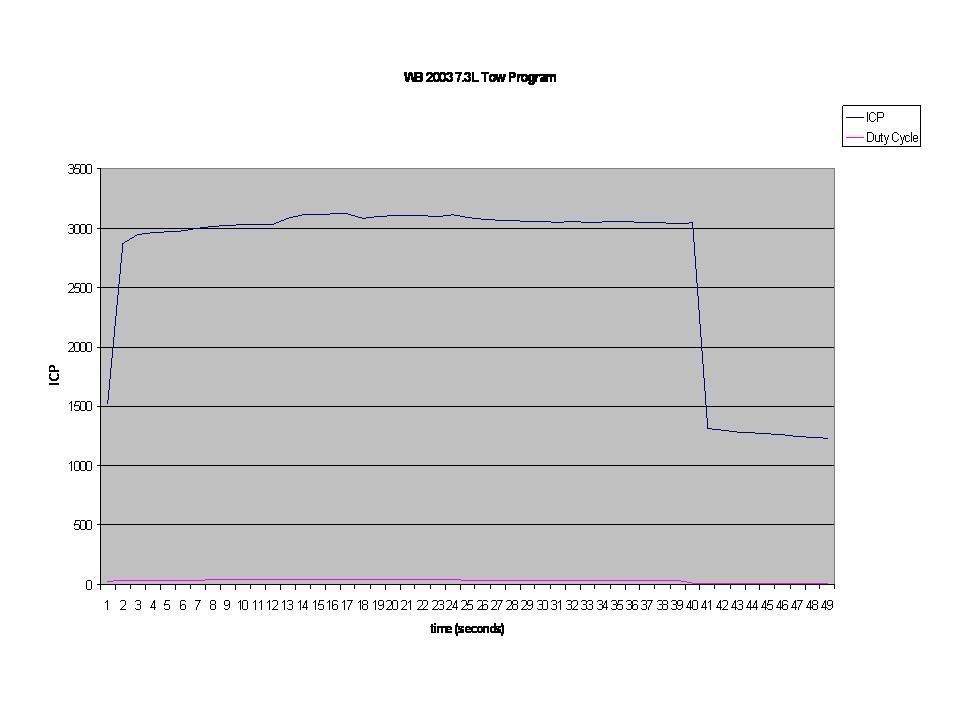
By looking at the ICP and duty cycle you can basically check the health of your HPOP. What you want is a pump that can maintain pressure. I can't recall what the stock PCM will call for but basically once it max's out (John said somewhere around 2800 psi) you want it be able to maintain pressure like in this graph.
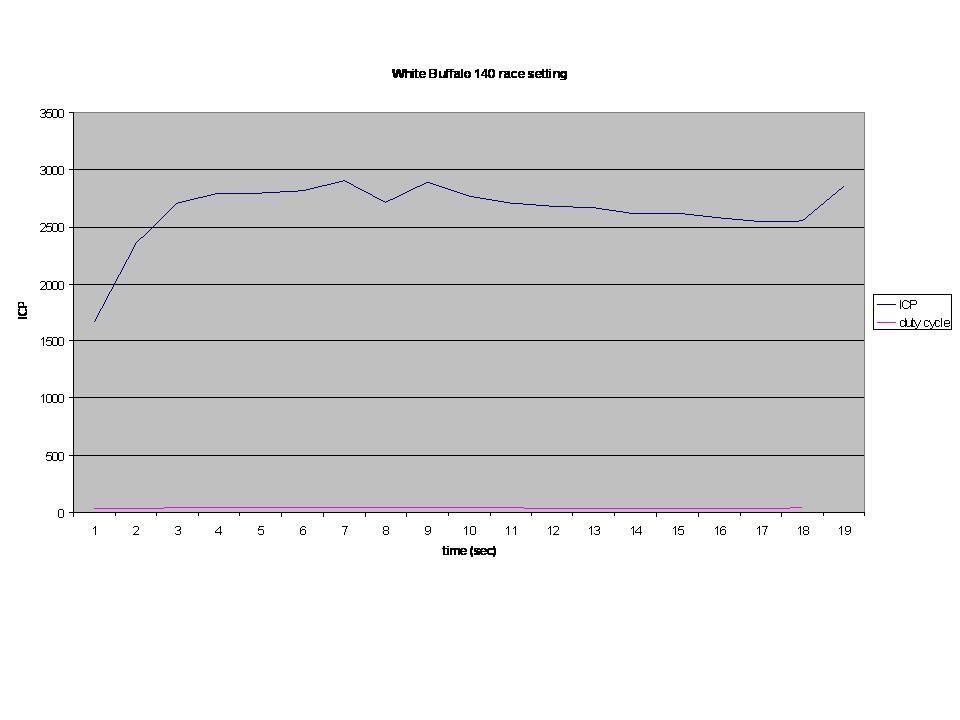
What you don't want to see in a stock program is the pressure bleeding off like in this graph. What eventually happens when a HPOP can't keep up with the demand is the ICP continues to drop and the duty cycle continues to raise. Once the duty cycle hits something around 53% or the ICP is way off you will trip a check engine light from a P1211 code.
So, by monitoring ICP & duty cycle you can check the health of your HPOP to see if this is the cause of your top end power loss. But this is also a very good idea to do prior to any chip install. That way you will know if your stock HPOP will be able to "keep up". It most likely won't in the high HP programs but a healthy HPOP will be able to keep up in the tow & daily driver programs.
If your ever in the Sioux Falls area feel free to stop on by for some coffee or a beer - always happy & willing to BS about the 7.3L & Excursions!
...Anything other than the pre pump kit you would recommend?
Frp rebuild kit?
Riffraff frx?
I have a generic pump in now was gonna either put in an oem Bosch but was seeing stuff about a walbro too, and keep the generic one as a spare.
Many will sing praises of Walbro, some will curse at it. Walbro was not specifically engineered for Diesel - it's a gas pump that happens to have the performance specs us 7.3L drivers like. While it performs fine for many, there may be nuances in the engineering that prevent the Walbro from being ideal. The OEM Bosch is ideal, but it's a Buck$Zooka round - not something from the Quarter Caliber clip.
Frp Rebuild kit? If you mean IPR rebuild kit - maybe not just yet. We need ICP/IPR/FIPW data before we start accusing any one part of not stepping up.
FRx addresses the deadhead issue, and can help with cackle - but it won't solve a power problem.
As for pre-pump, I just say make everything in the tank as simple as possible (simple frequently translates to more reliable). Put a pre-pump screen in line to take the job of the screens removed from the tank. Pre-filters have a very real potential for restricting the fuel flow - I got a piece of this one before I installed the screen.
I applaud you for wanting the truck 100%, rather than masking problems with a tune. I feel this is a sound scheme for augmenting the reliability of the truck.
You asked about the Motorcraft ICP sensor - that's a good part. I'm more curious about the ICP itself (Injector Control Pressure). Stock WOT ICP is between 2400 and 2800, depending on the vehicle and year. What's important is the IPR, and you won't find an aftermarket gauge for that - you will get that on your scan tool/gauge. If your IPR starts climbing to try to keep the max ICP, that's a problem. If IPR goes significantly over 40% at WOT, even if it's stable - that's bad. If your IPR idles 11% or more with an ICP of 475-500 PSI on a warm engine, more details are needed - but lower IPR is better.
If you determine your ICP/IPR is doing something odd, knowing the FIPW may be helpful... or not.
Now... if the IPR values are getting as high as a student at U of W or U of C, more testing may be needed to see if it's the IPR, the HPOP, injector O-rings, injectors, or something else. As mentioned before, a sagging ICP and climbing IPR at higher RPMs will cause exactly what you describe.
I figured the extra weight would slow it down some, I also have tires a little bigger than stock but I feel like the difference in speed was more than these two things as the culprit.
My shifts are longer than my truck too but I think that's only because it takes twice as long to reach 3k rpm. My truck usually taps the red line before every WOT shift and my X will rarely ever touch it it just doesn't have the *****.
Which PCM code do you have for the Excursion? AXOD?
Now that you have more than 20 posts you can fill out your signature in the "user CP" and your location. That way folks can better see your setup and help you out with the more specific questions & issues.
Now to get back on topic:
Basically there are two items that everyone thinks you should check.
1. fuel pressure
2. Your HPOP's health
1. The fuel pressure can easily be checked with a gauge plugged into one of the ports/plugs of the fuel bowl so you can see what pressure the injectors are receiving. Being that you live in North Dakota it would be a very useful gauge by giving you some heads up if you start to get any fuel gelling as well.
For example - The ISSPRO electric gauge in the cab or a mechanical gauge under the hood. Many prefer the in cab electrical gauge so you can see the fuel pressure under various conditions while driving. But occasionally the sending units get flaky and need to be replaced. Not that often but not that uncommon either.
Since you are planning to do the Hutch mod anyway you will remove the restriction & screens in the mixing chamber but the gauge will still help verify the condition of the pump and if there is a restriction somewhere else. The fuel pressure gauge comes in very handy when troubleshooting.
I will definitely order one, are they fairly easy to wire up the power I'm not sure where the best place is to tap into.
What you are after is to determine if your HPOP can keep up with the demand from the program, whether it is from the stock PCM or a chip. This is what John & Rich were getting at.
By looking at the ICP and duty cycle you can basically check the health of your HPOP. What you want is a pump that can maintain pressure. I can't recall what the stock PCM will call for but basically once it max's out (John said somewhere around 2800 psi) you want it be able to maintain pressure like in this graph.
What you don't want to see in a stock program is the pressure bleeding off like in this graph. What eventually happens when a HPOP can't keep up with the demand is the ICP continues to drop and the duty cycle continues to raise. Once the duty cycle hits something around 53% or the ICP is way off you will trip a check engine light from a P1211 code.
So, by monitoring ICP & duty cycle you can check the health of your HPOP to see if this is the cause of your top end power loss. But this is also a very good idea to do prior to any chip install. That way you will know if your stock HPOP will be able to "keep up". It most likely won't in the high HP programs but a healthy HPOP will be able to keep up in the tow & daily driver programs.
If your ever in the Sioux Falls area feel free to stop on by for some coffee or a beer - always happy & willing to BS about the 7.3L & Excursions!
Thank you I will run the test soon as I get off work in the morning and post up the results.
Yes there very simple as long as you have a decent set of instruction you'll be fine on the install.
According to the picture (which is backwards if your standing in front looking at your engine) you want the fuel bowl plug on the bottom right. Using this hole determines what your fuel pressure is after the fuel has gone through the fuel system.
Yes there very simple as long as you have a decent set of instruction you'll be fine on the install.
According to the picture (which is backwards if your standing in front looking at your engine) you want the fuel bowl plug on the bottom right. Using this hole determines what your fuel pressure is after the fuel has gone through the fuel system.
Oh sorry I meant for running the power and ground wires for an electrical gauge.
Keep that PMT1 in a safe place!!! as you said, it is compatible with the 2000 Excursions and could come in VERY handy down the road as your power modifications increase.
Ok I just got done running the icp and ipr duty cycle test.
I did several runs uphill and flat ground
I'm not sure if my icp ever touched 2900 but i did see it hit in the 2890s
I never saw my ipr hit 38%
WOT 60 - 90 MPH my icp leveled off In the 2700s and my ICP Peaked and held almost completely steady at 37.9% I'm not sure how many seconds it took to get to 90 but it felt like forever because this thing is slow and I was worried about cops.
I got the same results flat ground and uphill. I think the excursion itself is considered under a load haha
I also did 0 - 90 runs and had same results but dipped down to 2500s - 2600s between shifts
From my understanding this is good but I'm just learning this stuff today. Please let me know and if this can be ruled out from the power issue.
Those all look like good number from the text, but I still have this gut feeling you may be defueling at WOT - without evidence to back this up. Does the ICP/IPR dip a little at high RPMs?
This Hennessey Takes the Expedition Tremor's Off-Roading Capability to the Next Level
Slideshow: The VelociRaptor Expedition gains a lift, upgraded suspension, Brembo brakes, and trail-ready equipment while retaining the stock 440-horsepower EcoBoost V6.
Rezvani's Latest Post-Apocalyptic Monster Is a Ford F-150 Raptor Underneath
Slideshow: Called the Fortress, the 850-horsepower pickup combines Raptor underpinnings with military-inspired features, survival equipment, and a starting price of $285,000.









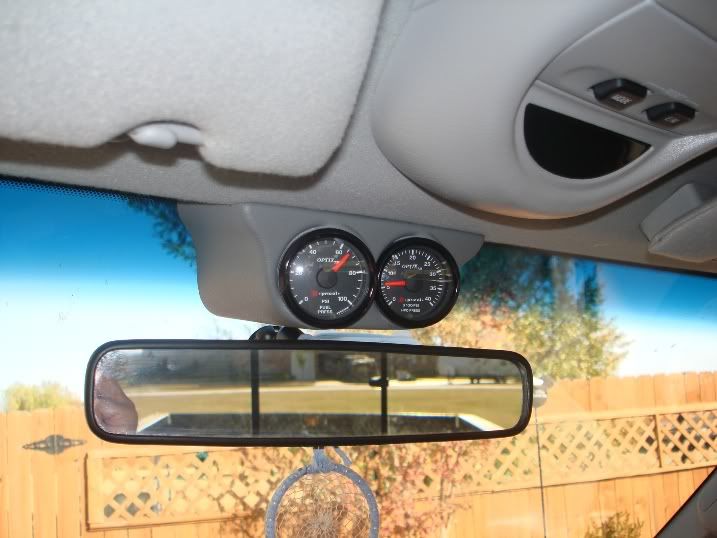


 Edit: I just ordered a fuel press gauge and a HPOP gauge for my F-250, thanks again for the fast shipping!