When you click on links to various merchants on this site and make a purchase, this can result in this site earning a commission. Affiliate programs and affiliations include, but are not limited to, the eBay Partner Network.
Bought a new copper/brass from US Radiator last spring. They also own Cool Craft, IIRC. Compare prices on both websites. They did vary for the same radiator. Got a three row, high efficiency core for about $500. Bolted right in, very happy.
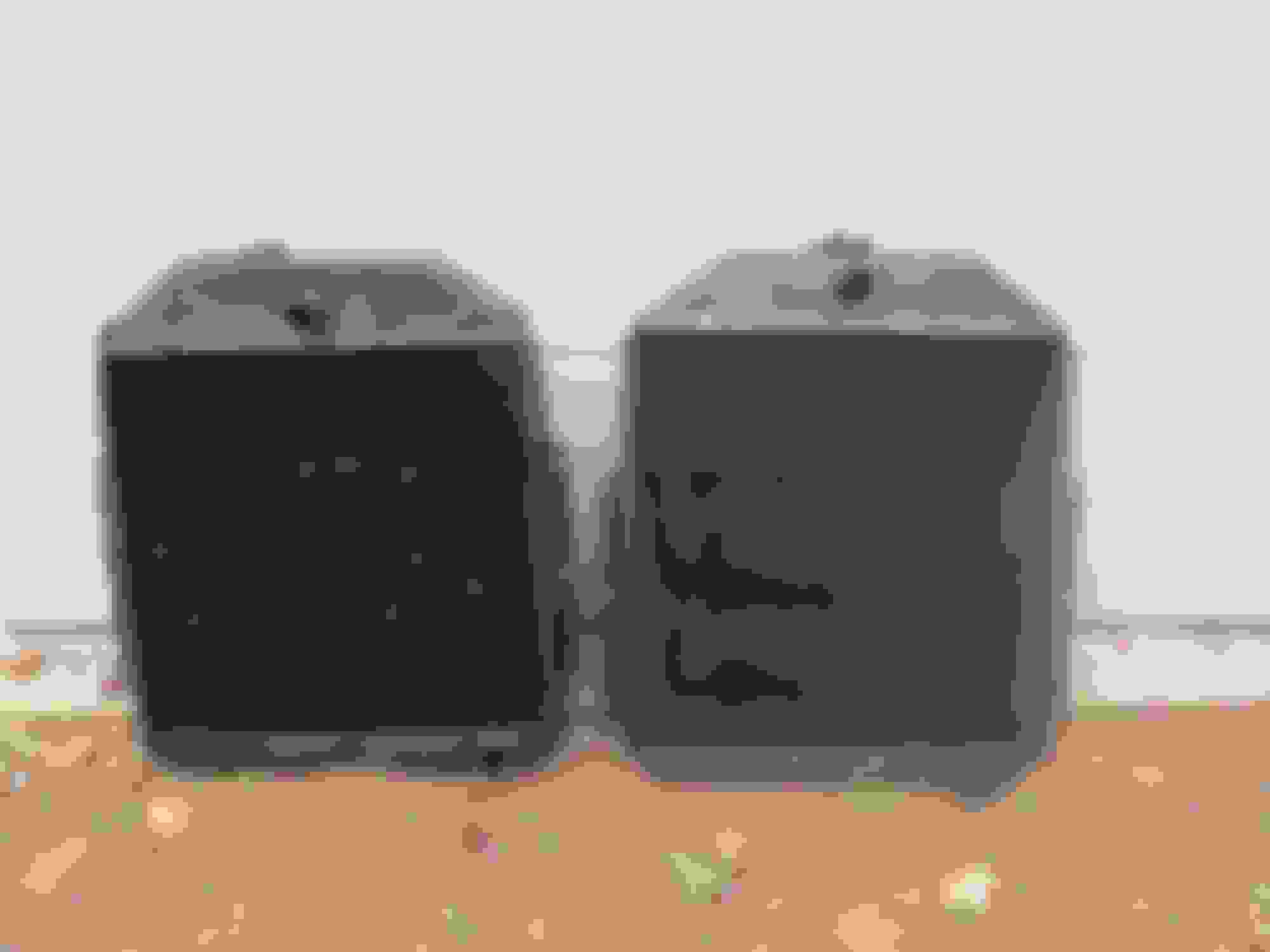
So, it’s almost a year later and it’s time now for, “The Rest of the Story”. As you know, if you were following this thread, I needed to make a decision on a 65 year-old radiator that was leaking. Being very unschooled in these matters, I turned to FTE members for advice. Based on the advice received, and my vision for my truck, I decided to have my original radiator re-cored. I got three estimates and in round numbers they came in at--$600, $600, and $800. Given the high quotes, and my “vision” not withstanding, I decided to purchase a new original equipment copper and brass type radiator from Classic Haulers. Their price was about $450—high but not as high as a re-core—and the Classic Haulers' radiator would be new.
As I was getting advice and coming to a decision, my radiator was sitting in a radiator repair shop--the best in my area as you may remember. With my mind finally made up to purchase a new radiator, I went to pick up my old unit. Much to my surprise, the owner of the shop, an old gentleman well into his 80’s said he repaired my radiator. He said he had the time and saw the repair as a particular challenge. He said no one in his shop could repair a radiator in the kind of shape mine was in, but he, with almost 70 years of experience in the radiator business, wanted to prove that he could. I had mentioned to him that another shop in our area had advised that my radiator was junk and could only be replaced or re-cored.
I told the old gentleman I hadn’t given permission for the repair to be made and had in fact decided to purchase a new radiator. The shop owner acknowledged that he had acted without permission and said I could have my repaired radiator and whether or not I decided to pay him would be up to me. Well, I couldn’t just take my radiator and walk out the door, so I paid the guy the $200 he had originally quoted for the repair. His parting words to me were, “If you have any trouble, bring it back”.
Now it’s almost a year later and it’s finally time to put the radiator back in my truck. And what do you know? The radiator leaks like a sieve—not where it was repaired (the old man did have the skills he claimed to have), but in lots of other places. The story gets a little long and tedious at this point so let’s just summarize and say that my old radiator has been in and out of my truck three times, I have my $200 back, and a new radiator from Classic Haulers arrived yesterday.
So, this is what I have learned: (1) The experts here on FTE know what they are talking about and failure to heed their advice can result in difficulties, delays, and frustration. (2) Radiators that are 65 years old are fragile and can fail multiple times in multiple places. (3) Storing old radiators dry without coolant for long periods of time is not a good idea. (4) Life is filled with interesting, well-meaning people, and patience is a virtue worth cultivating.
Sorry about the length of my little story, but I hope some of you will find it amusing as we struggle through the vicissitudes of life and try to get our projects out of our garages and onto the road.
Good story Jim, and one that I am glad you shared with the rest of us on the forum.
One other thing about these old radiators that needs to be considered, is the issue of metal fatigue. While corrosion is the greatest threat and problem, fatigue is just as lethal. More so than most of their more modern brethren, these old units were designed to expand/contract considerably during operation. All one has to do, is to just compare the appearance of the front face of the top tank when hot to when it is cold. The "swelling" is on the order of 3/16" or more in the center. Over a period of decades, the tank can develop stress fractures. Once these fractures appear, it is an exercise in futility to try to seal them up. One could, of course, replace the tank, but by the time you re-core, then replace a tank, the only original pieces of the radiator left is the mounting brackets, neck, and over flow tube. May as well get a new radiator.
For my part, I am loathe to replace the radiator on Gertie, but am resigned to the fact that, at some point, it is inevitable. My advice then, is that you use the old radiator until it is in need of a major repair, once that circumstance arises, cut your losses, and get a quality, preferably American made new replacement.
The core on the new rad looks to be an inch taller than the old one, a bonus if that's really the case.
J.D., if your tank is bulging I'd bet the internal brace has come disconnected. If pressure goes over rating, the brace can just come loose and the tank will bulge in/out noticeably. It is usually just to the left (to PS) of the filler on V8's. It happened to mine because the PO put a 14 psi cap on it.
Looking at it again, at the flange mounting holes, it looks like the new one may sit quite a bit higher in the saddle. I'd check hood deflectors for interference!
Good eye once again, Ross. As already noted, the new core, and in fact the whole new unit, is about 1 inch taller than the one it replaces. When measured on a flat surface, the top mounting hole of the new unit appears to be positioned about 3/8 of an inch higher then the old one. The mounting holes are over sized, however, and may compensate for slight variations. I won't be working on the installation until Monday at the earliest--it's cold and raining in the North-woods today. I'll be sure to check the hood deflectors for interference. Thanks.
I appreciate the follow up story. As I have said in other threads, "I hate dead end threads". So thank you for posting.
This forum is indeed full of excellent advice and technical help. It is just so frustrating when you read a thread to find a solution to a problem, you just get to the good part and......................
So, this is what I have learned: (1) The experts here on FTE know what they are talking about and failure to heed their advice can result in difficulties, delays, and frustration.
I want to reiterate this point. Fortunately, not heeding the advice on here hasn't cost me money. It just made me look really stupid for not following the advice. Sometimes, I just didn't read close enough.
Thanks for the heads up on an internal brace Ross. Since I have never had this radiator apart, I had no idea there was one in there. Too, I can't see the thing due to the filler neck tube that extends down into the radiator about three inches.
From what I have learned years ago, my radiator cap is original. I checked it some years ago with a pressure tester, and it was still good to around 4 lbs., and opened at slightly above. Since I have not found a cap that looks anything like it, I have been reluctant to replace it. That said, a number of years ago, the rubber seal finally failed. Luckily, I was able to secure a replacement (I think I had to buy another cap, and swipe the seal from it). As far as the system ever experiencing an over-pressure condition, I don't think so, at least not in the 33 years I have had the truck. Of course, I have no clue as to what occurred in the first 18 years of the truck's life.
I checked the tank earlier today, and it certainly seems that there isn't any attachment to a brace anywhere in the area you indicated. I wonder if a brace is something that has been added to later radiators? Although I haven't been into Gertie's, I have seen the innards of several farm tractor radiators from the period, and never recall any internal bracing.
Over the winter, I intend to yazz out the radiator, and send it down to the local shop to have it evaluated. While it currently doesn't leak, I have had issues with leakage around the solder joint where the top tank attaches to the core (directly under the filler, and in front). I have soldered it several times, but the seal keeps breaking. Flexing of the front face is weakening the solder joint and causing failure.
Many years ago, we used to do a fair amount of radiator repair at our family machine shop. Mostly it was to the cores, although we did remove and repair a number or tanks. Our big problem was that we did not have a tank and caustic solution to clean the things. besides, we really didn't want to get into these repairs as part of the services we offered. That said, while most of our repairs were to cores, we saw a fair amount of tanks that had stress failures. When we saw that sort of damage, we informed the customer to just get a new radiator.
The brace in mine was a simple Z-shaped strip of brass, with the legs soldered to the front and rear inside vertical faces of the tank. You couldn't tell it was there from the outside. You'll find out when you have yours rodded out. If there isn't one there, you could have them add one ( or two).
I have a hand-crank on my truck and would miss that feature if I were to buy a new radiator.
But.......the local radiator shops get $700+ to recore and repair radiators like ours.
If my original radiator ever fails, I'll have a tough choice to make.
The coolness factor of a hand-crank, or a good solid new radiator.
Rezvani's Latest Post-Apocalyptic Monster Is a Ford F-150 Raptor Underneath
Slideshow: Called the Fortress, the 850-horsepower pickup combines Raptor underpinnings with military-inspired features, survival equipment, and a starting price of $285,000.