


Tonner wheel question

Thread Starter
|
Lead Driver


Joined: Jan 2005
Posts: 6,104
Likes: 138
From: Orcas Island Wa.

Tonner wheel question
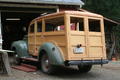
Calling Truckdog and Numberdummy.... All of the 17" lock ring tonner wheels I have here on my place have a solid disc center. The ones on the '42 panel I'm getting have 4 slots (vents?). I think the wheels I have are earlier and I'm wondering if they would be the same width as the slotted ones, or perhaps narrower. I would like to get some of my tires mounted up, but I guess it would be dumb if the ones on the panel are wider. I will be using 7.50 x 17s. Thanks

Marmon-Herrington Man

Joined: Jul 2005
Posts: 11,986
Likes: 446
From: Central Illinois
Here's what the books show. First the Green Bible shows from 1938 to 1942 Ford supplied #11Y 1015-B which is described as a 17" x 5" wheel. It used ring #82Y 1099-B. The Green Bible also shows #11Y 1015-A used from 1938-1947. It used ring #82Y 1099-A. It is described as a 17" x 6" wheel.
Now, before I proceed to the wheel industry info, be aware that the industry trade group, the National Wheel and Rim Association (NWRA), during this era stopped measuring wheels across the rim lips and adopted the system used today where wheel width is measured down inside across the inner base. Thus a 5" in the Green Bible and elsewhere became a 3.75", and a 6" became a 4.33".
The Budd Company made all these wheels using Firestone Steel Products Company "RH" style outer rims. I find two Budd part numbers for each wheel width. The 5"/3.75" ones were either #41620 or #44620. The 6"/4.33" were either #41470 or #44630. The first numbers of each pairing are the oldest and were pulled from a 1939 NWRA reference. From 1944 on both NWRA and Budd references use the latter of each set of numbers. In most cases Budd part numbers can be found stamped into the rear rim lips.
You won't find Budd numbers on the rings. But you should find the Firestone numbers molded into the BACKS of the rings. You probably will also find the Firestone rim numbers on the inner rim base once tires are removed. The 17"x3.75"/5" ring is Firestone #SR151RI. The 17" x 4.33"/6" is SR149RI. The rims are 151RH-4 and 149RH-4 respectively.
If I haven't put you to sleep by now you might ask, like I have, why an RI ring goes on an RH rim. This is because the RI and RH rims are identical, aside from the RI being used in Dayton style demountable applications and the RH being used in disc wheel applications.
I don't know why some have vent holes while others don't, unless it relates to the number changes cited above.
What's important is that the 3.75"/5" rings not be mounted on the 4.33"/6" rims, and vice versa. They do not interchange between sizes. They all used 7.50 x 17" tires. Edit - Oops, wrong, the 3.75"/5" were spec'd for 6.00" or 6.50" x 17s.
Here's the identifying markings on the back of an RI ring. Stu

Now, before I proceed to the wheel industry info, be aware that the industry trade group, the National Wheel and Rim Association (NWRA), during this era stopped measuring wheels across the rim lips and adopted the system used today where wheel width is measured down inside across the inner base. Thus a 5" in the Green Bible and elsewhere became a 3.75", and a 6" became a 4.33".
The Budd Company made all these wheels using Firestone Steel Products Company "RH" style outer rims. I find two Budd part numbers for each wheel width. The 5"/3.75" ones were either #41620 or #44620. The 6"/4.33" were either #41470 or #44630. The first numbers of each pairing are the oldest and were pulled from a 1939 NWRA reference. From 1944 on both NWRA and Budd references use the latter of each set of numbers. In most cases Budd part numbers can be found stamped into the rear rim lips.
You won't find Budd numbers on the rings. But you should find the Firestone numbers molded into the BACKS of the rings. You probably will also find the Firestone rim numbers on the inner rim base once tires are removed. The 17"x3.75"/5" ring is Firestone #SR151RI. The 17" x 4.33"/6" is SR149RI. The rims are 151RH-4 and 149RH-4 respectively.
If I haven't put you to sleep by now you might ask, like I have, why an RI ring goes on an RH rim. This is because the RI and RH rims are identical, aside from the RI being used in Dayton style demountable applications and the RH being used in disc wheel applications.
I don't know why some have vent holes while others don't, unless it relates to the number changes cited above.
What's important is that the 3.75"/5" rings not be mounted on the 4.33"/6" rims, and vice versa. They do not interchange between sizes. They all used 7.50 x 17" tires. Edit - Oops, wrong, the 3.75"/5" were spec'd for 6.00" or 6.50" x 17s.
Here's the identifying markings on the back of an RI ring. Stu

Thread Starter
|
Lead Driver
Joined: Jan 2005
Posts: 6,104
Likes: 138
From: Orcas Island Wa.
Thanks much Stu. I will need to break down a few to read the numbers, but maybe I should be patient and wait for the truck to arrive, most likely in Jan/Feb, before I go mounting tires. In the meantime maybe a plywood jig to measure wheel width with tires mounted. Great info about not mixing rings. Thanks.

New User
Joined: Dec 2017
Posts: 15
Likes: 0
Where can I buy new old stock?
where can I buy new old stock of these rims.
Here's what the books show. First the Green Bible shows from 1938 to 1942 Ford supplied #11Y 1015-B which is described as a 17" x 5" wheel. It used ring #82Y 1099-B. The Green Bible also shows #11Y 1015-A used from 1938-1947. It used ring #82Y 1099-A. It is described as a 17" x 6" wheel.
Now, before I proceed to the wheel industry info, be aware that the industry trade group, the National Wheel and Rim Association (NWRA), during this era stopped measuring wheels across the rim lips and adopted the system used today where wheel width is measured down inside across the inner base. Thus a 5" in the Green Bible and elsewhere became a 3.75", and a 6" became a 4.33".
The Budd Company made all these wheels using Firestone Steel Products Company "RH" style outer rims. I find two Budd part numbers for each wheel width. The 5"/3.75" ones were either #41620 or #44620. The 6"/4.33" were either #41470 or #44630. The first numbers of each pairing are the oldest and were pulled from a 1939 NWRA reference. From 1944 on both NWRA and Budd references use the latter of each set of numbers. In most cases Budd part numbers can be found stamped into the rear rim lips.
You won't find Budd numbers on the rings. But you should find the Firestone numbers molded into the BACKS of the rings. You probably will also find the Firestone rim numbers on the inner rim base once tires are removed. The 17"x3.75"/5" ring is Firestone #SR151RI. The 17" x 4.33"/6" is SR149RI. The rims are 151RH-4 and 149RH-4 respectively.
If I haven't put you to sleep by now you might ask, like I have, why an RI ring goes on an RH rim. This is because the RI and RH rims are identical, aside from the RI being used in Dayton style demountable applications and the RH being used in disc wheel applications.
I don't know why some have vent holes while others don't, unless it relates to the number changes cited above.
What's important is that the 3.75"/5" rings not be mounted on the 4.33"/6" rims, and vice versa. They do not interchange between sizes. They all used 7.50 x 17" tires. Edit - Oops, wrong, the 3.75"/5" were spec'd for 6.00" or 6.50" x 17s.
Here's the identifying markings on the back of an RI ring. Stu

Now, before I proceed to the wheel industry info, be aware that the industry trade group, the National Wheel and Rim Association (NWRA), during this era stopped measuring wheels across the rim lips and adopted the system used today where wheel width is measured down inside across the inner base. Thus a 5" in the Green Bible and elsewhere became a 3.75", and a 6" became a 4.33".
The Budd Company made all these wheels using Firestone Steel Products Company "RH" style outer rims. I find two Budd part numbers for each wheel width. The 5"/3.75" ones were either #41620 or #44620. The 6"/4.33" were either #41470 or #44630. The first numbers of each pairing are the oldest and were pulled from a 1939 NWRA reference. From 1944 on both NWRA and Budd references use the latter of each set of numbers. In most cases Budd part numbers can be found stamped into the rear rim lips.
You won't find Budd numbers on the rings. But you should find the Firestone numbers molded into the BACKS of the rings. You probably will also find the Firestone rim numbers on the inner rim base once tires are removed. The 17"x3.75"/5" ring is Firestone #SR151RI. The 17" x 4.33"/6" is SR149RI. The rims are 151RH-4 and 149RH-4 respectively.
If I haven't put you to sleep by now you might ask, like I have, why an RI ring goes on an RH rim. This is because the RI and RH rims are identical, aside from the RI being used in Dayton style demountable applications and the RH being used in disc wheel applications.
I don't know why some have vent holes while others don't, unless it relates to the number changes cited above.
What's important is that the 3.75"/5" rings not be mounted on the 4.33"/6" rims, and vice versa. They do not interchange between sizes. They all used 7.50 x 17" tires. Edit - Oops, wrong, the 3.75"/5" were spec'd for 6.00" or 6.50" x 17s.
Here's the identifying markings on the back of an RI ring. Stu
Marmon-Herrington Man
Joined: Jul 2005
Posts: 11,986
Likes: 446
From: Central Illinois
Nowhere. The RH/RI type rims have been out of production, even as replacement parts, since the early 1950s. I have found one NOS “RH” 20” x 4.33” base rim at a dealership auction, but have had to use a used ring with it. If there is a hoard of these parts located somewhere I hope they don’t end up going to scrap when the hoarder dies and the kids don’t know or care what he had. Stu

Thread
Thread Starter
Forum
Replies
Last Post
Okobojo
1957 - 1960 F100 & Larger F-Series Trucks
7
Sep 7, 2016 02:09 AM
hotrodjohn71
1957 - 1960 F100 & Larger F-Series Trucks
5
Jul 25, 2015 07:17 PM
skeneguy
1980 - 1986 Bullnose F100, F150 & Larger F-Series Trucks
4
Nov 24, 2007 08:30 PM


