When you click on links to various merchants on this site and make a purchase, this can result in this site earning a commission. Affiliate programs and affiliations include, but are not limited to, the eBay Partner Network.
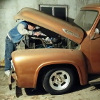
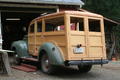
Morning to all, just started working on this gem last week. Picked it up about a month ago. Seems pretty solid all in all, motor is setup, brakes are in need of attention. One of the first questions I have is how easy is it to convert the mechanical brakes to juice and still retain the wide 5 wheels. I
haven't researched this on the site yet and will, but just wanted to throw it out there. Thank you for looking and thanks in advance for any and all information or ideas.
Pretty easy to convert. You can use the juice brakes from a 40s pickup and keep the wide 5 drums. I've even had a couple I parted out that were converted using the original backing plates but it looked like a hack job.
I think it would have to be 39, 40 or 41. AFIK the 42 is the same as the 46-47 with the 5 on 5 1/2. I imagine many of the donor trucks have been robbed of their brakes over the years. I think I have a set of front drums in my attic and maybe a complete front brake setup on a trailer I have out in the back 40. It has those wheels on a front axle mounted under the trailer. I will look to see if the backing plates are on it. Recovering from surgery so I can't jack it up and pull the wheels for a couple of weeks.
I personally advocate retaining the mechanical brakes. Mine work just as well as hydraulics, but do take more maintenance than hydraulics. If you are determined to convert, call this fellow, he makes bolt in kits so you cut nothing: 1932 thru 1938 Ford Hydraulic Brake Conversions and Parts
No backing plates or shoes etc. on that trailer. Does the '37 have rods or cables? I drove a '38 tonner for ten years with self energizing cable brakes and it really did stop surprisingly well. My experience with the rods not as good, but they were all 1 1/2 tons with lots of slop in all the pins etc.
37 and 38 both had cables. The cars and 1/2 tons had self energizing brakes. It really is a more sophisticated setup than the later hydraulic brakes. You have to put the springs in the correct locations and have woven linings or your brakes are terrible.
We have loads of deer on this island. In the years I drove my '38 tonner, Twice I totally locked my brakes leaving 4 highly visible stripes on the county road. 1938, being the first year of the tonner, I assume Henry knew the writing was on the wall for mechanical brakes, juice brakes would be used across the entire vehicle line for '39. Thus, he used the 1/2 tonner's cable brake system on the front axle and the 1 1/2 ton's cable brake system on the rear. I think the rears were something like 14 1/2" dia and really shut that empty pickup down when you think they were intended to stop that load in my avatar. So, yes, if they are cable, no real worry, and no cylinders to rebuilt. Maybe my front cables would work for you. You could have them for shipping.
This Hennessey Takes the Expedition Tremor's Off-Roading Capability to the Next Level
Slideshow: The VelociRaptor Expedition gains a lift, upgraded suspension, Brembo brakes, and trail-ready equipment while retaining the stock 440-horsepower EcoBoost V6.
Rezvani's Latest Post-Apocalyptic Monster Is a Ford F-150 Raptor Underneath
Slideshow: Called the Fortress, the 850-horsepower pickup combines Raptor underpinnings with military-inspired features, survival equipment, and a starting price of $285,000.