



Posi or not?
Lead Driver


Joined: Apr 2011
Posts: 6,399
Likes: 40
From: El Dorado, Arkansas
The only place you'll ever find a 'posi' is in a GM product. Positraction is a brand name of the General Motors Corporation component that directs power to both wheels of the same axle assembly.
In Ford terms, depending on year model, it would either be an Equalok (1957-1968) or, Traction-Lok (1969-1986).
In your case, you have a factory open (single track) differential. (power is only directed to one wheel).
An open Ford differential is easy to distinguish between an Equalok or a Traction-Lok. The first clue is the (10) ring gear bolt heads. They will be fully exposed and will require a 3/4" wrench or socket to break loose.
The (10) ring gear bolt heads of an Equalok/Traction-Lok will be partially shrouded by the differential casting. You cannot get a wrench on the bolt heads. You can only get a 5/8" socket on the ring gear bolt heads.
Example of a Ford Traction-Lok differential next to an open differential.
Differential Types
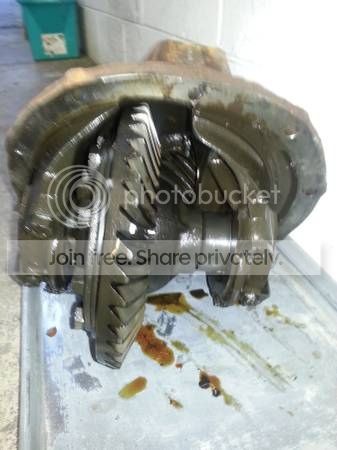
I can't be certain of the ratio of the 3rd member you have pictured but, I can tell it has a fairly high ratio (low, numerically --possibly in the neighborhood in the 3.00-ish range and at least no lower than 3.25:1. I also see that the 3rd member was taken from a car, as denoted by the casting of the 'hood' sticking out over the driving pinion housing.
In Ford terms, depending on year model, it would either be an Equalok (1957-1968) or, Traction-Lok (1969-1986).
In your case, you have a factory open (single track) differential. (power is only directed to one wheel).
An open Ford differential is easy to distinguish between an Equalok or a Traction-Lok. The first clue is the (10) ring gear bolt heads. They will be fully exposed and will require a 3/4" wrench or socket to break loose.
The (10) ring gear bolt heads of an Equalok/Traction-Lok will be partially shrouded by the differential casting. You cannot get a wrench on the bolt heads. You can only get a 5/8" socket on the ring gear bolt heads.
Example of a Ford Traction-Lok differential next to an open differential.
Differential Types
I can't be certain of the ratio of the 3rd member you have pictured but, I can tell it has a fairly high ratio (low, numerically --possibly in the neighborhood in the 3.00-ish range and at least no lower than 3.25:1. I also see that the 3rd member was taken from a car, as denoted by the casting of the 'hood' sticking out over the driving pinion housing.
Thread Starter
|
Senior User
Joined: Aug 2012
Posts: 215
Likes: 0
The only place you'll ever find a 'posi' is in a GM product. Positraction is a brand name of the General Motors Corporation component that directs power to both wheels of the same axle assembly.
In Ford terms, depending on year model, it would either be an Equalok (1957-1968) or, Traction-Lok (1969-1986).
In your case, you have a factory open (single track) differential. (power is only directed to one wheel).
An open Ford differential is easy to distinguish between an Equalok or a Traction-Lok. The first clue is the (10) ring gear bolt heads. They will be fully exposed and will require a 3/4" wrench or socket to break loose.
The (10) ring gear bolt heads of an Equalok/Traction-Lok will be partially shrouded by the differential casting. You cannot get a wrench on the bolt heads. You can only get a 5/8" socket on the ring gear bolt heads.
Example of a Ford Traction-Lok differential next to an open differential.
Differential Types
I can't be certain of the ratio of the 3rd member you have pictured but, I can tell it has a fairly high ratio (low, numerically --possibly in the neighborhood in the 3.00-ish range and at least no lower than 3.25:1. I also see that the 3rd member was taken from a car, as denoted by the casting of the 'hood' sticking out over the driving pinion housing.
In Ford terms, depending on year model, it would either be an Equalok (1957-1968) or, Traction-Lok (1969-1986).
In your case, you have a factory open (single track) differential. (power is only directed to one wheel).
An open Ford differential is easy to distinguish between an Equalok or a Traction-Lok. The first clue is the (10) ring gear bolt heads. They will be fully exposed and will require a 3/4" wrench or socket to break loose.
The (10) ring gear bolt heads of an Equalok/Traction-Lok will be partially shrouded by the differential casting. You cannot get a wrench on the bolt heads. You can only get a 5/8" socket on the ring gear bolt heads.
Example of a Ford Traction-Lok differential next to an open differential.
Differential Types
I can't be certain of the ratio of the 3rd member you have pictured but, I can tell it has a fairly high ratio (low, numerically --possibly in the neighborhood in the 3.00-ish range and at least no lower than 3.25:1. I also see that the 3rd member was taken from a car, as denoted by the casting of the 'hood' sticking out over the driving pinion housing.
I am looking for a 28 spline 9" posi. Trac loc etc for my truck. This was for sale locally but passed on it. Looking for 3.00 or 2.75 gear ratio in good condition.
Wish me luck LOL
Ford Parts Specialist
Joined: Nov 2006
Posts: 88,826
Likes: 785
From: Simi Valley, CA

1968/72 F100's were available with two different 9" rear axles.
One has 28 spline axle shafts with or without Limited Slip. Has a 3,300 lb. capacity
The other has a 9 3/8" ring gear, 31 spline axle shafts and 4 pinion Traction-Lok. Has a 3,600 lb. capacity.
9 vs 9 3/8: Only 5 parts are the same: Housing gasket, pinion seal, pilot bearing retainer, one pinion bearing & cup.
EVERYTHING else is different!
One has 28 spline axle shafts with or without Limited Slip. Has a 3,300 lb. capacity
The other has a 9 3/8" ring gear, 31 spline axle shafts and 4 pinion Traction-Lok. Has a 3,600 lb. capacity.
9 vs 9 3/8: Only 5 parts are the same: Housing gasket, pinion seal, pilot bearing retainer, one pinion bearing & cup.
EVERYTHING else is different!
Trending Topics
Thread Starter
|
Senior User
Joined: Aug 2012
Posts: 215
Likes: 0
Fortunately I have the rear end tag on mine.
WES-AA Cougar '69-'70
Mustang '69-'71 3.00 9 in NL 28 -
WES-AA Cougar '69-'70
Mustang '69-'71 3.00 9 in NL 28 -
FTE Stories
Ford Trucks for Ford Truck Enthusiasts

10 Things Every Truck Owner NEEDS (2026 Edition)
Michael S. Palmer
Rezvani's Latest Post-Apocalyptic Monster Is a Ford F-150 Raptor Underneath
Verdad Gallardo
Top 10 Most Expensive Ford Trucks Ever Sold on Bring a Trailer
Joe Kucinski
2027 Ford Super Duty Buyer's Guide (Every Model, Engine, & Package)
Brett Foote
Top 10 Ford Truck Tragedies
Joe Kucinski
AEV FXL Super Duty - the Super Duty Raptor Ford Doesn't Make
Brett Foote
Lobo Vs Lobo: Proof the F-150 Lobo Should Be Even Lower!
Michael S. Palmer
Ford's 2001 Explorer Sportsman Concept Looks For a New Home
Verdad Gallardo
10 Best Ford Truck Engines We Miss the Most!
Joe Kucinski
Lead Driver
Joined: Apr 2011
Posts: 6,399
Likes: 40
From: El Dorado, Arkansas
'68 9-inch differential would be an Equalok, 28 splines, 2-pinion (only) differential.
The 9-inch Traction-Lok differential came out in 1969 (worst year of Traction-Lok differential to have, by the way) '69, '70, '71 and '72 would be Traction-Lok with 28-splines. Traction-Lok differentials came in both 2-pinion and (stronger) 4-pinion arrangements.
I'm not certain if there were any 2-pinion Traction-Loks in the trucks but, there were some 2-pinion Traction-Lok differentials in the cars --at least there was (in the cars) from 1975-1980. --1980 was the last year Ford put a 9-inch rear end in a car (Granadas, Monarchs and Lincoln Versailles are among the car lines that COULD have a 28-spline Traction-Lok with either 2 or 4-pinion differentials). --Traction-Lok differentials were optional in cars and trucks and not standard equipment so, finding them is not always easy.
The majority of Ford 9-inch rears in the '73-'86 Ford trucks, with a Traction-Lok differential, had 31-splines.
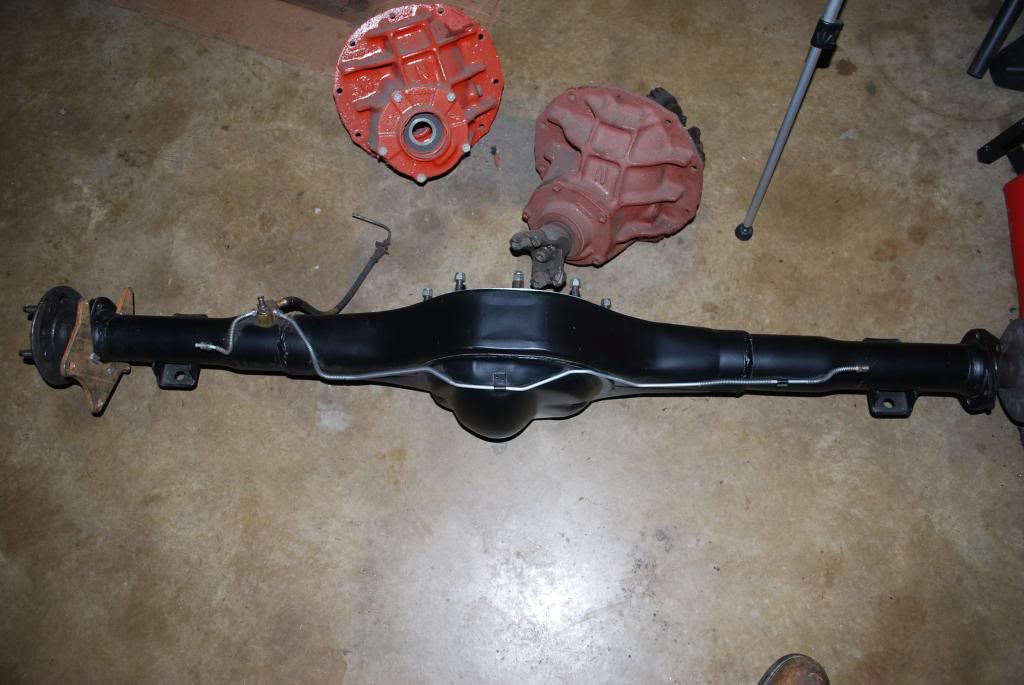
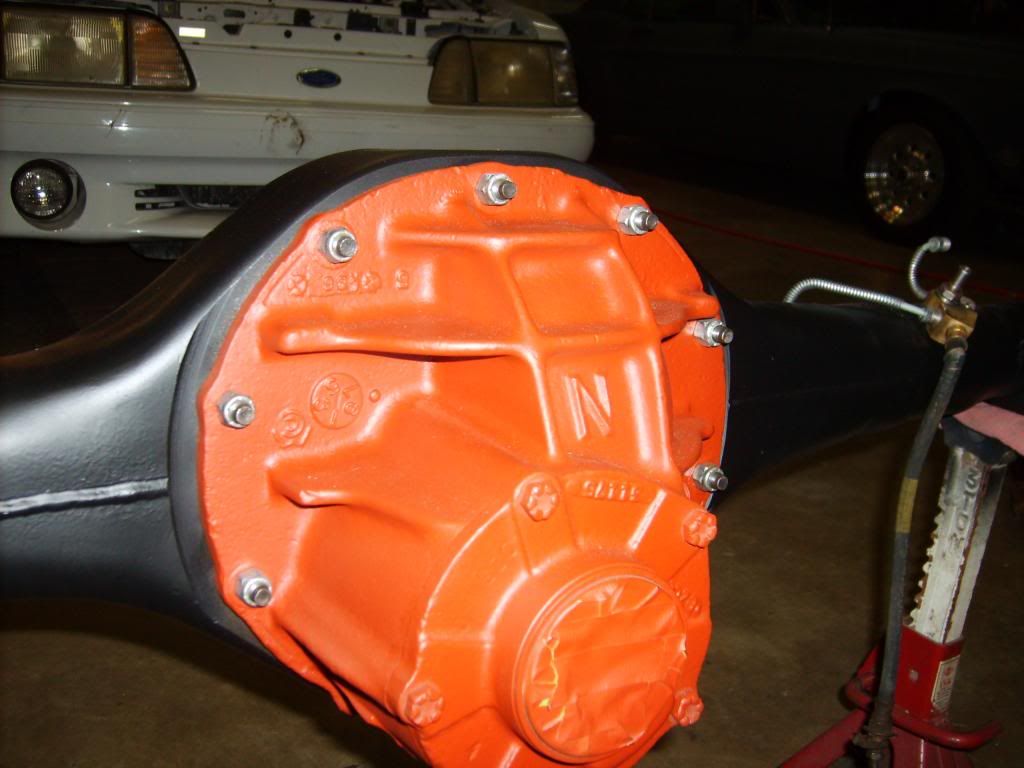
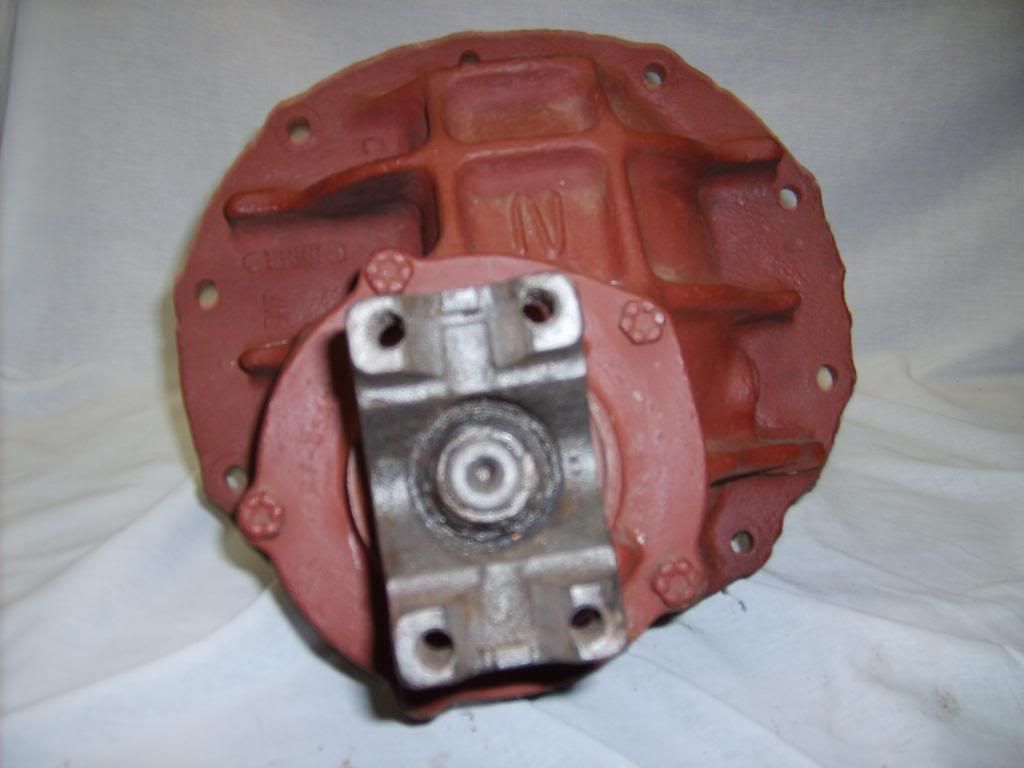
I have about a half dozen 9-inch 3rd members in my private stash that all have 31-spline, Traction-Lok, 4-pinion differentials. All the Traction-Lok 3rd members I have, I pulled from '73-'79 model trucks. Two of these are factory N-case 3rd members. One of those two is the ultimate of the N-cases --it's a Daytona version with the larger driving pinion bearings and the heavier cast housing for the driving pinion gear.
My two factory N-cases. Daytona version on the right.
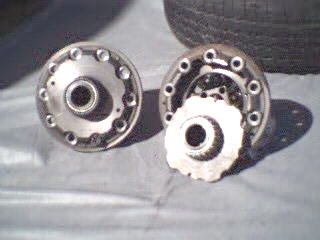
This is the fate of many 1969 Traction-Lok differentials --blown out clutch hub casting, as seen on the right. (1970-1986 Traction-Lok on the left).
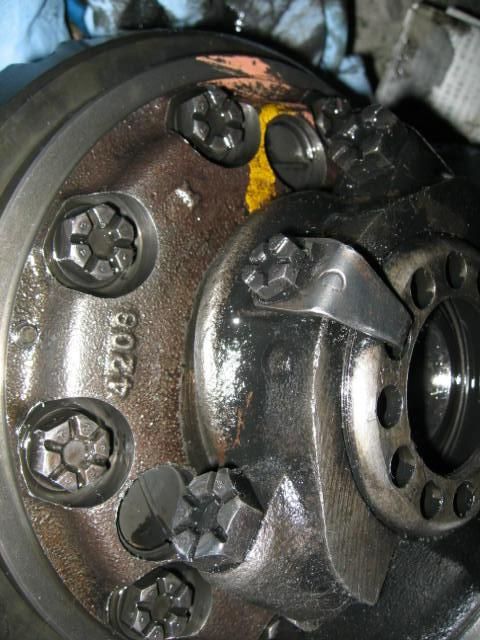
This is the reason for the weakness of the '69 Traction-Lok differential --4 large holes on the left half of the differential casting. Two of the four large holes (near the heads of the ring gear bolt heads) can be seen here.
If you're buying a used Traction-Lok, its best to steer clear of one from a '69 model Ford.
The 9-inch Traction-Lok differential came out in 1969 (worst year of Traction-Lok differential to have, by the way) '69, '70, '71 and '72 would be Traction-Lok with 28-splines. Traction-Lok differentials came in both 2-pinion and (stronger) 4-pinion arrangements.
I'm not certain if there were any 2-pinion Traction-Loks in the trucks but, there were some 2-pinion Traction-Lok differentials in the cars --at least there was (in the cars) from 1975-1980. --1980 was the last year Ford put a 9-inch rear end in a car (Granadas, Monarchs and Lincoln Versailles are among the car lines that COULD have a 28-spline Traction-Lok with either 2 or 4-pinion differentials). --Traction-Lok differentials were optional in cars and trucks and not standard equipment so, finding them is not always easy.
The majority of Ford 9-inch rears in the '73-'86 Ford trucks, with a Traction-Lok differential, had 31-splines.
I have about a half dozen 9-inch 3rd members in my private stash that all have 31-spline, Traction-Lok, 4-pinion differentials. All the Traction-Lok 3rd members I have, I pulled from '73-'79 model trucks. Two of these are factory N-case 3rd members. One of those two is the ultimate of the N-cases --it's a Daytona version with the larger driving pinion bearings and the heavier cast housing for the driving pinion gear.
My two factory N-cases. Daytona version on the right.


This is the fate of many 1969 Traction-Lok differentials --blown out clutch hub casting, as seen on the right. (1970-1986 Traction-Lok on the left).

This is the reason for the weakness of the '69 Traction-Lok differential --4 large holes on the left half of the differential casting. Two of the four large holes (near the heads of the ring gear bolt heads) can be seen here.

If you're buying a used Traction-Lok, its best to steer clear of one from a '69 model Ford.

Thread
Thread Starter
Forum
Replies
Last Post
David LaPell
1980 - 1986 Bullnose F100, F150 & Larger F-Series Trucks
2
Sep 21, 2010 06:22 AM
jimk351c
Clutch, Transmission, Differential, Axle & Transfer Case
2
Dec 21, 2001 01:21 PM