




400 rpm range
Thread Starter
|
Elder User
Joined: Jun 2013
Posts: 685
Likes: 2
400 rpm range
The truck:
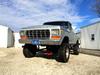
1979 f150
400 lopey (unknown) cam, holly intake, 650cfm carb, headers, true duals, MSD ignition. Rotating assembly and compression are unknown.
9" rear 44 front
35" BFG's 4.56 gears
Np435/np205
I was wondering what a safe driving rpm would be. Also, what should the redline be set at?
Currently the redline is set at 4,000 rpm. 55 mph puts the tach at 2,450 rpm.
Although I have yet to take it on the interstate, 70 mph would be 3,150 rpm
1979 f150
400 lopey (unknown) cam, holly intake, 650cfm carb, headers, true duals, MSD ignition. Rotating assembly and compression are unknown.
9" rear 44 front
35" BFG's 4.56 gears
Np435/np205
I was wondering what a safe driving rpm would be. Also, what should the redline be set at?
Currently the redline is set at 4,000 rpm. 55 mph puts the tach at 2,450 rpm.
Although I have yet to take it on the interstate, 70 mph would be 3,150 rpm
Thread Starter
|
Elder User
Joined: Jun 2013
Posts: 685
Likes: 2
Okay that's good to know. I just wasn't too sure about holding at 3 grand for extended periods of time. The truck rarely gets above 2500 currently.
Larger tires will have to wait. I only have a half inch of clearance to get in the garage with 35's!
Larger tires will have to wait. I only have a half inch of clearance to get in the garage with 35's!
Thread Starter
|
Elder User
Joined: Jun 2013
Posts: 685
Likes: 2
Okay that's good to know. I just wasn't too sure about holding at 3 grand for extended periods of time. The truck rarely gets above 2500 currently.
Larger tires will have to wait. I only have a half inch of clearance to get in the garage with 35's!
Larger tires will have to wait. I only have a half inch of clearance to get in the garage with 35's!
Thread Starter
|
Elder User
Joined: Jun 2013
Posts: 685
Likes: 2
The cam is not stock. The PO had rebuilt the engine but had no papers to show me the cam specs. Same for the bottom end components and compression.
Trending Topics

Laughing Gas
Joined: Dec 2012
Posts: 801
Likes: 7
From: Toledo, Ohio
FTE Stories
Ford Trucks for Ford Truck Enthusiasts

10 Things Every Truck Owner NEEDS (2026 Edition)
Michael S. Palmer
Rezvani's Latest Post-Apocalyptic Monster Is a Ford F-150 Raptor Underneath
Verdad Gallardo
Top 10 Most Expensive Ford Trucks Ever Sold on Bring a Trailer
Joe Kucinski
2027 Ford Super Duty Buyer's Guide (Every Model, Engine, & Package)
Brett Foote
Top 10 Ford Truck Tragedies
Joe Kucinski
AEV FXL Super Duty - the Super Duty Raptor Ford Doesn't Make
Brett Foote
Lobo Vs Lobo: Proof the F-150 Lobo Should Be Even Lower!
Michael S. Palmer
Ford's 2001 Explorer Sportsman Concept Looks For a New Home
Verdad Gallardo
10 Best Ford Truck Engines We Miss the Most!
Joe Kucinski
Thread Starter
|
Elder User
Joined: Jun 2013
Posts: 685
Likes: 2
I bought the truck from a good friends father. He had lost the contact info of the man that did the majority of the restoration work. The engine does everything it is supposed to do and I have no real interest in tracking down that owner.
How does this relate to my question on safe RPM range?
How does this relate to my question on safe RPM range?
Laughing Gas
Joined: Dec 2012
Posts: 801
Likes: 7
From: Toledo, Ohio
I bought the truck from a good friends father. He had lost the contact info of the man that did the majority of the restoration work. The engine does everything it is supposed to do and I have no real interest in tracking down that owner.
How does this relate to my question on safe RPM range?
How does this relate to my question on safe RPM range?
. You said "Rotating assembly and compression are unknown."
. Which would affect efficient cruising RPMs and expected MPG at that RPMs level...
Thread Starter
|
Elder User
Joined: Jun 2013
Posts: 685
Likes: 2
I'm not so much concerned with efficiency and fuel economy isn't really much of a concern. My current driving style in town and on the back roads averages 12mpg. I'm really just wanting to know when parts are going to come flying out of the engine.
Let's assume the rods crank and pistons are not stock, since it has detonation without premium fuel. The cam could be something similar to comps motha thumpr or big motha thumpr. Based on idle sound and that the engine pulls best past 2,500 rpm.
Let's assume the rods crank and pistons are not stock, since it has detonation without premium fuel. The cam could be something similar to comps motha thumpr or big motha thumpr. Based on idle sound and that the engine pulls best past 2,500 rpm.
Laughing Gas
Joined: Dec 2012
Posts: 801
Likes: 7
From: Toledo, Ohio
.
. My '78 also has a very lopey idle that people comment about, but far as I know, it has stock cam... but high lift 1.73:1 ratio rocker arms are also stock... and low stall RPM torque converter makes it really weak off the line... have had to put it in low transfer just to pull the front wheels back up out off a ditch bank...
. Can cruise even stock engine up to 5,000 RPMs or so... but serious pumping losses up there from low compression ratio and being above the cam's designed operating range...
. My '78 also has a very lopey idle that people comment about, but far as I know, it has stock cam... but high lift 1.73:1 ratio rocker arms are also stock... and low stall RPM torque converter makes it really weak off the line... have had to put it in low transfer just to pull the front wheels back up out off a ditch bank...
. Can cruise even stock engine up to 5,000 RPMs or so... but serious pumping losses up there from low compression ratio and being above the cam's designed operating range...

Laughing Gas


Joined: Sep 2013
Posts: 1,114
Likes: 103
From: North Idaho
61steven,
If you're going to assume the crank, rods, and pistons are not stock.....
Callies crank, Oliver rods, and Arias lightweight pistons - you're good to 8,000 RPM! My point is unless you KNOW, you are making some huge assumptions. These performance parts are not easy to find or cheap for the 400. It probably has aftermarket pistons, but crank and rods might be a stretch.
5,000 RPM might be a safe limit for a basically stock engine. If you drop the pan you could inspect the crank and rods, and might be able to determine what type of pistons you have.
If you're going to assume the crank, rods, and pistons are not stock.....
Callies crank, Oliver rods, and Arias lightweight pistons - you're good to 8,000 RPM! My point is unless you KNOW, you are making some huge assumptions. These performance parts are not easy to find or cheap for the 400. It probably has aftermarket pistons, but crank and rods might be a stretch.
5,000 RPM might be a safe limit for a basically stock engine. If you drop the pan you could inspect the crank and rods, and might be able to determine what type of pistons you have.
Thread Starter
|
Elder User
Joined: Jun 2013
Posts: 685
Likes: 2
8,000!! Whoa that's really turning!
5,000 rpm redline is more than I am personally willing to push the engine. I might drop the pan one of these days out of curiosity for bottom end parts and condition.
I read somewhere that 400 rods are actually very strong from the factory and are usually not much of a concern. What would make the crank weaker than aftermarket ones? Stronger metals and lighter?
5,000 rpm redline is more than I am personally willing to push the engine. I might drop the pan one of these days out of curiosity for bottom end parts and condition.
I read somewhere that 400 rods are actually very strong from the factory and are usually not much of a concern. What would make the crank weaker than aftermarket ones? Stronger metals and lighter?