When you click on links to various merchants on this site and make a purchase, this can result in this site earning a commission. Affiliate programs and affiliations include, but are not limited to, the eBay Partner Network.
I havent done an EGR delete.. but have thought about it..
I'll have to read about the upgraded cooler (thanks for the link)..
Fortunately, the van has only 22k miles, so maybe I have a bit of time?
I have been pretty gentle on driving it.
blageurt, thanks for the link.. I only read this every couple days... kids, full time job, full plate, .. nothing personal about my response time.. appreciate ALL the thoughts and experience people can help me with..
The thing is ...with the 6.0 ........IF you do not drive it hard , Unison RIng can Rust and Stick causing errratic acceleration.......BUT...Particulate/Precipitate.... accumulates in the EGR cooler.....when EGR is clogged.....you CAN grenade the Head Gaskets......In Pick-up No Big Deal........In a VAN..........Major Issues....Worst case scenario is New Head gaskets....which is like 5 large....Protect yourself...They will try to sell you a new Engine....
The thing is ...with the 6.0 ........IF you do not drive it hard , Unison RIng can Rust and Stick causing errratic acceleration.......BUT...Particulate/Precipitate.... accumulates in the EGR cooler.....when EGR is clogged.....you CAN grenade the Head Gaskets......In Pick-up No Big Deal........In a VAN..........Major Issues....Worst case scenario is New Head gaskets....which is like 5 large....Protect yourself...They will try to sell you a new Engine....
Thanks.. Read a bit about the egr cooler upgrade last night...
I like the packed insulation covered with foil... think that will be my plan.
I'm wondering if I run my electrical (110v) through the packed in insulation space, if I need to put wires in some type of conduit or not?... planning on inverter with 110v outlets for fridge, coffee pot, etc.... at least down length of driver side wall.
Or if it would just be easier to run them inside, ie through the back of bench seats I'm planning on driver side?
Does the aluminum foil insulation provide any vapor barrier protection? I live in Florida. Any cold surface/metal condenses humidity like crazy.
thanks
Mark
Running any wiring inside conduit is a good idea if only to give it max protection where ever its run. I have used the lower cavities to run wiring however took fairly extensive precautions to either secure it away from sharp sheet metal edges, those places that might chafe through the insulation. 120VAC wiring using something other than household Romex or other similar material I'd advice against. Use a heavier jacketed cable---check Lowe's Home Depot etc.
If you use conduit use the largest size you can squeeze in, install a fish line to leave in place for future expansion. A good nylon string like concrete form builder use works great, available in high visibility colors too.
The radiant barrier insulation with the foil side glued to the metal walls does indeed greatly reduce interior condensation. While condensation probably still occurs it does so on the PVC side leaving the metal "dry". Honestly though in those spots where mine is installed but not yet covered even on high humidity days there's no sign of those surfaces having collected any moisture. The outside skin will be soaking wet, entire interior surfaces pretty much completely dry.
Started insulating and floor done.
I used 3/4 inch plywood on the floor... Plan to anchor the sides to the horizontal metal "shelf" about 1 1/2 inches off the perimeter of the floor.
I had a bunch of old dynamat from a previous vehicle, it was helpful to cover the larger openings after stuffed with insulation.
In the process of covering the walls now with aluminum bubble sheets....
I had wanted to put a window or two in the middle for passengers to view out of when driving,..... But can't find anyone in my area to do it... And I'm to scared to cut the holes and mess it up,..... So something to visit later
Looking good so far Mark----you'll love how much more quiet your van will be just with that flooring in place. I hope you didn't use anything under it, something fabric-like touching the sheet metal below? Not only is that unnecessary but its a huge potential moisture trap too.
I ripped some 2x4's down into strips that fit slightly proud of that lower flange or lip close to the floor, perhaps 1/8" or so. Measuring the height between the floor and lower part of that flange cut those strips to snugly fit in that space. Drilling through the flange I secured the strips in place with 1" screws making those pretty solid, works great for attaching your finished wall covering.
Being that my van is just a nicely appointed tool box I used a higher quality fiberglass reinforced plastic, that same sort of pebble textured bathroom stuff you'd find at Lowe's etc. I found it in 10' sheets which means I can get two full inside height pieces out of one sheet. (Our vans measure just about 52" inside tall, a 8' sheet leaves too much waste.)
When it came to wheel well covering I just boxed them in with plywood, pieces left over from the floor. In this way I'm able to use the space above them as additional storage, in my case a nice tucked away spot for flat windshields I carry but are rarely used these days.
Anyway that's how I did it............. I envy your raised roof---have one of those vans myself but its no longer used for much more than a storage place despite it probably being a better van overall than my current one.
When I bought the van it had been used for some kind of a cargo van and there was thin plywood on the inside...without insulation... but it didn't run down past the flange. That's a good idea about leaving the "ripped" securing strips for the floor a bit wider than the flange to secure new wall material... And probably easier than trying to figure out how to use some L brackets to hold it in.
Thanks
Mark
Rezvani's Latest Post-Apocalytic Monster Is a Ford F-150 Raptor Underneath
Slideshow: Called the Fortress, the 850-horsepower pickup combines Raptor underpinnings with military-inspired features, survival equipment, and a starting price of $285,000.


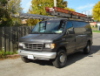








 I envy your raised roof---have one of those vans myself but its no longer used for much more than a storage place despite it probably being a better van overall than my current one.
