



351m tuning project

FTE Legend


Joined: Jul 2010
Posts: 32,875
Likes: 48
From: Northeast, OK
Subscribing. Haven't read all 11 pages, but several. However, I didn't see the latest cruise AFR so will go back to look. And, it looks like you have the same AEM meter I have - how does your tach function work?
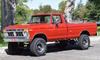
And here's a bit about Rusty. The M has been warmed up with an RV cam and it has been bored .060" over with forged pistons. (It was that way when I got it and I have confirmed that by tearing it down.). Edelbrock intake and Eddy 1406 600 CFM carb. The AEM showed I was running rich, with a max of 14.0 AFR at cruise using stock jetting. So I went one step lean on a jet/rod combo and now get about 15 - 16:1 at cruise depending on the speed - more speed makes it leaner. And with that combo I get about 13.5 MPG running 65 MPH. No bogs and plenty of power when I open it up, where it runs 12 - 13:1 depending on RPM. Oh, and I recently got 10.5 MPG running 65 MPH pulling a car-hauler trailer light, so it runs well.
Now, back to your project. You are suffering from the cold air that leans the mix out, so why not go back to the stock air cleaner with temperature contol? I have that on Rusty and don't have winter problems - and my mix is lean, as you saw. And, I'll run a "factory" temp-controlled air cleaner on Dad's truck when it goes together, although I'm grafting a second snorkel onto an HO air cleaner. Thought maybe the "stroked 351M" could use the air flow since Tim says it'll dyno around 550 HP and 500 lb-ft.
Edit: I should have said that the manufacturers went with temp-controlled air cleaners because they were faced with the same problem. They had leaned the mix and had to hold a constant temp so the mix wouldn't go too lean and kill drivability. It worked and will work for us - if we ditch the open element cleaner that looks "cool". But, they aren't cool as they suck underhood air that is very hot in summer, so the AFR goes rich and VE goes down. However, if you use a factory cleaner that pulls cool air from in front of the radiator and mixes that with hot air from the exhaust you can hold the inlet air temp quite constant.
And here's a bit about Rusty. The M has been warmed up with an RV cam and it has been bored .060" over with forged pistons. (It was that way when I got it and I have confirmed that by tearing it down.). Edelbrock intake and Eddy 1406 600 CFM carb. The AEM showed I was running rich, with a max of 14.0 AFR at cruise using stock jetting. So I went one step lean on a jet/rod combo and now get about 15 - 16:1 at cruise depending on the speed - more speed makes it leaner. And with that combo I get about 13.5 MPG running 65 MPH. No bogs and plenty of power when I open it up, where it runs 12 - 13:1 depending on RPM. Oh, and I recently got 10.5 MPG running 65 MPH pulling a car-hauler trailer light, so it runs well.
Now, back to your project. You are suffering from the cold air that leans the mix out, so why not go back to the stock air cleaner with temperature contol? I have that on Rusty and don't have winter problems - and my mix is lean, as you saw. And, I'll run a "factory" temp-controlled air cleaner on Dad's truck when it goes together, although I'm grafting a second snorkel onto an HO air cleaner. Thought maybe the "stroked 351M" could use the air flow since Tim says it'll dyno around 550 HP and 500 lb-ft.
Edit: I should have said that the manufacturers went with temp-controlled air cleaners because they were faced with the same problem. They had leaned the mix and had to hold a constant temp so the mix wouldn't go too lean and kill drivability. It worked and will work for us - if we ditch the open element cleaner that looks "cool". But, they aren't cool as they suck underhood air that is very hot in summer, so the AFR goes rich and VE goes down. However, if you use a factory cleaner that pulls cool air from in front of the radiator and mixes that with hot air from the exhaust you can hold the inlet air temp quite constant.
Thread Starter
|
Senior User
Joined: Sep 2012
Posts: 372
Likes: 4
From: New Mexico
My AEM gauge just reports the AFR. For the logger I tap off the tach signal coming out of the MSD unit I have. Previously I tapped into the - coil wire which did produce some erratic behavior. I think the signal was too high and noisy for the logger. I was heading down the road to make some sort of 'one-shot' circuit as a buffer, but getting the MSD made that unnecessary.
Thanks for the info on Rusty. Nice mileage numbers and seeing your AFR numbers is helpful. Over the break I'm going to make some detailed MPG measurements especially at cruise. Everything I've done so far has essentially covered my normal commute with all the stops and starts.
Interesting idea about the temperature-controlled air cleaner. How does this work and what does it look like? This morning it was in the 30s and I could clearly see the effect of the colder air on the AFR. I used a bit of choke for some time to keep the AFR in the 15 - 16 range until the engine was good and warm.
Thanks for the info on Rusty. Nice mileage numbers and seeing your AFR numbers is helpful. Over the break I'm going to make some detailed MPG measurements especially at cruise. Everything I've done so far has essentially covered my normal commute with all the stops and starts.
Interesting idea about the temperature-controlled air cleaner. How does this work and what does it look like? This morning it was in the 30s and I could clearly see the effect of the colder air on the AFR. I used a bit of choke for some time to keep the AFR in the 15 - 16 range until the engine was good and warm.
FTE Legend
Joined: Jul 2010
Posts: 32,875
Likes: 48
From: Northeast, OK
I have AEM's Failsafe unit, and it records ~3 hours of AFR, vacuum/boost, and tach. And, it comes in pretty handy - just drove home from church and the engine bucked once after driving about a mile, just as I was easing into the throttle. A quick look and I discovered the AFR was 18:1. Apparently the choke is coming off just a bit too early.
The air cleaner on Rusty is the stock unit from Ford. It has a temp sensor in the lid that controls vacuum to a vacuum motor in the end of the snorkel. The large opening in the snorkel is connected to ducting that runs up to the radiator support, where it gets "cold" air from in front of the radiator. And on the bottom of the snorkel there's an opening that is connected to tubing that pulls hot air from a baffle around the exhaust manifold.
When the temp in the air cleaner is below the set point, which is typically 105 degrees but there are colder ones, the flapper closes and hot air is pulled into the air cleaner from around the exhaust manifold. As the temp comes up the flapper starts closing the hot air side off and opening the cold air side to maintain the temp at the set point. And in summer you get much cooler air than what is around the engine under the hood. And all of that is stock.
Here's a link to a thread about the air cleaner I'm making for Dads truck. In there you can see the components. But the best thread is eluding me at the moment, but I'll find it and post it here ASAP.
The air cleaner on Rusty is the stock unit from Ford. It has a temp sensor in the lid that controls vacuum to a vacuum motor in the end of the snorkel. The large opening in the snorkel is connected to ducting that runs up to the radiator support, where it gets "cold" air from in front of the radiator. And on the bottom of the snorkel there's an opening that is connected to tubing that pulls hot air from a baffle around the exhaust manifold.
When the temp in the air cleaner is below the set point, which is typically 105 degrees but there are colder ones, the flapper closes and hot air is pulled into the air cleaner from around the exhaust manifold. As the temp comes up the flapper starts closing the hot air side off and opening the cold air side to maintain the temp at the set point. And in summer you get much cooler air than what is around the engine under the hood. And all of that is stock.
Here's a link to a thread about the air cleaner I'm making for Dads truck. In there you can see the components. But the best thread is eluding me at the moment, but I'll find it and post it here ASAP.
Thread Starter
|
Senior User
Joined: Sep 2012
Posts: 372
Likes: 4
From: New Mexico
Thanks. Your description rings a bell. I think my parent's '74 T-bird had one of those. Oh I wish I had that 460 right now. On my long list of tinkering projects was to make/modify an air cleaner to avoid pulling in the hot engine compartment air during the summer. With headers, I'll have to think how to enable a system for winter use.
FTE Legend
Joined: Jul 2010
Posts: 32,875
Likes: 48
From: Northeast, OK
Several guys on the 80-86 forum have fashioned a shroud around the headers using sheet metal. Rusty is running stock manifolds so I'm using the stock shroud. But Dads truck is probably going to have headers so I'll have to cross that bridge as well.
FTE Legend
Joined: Jul 2010
Posts: 32,875
Likes: 48
From: Northeast, OK
Ok, I've found a thread on the 80-86 forum that should help. It is About The Carb Heat Situation. Lots of reading and lots of detail.
In the 80-86 trucks there were two different air cleaners - the little aluminum one that most trucks got, and the bigger one the 351HO's and maybe the 460's got. Both used the same air Cleaner Temp Sensors and the similar vacuum motors. And, they controlled in exactly the same way so could be interchanged.
Also needed is the ducting to the core support to get fresh air. My thread shows the two different sets of ducting Ford used in 80-86, and it is flexible enough it might work for yours - assuming there wasn't something from Ford for your truck.
In the 80-86 trucks there were two different air cleaners - the little aluminum one that most trucks got, and the bigger one the 351HO's and maybe the 460's got. Both used the same air Cleaner Temp Sensors and the similar vacuum motors. And, they controlled in exactly the same way so could be interchanged.
Also needed is the ducting to the core support to get fresh air. My thread shows the two different sets of ducting Ford used in 80-86, and it is flexible enough it might work for yours - assuming there wasn't something from Ford for your truck.

Senior User
Joined: Jan 2013
Posts: 290
Likes: 0
I'm dialing in my timing, got 10.6 mixed, mostly city. Still haven't swapped my jets. The new thermostat seems to have taken care of my odd idle problem, or just running it cleared out some trash in the carb.
I wonder how my open breather compares to the ducted one as far as air intake temperature. Long tube headers get a little warm under the hood.
I wonder how my open breather compares to the ducted one as far as air intake temperature. Long tube headers get a little warm under the hood.
FTE Legend
Joined: Jul 2010
Posts: 32,875
Likes: 48
From: Northeast, OK
Well, old man, I wonder the same thing. In fact, I wonder how well the air cleaner temp sensor (ACTS) does at regulating the air temp. I had already altered my plans to build an Arduino gadget to capture oil pressure and water temp to replace the aftermarket gauges, and include inlet and outside air temps. But, it looks to me like I should also include a sensor for under hood temps, and maybe right on the outside of the air cleaner. Would that answer the question?
In my case the plan is to have the display replace the factory clock so it is available all the time. It will eventually go on Dad's truck, but I think I'll devel it soon and test it out on Rusty. And the reason for outside air temp, meaning in front of the radiator support, is to see how cool the inlet air is kept vs the under hood air.
In my case the plan is to have the display replace the factory clock so it is available all the time. It will eventually go on Dad's truck, but I think I'll devel it soon and test it out on Rusty. And the reason for outside air temp, meaning in front of the radiator support, is to see how cool the inlet air is kept vs the under hood air.
FTE Stories
Ford Trucks for Ford Truck Enthusiasts

Top 10 Most Expensive Ford Trucks Ever Sold on Bring a Trailer
Joe Kucinski
2027 Ford Super Duty Buyer's Guide (Every Model, Engine, & Package)
Brett Foote
Top 10 Ford Truck Tragedies
Joe Kucinski
AEV FXL Super Duty - the Super Duty Raptor Ford Doesn't Make
Brett Foote
Lobo Vs Lobo: Proof the F-150 Lobo Should Be Even Lower!
Michael S. Palmer
Ford's 2001 Explorer Sportsman Concept Looks For a New Home
Verdad Gallardo
10 Best Ford Truck Engines We Miss the Most!
Joe Kucinski
2026 Shelby F-150 Off-Road: Better Than a Raptor R?
Brett Foote
2027 Super Duty Carhartt Package First Look: 12 Things You NEED to Know!
Michael S. Palmer
Senior User
Joined: Jan 2013
Posts: 290
Likes: 0
Sounds like a plan.
The temp sensor at the breather would certainly do the trick for me. If your under hood temps are reasonable, then mine *should* be warmer.
I need to quit eating, feeding kids and paying bills for a month. I could get so much accomplished... lol
The temp sensor at the breather would certainly do the trick for me. If your under hood temps are reasonable, then mine *should* be warmer.
I need to quit eating, feeding kids and paying bills for a month. I could get so much accomplished... lol
Thread Starter
|
Senior User
Joined: Sep 2012
Posts: 372
Likes: 4
From: New Mexico
Well, it's been pretty cold here in the mornings (20s) so I've been driving to work to see how this impacts my tuning. When the engine is at operating temperature, the performance (e.g. AFR readings in various scenarios) is very similar to when I made all the changes in the 80 - 90 degree weather. However, starting the engine cold is very different. For the first few minutes, I have to repeatedly tap the accelerator to keep the engine running even with the choke on. My thinking is that the reduced IFRs can't supply enough fuel given the low fraction atomized with a cold engine and cold air. This wasn't an issue at all when the weather was warmer (often I didn't even use the choke). This also makes sense as applying more choke even to an AFR of 12 kills the engine as their just isn't enough fuel and air. Not sure it's worth changing as it's only a problem for a few minutes, but I can now understand why the out of the box setup on this carb (which at 600 cfm is the recommended size for this engine) is biased to more fuel than one might need on average and tuned rich in general. Have I already mentioned fuel injection seems attractive??
FTE Legend
Joined: Jul 2010
Posts: 32,875
Likes: 48
From: Northeast, OK
That's the way Rusty was when it was really cold the other day. And the main reason is that I don't have the exhaust preheat hooked to the carb yet. So, I started the installation and then decided I needed to take pics of the pieces, and that mushroomed to this photo album: Intake Air Pre-heat Shrouds.
Senior User
Joined: Jan 2013
Posts: 290
Likes: 0
I've been keeping up with my mileage, little tinkering here and there.
10.6MPG, city or highway.
I finally tore down my old 600 and found the problem, the shaft going from the metering block to the main body had a damaged O-ring. I probably lightly nicked it when I put it together and our lovely ethanol laced fuel finished it off for me.
I took the 62 jets out of the old one and put them in the new carb. A quick test drive, it is a little weaker, didn't really expect that, but I probably should have. I doubt it will be a problem once the power valve kicks in, just not *quite* as stout in general driving, light acceleration. The engine should be around 410-430lbs of torque, so it can survive if I lose a tad so that I can afford to drive it. lol
10.6MPG, city or highway.
I finally tore down my old 600 and found the problem, the shaft going from the metering block to the main body had a damaged O-ring. I probably lightly nicked it when I put it together and our lovely ethanol laced fuel finished it off for me.
I took the 62 jets out of the old one and put them in the new carb. A quick test drive, it is a little weaker, didn't really expect that, but I probably should have. I doubt it will be a problem once the power valve kicks in, just not *quite* as stout in general driving, light acceleration. The engine should be around 410-430lbs of torque, so it can survive if I lose a tad so that I can afford to drive it. lol
FTE Legend
Joined: Jul 2010
Posts: 32,875
Likes: 48
From: Northeast, OK
I know the feeling - lean it down a bit and the engine isn't quite as crisp. But, the gas mileage was much improved on mine, and like yours, just a bit more throttle and the enrichment system kicks in and the crispness is back if I want it.
Anyway, glad you found it.
Anyway, glad you found it.
Senior User
Joined: Jan 2013
Posts: 290
Likes: 0
Quite chilly, not a lot of super efficient driving, some carb issues, wasted fuel trying to get it to start with no choke, a few WOT shots, etc, still got it up to 11.2mpg.
I'm curious what I'll see when it is above 40*F for a little while.
I'm curious what I'll see when it is above 40*F for a little while.