



351m tuning project
Thread Starter
|
Senior User
Joined: Sep 2012
Posts: 372
Likes: 4
From: New Mexico
351m tuning project
One of the projects on my list has been to add some engine diagnostics and better understand tuning. Maybe I can squeeze a bit more mileage out as well. I'm not sure where I'll end up over the next couple of months, but I thought I'd share what I learn with you all along the way.
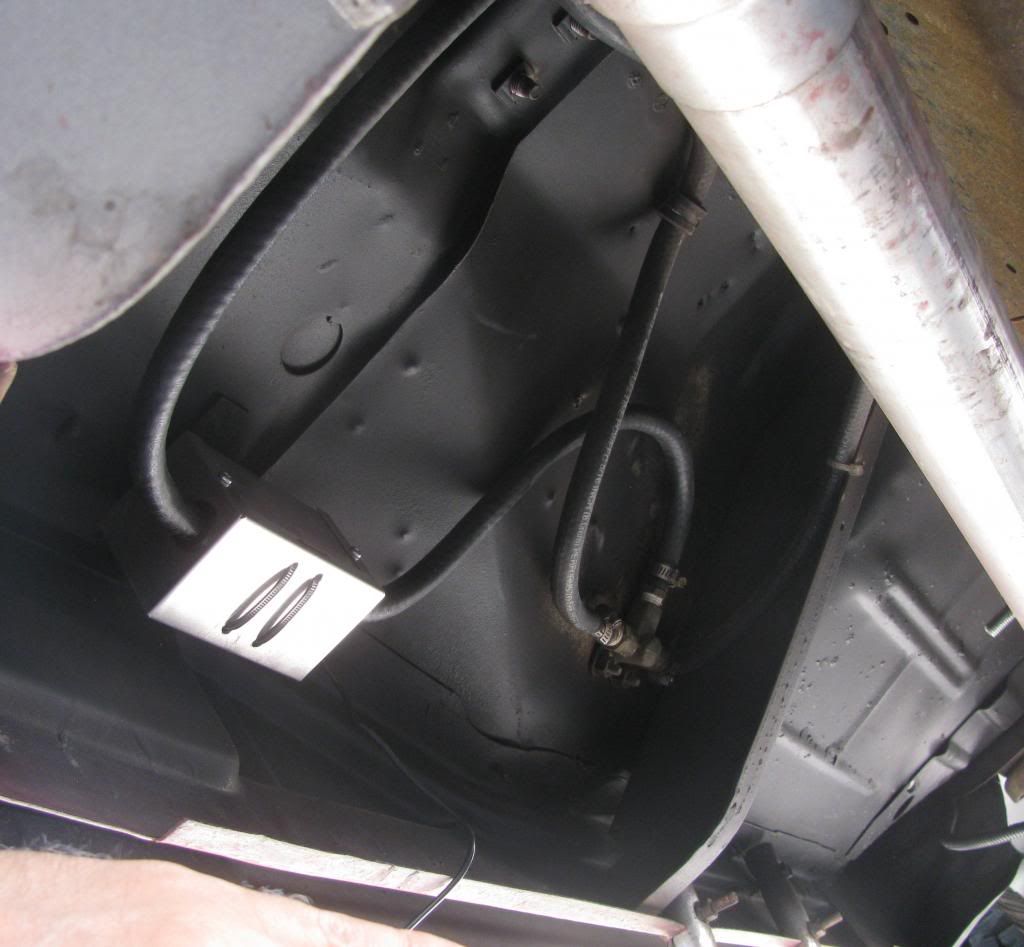
My first task was to add an air/fuel ratio gauge. Reviews on the web pointed me to an AEM kit and I found it for a good price on eBay. Since I don't trust my gas gauge in being very accurate (I'm using what looks like a homebuilt aux tank until I can replace the stock one), I found a fuel flow meter to help monitor consumption. It can measure real-time flow as well as integrated flow.
Here are some pics for the above. I'm going to drive the truck to work for the next couple of days and will have some data to share soon including a snapshot of my current set-up (carb, jets, timing, etc.)
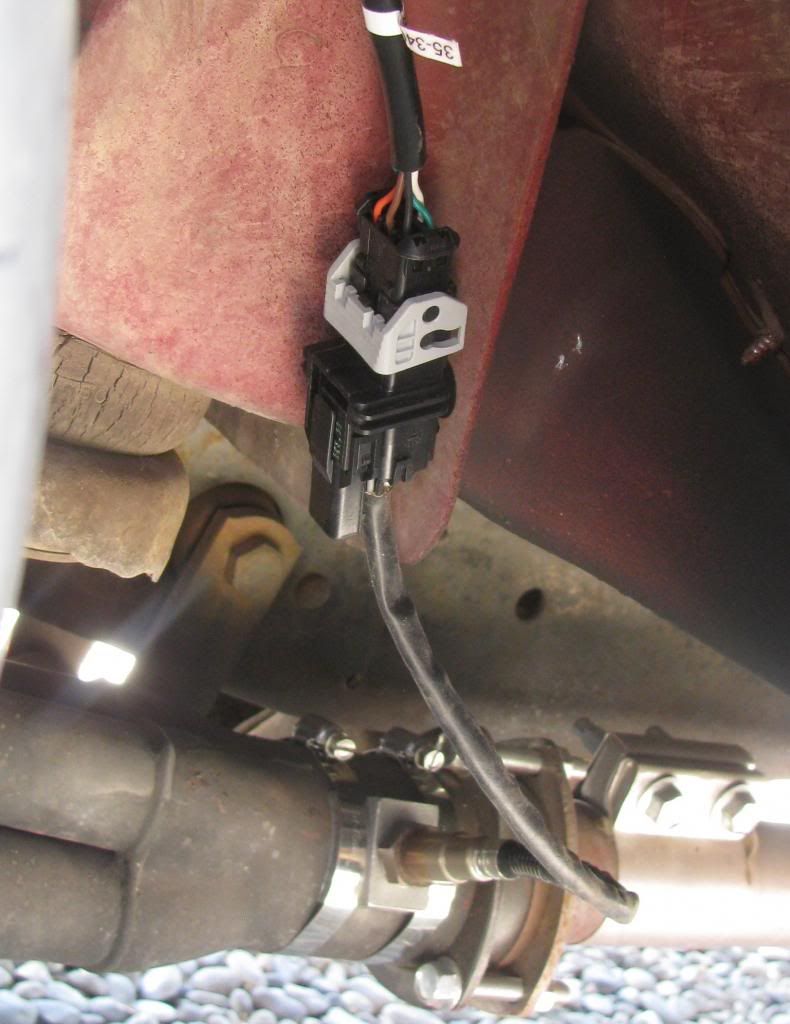
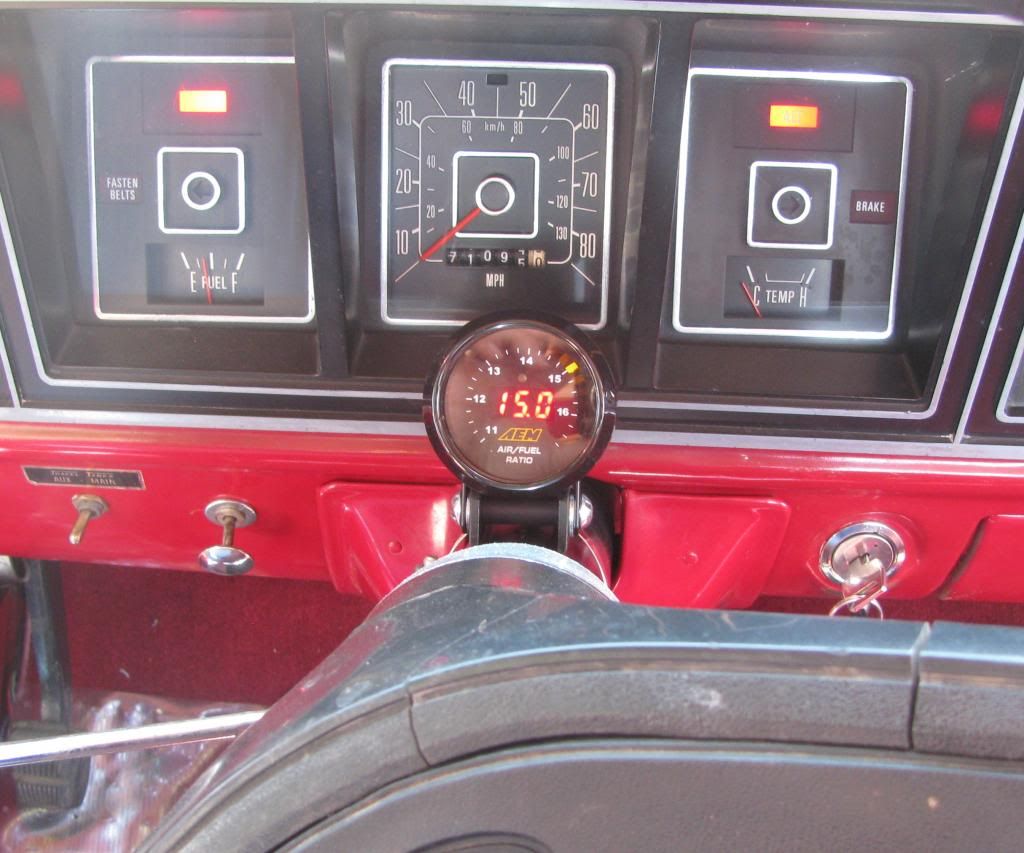
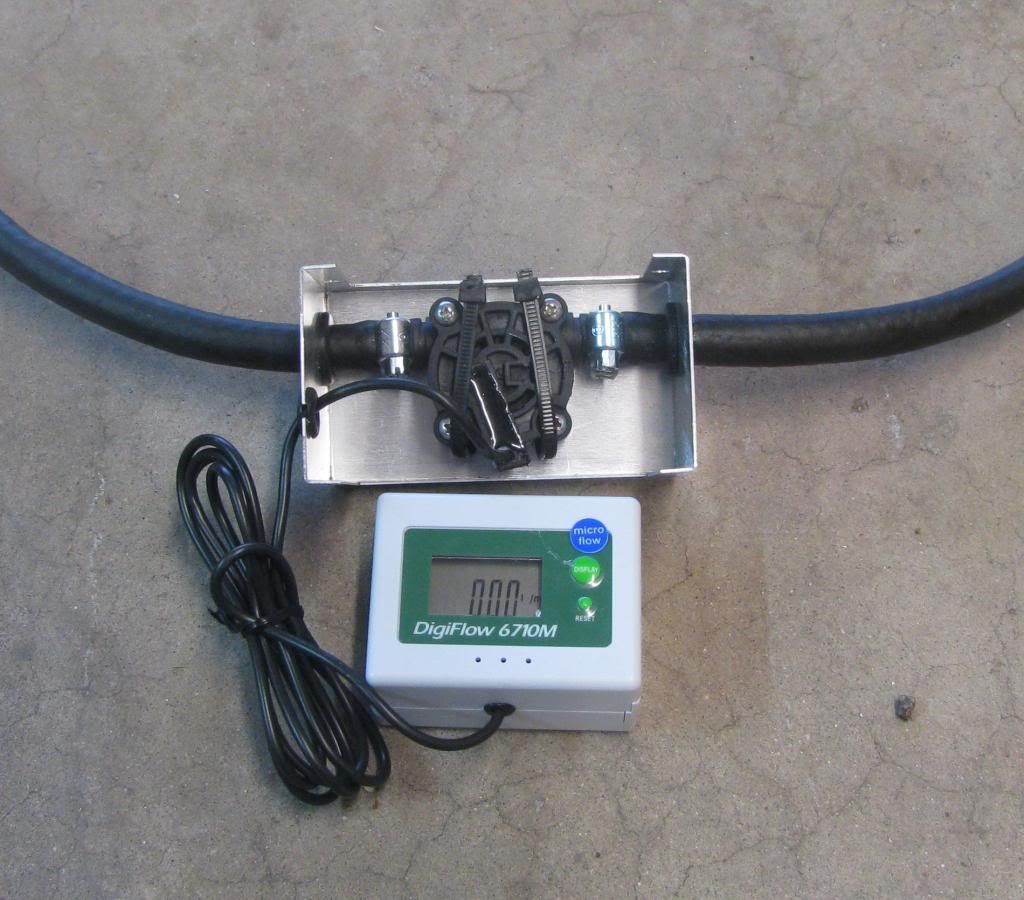
My first task was to add an air/fuel ratio gauge. Reviews on the web pointed me to an AEM kit and I found it for a good price on eBay. Since I don't trust my gas gauge in being very accurate (I'm using what looks like a homebuilt aux tank until I can replace the stock one), I found a fuel flow meter to help monitor consumption. It can measure real-time flow as well as integrated flow.
Here are some pics for the above. I'm going to drive the truck to work for the next couple of days and will have some data to share soon including a snapshot of my current set-up (carb, jets, timing, etc.)


Laughing Gas


Joined: Aug 2000
Posts: 1,010
Likes: 65
From: Eastern, Idaho
You sound a lot like me.
I bought the summit racing version of that aem a/f meter, which is almost identical. It works excellent. Way better than a narrow band and a multimeter I was trying to use before. I am running in the 12:1 area with full throttle and at idle then around 13-14 at cruise. I used a cigarette lighter plug for the power and ground and just ran it out the window for testing purposes. I recently rented a 2013 v6 mustang and it had several apps including an AF monitor. It ran right in the 14:1 area most of the time and maybe 13:1 at full throttle. It got 24 mpg over the 10 days I had it and I wasn't ever nice to it.
After watching a factory tuned mustang, I think I am going to play with the jets on my carb and try to get around 13:1 at full throttle. I tried leaning the idle down but it didn't like it at all. Vacuum gauge method worked best on the idle.
Make sure you keep us updated.
I bought the summit racing version of that aem a/f meter, which is almost identical. It works excellent. Way better than a narrow band and a multimeter I was trying to use before. I am running in the 12:1 area with full throttle and at idle then around 13-14 at cruise. I used a cigarette lighter plug for the power and ground and just ran it out the window for testing purposes. I recently rented a 2013 v6 mustang and it had several apps including an AF monitor. It ran right in the 14:1 area most of the time and maybe 13:1 at full throttle. It got 24 mpg over the 10 days I had it and I wasn't ever nice to it.
After watching a factory tuned mustang, I think I am going to play with the jets on my carb and try to get around 13:1 at full throttle. I tried leaning the idle down but it didn't like it at all. Vacuum gauge method worked best on the idle.
Make sure you keep us updated.
Thread Starter
|
Senior User
Joined: Sep 2012
Posts: 372
Likes: 4
From: New Mexico
Thanks! Your truck has inspired me to think about going with the two-tone given how great it looks.
Thread Starter
|
Senior User
Joined: Sep 2012
Posts: 372
Likes: 4
From: New Mexico
Orangeford - thanks for sharing that info. In parallel to making measurements, I need to learn more about what to target for an AF ratio and when. You raise an interesting idea - I should go see what my mustang is running at.
Thread Starter
|
Senior User
Joined: Sep 2012
Posts: 372
Likes: 4
From: New Mexico
Here's a snapshot of my current setup:
Over a couple of days back and forth to work, I averaged 9.5 MPG with an average speed of 25.5 MPH. Using an iPhone app and Google Earth I found that my odometer reads about 11% low - an effect of the 35" tires I assume.
Here's a quick scan of the AFR with a slow ramp of RPM:
700 13.6
1000 12.4
1500 12.2
2000 12.9
2500 13.8
Seems like I could drop a couple of jet sizes, but I now realize I want to go check the timing and get a map of the advance curve before I start making any changes.
- 351m with ~71k miles
- Hedman fenderwell headers with 1 5/8" tubes and 3" collectors
- Straight exhaust to Flowmaster 40 mufflers dumping before the tires
- Edelbrock Streetmaster manifold
- new Holley 4160 with #67 jets
- new cap, rotor, wires, plugs
Over a couple of days back and forth to work, I averaged 9.5 MPG with an average speed of 25.5 MPH. Using an iPhone app and Google Earth I found that my odometer reads about 11% low - an effect of the 35" tires I assume.
Here's a quick scan of the AFR with a slow ramp of RPM:
700 13.6
1000 12.4
1500 12.2
2000 12.9
2500 13.8
Seems like I could drop a couple of jet sizes, but I now realize I want to go check the timing and get a map of the advance curve before I start making any changes.
Fleet Mechanic
Joined: Jan 2010
Posts: 1,287
Likes: 17
From: San Carlos, CA

Thanks for the kind words. 
What is your altitude? I'm getting about 10MPG after a lot of tweaking of the carb and mostly my timing but I have to burn the higher octane fuel.
What is your altitude? I'm getting about 10MPG after a lot of tweaking of the carb and mostly my timing but I have to burn the higher octane fuel.
Trending Topics
Thread Starter
|
Senior User
Joined: Sep 2012
Posts: 372
Likes: 4
From: New Mexico
Good question - I should've noted that I'm at just about 5200 feet. This reminds me I should go get some vacuum numbers as well. I'm starting to think I need to get/build a data logger for this project.
FTE Stories
Ford Trucks for Ford Truck Enthusiasts

Top 6 Best Deals Available on New Fords & Lincolns Right Now
Brett Foote
This Hennessey Takes the Expedition Tremor's Off-Roading Capability to the Next Level
Verdad Gallardo
Top 10 Fords at 2026 Carlisle Ford Nationals
Joe Kucinski
3 Best / 3 Worst Parts of Modern Ford Ownership
Brett Foote
10 Amazing Upgrades That Solve Common Ford Truck Owner Headaches
Pouria Savadkouei
Every 2026 Ford Engine Explained
Brett Foote
10 Ugly Ford Trucks That We Still Kinda Love
Joe Kucinski
10 Things Every Truck Owner NEEDS (2026 Edition)
Michael S. Palmer
Rezvani's Latest Post-Apocalyptic Monster Is a Ford F-150 Raptor Underneath
Verdad Gallardo
MSEE
Joined: Apr 2004
Posts: 10,386
Likes: 35
From: Austin, TX
Very cool. I am using that same fuel flow rate sensor on my truck for a related project. I'll be interested to know your thoughts on its performance.
I'm pasting a link to the picture instead of the picture itself so as not to crowd your thread.
http://i1130.photobucket.com/albums/...psb7778b2c.jpg
I'm pasting a link to the picture instead of the picture itself so as not to crowd your thread.
http://i1130.photobucket.com/albums/...psb7778b2c.jpg

Hotshot


Joined: Feb 2004
Posts: 10,860
Likes: 2,621
From: The Shenandoah Valley
Is that 71,000 original miles on a OEM 351M you have?
Here's a snapshot of my current setup:
- 351m with ~71k miles
- Hedman fenderwell headers with 1 5/8" tubes and 3" collectors
- Straight exhaust to Flowmaster 40 mufflers dumping before the tires
- Edelbrock Streetmaster manifold
- new Holley 4160 with #67 jets
- new cap, rotor, wires, plugs
Thread Starter
|
Senior User
Joined: Sep 2012
Posts: 372
Likes: 4
From: New Mexico
tbear853 - yes, I'm reasonably confident the 71k miles is original. The truck is in really great shape and shows little signs of wear and tear. Other than age related issues with plastics and rubber, there's no body work or major dents and I only had to deal with light surface rust on the roof and hood from the paint being cooked off in the NM sun. I'm the third owner and the second owner only had it a year. I think I got very lucky finding this one.
You're absolutely right - I should've been more clear on the carb. It's a list 1850 at 600 cfm with vacuum seondaries and a manual choke.
You're absolutely right - I should've been more clear on the carb. It's a list 1850 at 600 cfm with vacuum seondaries and a manual choke.
Thread Starter
|
Senior User
Joined: Sep 2012
Posts: 372
Likes: 4
From: New Mexico
So far the calculated mileage using the flow meter measurements is reasonable consistent with estimates I made trying to use the gas gauge. It's interesting to watch the flow rate numbers. From what I've observed so far, the rate of flow tracks with RPM and also with load. For example, going to the HF today is all uphill for about 5 miles. The flow rate was noticeably higher than when returning home. One annoyance is the LCD screen shuts off after a second or two when I stop at a light.
Thread Starter
|
Senior User
Joined: Sep 2012
Posts: 372
Likes: 4
From: New Mexico
With more driving today, updating the mileage calculation got me to 9.0 MPG. Based on the flow meter, I'm guessing this is good to +- 1 MPG.
Also, I repeated the AFR scan I posted below. The only difference was every number was ~0.4 lower except idle which was about the same (although it bounces around quite a bit). Now today it was about 20 degrees warmer than when I took the data below and the atmospheric pressure was lower. Maybe it's a coincidence, but the percentage drop in air density today was about the same as the percentage drop in the AFR. Hence the reason modern engines have mass air flow sensors?
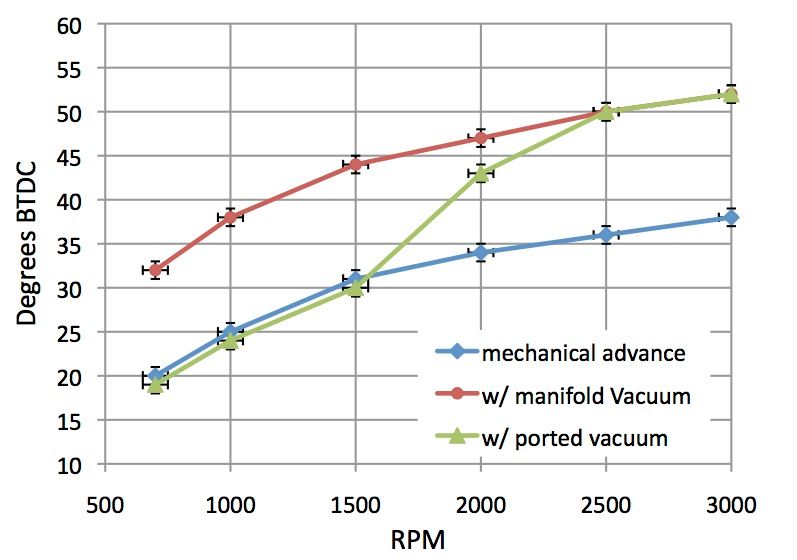
Finally, I measured the advance curve for just mechanical, with the advance connected to manifold vacuum, and with the advance connected to the ported vacuum. I have been running with it connected to manifold vacuum. Clearly I have too much initial. I'll also double check the harmonic balancer marks and try another timing light.
Also, I repeated the AFR scan I posted below. The only difference was every number was ~0.4 lower except idle which was about the same (although it bounces around quite a bit). Now today it was about 20 degrees warmer than when I took the data below and the atmospheric pressure was lower. Maybe it's a coincidence, but the percentage drop in air density today was about the same as the percentage drop in the AFR. Hence the reason modern engines have mass air flow sensors?
Finally, I measured the advance curve for just mechanical, with the advance connected to manifold vacuum, and with the advance connected to the ported vacuum. I have been running with it connected to manifold vacuum. Clearly I have too much initial. I'll also double check the harmonic balancer marks and try another timing light.

Hotshot
Joined: Feb 2004
Posts: 10,860
Likes: 2,621
From: The Shenandoah Valley
 .... I thought that was "low miles" ... it got used some earlier in my ownership but since the early 2000s I cut way back on use, though since retiring and taking a PT job I do drive her some more (my career then was as a state LEO which meant I walked to work for 31+ years) .... so she still only has 104,000 miles.
 If my buddy "Brownie" at the local auto machine shop where he's been over 35 years is right, you may start noticing a oil pressure drop. If you do, don't push it, just drop the panhard bar and pan and pull a rod cap and a main cap and have a look at the lower main shell and upper rod shell.
In fall of 1992 I had just changed oil and serviced my truck, and even used some "Slick 50" for once.
Then come October of 1992 and I was offered a recently rebuilt Shopsmith for just $225 by my wife's brother which covered the cost of new larger 1.5hp motor and speed adjusting quill by the local Shopsmith store there and so we took a trip to Muscadine, Al. from here in Virginia and the truck had fine oil pressure when we left .... but down near Chatsworth, Ga .... I noticed it dropped. Motor sounded OK, I thought "bad sender" .... swapped new sender in and still low. Motor sounded OK, I though "bad gage". Drove on through Rome and down through western Ga., spent weekend, drove to Atlanta Raceway for Richard Petty's last race and to see Alan Kulwicki win the 1992 Championship and Bill Elliott win the race (Alan held on to lead long enough to "lead most laps" by a lap and that 5 points gave him the Championship .... he was a thinker) .... and then on Monday, loaded up a Shopsmith Mk 5 and all accessories and wife and our dog and luggage and headed home via the Smokies and I made Bristol by dark, came up I'81 over 200 miles at 65 mph with CC set, still near no oil pressure, and no unusual noises.
Tuesday, slipped a mechanical oil pressure gage in place, had 4psi. FOUR PSI. Jacked truck, let frt axle hang, dropped PH bar and pan and pulled a main and rod cap. Lower side main shell was really badly worn, upper shell of rod was some copper. Crank looked "OK", I took shells to Ford parts, they could not tell me size by part numbers on back.

I went to local machine shop, Brownie looked and I told him my tale of woe" and he asked "how many miles", and when I told him .... he said most 351ms were about due at 75,000 in his experience. He said 400s not so much .... but that he'ld just seen it a lot with the 351ms .... leading me to think it's a balance issue with 351Ms Worn mains drop pressure, and so rod shells start wearing then. Just my theory (I know, some 351ms go way past 75,000 miles).
Brownie then measured thickness of shells at side where they don't wear, looked in book he had, I had std rod and main bearings. I bought new bearings, some fine crocus cloth, oil, filter, and new HV oil pump and gaskets. I did one shell at a time, doing the mains frt to back, slip old out, polish journal, clean with strip of cloth, slip oiled new shell in, attach cap, torque, go to next one ..... did all 8 rod sets too. New oil pump in, pan on, sealed up, that at 75,000 miles.
I just hoped she'ld last 6 months and so I built a 400 short block. I had burnt a valve a few months earlier and had come across a great set of freshly redone heads with 16 new guides and 8 new exhaust valves so plan was to reuse them. 22 years later and she still holds 50+ psi with 20W50 in summer at 65 mph with 31/10.50-15 and 3.50 gears. 400 is still on stand, all new, still waiting in basement.

Senior User
Joined: Sep 2011
Posts: 124
Likes: 1
From: canton michigan