


Wiring / Emission / Computer Delete

Thread Starter
|
Posting Guru
Joined: May 2013
Posts: 1,122
Likes: 0
From: Haysville, KS
Wiring / Emission / Computer Delete
Bear with me, this could be a long post.
I have a previous thread regarding a carburetor question and it started to evolve into a discussion on cleaning up the wiring and deleting some emissions.
To that end, I though I'd start a separate post.
After the carb and ignition change (DUI) I'd like to clean up the engine compartment and simplify things a bit. I've been doing some digging around and managed to figure a few things out, but still have some questions.
I followed the wire harness to the right firewall and think I located the MAP sensor. In that harness is also a wire that goes to the starter solenoid, so I'll need to get that separate from the rest, yes? (and the MAP sensor can go, correct?)
There are a few things that I'm not sure what they are or do; since a picture is worth a thousand words, here we go:
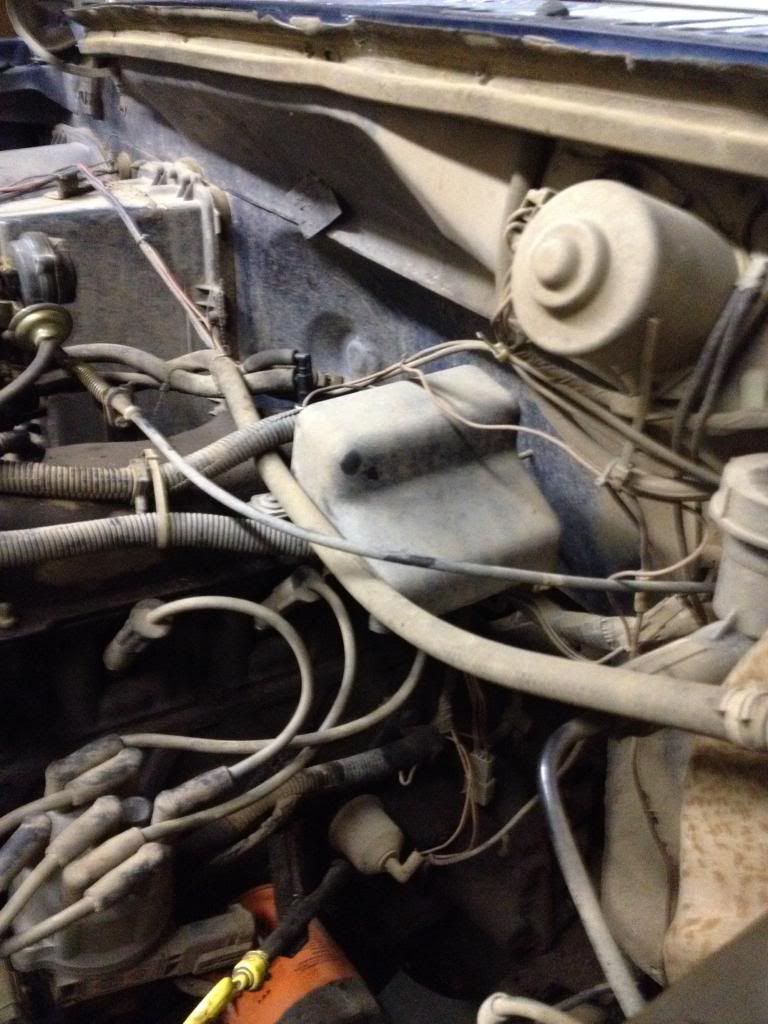
What is this and can it go away (looks like some relays or solenoids under the cover);
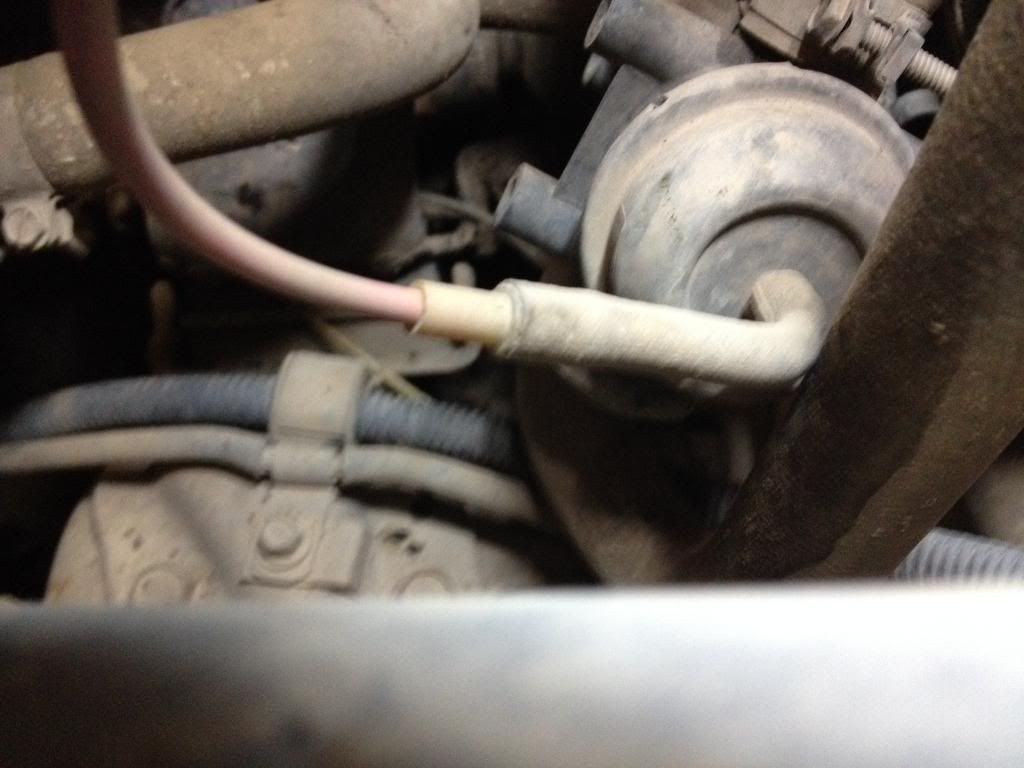
This (and a black one) look like vacuum lines going to the smog pump valve. If the SMOG system is deleted, do these get capped, or do they route to the above solenoids (if that is what they are)
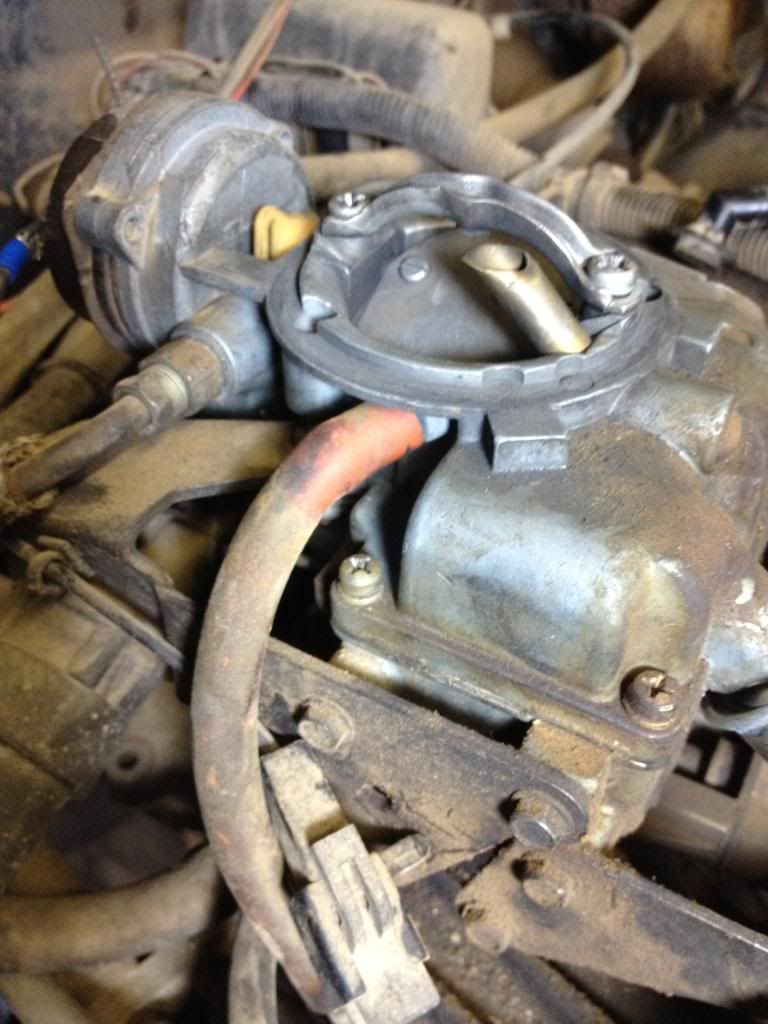
What is this orange (pink) line coming off the carburetor?
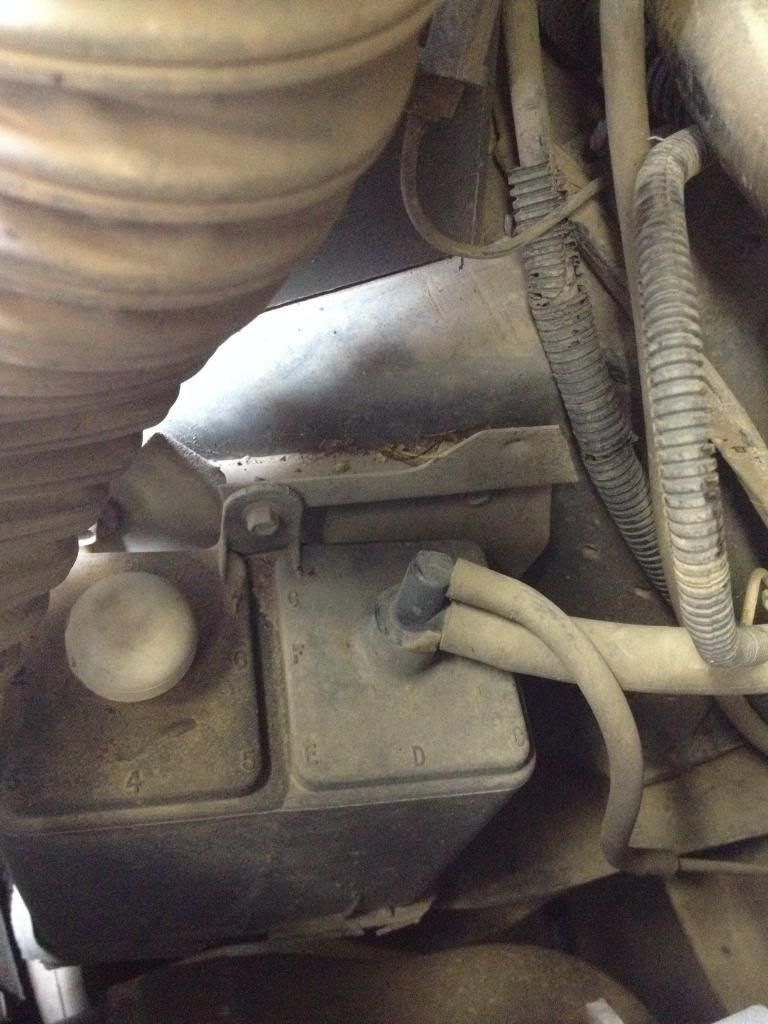
What about this canister. Stay or go?
It looks like there is some sort of valve or sensor on the line coming from the above canister to the carb. What is it and after the computer is gone, can it go away (or should it)
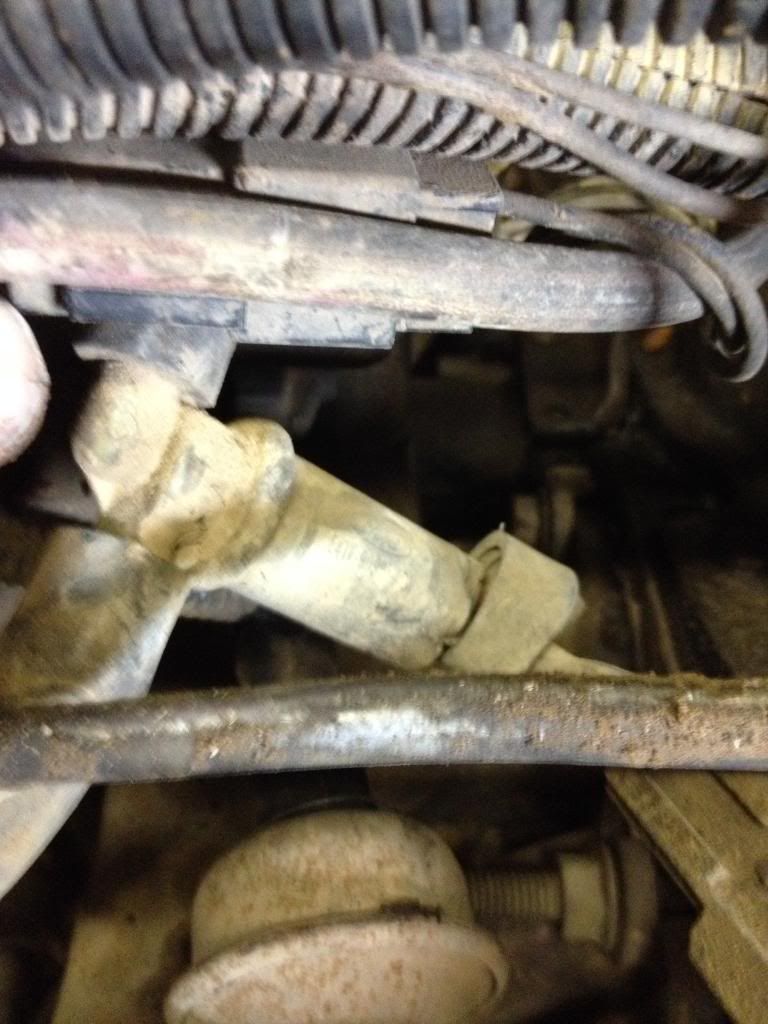
Bottom line; what can go and what needs to stay??
What about the EGR? Computer controlled or no?
I suppose since I'm getting rid of the computer, anything controlled by the computer might as well go. What all is that???
And this conversion was supposed to be easy. Well, I guess the conversion is but the cleanup is confusing the heck out of me..
I have a previous thread regarding a carburetor question and it started to evolve into a discussion on cleaning up the wiring and deleting some emissions.
To that end, I though I'd start a separate post.
After the carb and ignition change (DUI) I'd like to clean up the engine compartment and simplify things a bit. I've been doing some digging around and managed to figure a few things out, but still have some questions.
I followed the wire harness to the right firewall and think I located the MAP sensor. In that harness is also a wire that goes to the starter solenoid, so I'll need to get that separate from the rest, yes? (and the MAP sensor can go, correct?)
There are a few things that I'm not sure what they are or do; since a picture is worth a thousand words, here we go:
What is this and can it go away (looks like some relays or solenoids under the cover);
This (and a black one) look like vacuum lines going to the smog pump valve. If the SMOG system is deleted, do these get capped, or do they route to the above solenoids (if that is what they are)
What is this orange (pink) line coming off the carburetor?
What about this canister. Stay or go?
It looks like there is some sort of valve or sensor on the line coming from the above canister to the carb. What is it and after the computer is gone, can it go away (or should it)
Bottom line; what can go and what needs to stay??
What about the EGR? Computer controlled or no?
I suppose since I'm getting rid of the computer, anything controlled by the computer might as well go. What all is that???
And this conversion was supposed to be easy. Well, I guess the conversion is but the cleanup is confusing the heck out of me..
Thread Starter
|
Posting Guru
Joined: May 2013
Posts: 1,122
Likes: 0
From: Haysville, KS
I did manage to do some more research as related to this canister. I know what it is, but wasn't sure how it worked.
The device in the picture that is inline with the canister as it enters the carb is the canister purge solenoid. It is computer controlled, so if I understand this correctly, the EVAP system won't work after the computer is pulled out and might as well go away.
Ditto for the EGR and SMOG pump from what I can tell.
If I'm on the right track, it looks like remove items, plug holes and vacuum lines / ports as needed. Open up wire harness and keep some wires and pull the rest. The first picture I posted appears to be a bank of vacuum control solenoids that are also under computer control - so that can go as well.
Am I on the right track? Anything I'm missing?
The device in the picture that is inline with the canister as it enters the carb is the canister purge solenoid. It is computer controlled, so if I understand this correctly, the EVAP system won't work after the computer is pulled out and might as well go away.
Ditto for the EGR and SMOG pump from what I can tell.
If I'm on the right track, it looks like remove items, plug holes and vacuum lines / ports as needed. Open up wire harness and keep some wires and pull the rest. The first picture I posted appears to be a bank of vacuum control solenoids that are also under computer control - so that can go as well.
Am I on the right track? Anything I'm missing?

Moderator


Joined: Jan 2001
Posts: 56,995
Likes: 2,741
From: Virginia

Keep doing research and find out what everything does. If you did verify that the computer controls the purge solenoid, how are you going to deal with that? If you do not mind a fuel smell coming from the engine compartment, then ok you can get rid of all that and the canister. If you do mind a fuel smell, I think I would leave some of it. I am not totally up on the purge system, but you might just be able to activate the solenoid anytime the key is in run. The first thing I would do is experiment and hot wire the solenoid to the battery by just touching the wires, and see how it affects how the engine runs, and then go from there.
That orange line going to the carb looks like the fresh air line going to the choke system. That line will run filter air down to the exhaust manifold where it's warmed up and then sucked into the carb choke housing to make the choke work. That's the line you were wondering about re-routing.
All this stuff originally had a purpose, so there will be some things that are affected if you get rid of it.
That orange line going to the carb looks like the fresh air line going to the choke system. That line will run filter air down to the exhaust manifold where it's warmed up and then sucked into the carb choke housing to make the choke work. That's the line you were wondering about re-routing.
All this stuff originally had a purpose, so there will be some things that are affected if you get rid of it.
Thread Starter
|
Posting Guru
Joined: May 2013
Posts: 1,122
Likes: 0
From: Haysville, KS
Since I don't have the cats, I don't see the purpose of the smog pump anymore. In terms of the EVAP canister, I know that others have pulled the computer, so I'm wondering how they dealt with the purge solenoid (or am I off track and that isn't controlled by the computer?)
Bottom line, I guess I need to know what emission stuff is controlled by the computer..
Bottom line, I guess I need to know what emission stuff is controlled by the computer..

Cargo Master

Joined: Dec 2004
Posts: 3,362
Likes: 22
From: Florence, SC
Originally Posted by kscop
I followed the wire harness to the right firewall and think I located the MAP sensor. In that harness is also a wire that goes to the starter solenoid, so I'll need to get that separate from the rest, yes? (and the MAP sensor can go, correct?)
2. - I would start be removing the engine computer and the wiring that goes with it first. It is all part of one large wire harness. The only things that you will need from all that mess is the engine temperature sending unit wire, the oil sending unit wire, and the tachometer. It will be much easier and neater to just wire these back in from scratch than to to try to sort it out. (Once you start to remove the computer and the wire harness, you will see what I mean; some of those splices were SCARY.) Once you have dealt with that, anything left unplugged can be removed.
3. - Not sure what the second picture is.
4. - Like Franklin said, the orange tube is the fresh air connection from the carburetor to the choke stove. Leave this in place.
5. - Leave the charcoal canister in place for now. It is part of the evaporative emissions (EVAP) and it's purpose is to store gas fumes from the gas tank and the carburetor fuel bowl. With the computer gone and canister purge solenoid now useless (the solenoid shown in your last picture), the vapors can't be purged back into the engine to be burned, but that can easily be fixed later by adding a vacuum operated canister purge valve and ported vacuum switch. This system works much like a PCV valve and doesn't rob any horsepower to operate. Like Franklin said, this will keep your truck from smelling like a gas station all the time.
Thread Starter
|
Posting Guru
Joined: May 2013
Posts: 1,122
Likes: 0
From: Haysville, KS
Sounds like a plan then. Any idea on part numbers or where I can get the vacuum solenoid and ported switch?
Trending Topics
Thread Starter
|
Posting Guru
Joined: May 2013
Posts: 1,122
Likes: 0
From: Haysville, KS
Would this be the vacuum valve that would work? Where do I pull the ported vacuum to operated this?

FTE Stories
Ford Trucks for Ford Truck Enthusiasts

3 Best / 3 Worst Parts of Modern Ford Ownership
Brett Foote
10 Amazing Upgrades That Solve Common Ford Truck Owner Headaches
Pouria Savadkouei
Every 2026 Ford Engine Explained
Brett Foote
10 Ugly Ford Trucks That We Still Kinda Love
Joe Kucinski
10 Things Every Truck Owner NEEDS (2026 Edition)
Michael S. Palmer
Rezvani's Latest Post-Apocalyptic Monster Is a Ford F-150 Raptor Underneath
Verdad Gallardo
Top 10 Most Expensive Ford Trucks Ever Sold on Bring a Trailer
Joe Kucinski
2027 Ford Super Duty Buyer's Guide (Every Model, Engine, & Package)
Brett Foote
Top 10 Ford Truck Tragedies
Joe Kucinski
Thread
Thread Starter
Forum
Replies
Last Post
aaron.gwin
1980 - 1986 Bullnose F100, F150 & Larger F-Series Trucks
52
Jul 10, 2014 07:38 PM
Seth_84F250
1980 - 1986 Bullnose F100, F150 & Larger F-Series Trucks
25
Dec 17, 2013 08:22 PM
gotjeepzj
1980 - 1986 Bullnose F100, F150 & Larger F-Series Trucks
12
Aug 16, 2009 08:05 AM
rostena
1987 - 1996 F150 & Larger F-Series Trucks
137
Sep 1, 2008 07:20 PM
Lead Head
1980 - 1986 Bullnose F100, F150 & Larger F-Series Trucks
13
Dec 23, 2007 05:41 PM