


Wiring Question


Thread Starter
|
Junior User
Joined: Jul 2006
Posts: 54
Likes: 0
From: Saint Francis, Minnesota
Wiring Question
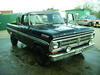
I have a nice 72 F100, SB with 126,000 miles, no rust, no bondo, 302 3 on the tree and factory power steering.
This is a daily driver for me and it has some electrical glitches. I ordered the Kwik Wire 14 circuit wiring kit for it. Has anybody here had any experience with Kwik Wire and rewiring a 72 in general?
Any comments or suggestions would be appreciated.
This is a daily driver for me and it has some electrical glitches. I ordered the Kwik Wire 14 circuit wiring kit for it. Has anybody here had any experience with Kwik Wire and rewiring a 72 in general?
Any comments or suggestions would be appreciated.

Freshman User
Joined: Sep 2012
Posts: 33
Likes: 0
I installed a 22 circuit Kwikwire harness in my 72 F100, 302, 3spd on column, no power steering though. I found the Kwikwire harness satisfactory in quality (I had a few minor issues). I used Kwikwires POC for help resolving two issues and found them to be decent, but not overly helpful.
One issue was the brake light wire from the fuse panel was wired to the ACC position of the buss bar vice constant 12v position, and the cruise control/power windows were wired to constant hot (I suspect they were wired backwards from the factory). They would not provide a fuse block schematic so I could easily rewire it so I had to draw my own (PITA). Resolving this issue required swapping the two feed wires.
Also, a few of the instructions were not correct for my truck. The dome light needs to be wired differently than the Kwikwire instructions show, also the starter circuit needs to accommodate the relay being on the firewall. The instructions provided by Kwikwire are for a generic installation, not specific to your Ford Truck, so just be aware you will need to tweak a little.
Last thing is to take good notes as you work and keep track of any changes you make. I highly suggest you do a complete diagram of your new system when done. Include wire colors/numbers so you can go back and fix any issues that might pop up later on.
Good luck!
One issue was the brake light wire from the fuse panel was wired to the ACC position of the buss bar vice constant 12v position, and the cruise control/power windows were wired to constant hot (I suspect they were wired backwards from the factory). They would not provide a fuse block schematic so I could easily rewire it so I had to draw my own (PITA). Resolving this issue required swapping the two feed wires.
Also, a few of the instructions were not correct for my truck. The dome light needs to be wired differently than the Kwikwire instructions show, also the starter circuit needs to accommodate the relay being on the firewall. The instructions provided by Kwikwire are for a generic installation, not specific to your Ford Truck, so just be aware you will need to tweak a little.
Last thing is to take good notes as you work and keep track of any changes you make. I highly suggest you do a complete diagram of your new system when done. Include wire colors/numbers so you can go back and fix any issues that might pop up later on.
Good luck!
Thread Starter
|
Junior User
Joined: Jul 2006
Posts: 54
Likes: 0
From: Saint Francis, Minnesota
Thanks!
Thanks so much for the reply Tsix. I haven't had much experience wiring, although I did my 60 pro street using a Ron Francis set up. Will have to give the Kwik Wire a go and see what happens, I can't have the truck laid up for a long time. Again any comments or suggestions are appreciated.
Thread Starter
|
Junior User
Joined: Jul 2006
Posts: 54
Likes: 0
From: Saint Francis, Minnesota
I mentioned their is some electrical glitches, they list as follows;
1. All lights work, headlights,brake lights, running lights, parking lights, all turn signals except right rear.
2. When brakes are applied parking lights (front), and dash lights along with brake lights come on.
3. Amp gage appears to be inop.
1. All lights work, headlights,brake lights, running lights, parking lights, all turn signals except right rear.
2. When brakes are applied parking lights (front), and dash lights along with brake lights come on.
3. Amp gage appears to be inop.
Freshman User
Joined: Sep 2012
Posts: 33
Likes: 0
I mentioned their is some electrical glitches, they list as follows;
1. All lights work, headlights,brake lights, running lights, parking lights, all turn signals except right rear.
2. When brakes are applied parking lights (front), and dash lights along with brake lights come on.
3. Amp gage appears to be inop.
1. All lights work, headlights,brake lights, running lights, parking lights, all turn signals except right rear.
2. When brakes are applied parking lights (front), and dash lights along with brake lights come on.
3. Amp gage appears to be inop.
2. Obvious short somewhere, should go away when you get the new harness installed.
3. Amp gauges are notorious for being very limited in usefulness. They typically only deflect in fractions of fractions of inches, making them seem to be non-functioning when in fact they are working. As long as the needle stays on the plus side you should be okay. If it goes negative then your alt is not keeping up with demand. I wired a voltmeter in to mine, but then I also put a whole new instrument panel in...
As far as additional tips go:
Take your time, use solder on as many connections as possible.
Keep the wires separated as far as which areas they run to.
Get a couple of hundred plastic tie wraps from harbor freight and keep everything neat and tidy as you go. The ties are cheap so don't worry about cutting them and replacing as you add more wires to the runs.
Get a few rolls of non adhesive automotive electrical tape and when you have all your wire routed to the areas they go to, wrap the bundles before terminating them.
Once you are satisfied that everything is where it should be, terminate and connect the wire. Then when you realize you missed something, unwrap the bundle and start over...

Before you hook up the battery and fry everything you just did, get your battery charger out and hook it to the main 12v feed wires and go around checking everything that should have constant 12v power. Especially look for leaking smoke...

When you are satisfied at this stage, turn on your ignition switch and recheck everything, including ACC powered stuff this time. If all looks good, hook up the battery and give her a turn...

Lastly, go back and clamp/tie/secure everything up, get a beer and decide what you are going to do for the rest of the morning...

Good luck!
Senior User
Joined: Oct 2011
Posts: 171
Likes: 1
1. Check your ground at the tail light, I believe the ground is through the "bucket" assembly. Meaning the bulb socket itself should ground to the frame of the taillight bucket, which grounds to the frame of the truck through the mounting screws.
2. Obvious short somewhere, should go away when you get the new harness installed.
3. Amp gauges are notorious for being very limited in usefulness. They typically only deflect in fractions of fractions of inches, making them seem to be non-functioning when in fact they are working. As long as the needle stays on the plus side you should be okay. If it goes negative then your alt is not keeping up with demand. I wired a voltmeter in to mine, but then I also put a whole new instrument panel in...
As far as additional tips go:
Take your time, use solder on as many connections as possible.
Keep the wires separated as far as which areas they run to.
Get a couple of hundred plastic tie wraps from harbor freight and keep everything neat and tidy as you go. The ties are cheap so don't worry about cutting them and replacing as you add more wires to the runs.
Get a few rolls of non adhesive automotive electrical tape and when you have all your wire routed to the areas they go to, wrap the bundles before terminating them.
Once you are satisfied that everything is where it should be, terminate and connect the wire. Then when you realize you missed something, unwrap the bundle and start over...
Before you hook up the battery and fry everything you just did, get your battery charger out and hook it to the main 12v feed wires and go around checking everything that should have constant 12v power. Especially look for leaking smoke...
When you are satisfied at this stage, turn on your ignition switch and recheck everything, including ACC powered stuff this time. If all looks good, hook up the battery and give her a turn...
Lastly, go back and clamp/tie/secure everything up, get a beer and decide what you are going to do for the rest of the morning...
Good luck!
2. Obvious short somewhere, should go away when you get the new harness installed.
3. Amp gauges are notorious for being very limited in usefulness. They typically only deflect in fractions of fractions of inches, making them seem to be non-functioning when in fact they are working. As long as the needle stays on the plus side you should be okay. If it goes negative then your alt is not keeping up with demand. I wired a voltmeter in to mine, but then I also put a whole new instrument panel in...
As far as additional tips go:
Take your time, use solder on as many connections as possible.
Keep the wires separated as far as which areas they run to.
Get a couple of hundred plastic tie wraps from harbor freight and keep everything neat and tidy as you go. The ties are cheap so don't worry about cutting them and replacing as you add more wires to the runs.
Get a few rolls of non adhesive automotive electrical tape and when you have all your wire routed to the areas they go to, wrap the bundles before terminating them.
Once you are satisfied that everything is where it should be, terminate and connect the wire. Then when you realize you missed something, unwrap the bundle and start over...
Before you hook up the battery and fry everything you just did, get your battery charger out and hook it to the main 12v feed wires and go around checking everything that should have constant 12v power. Especially look for leaking smoke...
When you are satisfied at this stage, turn on your ignition switch and recheck everything, including ACC powered stuff this time. If all looks good, hook up the battery and give her a turn...
Lastly, go back and clamp/tie/secure everything up, get a beer and decide what you are going to do for the rest of the morning...
Good luck!


Thread
Thread Starter
Forum
Replies
Last Post
Mason_72_F100
1967 - 1972 F-100 & Larger F-Series Trucks
3
Jun 18, 2019 08:03 AM
55_f_100
1948 - 1956 F1, F100 & Larger F-Series Trucks
22
Sep 27, 2010 09:32 AM
FLJ
1980 - 1986 Bullnose F100, F150 & Larger F-Series Trucks
4
Mar 3, 2009 05:41 PM
kenmaraz
1948 - 1956 F1, F100 & Larger F-Series Trucks
5
Oct 30, 2004 11:19 AM


