




Regular gas in tank.

Thread Starter
|
New User
Joined: Oct 2010
Posts: 24
Likes: 0
From: Chandler AZ
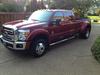
The truck was brand new. 288 miles on her. Took it in for a bed liner. When they were done they asked if I would like it washed and a full tank of gas. No brainer, duh! As the accessory rep was bringing it around front he felt the effects of the gas. He immediately shut it down. Probably driven a total of 2 to 3 miles. This truck had just arrived at the dealership and is the EXACT truck I would have ordered. I am just sick over this. On Monday they are going to try and contact the bank and undo things and start. Over. Have dealt with these guys for many years and have been very happy.
Thread Starter
|
New User
Joined: Oct 2010
Posts: 24
Likes: 0
From: Chandler AZ
One more thing, they gave me a brand new truck off the lot to go on my 4th of July camping trip and told me not to worry about anything. Hard not to dwell on it though, I really wanted THAT truck.

Posting Guru
Joined: Apr 2011
Posts: 2,345
Likes: 0

That is a lot of gas in the truck and if it was presenting symptoms the fuel pump is trashed. There is metal in the injectors. Costs for repairs have ranged a min of $10,000 to $20,000. Those are numbers reported here by people that have had to do it. It sounds like the dealership knows there may be severe damage to the truck.
Accidentally filling a diesel with gasoline - Putting gasoline in a diesel - Running a diesel engine on gasoline
Accidentally filling a diesel with gasoline - Putting gasoline in a diesel - Running a diesel engine on gasoline
Posting Guru
Joined: Apr 2011
Posts: 2,345
Likes: 0
How similar is the truck they gave you to the one you had? Ford will claim misfueling to deny warranty repairs if they know of the incident. How the dealership treats you on this is a real test. Hopefully they don't start trying to weasel out of this. Sometimes things change when they start to find out how extensive the damage is.
Senior User
Joined: Apr 2009
Posts: 157
Likes: 0
Super Moderator


Joined: Aug 2003
Posts: 25,479
Likes: 742
From: Isanti, MN

You need to get another truck.
One question to the OP, was this the initial fill up the dealer does when you buy a new truck. In the endless thread on HPFP requirements it stated some where that the brake in initial start up requires even more lubricity in the fuel. If you read 10% of that thread your mind will be made up.
One question to the OP, was this the initial fill up the dealer does when you buy a new truck. In the endless thread on HPFP requirements it stated some where that the brake in initial start up requires even more lubricity in the fuel. If you read 10% of that thread your mind will be made up.
In ANY situation when the truck is misfueled and the engine started the entire high pressure fuel system must be replaced. That means new HPFP, injectors, lines, etc. The dealer has to do this in order to sell the truck.
It appears the OP is getting a different truck, but whomever ends up with the one that was misfueled will never know the difference. In some states they are required to notify the buyer of a major repair, but every possible component that could be damaged will be replaced in this situation. If they don't they risk their Ford franchise and one hell of a lawsuit. The repair won't be on Ford, but rather the dealer's insurance if applicable. This has nothing to do with warranty, but rather an error on their part.

Lead Driver

Joined: Mar 2010
Posts: 5,505
Likes: 257
From: Woodbridge, Ontario, CA
I had such a situation awhile back where a new truck was towed into my shop, filled with gas. The vehicle in question was a 2012 truck with a 6.7L if I recall correctly, with very low mileage not even due for its first oil change. After determining very quickly that this vehicle had been mis-fueled, I submitted a quote to replace all fuel system components. The truck sat on our lot for almost a month before being towed away after the owner declined (likely due to the cost). A CuDL file was then submitted on that VIN in OASIS, just in case he were to end up on the doorstep of another dealer, attempting to get the repair put through under warranty (which would most definitely bounce, when the folks at WEPA get their hands on the old parts and determine mis-fueling to be the cause of the part failure).
I shouldn't really be posting this but about six to eight months later, I was approached by one of our sales managers (whom I'm not ever on exactly the same page with) requesting me to "remove" the CuDL file on said truck. Apparently the customer had it towed to another shop to have it "fixed" (what exactly was done, I don't know but can definitely say it wasn't a high pressure fuel system replacement for certain). Once a CuDL file is opened, it cannot be removed. It's on that vehicle's OASIS report for the rest of its service life. Said manager even had the ***** to ask if I can look at the truck "and say it's OK" in some way. I basically told him to go pound sand. The truck ended up on our doorstep shortly after, where it ended up being traded in for a '13 truck and then wholesaled away.
Hopefully this sheds some light on what happens to one of these trucks, in a similar situation.
FTE Stories
Ford Trucks for Ford Truck Enthusiasts

3 Best / Worst Features Of The 2025+ Ford Expedition
Brett Foote
10 Ways Ford is LOSING to the Competition
Joe Kucinski
Top 6 Best Deals Available on New Fords & Lincolns Right Now
Brett Foote
This Hennessey Takes the Expedition Tremor's Off-Roading Capability to the Next Level
Verdad Gallardo
Top 10 Fords at 2026 Carlisle Ford Nationals
Joe Kucinski
3 Best / 3 Worst Parts of Modern Ford Ownership
Brett Foote
10 Amazing Upgrades That Solve Common Ford Truck Owner Headaches
Pouria Savadkouei
Every 2026 Ford Engine Explained
Brett Foote
10 Ugly Ford Trucks That We Still Kinda Love
Joe Kucinski

Super Moderator
Joined: Aug 2003
Posts: 25,479
Likes: 742
From: Isanti, MN
If it was never titled, it's still a brand-new truck. Some states, like Ohio, require them to disclose a major repair. But that detracts absolutely nothing from a new truck; there's still a brand-new HPFP, injectors, lines...just like any other new truck.
Posting Guru
Joined: Apr 2011
Posts: 2,345
Likes: 0
I don't think you understand this CTD.
In ANY situation when the truck is misfueled and the engine started the entire high pressure fuel system must be replaced. That means new HPFP, injectors, lines, etc. The dealer has to do this in order to sell the truck.
It appears the OP is getting a different truck, but whomever ends up with the one that was misfueled will never know the difference. In some states they are required to notify the buyer of a major repair, but every possible component that could be damaged will be replaced in this situation. If they don't they risk their Ford franchise and one hell of a lawsuit. The repair won't be on Ford, but rather the dealer's insurance if applicable. This has nothing to do with warranty, but rather an error on their part.
In ANY situation when the truck is misfueled and the engine started the entire high pressure fuel system must be replaced. That means new HPFP, injectors, lines, etc. The dealer has to do this in order to sell the truck.
It appears the OP is getting a different truck, but whomever ends up with the one that was misfueled will never know the difference. In some states they are required to notify the buyer of a major repair, but every possible component that could be damaged will be replaced in this situation. If they don't they risk their Ford franchise and one hell of a lawsuit. The repair won't be on Ford, but rather the dealer's insurance if applicable. This has nothing to do with warranty, but rather an error on their part.
The fuel system is the least that can be done. That much gasoline will not ignite at the right time causing extreme detonation. This can cause wrist pin damage and may even affect rods. Old timers call a diesel that has been started on ether to often to be addicted for they only want to start using it. What has happened is damage to the cylinder and piston and rods etc. It has slightly reduced compression creating a starting problem. This truck will run but for how long? If any internal engine damage happens in the future, Ford will go back to this event. This dealer will most probably not be involved in future repairs. They probably will trade it off. They have to explane less that way. If a fuel system would solve the problem then keeping this truck would not be a problem. I wouldn't do it. It seems the dealer believes this may be a long term problem and doesn't want to deal with it. They say that they want to start over. Lets hope that does not change. Unfortunately, it often does.
Super Moderator
Joined: Aug 2003
Posts: 25,479
Likes: 742
From: Isanti, MN
The fuel system is the least that can be done. That much gasoline will not ignite at the right time causing extreme detonation. This can cause wrist pin damage and may even affect rods. Old timers call a diesel that has been started on ether to often to be addicted for they only want to start using it. What has happened is damage to the cylinder and piston and rods etc. It has slightly reduced compression creating a starting problem. This truck will run but for how long? If any internal engine damage happens in the future, Ford will go back to this event. This dealer will most probably not be involved in future repairs. They probably will trade it off. They have to explane less that way. If a fuel system would solve the problem then keeping this truck would not be a problem. I wouldn't do it. It seems the dealer believes this may be a long term problem and doesn't want to deal with it. They say that they want to start over. Lets hope that does not change. Unfortunately, it often does.
Posting Guru
Joined: Apr 2011
Posts: 2,345
Likes: 0
The repair needed, would most definitely not show up on OASIS, since it will NOT be a warrantable repair. How the dealer will handle it, may depend on their ethics (or lack thereof).
I had such a situation awhile back where a new truck was towed into my shop, filled with gas. The vehicle in question was a 2012 truck with a 6.7L if I recall correctly, with very low mileage not even due for its first oil change. After determining very quickly that this vehicle had been mis-fueled, I submitted a quote to replace all fuel system components. The truck sat on our lot for almost a month before being towed away after the owner declined (likely due to the cost). A CuDL file was then submitted on that VIN in OASIS, just in case he were to end up on the doorstep of another dealer, attempting to get the repair put through under warranty (which would most definitely bounce, when the folks at WEPA get their hands on the old parts and determine mis-fueling to be the cause of the part failure).
I shouldn't really be posting this but about six to eight months later, I was approached by one of our sales managers (whom I'm not ever on exactly the same page with) requesting me to "remove" the CuDL file on said truck. Apparently the customer had it towed to another shop to have it "fixed" (what exactly was done, I don't know but can definitely say it wasn't a high pressure fuel system replacement for certain). Once a CuDL file is opened, it cannot be removed. It's on that vehicle's OASIS report for the rest of its service life. Said manager even had the ***** to ask if I can look at the truck "and say it's OK" in some way. I basically told him to go pound sand. The truck ended up on our doorstep shortly after, where it ended up being traded in for a '13 truck and then wholesaled away.
Hopefully this sheds some light on what happens to one of these trucks, in a similar situation.
I had such a situation awhile back where a new truck was towed into my shop, filled with gas. The vehicle in question was a 2012 truck with a 6.7L if I recall correctly, with very low mileage not even due for its first oil change. After determining very quickly that this vehicle had been mis-fueled, I submitted a quote to replace all fuel system components. The truck sat on our lot for almost a month before being towed away after the owner declined (likely due to the cost). A CuDL file was then submitted on that VIN in OASIS, just in case he were to end up on the doorstep of another dealer, attempting to get the repair put through under warranty (which would most definitely bounce, when the folks at WEPA get their hands on the old parts and determine mis-fueling to be the cause of the part failure).
I shouldn't really be posting this but about six to eight months later, I was approached by one of our sales managers (whom I'm not ever on exactly the same page with) requesting me to "remove" the CuDL file on said truck. Apparently the customer had it towed to another shop to have it "fixed" (what exactly was done, I don't know but can definitely say it wasn't a high pressure fuel system replacement for certain). Once a CuDL file is opened, it cannot be removed. It's on that vehicle's OASIS report for the rest of its service life. Said manager even had the ***** to ask if I can look at the truck "and say it's OK" in some way. I basically told him to go pound sand. The truck ended up on our doorstep shortly after, where it ended up being traded in for a '13 truck and then wholesaled away.
Hopefully this sheds some light on what happens to one of these trucks, in a similar situation.
Posting Guru
Joined: Apr 2011
Posts: 2,345
Likes: 0
Gasoline will compression ignite. Just not at the right time. That is what a gas motor does when too low octane fuel is used for the compression when you shut it off and it continues to run, extremely poorly. This truck has some diesel in it. The extreme pressures of detonation slightly shorten the stroke making starting harder. In the extreme you can bed a rod. Some of this stuff takes time, how much, I don't know. Detonation can destroy an engine even before you can hear it. Firing off to early on the compression stroke causes bad things. Like hitting the piston with a sledge hammer. I know what old diesel mechanics have said for years and We have a couple that suffer from it. I have seen many gas wrist pin and rod bearing failures and a bent rod caused by it. And then our modern engines are not overbuilt.
Thread Starter
|
New User
Joined: Oct 2010
Posts: 24
Likes: 0
From: Chandler AZ
Heres what happened. I told them that there was no way I was keeping that truck and I would consider a Lariat for the blunder as a fair settlement. They searched for one that would work but no dice. They found me an XLT that was comparable to mine and said they would add the backup camera and remote start. Well, knowing that they weren't even capable of putting the correct fuel in the tank there was no way I wanted a new truck that had been taken apart and put back together.
Thats when I started to think about my truck and how perfect it was and the smokin deal I got on it. I spoke with the gentleman who drove it out of the detail area and he told me that immediately upon feeling the roughness in the motor he turned it of. They said it didn't take much to get it running perfectly because not much fuel had entered the system.
Long story short, new Toyo 35x12.5x20 AT2's, a sprayed in Inyati bedliner, a 7yr. 100000 mi premium Ford warranty and a $100 gift card to Flemings and I couldn't be happier. Truck runs perfect! Earnhardts really stepped up.
Thats when I started to think about my truck and how perfect it was and the smokin deal I got on it. I spoke with the gentleman who drove it out of the detail area and he told me that immediately upon feeling the roughness in the motor he turned it of. They said it didn't take much to get it running perfectly because not much fuel had entered the system.
Long story short, new Toyo 35x12.5x20 AT2's, a sprayed in Inyati bedliner, a 7yr. 100000 mi premium Ford warranty and a $100 gift card to Flemings and I couldn't be happier. Truck runs perfect! Earnhardts really stepped up.