


7.3 Toast?

Thread Starter
|
Cross-Country

Joined: Jun 2013
Posts: 72
Likes: 6
 7.3 Toast?
My first post on here.
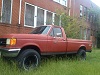
Looks like I very, very stupidly toasted my '89 F250 7.3 diesel.
Few weeks ago my radiator sprung a leak. Took it out & to a radiator shop. Guy there said there was a cracked seam and looked like several plugged tubes. He said it wasn't worth fixing, buy a new radiator.
I went home and laid it flat and filled with muriatic acid for a couple hours. Flushed it out with water & then baking soda. Soldered the seam, rigged up a way to pressurize the rad. No leaks. Reinstalled, ran some flush stuff thru the system, filled with SCA pre-charged AF. No leaks. I congratulated myself on saving about $400.
Last week I had to go to an energy fair trade show I exhibit at every year. Loaded up my trailer the night before I had to leave, and then noticed a tell-tale puddle under the truck. Grump, leaking AF. Dumped in a can of stop leak, looked like it quit leaking.
Next morning I set out to drive 150 miles to the fair. Stopped for diesel and saw another squirt & puddle. %$#@!!!! I should have given up and limped home at this point, but I had paid like $500 to be an exhibitor and just wanted to get to the fair and get set up. So I dumped in another can of stop leak. Thought it quit, so I kept driving.
The temp gauge usually reads between N & O, but it was running more in the R to M range. I figured well, it's warm but still in the NORMAL range. The needle started creeping up to A. I sighed and turned on the heater, and it seemed to stabilize.
Check engine light came on, now the needle said A to L. I cranked the heater to max and the light went out and the needle went back to A. Kept driving. Then the light came on and the needle pegged off the scale. I pulled over and shut it off and let it cool enough for needle to drop to R and light to go out. I did not let it cool enough to take the cap off and check fluid, though. Duh.
To make a long story short, I drove the poor truck for three hours, and got to my destination. When I shut it off and let it sit for a while, I added about 6 to 8 quarts of water (31 qt system). Then it would not start. Cranked until the battery was too low. A couple of friends tried jumping me, I sprayed some ether, no go. Put a charger on it overnight. Next morning batteries completely charged, but now the starter just went "click" and it didn't turn over at all.
I wound up calling AAA and it cost me $200+ to get the truck hauled 150 miles back home.
Various people have offered me theories about how bad the situation is. One guy said the ether caused vapor lock and fried the starter. Others said I may have warped a head and/or blown a gasket and have AF in the cylinders keeping the engine from turning (although I don't see milkiness on the dipstick). And/or have serious cavitation issues.
So my question is: is there any hope to resurrect this engine? If I need a new engine, I will probably be looking for a different truck, as this one is pretty rusty and has no shortage of other issues.
Looks like I very, very stupidly toasted my '89 F250 7.3 diesel.
Few weeks ago my radiator sprung a leak. Took it out & to a radiator shop. Guy there said there was a cracked seam and looked like several plugged tubes. He said it wasn't worth fixing, buy a new radiator.
I went home and laid it flat and filled with muriatic acid for a couple hours. Flushed it out with water & then baking soda. Soldered the seam, rigged up a way to pressurize the rad. No leaks. Reinstalled, ran some flush stuff thru the system, filled with SCA pre-charged AF. No leaks. I congratulated myself on saving about $400.
Last week I had to go to an energy fair trade show I exhibit at every year. Loaded up my trailer the night before I had to leave, and then noticed a tell-tale puddle under the truck. Grump, leaking AF. Dumped in a can of stop leak, looked like it quit leaking.
Next morning I set out to drive 150 miles to the fair. Stopped for diesel and saw another squirt & puddle. %$#@!!!! I should have given up and limped home at this point, but I had paid like $500 to be an exhibitor and just wanted to get to the fair and get set up. So I dumped in another can of stop leak. Thought it quit, so I kept driving.
The temp gauge usually reads between N & O, but it was running more in the R to M range. I figured well, it's warm but still in the NORMAL range. The needle started creeping up to A. I sighed and turned on the heater, and it seemed to stabilize.
Check engine light came on, now the needle said A to L. I cranked the heater to max and the light went out and the needle went back to A. Kept driving. Then the light came on and the needle pegged off the scale. I pulled over and shut it off and let it cool enough for needle to drop to R and light to go out. I did not let it cool enough to take the cap off and check fluid, though. Duh.
To make a long story short, I drove the poor truck for three hours, and got to my destination. When I shut it off and let it sit for a while, I added about 6 to 8 quarts of water (31 qt system). Then it would not start. Cranked until the battery was too low. A couple of friends tried jumping me, I sprayed some ether, no go. Put a charger on it overnight. Next morning batteries completely charged, but now the starter just went "click" and it didn't turn over at all.
I wound up calling AAA and it cost me $200+ to get the truck hauled 150 miles back home.
Various people have offered me theories about how bad the situation is. One guy said the ether caused vapor lock and fried the starter. Others said I may have warped a head and/or blown a gasket and have AF in the cylinders keeping the engine from turning (although I don't see milkiness on the dipstick). And/or have serious cavitation issues.
So my question is: is there any hope to resurrect this engine? If I need a new engine, I will probably be looking for a different truck, as this one is pretty rusty and has no shortage of other issues.
Senior User
Joined: Jun 2013
Posts: 208
Likes: 1
Dude, sorry to hear that... Usually when it REEEEALLY dies the engine will lock up. Have you tried roll starting it? I had a similar issue in the exact same truck where it over heated enough to the point it would not start and then burnt up my starter in the process.. Thought it was the batteries at first so I had them charged but still only heard a click from the solenoid. On closer inspection one of the wires on the starter was all burnt up.. Had to get a new one. Works great now!
Thread Starter
|
Cross-Country
Joined: Jun 2013
Posts: 72
Likes: 6
7.3 maybe not toast. Radiator advice?
Update on my toast post.
I got my son to pull the truck. Filled the radiator, got 'er rolling and popped the clutch to see if the engine would turn over. It did, and started. Drove er up and down the road a bit. Seemed to run good, sounded OK, although the temp gauge was creeping up.
Back home, I drained the oil. No water or AF in the oil, swished a magnet around in the bucket, no obvious metal shreds.
I took out the starter and bench tested it. Solenoid kicks in, but shaft & gear don't turn. Called the place I bought the starter, they said it has a lifetime guarantee, they will replace it.
So, I guess I am going to gamble that my 7.3 has some life left in it (it's about 190k miles). I'll replace the starter and radiator and also the worn ball joints, and keep driving it.
I ordered a $100 used radiator from a salvage yard, but they called back and said when they went to pull it, it was junk, sorry. Now I am thinking I don't wanna experience the leaking radiator blues again, maybe a new one is a better plan.
The OEM radiator is brass and copper. Looks like most of the less expensive radiators out there are aluminum with plastic tanks. I see on Rock Auto site one of those for about $268. Copper/brass one is $382.
Anybody have any advice/experience on the aluminum/plastic vs copper/brass?
I got my son to pull the truck. Filled the radiator, got 'er rolling and popped the clutch to see if the engine would turn over. It did, and started. Drove er up and down the road a bit. Seemed to run good, sounded OK, although the temp gauge was creeping up.
Back home, I drained the oil. No water or AF in the oil, swished a magnet around in the bucket, no obvious metal shreds.
I took out the starter and bench tested it. Solenoid kicks in, but shaft & gear don't turn. Called the place I bought the starter, they said it has a lifetime guarantee, they will replace it.
So, I guess I am going to gamble that my 7.3 has some life left in it (it's about 190k miles). I'll replace the starter and radiator and also the worn ball joints, and keep driving it.
I ordered a $100 used radiator from a salvage yard, but they called back and said when they went to pull it, it was junk, sorry. Now I am thinking I don't wanna experience the leaking radiator blues again, maybe a new one is a better plan.
The OEM radiator is brass and copper. Looks like most of the less expensive radiators out there are aluminum with plastic tanks. I see on Rock Auto site one of those for about $268. Copper/brass one is $382.
Anybody have any advice/experience on the aluminum/plastic vs copper/brass?
Logistics Pro
Joined: Apr 2011
Posts: 4,744
Likes: 5
From: Earth
never delt with replacing/swapping the rad my self yet but I would try for the copper/brass if possible, better able to with stant the constant expand and contract the rads go through to cool the vehicle, the plastic while good do over time tend to crack so I try to avoid them if possible when dealing with the plastic tank ones, my friend who has changed his out on his E serives van also says to stick with the metal ones, and avoid the plastic if able as it will crack over time from the continued expanding and contracting with the heat and cooling of the vehicles engine and the weather temps also effecting it as well...hope this helps some.

FTE Chapter Leader


Joined: May 2009
Posts: 8,843
Likes: 27
From: Eastern Ky

I've replaced 2 radiators (Car-Quest got them for me for $144 each) with the aluminum fins/plastic tanks.
Almost 5 yrs later, and neither one has had any cracking issues (No overheating either).
So I'm not gonna bash plastic and aluminum for doing its' job.
Almost 5 yrs later, and neither one has had any cracking issues (No overheating either).
So I'm not gonna bash plastic and aluminum for doing its' job.

i ain't rite
Joined: Mar 2005
Posts: 65,481
Likes: 5,542
From: Marlboro Mental Hospital.

there is a big difference between the gas radiators and the diesel radiators though Wesley.
my advice would be bite the bullet and go for the brass/copper.
i am on my second radiator in my 88 at 496,000 miles. the first one last around 350,000 miles before the top tank rotted off. the replacement was a modine brass/copper.
my advice would be bite the bullet and go for the brass/copper.
i am on my second radiator in my 88 at 496,000 miles. the first one last around 350,000 miles before the top tank rotted off. the replacement was a modine brass/copper.
FTE Chapter Leader
Joined: May 2009
Posts: 8,843
Likes: 27
From: Eastern Ky
there is a big difference between the gas radiators and the diesel radiators though Wesley.
my advice would be bite the bullet and go for the brass/copper.
i am on my second radiator in my 88 at 496,000 miles. the first one last around 350,000 miles before the top tank rotted off. the replacement was a modine brass/copper.
my advice would be bite the bullet and go for the brass/copper.
i am on my second radiator in my 88 at 496,000 miles. the first one last around 350,000 miles before the top tank rotted off. the replacement was a modine brass/copper.
Just was saying that not all plastics are made equal.
I highly recommend the Anti-Cavitation additive to the coolant, or make sure to get one that lists the A-C stuff in its' ingredient list.
Trending Topics
Thread Starter
|
Cross-Country
Joined: Jun 2013
Posts: 72
Likes: 6
Radiator options
Thanks, guys.
First I ordered a used radiator from a salvage yard. They had to remove it from the truck. They called back the next day and said sorry, the only one we have is junk.
Yesterday I ordered from rockauto.com a brass/copper Vista-Pro 432194 rad. Listed $382, but came to $473 with shipping and tax. Today they called me and told me this unit was out of stock.
So, back to the drawing board. I've been doing some more online research. A different ford truck forum had a long thread offering opinions on advantages and disadvantages of various kinds of radiators. I now have a slightly better idea of my ignorance on the subject.
I learned that different radiators have different numbers of rows of cooling tubes and different numbers of fins per inch, which the online descriptions may or may not tell you about. The various posters of course, had widely differing opinions on what to look for.
I looked at a bunch of rads on eBay and at the moment am leaning toward an all-aluminum three-row with tig-welded Al tanks (not plastic). It claims to be designed for racing and have 40% more cooling capacity than stock, but sells for $208 with free shipping. For a few bucks more I could get the same unit with two electric fans attached to it. If they would fit with my stock belt driven fan in place, i like the idea of just wiring them to a switched relay so i can flip them on if I am climbing a hill and the belt driven fan doesn't cool enough.
First I ordered a used radiator from a salvage yard. They had to remove it from the truck. They called back the next day and said sorry, the only one we have is junk.
Yesterday I ordered from rockauto.com a brass/copper Vista-Pro 432194 rad. Listed $382, but came to $473 with shipping and tax. Today they called me and told me this unit was out of stock.
So, back to the drawing board. I've been doing some more online research. A different ford truck forum had a long thread offering opinions on advantages and disadvantages of various kinds of radiators. I now have a slightly better idea of my ignorance on the subject.
I learned that different radiators have different numbers of rows of cooling tubes and different numbers of fins per inch, which the online descriptions may or may not tell you about. The various posters of course, had widely differing opinions on what to look for.
I looked at a bunch of rads on eBay and at the moment am leaning toward an all-aluminum three-row with tig-welded Al tanks (not plastic). It claims to be designed for racing and have 40% more cooling capacity than stock, but sells for $208 with free shipping. For a few bucks more I could get the same unit with two electric fans attached to it. If they would fit with my stock belt driven fan in place, i like the idea of just wiring them to a switched relay so i can flip them on if I am climbing a hill and the belt driven fan doesn't cool enough.
FTE Stories
Ford Trucks for Ford Truck Enthusiasts

2027 Ford Super Duty Buyer's Guide (Every Model, Engine, & Package)
Brett Foote
Top 10 Ford Truck Tragedies
Joe Kucinski
AEV FXL Super Duty - the Super Duty Raptor Ford Doesn't Make
Brett Foote
Lobo Vs Lobo: Proof the F-150 Lobo Should Be Even Lower!
Michael S. Palmer
Ford's 2001 Explorer Sportsman Concept Looks For a New Home
Verdad Gallardo
10 Best Ford Truck Engines We Miss the Most!
Joe Kucinski
2026 Shelby F-150 Off-Road: Better Than a Raptor R?
Brett Foote
2027 Super Duty Carhartt Package First Look: 12 Things You NEED to Know!
Michael S. Palmer
10 Most Surprising 2026 Ford Truck Features!
Joe Kucinski
Thread Starter
|
Cross-Country
Joined: Jun 2013
Posts: 72
Likes: 6
7.3 not toast i hope
Update on this post. I have now replaced the starter and the radiator. I wound up buying a brass/copper radiator from Advance Auto Parts. Their #432194 which is the same as the Vista Pro #, although AAP did not specify brand name. It was in stock in a store in a nearby town, so I picked it up in person.
I also replaced the air and oil filters. Truck seems to be running great.
I also just threw $1111 into new ball joints, new front tires and alignment. I may have invested more than this rusty '89 F250 is worth, but after shopping for a replacement truck, I concluded that i could spend a hell of a lot of $ for a truck with a lot more miles than this one (190k).
After all this, I now have to replace a driveshaft U-joint, but I am going to start a new post on that issue.
I also replaced the air and oil filters. Truck seems to be running great.
I also just threw $1111 into new ball joints, new front tires and alignment. I may have invested more than this rusty '89 F250 is worth, but after shopping for a replacement truck, I concluded that i could spend a hell of a lot of $ for a truck with a lot more miles than this one (190k).
After all this, I now have to replace a driveshaft U-joint, but I am going to start a new post on that issue.

Senior User
Joined: Mar 2008
Posts: 273
Likes: 1
...I may have invested more than this rusty '89 F250 is worth, but after shopping
for a replacement truck, I concluded that i could spend a hell of a lot of $ for
a truck with a lot more miles than this one (190k).
for a replacement truck, I concluded that i could spend a hell of a lot of $ for
a truck with a lot more miles than this one (190k).
I can fix a lot of stuff for what a new truck payment and insurance would cost every month.
Robert


Thread
Thread Starter
Forum
Replies
Last Post
Huntershaw
1973 - 1979 F-100 & Larger F-Series Trucks
5
Aug 12, 2018 04:46 PM
BUT
Pre-Power Stroke Diesel (7.3L IDI & 6.9L)
5
Jun 24, 2010 12:04 PM
89nolaf250
Pre-Power Stroke Diesel (7.3L IDI & 6.9L)
4
Dec 14, 2009 12:55 AM