







A/C not blowing cold

Elder User
Joined: Jun 2012
Posts: 757
Likes: 0
From: 7th realm of hell, Va.
Here is how I do it.
1. take the ambient air temp.
2. add 20 degrees.
3 cross this temp to a pressure. Your discharge pressure should be the new temps PTR pressure or less
here is a PTR chart
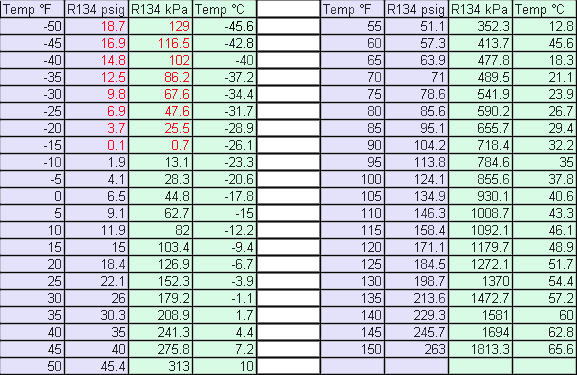
It wouldn't post the pic from photo bucket, but you can google R134a PTR chart and you will get a couple of hundred results
Matt
1. take the ambient air temp.
2. add 20 degrees.
3 cross this temp to a pressure. Your discharge pressure should be the new temps PTR pressure or less
here is a PTR chart

It wouldn't post the pic from photo bucket, but you can google R134a PTR chart and you will get a couple of hundred results
Matt
Elder User
Joined: Jun 2012
Posts: 757
Likes: 0
From: 7th realm of hell, Va.
Like I said in a previous post we need to know the system pressure and the ambient temop first thing in the morning.
The reason for doing it first thing in the morning is that every thing under the hood has had time to cool o ambient temp so there is no heat soak form the engine.
With the air I believe you ave in the system the R135a PTR chart will not be completely accurate because the air mixes with the refrigerant and changes the properties
Matt
The reason for doing it first thing in the morning is that every thing under the hood has had time to cool o ambient temp so there is no heat soak form the engine.
With the air I believe you ave in the system the R135a PTR chart will not be completely accurate because the air mixes with the refrigerant and changes the properties
Matt
Elder User
Joined: Jun 2012
Posts: 757
Likes: 0
From: 7th realm of hell, Va.
That is all I need Brad is the low pressure side. take it before you start the truck with everything off. The high side and the low side will be equalized so all i need is thee one reading.
I leave for work about 5:15 in the am so I probably will not see th post till the afternoon. but with the PTR chart I attached you can see for yourself whee you stand with the system. Should there be no air the system then we will have to visit other things to figure out what is going on. But lets start with the basics.
matt
I leave for work about 5:15 in the am so I probably will not see th post till the afternoon. but with the PTR chart I attached you can see for yourself whee you stand with the system. Should there be no air the system then we will have to visit other things to figure out what is going on. But lets start with the basics.
matt
Elder User
Joined: Jun 2012
Posts: 757
Likes: 0
From: 7th realm of hell, Va.
This is the same method used for finding out if you have a bottle of refrigerant and you don't know the condition. You use the PTR and you can tell if you hva a good bottle of refrigerant or a contaminated bottle.
But yes, definatley truck off.
Matt
But yes, definatley truck off.
Matt
FTE Stories
Ford Trucks for Ford Truck Enthusiasts

Top 10 Most Expensive Ford Trucks Ever Sold on Bring a Trailer
Joe Kucinski
2027 Ford Super Duty Buyer's Guide (Every Model, Engine, & Package)
Brett Foote
Top 10 Ford Truck Tragedies
Joe Kucinski
AEV FXL Super Duty - the Super Duty Raptor Ford Doesn't Make
Brett Foote
Lobo Vs Lobo: Proof the F-150 Lobo Should Be Even Lower!
Michael S. Palmer
Ford's 2001 Explorer Sportsman Concept Looks For a New Home
Verdad Gallardo
10 Best Ford Truck Engines We Miss the Most!
Joe Kucinski
2026 Shelby F-150 Off-Road: Better Than a Raptor R?
Brett Foote
2027 Super Duty Carhartt Package First Look: 12 Things You NEED to Know!
Michael S. Palmer
Elder User
Joined: Jun 2012
Posts: 757
Likes: 0
From: 7th realm of hell, Va.
With ambient temp at 65 degrees you should have seen about 64 psi. So you are 25-30 psi over what it should be, that tells Me with out a doubt that you have got air in your system. This also explains the extremely high discharge pressure when the unit is running.
The proper fix would be to have the system recovered, a pressure test conducted to find the leak, fix the leak, pull a deep vacuum and recharge with the proper amount of refrigerant.
What will happen when you get it fixed?
You will have even colder air coming out of your vents,
You will extend the service life of your compressor, running high pressures on your system shortens the compressor life.
You will have less load on your serpentine drive belt and therefore less load on the engine. After all it takes more power to compress something to 250 PSI then it does 150 psi.
If you have any other questions feel free to ask
matt
The proper fix would be to have the system recovered, a pressure test conducted to find the leak, fix the leak, pull a deep vacuum and recharge with the proper amount of refrigerant.
What will happen when you get it fixed?
You will have even colder air coming out of your vents,
You will extend the service life of your compressor, running high pressures on your system shortens the compressor life.
You will have less load on your serpentine drive belt and therefore less load on the engine. After all it takes more power to compress something to 250 PSI then it does 150 psi.
If you have any other questions feel free to ask
matt

Thread
Thread Starter
Forum
Replies
Last Post
Varro
1999 - 2003 7.3L Power Stroke Diesel
2
Oct 10, 2016 06:21 PM
evenwill
Cooling, Heating, Ventilation & A/C
11
Mar 30, 2015 11:46 AM