



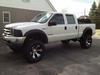

Fuel Mileage Question

Posting Guru
Joined: Dec 2003
Posts: 2,392
Likes: 0
From: NW Arkansas
Caps locks mean yelling btw.
Exhaust, intake, gauges n a custom tune will wake your truck up. Your letting it breathe better and getting a better burn in the cylinder with a custom tune.
No doubt that you will pick up 2-3mpg once you learn to drive regular again. You will get drunk with power at first.
Exhaust, intake, gauges n a custom tune will wake your truck up. Your letting it breathe better and getting a better burn in the cylinder with a custom tune.
No doubt that you will pick up 2-3mpg once you learn to drive regular again. You will get drunk with power at first.

Logistics Pro
Joined: Jun 2005
Posts: 4,243
Likes: 16
From: AZ
I AM NOT TRYING TO SPEND ANY MORE MONEY THAN I NEED TO. I DO HAUL HEAVY LOADS, SOME TIMES AS MUCH AS 14000 LBS. IF MY ROUTE GETS ANY BIGGER I'LL HAVE TO START PULLING A 7X14 TRAILER. I WOULD LIKE TO KNOW IF A TUNER WOULD HELP AT ALL. ALSO WILL A 4 INCH DOWN TUBE WITH 4 INCH EXHAUST HELP ? I AM WORKING ON A WIND JAM TO GO FROM THE TOP OF THE CAB TO THE TOP OF THE BOX,WONT COST A LOT AND MIGHT CUT DOWN ON SOME OF THE WIND DRAG. I ALREADY DRIVE AT 2000 RPM'S . I DONT WANT TO FIND OUT WANT MPG'S I WOULD GET AT 70 MPH . I LOVE THE TRUCK AND IF ALL I GET IS 13.5 MPG SO BE IT . REGEARING IS NOT AN OPTION AS I NEED THEM THE WAY THEY ARE .
 ), is an overdrive unit and some serious transmission cooling upgrades. The problem with the OD unit is the break-even point is way out there in the future for most folks. If you haul serious distances regularly, then the payoff is sooner. Somewhere I have a calculator I built that will tell you the time to break-even. I'll look for it if you want to run some numbers. BTW, we did some serious testing of airfoils on our trucks and we found that without the ability to lower the airfoil during crosswinds, it was a wash on savings.

Hotshot


Joined: Jan 2011
Posts: 18,849
Likes: 179
From: Puget Sound
If you had that truck with a gas engine, you'd be lucky to break 9... downhill.
One thing I've learned on these motors: Get it to 100% operational. No flakey sensors, no leaks (air, fuel, exhaust, boost, coolant, oil, whatever), no mixing of of anything in the previous list, clean air, clean fuel, clean oil, and it never hurts to get more air in/out. Cooler EGTs do signal better economy.
Tires... I saw my economy take a hit when I installed new tires. I puffed them up a little tighter and my economy returned (still under max pressure), but the ride suffered.
Aerodynamics: Keeping the parts facing the wind low and sleek really helps, but a square butt is a big vacuum. Many people overlook the rear of the vehicle when trying to improve aerodynamics. Round off the trucks butt and your butt will have more padding from a thicker wallet.
A tuner will not likely give you more economy, unless the shifting strategy works better for your environment than the stock strategy does. It will give you more power when called upon, though. Driving normal will keep your economy, but making heavy use of that added power will lose some of the MPGs you have now.
If there was one silver bullet, Ford would have put it in there... which they have (turbo): That's why you get 13.5 MPG of clean power, instead of 10 MPG of rollin' coal like the older trucks.
One thing I've learned on these motors: Get it to 100% operational. No flakey sensors, no leaks (air, fuel, exhaust, boost, coolant, oil, whatever), no mixing of of anything in the previous list, clean air, clean fuel, clean oil, and it never hurts to get more air in/out. Cooler EGTs do signal better economy.
Tires... I saw my economy take a hit when I installed new tires. I puffed them up a little tighter and my economy returned (still under max pressure), but the ride suffered.
Aerodynamics: Keeping the parts facing the wind low and sleek really helps, but a square butt is a big vacuum. Many people overlook the rear of the vehicle when trying to improve aerodynamics. Round off the trucks butt and your butt will have more padding from a thicker wallet.
A tuner will not likely give you more economy, unless the shifting strategy works better for your environment than the stock strategy does. It will give you more power when called upon, though. Driving normal will keep your economy, but making heavy use of that added power will lose some of the MPGs you have now.
If there was one silver bullet, Ford would have put it in there... which they have (turbo): That's why you get 13.5 MPG of clean power, instead of 10 MPG of rollin' coal like the older trucks.

Postmaster
Joined: Jun 2010
Posts: 2,555
Likes: 9
From: Longview, TX
1- a tuner will likely not help fuel economy. I say likely not, because there are circumstances where it may, but it's because of changed driving habits, not the tunes. It still takes a given amount of fuel to get these bad boys rolling and keep them there.
2- a larger exhaust will likely not help with mileage. It will help to lower EGTs though, which is beneficial for the engine. 4" is optimum, 5" is too big.
3- an improved intake will likely not improve mileage. It will help your turbo pull more air, but under long haul conditions with a steady rpm range, boost will be in an easily achievable range.
4- all of the above help improve performance, and you will likely tell a difference, but nobody can promise they will improve mileage. You may experience different results based on your driving style, but don't expect it.
5- a well maintained and 100% operational truck is the best way to get the most MPGs. Like others have said, clean fluids, greased bearings, properly inflated tires (no really, Obama was right), working sensors (clean back pressure sensor plays a big role), no boost leaks, no exhaust leaks, fuel system not sucking air. These are key.
6- regearing will help lower engine speeds at cruising velocity, which will help. Taller tires will also regear, but with taller tires comes more weight and other variables. (And I know you don't want to lose your gears anyway)
7- wind resistance plays the next largest factor IMO. I get 10-11 pulling a high profile fifth wheel. I can get 13-14 with the same weight on a flatbed. Strap your loads keeping safety first in mind, them aerodynamics second.
8- warming up the engine prior to driving will help. These trucks suck a LOT of fuel when cold and under load. A 10-20 minute idle will burn less fuel than gunning it hard for 5 miles.
Good luck!
2- a larger exhaust will likely not help with mileage. It will help to lower EGTs though, which is beneficial for the engine. 4" is optimum, 5" is too big.
3- an improved intake will likely not improve mileage. It will help your turbo pull more air, but under long haul conditions with a steady rpm range, boost will be in an easily achievable range.
4- all of the above help improve performance, and you will likely tell a difference, but nobody can promise they will improve mileage. You may experience different results based on your driving style, but don't expect it.
5- a well maintained and 100% operational truck is the best way to get the most MPGs. Like others have said, clean fluids, greased bearings, properly inflated tires (no really, Obama was right), working sensors (clean back pressure sensor plays a big role), no boost leaks, no exhaust leaks, fuel system not sucking air. These are key.
6- regearing will help lower engine speeds at cruising velocity, which will help. Taller tires will also regear, but with taller tires comes more weight and other variables. (And I know you don't want to lose your gears anyway)
7- wind resistance plays the next largest factor IMO. I get 10-11 pulling a high profile fifth wheel. I can get 13-14 with the same weight on a flatbed. Strap your loads keeping safety first in mind, them aerodynamics second.
8- warming up the engine prior to driving will help. These trucks suck a LOT of fuel when cold and under load. A 10-20 minute idle will burn less fuel than gunning it hard for 5 miles.
Good luck!

Logistics Pro


Joined: Aug 2005
Posts: 3,884
Likes: 180
From: Morgan Hill, CA

Put the most air you can in your tires, and only drive down hill. All kidding aside save your money for the fuel bill. Your payback period on MPG adders will be very, very long. 13.5 is good. It's not going to get much if any better. There is a reason people don't daily drive F450's!
The single best thing I did on mine to improve mileage was a T500 pump, which is available from RiffRaff Diesel in Orgeon. But mine is an early 99 and had the weaker pump.
The single best thing I did on mine to improve mileage was a T500 pump, which is available from RiffRaff Diesel in Orgeon. But mine is an early 99 and had the weaker pump.
Hotshot
Joined: Jan 2011
Posts: 18,849
Likes: 179
From: Puget Sound
Posting Guru
Joined: Dec 2003
Posts: 2,392
Likes: 0
From: NW Arkansas
1- a tuner will likely not help fuel economy. I say likely not, because there are circumstances where it may, but it's because of changed driving habits, not the tunes. It still takes a given amount of fuel to get these bad boys rolling and keep them there.
2- a larger exhaust will likely not help with mileage. It will help to lower EGTs though, which is beneficial for the engine. 4" is optimum, 5" is too big.
3- an improved intake will likely not improve mileage. It will help your turbo pull more air, but under long haul conditions with a steady rpm range, boost will be in an easily achievable range.
4- all of the above help improve performance, and you will likely tell a difference, but nobody can promise they will improve mileage. You may experience different results based on your driving style, but don't expect it.
5- a well maintained and 100% operational truck is the best way to get the most MPGs. Like others have said, clean fluids, greased bearings, properly inflated tires (no really, Obama was right), working sensors (clean back pressure sensor plays a big role), no boost leaks, no exhaust leaks, fuel system not sucking air. These are key.
6- regearing will help lower engine speeds at cruising velocity, which will help. Taller tires will also regear, but with taller tires comes more weight and other variables. (And I know you don't want to lose your gears anyway)
7- wind resistance plays the next largest factor IMO. I get 10-11 pulling a high profile fifth wheel. I can get 13-14 with the same weight on a flatbed. Strap your loads keeping safety first in mind, them aerodynamics second.
8- warming up the engine prior to driving will help. These trucks suck a LOT of fuel when cold and under load. A 10-20 minute idle will burn less fuel than gunning it hard for 5 miles.
Good luck!
2- a larger exhaust will likely not help with mileage. It will help to lower EGTs though, which is beneficial for the engine. 4" is optimum, 5" is too big.
3- an improved intake will likely not improve mileage. It will help your turbo pull more air, but under long haul conditions with a steady rpm range, boost will be in an easily achievable range.
4- all of the above help improve performance, and you will likely tell a difference, but nobody can promise they will improve mileage. You may experience different results based on your driving style, but don't expect it.
5- a well maintained and 100% operational truck is the best way to get the most MPGs. Like others have said, clean fluids, greased bearings, properly inflated tires (no really, Obama was right), working sensors (clean back pressure sensor plays a big role), no boost leaks, no exhaust leaks, fuel system not sucking air. These are key.
6- regearing will help lower engine speeds at cruising velocity, which will help. Taller tires will also regear, but with taller tires comes more weight and other variables. (And I know you don't want to lose your gears anyway)
7- wind resistance plays the next largest factor IMO. I get 10-11 pulling a high profile fifth wheel. I can get 13-14 with the same weight on a flatbed. Strap your loads keeping safety first in mind, them aerodynamics second.
8- warming up the engine prior to driving will help. These trucks suck a LOT of fuel when cold and under load. A 10-20 minute idle will burn less fuel than gunning it hard for 5 miles.
Good luck!
A tuner is going to increase efficiency in ways an intake and exhaust cannot.. but put them together and bam!! Better economy.
Our engines are air pumps.. more air in and more air out = power. We are not increasing power, we are freeing up power. We are freeing up fuel economy.
The idea of 4vs5 inch exhaust is a valid argument in theory.. yes.. a larger chamber allows exhaust gasses to cool faster.. at flow per RPM this theory is not valid. If you compared 3.5 inch DP to a 10inch DP perhaps you could find a difference...
it's dangerous to say these modifications do nothing.. they do but they are hard to measure.. When I was young in the diesel game I could not have understood what difference a tune could make.. I was perfectly happy with intake/exhaust/gauges.. This first ride w/ stage 1s/van turbo/tune was my first mental erection.. F'n amazing.. and it then it begins... more more more..
To the OP, you are behind the 8 ball in a bad way with a 450. We can help a little bit but gearing is killing you. I got an 08 450.. you just get used to getting kicked in the jeans over fuel mileage.. I get like 300-350 a tank empty.. 220-250 with a loan... but I can freaking haul stuff that would kill my 350 7.3.. Enjoy the towing capacity.. but look into other options if you want a daily driver.
FTE Stories
Ford Trucks for Ford Truck Enthusiasts

10 Things Every Truck Owner NEEDS (2026 Edition)
Michael S. Palmer
Rezvani's Latest Post-Apocalyptic Monster Is a Ford F-150 Raptor Underneath
Verdad Gallardo
Top 10 Most Expensive Ford Trucks Ever Sold on Bring a Trailer
Joe Kucinski
2027 Ford Super Duty Buyer's Guide (Every Model, Engine, & Package)
Brett Foote
Top 10 Ford Truck Tragedies
Joe Kucinski
AEV FXL Super Duty - the Super Duty Raptor Ford Doesn't Make
Brett Foote
Lobo Vs Lobo: Proof the F-150 Lobo Should Be Even Lower!
Michael S. Palmer
Ford's 2001 Explorer Sportsman Concept Looks For a New Home
Verdad Gallardo
10 Best Ford Truck Engines We Miss the Most!
Joe Kucinski
Posting Guru
Joined: Dec 2003
Posts: 2,392
Likes: 0
From: NW Arkansas
Put the most air you can in your tires, and only drive down hill. All kidding aside save your money for the fuel bill. Your payback period on MPG adders will be very, very long. 13.5 is good. It's not going to get much if any better. There is a reason people don't daily drive F450's!
The single best thing I did on mine to improve mileage was a T500 pump, which is available from RiffRaff Diesel in Orgeon. But mine is an early 99 and had the weaker pump.
The single best thing I did on mine to improve mileage was a T500 pump, which is available from RiffRaff Diesel in Orgeon. But mine is an early 99 and had the weaker pump.
Logistics Pro
Joined: Aug 2005
Posts: 3,884
Likes: 180
From: Morgan Hill, CA
This increased Injector Control Pressure, which increases atomization. I overlooked that. A tuner can increase your ICP at cruising speed, but it has to compensate by backing off the Fuel Injector Pulse Width to keep the fuel delivery the same. No guarantees as to how much this helps.
It was an early 99 with about 275,000 miles on the pump. I've had the DP Tuner for about ten years and didn't change anything after the pump install.
Postmaster
Joined: Jun 2010
Posts: 2,555
Likes: 9
From: Longview, TX
1, 2 & 3... please explain how these do not increase the fuel economy, engine efficiency, power, ect ect???
A tuner is going to increase efficiency in ways an intake and exhaust cannot.. but put them together and bam!! Better economy.
Our engines are air pumps.. more air in and more air out = power. We are not increasing power, we are freeing up power. We are freeing up fuel economy.
The idea of 4vs5 inch exhaust is a valid argument in theory.. yes.. a larger chamber allows exhaust gasses to cool faster.. at flow per RPM this theory is not valid. If you compared 3.5 inch DP to a 10inch DP perhaps you could find a difference...
it's dangerous to say these modifications do nothing.. they do but they are hard to measure.. When I was young in the diesel game I could not have understood what difference a tune could make.. I was perfectly happy with intake/exhaust/gauges.. This first ride w/ stage 1s/van turbo/tune was my first mental erection.. F'n amazing.. and it then it begins... more more more..
To the OP, you are behind the 8 ball in a bad way with a 450. We can help a little bit but gearing is killing you. I got an 08 450.. you just get used to getting kicked in the jeans over fuel mileage.. I get like 300-350 a tank empty.. 220-250 with a loan... but I can freaking haul stuff that would kill my 350 7.3.. Enjoy the towing capacity.. but look into other options if you want a daily driver.
A tuner is going to increase efficiency in ways an intake and exhaust cannot.. but put them together and bam!! Better economy.
Our engines are air pumps.. more air in and more air out = power. We are not increasing power, we are freeing up power. We are freeing up fuel economy.
The idea of 4vs5 inch exhaust is a valid argument in theory.. yes.. a larger chamber allows exhaust gasses to cool faster.. at flow per RPM this theory is not valid. If you compared 3.5 inch DP to a 10inch DP perhaps you could find a difference...
it's dangerous to say these modifications do nothing.. they do but they are hard to measure.. When I was young in the diesel game I could not have understood what difference a tune could make.. I was perfectly happy with intake/exhaust/gauges.. This first ride w/ stage 1s/van turbo/tune was my first mental erection.. F'n amazing.. and it then it begins... more more more..
To the OP, you are behind the 8 ball in a bad way with a 450. We can help a little bit but gearing is killing you. I got an 08 450.. you just get used to getting kicked in the jeans over fuel mileage.. I get like 300-350 a tank empty.. 220-250 with a loan... but I can freaking haul stuff that would kill my 350 7.3.. Enjoy the towing capacity.. but look into other options if you want a daily driver.
Now note that I said "likely not", and put it dependent on driving style. He stated that most of his driving was highway, which means the engine is primarily maintaining speed. It is possible to see some increase due to added power from an intake and exhaust because you won't have to downshift as often, but even running up the boost to hold a speed means you're burning more fuel to hold that speed. Maybe not as much fuel as shifting down would require, but averaging in these points of higher consumption with the rest if the trip will make them seem to disappear.
Now if there is a lot of in town driving, stop and go, variable speeds, etc. it's possible to see a little improvement. With all the extra power at the throttle, it's very unlikely. The best way is to take it easy, hence put an egg under the pedal (quote from Brother Les). Better performance does not equal better economy.
Edit: "performance" is a tough word. It can have different meanings for different people. I always think of performance as power. I think of economy as efficiency. Intake and exhaust will increase efficiency of the system, yes. Of course. Will it increase the efficiency enough to see a difference in fuel consumption per mile? I haven't seen that increase with these trucks. "Performance" and driveability were much better, but overall mileage, especially highway mileage, is generally unchanged. My dad drove a 2000 CC 2wd with 3.73s and could easily see 17-18 on flat rural ground. That truck had 315k when he sold it, and never once was there a test for boost leaks, exhaust leaks, or bad sensors. I bet he could have kissed 20-21 if I'd have known then what I know now, and that was a bone stock truck.

Thread Ender
Joined: Dec 2010
Posts: 1,296
Likes: 8
From: SC
Im not sure if the F450 is set up the exact same way regarding a couple of these but if you want better economy on a budget, these are some things that I would do:
1. Check/clean your exhaust back pressure sensor and tube.
2. Put more air in your tires.
3. Buy a used unlocked SuperChips Flashpac tuner off of ebay and run the economy tune.
4. Cut your muffler off (if you have one) and run a piece of straight pipe.
5. Use synthetic oil. (This is probably debatable for mpg reasons, but it cant hurt.)
6. And most importantly, drive like a granny. If you dont do that, you will counteract 1-5.
1. Check/clean your exhaust back pressure sensor and tube.
2. Put more air in your tires.
3. Buy a used unlocked SuperChips Flashpac tuner off of ebay and run the economy tune.
4. Cut your muffler off (if you have one) and run a piece of straight pipe.
5. Use synthetic oil. (This is probably debatable for mpg reasons, but it cant hurt.)
6. And most importantly, drive like a granny. If you dont do that, you will counteract 1-5.
Posting Guru
Joined: Dec 2003
Posts: 2,392
Likes: 0
From: NW Arkansas
It takes a certain amount of fuel to maintain a given speed under normal driving conditions. That doesn't change with a tune, an intake, or an exhaust. That's why no tuner will claim that their tune increases economy. Most of them even say that it's possible, but unlikely. As far as intake and exhaust, neither is anywhere near its design capacity while maintaining highway speed. Not even close. The stock air box and exhaust are capable of much more than what the truck is asking for while cruising.
Now note that I said "likely not", and put it dependent on driving style. He stated that most of his driving was highway, which means the engine is primarily maintaining speed. It is possible to see some increase due to added power from an intake and exhaust because you won't have to downshift as often, but even running up the boost to hold a speed means you're burning more fuel to hold that speed. Maybe not as much fuel as shifting down would require, but averaging in these points of higher consumption with the rest if the trip will make them seem to disappear.
Now if there is a lot of in town driving, stop and go, variable speeds, etc. it's possible to see a little improvement. With all the extra power at the throttle, it's very unlikely. The best way is to take it easy, hence put an egg under the pedal (quote from Brother Les). Better performance does not equal better economy.
Edit: "performance" is a tough word. It can have different meanings for different people. I always think of performance as power. I think of economy as efficiency. Intake and exhaust will increase efficiency of the system, yes. Of course. Will it increase the efficiency enough to see a difference in fuel consumption per mile? I haven't seen that increase with these trucks. "Performance" and driveability were much better, but overall mileage, especially highway mileage, is generally unchanged. My dad drove a 2000 CC 2wd with 3.73s and could easily see 17-18 on flat rural ground. That truck had 315k when he sold it, and never once was there a test for boost leaks, exhaust leaks, or bad sensors. I bet he could have kissed 20-21 if I'd have known then what I know now, and that was a bone stock truck.
Now note that I said "likely not", and put it dependent on driving style. He stated that most of his driving was highway, which means the engine is primarily maintaining speed. It is possible to see some increase due to added power from an intake and exhaust because you won't have to downshift as often, but even running up the boost to hold a speed means you're burning more fuel to hold that speed. Maybe not as much fuel as shifting down would require, but averaging in these points of higher consumption with the rest if the trip will make them seem to disappear.
Now if there is a lot of in town driving, stop and go, variable speeds, etc. it's possible to see a little improvement. With all the extra power at the throttle, it's very unlikely. The best way is to take it easy, hence put an egg under the pedal (quote from Brother Les). Better performance does not equal better economy.
Edit: "performance" is a tough word. It can have different meanings for different people. I always think of performance as power. I think of economy as efficiency. Intake and exhaust will increase efficiency of the system, yes. Of course. Will it increase the efficiency enough to see a difference in fuel consumption per mile? I haven't seen that increase with these trucks. "Performance" and driveability were much better, but overall mileage, especially highway mileage, is generally unchanged. My dad drove a 2000 CC 2wd with 3.73s and could easily see 17-18 on flat rural ground. That truck had 315k when he sold it, and never once was there a test for boost leaks, exhaust leaks, or bad sensors. I bet he could have kissed 20-21 if I'd have known then what I know now, and that was a bone stock truck.
If tuners do not claim fuel economy gains then why do we have 80economy and "Fuel sipper" tunes?
And I wasn't try to call you out or be a Dbag in my previous post.. I reread it and it could have been taken that way..

Fleet Mechanic

Joined: Mar 2009
Posts: 1,856
Likes: 52
From: Sacramento Delta, CA
Below, is something I posted on a different forum on the same subject last year. Although it does not address the OP's specific truck needs, it does relate my personal experience with rpm and mileage. I hope it rounds out the discussion:
"You know what is really sad? I have been thinking that I am getting 13 mpg with my 3.73's and 31.7" tire diameter. But my speedo says I am doing 67 mph when I am really doing 64 measured by the gps.
So that means that my odometer is overstating my mileage.
Which means I blew through my 100,000 mile warranty too quickly and am actually getting less than 13 mpg!
One thing is for sure though. Prior to modifications, three weeks after I got my van new with 7.3, 3.55 diff., stock tire size, factory calibrated speedo, no 4x4, no fiberglass top, etc. I got 21.96 mpg* driving 45-55 mph on the flats on I-5 from Sacto to L.A.
So, it seems to me that speed is not the problem (other than the big box wind resistance that I have now), but rpms.
So, based on David Whitmer's mods and my experience, fewer rpms means more mpg with the 7.3.
So, since my 15-passenger van is intended to haul asses rather than hauling ***, I am going to find the gearing with the fewest rpms with the least torque I can live with.
Which may be back to the 3.55 or 3.27 or even the 3.08 which Whitmer installed in his 7.3."
* Note this was hand calculated. 7.3 vans did not come with lie-o-meters.
"You know what is really sad? I have been thinking that I am getting 13 mpg with my 3.73's and 31.7" tire diameter. But my speedo says I am doing 67 mph when I am really doing 64 measured by the gps.
So that means that my odometer is overstating my mileage.
Which means I blew through my 100,000 mile warranty too quickly and am actually getting less than 13 mpg!
One thing is for sure though. Prior to modifications, three weeks after I got my van new with 7.3, 3.55 diff., stock tire size, factory calibrated speedo, no 4x4, no fiberglass top, etc. I got 21.96 mpg* driving 45-55 mph on the flats on I-5 from Sacto to L.A.
So, it seems to me that speed is not the problem (other than the big box wind resistance that I have now), but rpms.
So, based on David Whitmer's mods and my experience, fewer rpms means more mpg with the 7.3.
So, since my 15-passenger van is intended to haul asses rather than hauling ***, I am going to find the gearing with the fewest rpms with the least torque I can live with.
Which may be back to the 3.55 or 3.27 or even the 3.08 which Whitmer installed in his 7.3."
* Note this was hand calculated. 7.3 vans did not come with lie-o-meters.
Posting Guru
Joined: Dec 2003
Posts: 2,392
Likes: 0
From: NW Arkansas
Below, is something I posted on a different forum on the same subject last year. Although it does not address the OP's specific truck needs, it does relate my personal experience with rpm and mileage. I hope it rounds out the discussion:
"You know what is really sad? I have been thinking that I am getting 13 mpg with my 3.73's and 31.7" tire diameter. But my speedo says I am doing 67 mph when I am really doing 64 measured by the gps.
So that means that my odometer is overstating my mileage.
Which means I blew through my 100,000 mile warranty too quickly and am actually getting less than 13 mpg!
One thing is for sure though. Prior to modifications, three weeks after I got my van new with 7.3, 3.55 diff., stock tire size, factory calibrated speedo, no 4x4, no fiberglass top, etc. I got 21.96 mpg* driving 45-55 mph on the flats on I-5 from Sacto to L.A.
So, it seems to me that speed is not the problem (other than the big box wind resistance that I have now), but rpms.
So, based on David Whitmer's mods and my experience, fewer rpms means more mpg with the 7.3.
So, since my 15-passenger van is intended to haul asses rather than hauling ***, I am going to find the gearing with the fewest rpms with the least torque I can live with.
Which may be back to the 3.55 or 3.27 or even the 3.08 which Whitmer installed in his 7.3."
* Note this was hand calculated. 7.3 vans did not come with lie-o-meters.
"You know what is really sad? I have been thinking that I am getting 13 mpg with my 3.73's and 31.7" tire diameter. But my speedo says I am doing 67 mph when I am really doing 64 measured by the gps.
So that means that my odometer is overstating my mileage.
Which means I blew through my 100,000 mile warranty too quickly and am actually getting less than 13 mpg!
One thing is for sure though. Prior to modifications, three weeks after I got my van new with 7.3, 3.55 diff., stock tire size, factory calibrated speedo, no 4x4, no fiberglass top, etc. I got 21.96 mpg* driving 45-55 mph on the flats on I-5 from Sacto to L.A.
So, it seems to me that speed is not the problem (other than the big box wind resistance that I have now), but rpms.
So, based on David Whitmer's mods and my experience, fewer rpms means more mpg with the 7.3.
So, since my 15-passenger van is intended to haul asses rather than hauling ***, I am going to find the gearing with the fewest rpms with the least torque I can live with.
Which may be back to the 3.55 or 3.27 or even the 3.08 which Whitmer installed in his 7.3."
* Note this was hand calculated. 7.3 vans did not come with lie-o-meters.