


why diesels suck

Thread Starter
|
Senior User
Joined: Nov 2012
Posts: 138
Likes: 0
Where did this thread come from? A turbo gas engine will probably make more HP than a turbo diesel, but no way in hell will it make more torque. With a truck application, HP really isn't on most people's minds. For a truck it more about torque and producing torque at lower RPM's. That's what most people look for at least. This brings me to your point of 20 PSI of boost in a gas engine and 20 PSI in a diesel. You may get more HP out of the gasser, but almost guaranteed you won't come close to that 800ft-lb of torque. And even if it did it wouldn't be making it till much higher in the RPM range. That 800ft-lb in the diesel, which I assume is pointing towards the 6.7 powerstroke, is there at 1600 RPM. In a gasser the turbo wouldn't even be close to spooling up. The other thing to think about is the other work required to run these boost levels. With most diesels, other than some tuning, and maybe injectors, you can run that turbo at 20 PSI all day long and still get decent fuel mileage. Withe that gasser, in most engines, you will be rebuilding the entire bottom end to handle that much boost at the RPM's that would produce power like the diesel. Not to mention, once the turbo is spooled up to that 20 PSI the engine will be at a much higher RPM requiring much more fuel to be used. So at the end of the day, diesel's do NOT suck. They have their well earned place. Saying that they need turbo's to make power is valid. HOWEVER, the trend of today's gas engines seems to be creating power with turbo's as well so you can't just dog of the diesels anymore.
Thread Starter
|
Senior User
Joined: Nov 2012
Posts: 138
Likes: 0
You are moving into troll territory.
Your other post is a fine display of your genius and broad understanding of the internal combustion engine, on par with your understanding of the English language and it's uses.
https://www.ford-trucks.com/forums/1...ine-power.html
My guess is that you are 14.
Your other post is a fine display of your genius and broad understanding of the internal combustion engine, on par with your understanding of the English language and it's uses.
https://www.ford-trucks.com/forums/1...ine-power.html
My guess is that you are 14.
Thread Starter
|
Senior User
Joined: Nov 2012
Posts: 138
Likes: 0
You are moving into troll territory.
Your other post is a fine display of your genius and broad understanding of the internal combustion engine, on par with your understanding of the English language and it's uses.
https://www.ford-trucks.com/forums/1...ine-power.html
My guess is that you are 14.
Your other post is a fine display of your genius and broad understanding of the internal combustion engine, on par with your understanding of the English language and it's uses.
https://www.ford-trucks.com/forums/1...ine-power.html
My guess is that you are 14.

Posting Guru
Joined: May 2011
Posts: 2,156
Likes: 0

20 lbs of boost on a 4 cylinder will give you 400 hp and 200 lbs torque at 9,000 rpm.
a naturally aspirated 7.3 only makes 185 hp at 3000 rpm, but it also makes 360 lbs torque at 1400 rpm. so while it is not a race car, it will do anything you ask it to do. just not fast.

Senior User
Joined: Mar 2005
Posts: 191
Likes: 0
From: Maryland
Really talking about 2 forms of power. An engine with torque down low is better for a truck, that's why the 4.9 six is so much better in a truck than a 5.0, unless you're using the truck as a car.
I have an old ('89) international with the non-turbo 7.3 IDI, (same as the Ford pickups of this era) and regularly make the rum between Philly and DC @ 25,000 lbs. with 185 HP.
Also have some experience with installing turbo's on gas engines, and I can tell you fuel mileage will decrease, due to the exhaust restriction caused by the turbine at low throttle openings and no boost. A larger turbo will be less restrictive, but then it will come on boost later. Proper turbo sizing is a very important step, and probably the first step skipped on most installations.
I have an old ('89) international with the non-turbo 7.3 IDI, (same as the Ford pickups of this era) and regularly make the rum between Philly and DC @ 25,000 lbs. with 185 HP.
Also have some experience with installing turbo's on gas engines, and I can tell you fuel mileage will decrease, due to the exhaust restriction caused by the turbine at low throttle openings and no boost. A larger turbo will be less restrictive, but then it will come on boost later. Proper turbo sizing is a very important step, and probably the first step skipped on most installations.
Thread Starter
|
Senior User
Joined: Nov 2012
Posts: 138
Likes: 0
FTE Stories
Ford Trucks for Ford Truck Enthusiasts

3 Best / Worst Features Of The 2025+ Ford Expedition
Brett Foote
10 Ways Ford is LOSING to the Competition
Joe Kucinski
Top 6 Best Deals Available on New Fords & Lincolns Right Now
Brett Foote
This Hennessey Takes the Expedition Tremor's Off-Roading Capability to the Next Level
Verdad Gallardo
Top 10 Fords at 2026 Carlisle Ford Nationals
Joe Kucinski
3 Best / 3 Worst Parts of Modern Ford Ownership
Brett Foote
10 Amazing Upgrades That Solve Common Ford Truck Owner Headaches
Pouria Savadkouei
Every 2026 Ford Engine Explained
Brett Foote
10 Ugly Ford Trucks That We Still Kinda Love
Joe Kucinski
Thread Starter
|
Senior User
Joined: Nov 2012
Posts: 138
Likes: 0
Really talking about 2 forms of power. An engine with torque down low is better for a truck, that's why the 4.9 six is so much better in a truck than a 5.0, unless you're using the truck as a car.
I have an old ('89) international with the non-turbo 7.3 IDI, (same as the Ford pickups of this era) and regularly make the rum between Philly and DC @ 25,000 lbs. with 185 HP.
Also have some experience with installing turbo's on gas engines, and I can tell you fuel mileage will decrease, due to the exhaust restriction caused by the turbine at low throttle openings and no boost. A larger turbo will be less restrictive, but then it will come on boost later. Proper turbo sizing is a very important step, and probably the first step skipped on most installations.
I have an old ('89) international with the non-turbo 7.3 IDI, (same as the Ford pickups of this era) and regularly make the rum between Philly and DC @ 25,000 lbs. with 185 HP.
Also have some experience with installing turbo's on gas engines, and I can tell you fuel mileage will decrease, due to the exhaust restriction caused by the turbine at low throttle openings and no boost. A larger turbo will be less restrictive, but then it will come on boost later. Proper turbo sizing is a very important step, and probably the first step skipped on most installations.
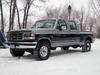
are you saying that with a properly sized turbo mileage could increase. i guess there is a guy around my parts that put a turbo on this truck and reported better fuel mileage due to making the engine more efficient
Posting Guru
Joined: May 2011
Posts: 2,156
Likes: 0


Posting Guru
Joined: Aug 2004
Posts: 2,417
Likes: 4
From: Braham MN


Thread
Thread Starter
Forum
Replies
Last Post
Supadoodie
7.3L / 6.8L V8 Gasoline Engines
93
Apr 6, 2020 04:41 PM
Intercooled
Pre-Power Stroke Diesel (7.3L IDI & 6.9L)
10
Aug 20, 2003 12:24 PM