







Fuel additive ?

Senior User
Joined: Feb 2011
Posts: 425
Likes: 0
From: Epsom,NH in the summer.
It depends where you buy your diesel from. If you buy from a station that moves alot of diesel, you usually should have no problem. Compare to a station that sits on it and sells it at a lower price. I should know I deliver the fuel. Always be pro active and play on safety and use some type of anti-gelling fuel additive. If you live where it gets cold below 32*.

Thread Starter
|
Cross-Country
Joined: May 2012
Posts: 82
Likes: 1
Trending Topics

Posting Guru
Joined: Oct 2012
Posts: 1,910
Likes: 2
From: Hat Creek Ca
I use Stanadyne and have had no issues, been down as low as -9 recently and have had average highs in the 30's for almost a month. There was a thread on here a while back that had lab test results on several differt products. Stanadyne was in the top 5 or so. Some were better depending on which properties were required. Some were just plain snake oil at best and a couple were actually damaging to the injectors
FTE Stories
Ford Trucks for Ford Truck Enthusiasts

10 Best Ford Truck Engines We Miss the Most!
Joe Kucinski
2026 Shelby F-150 Off-Road: Better Than a Raptor R?
Brett Foote
2027 Super Duty Carhartt Package First Look: 12 Things You NEED to Know!
Michael S. Palmer
10 Most Surprising 2026 Ford Truck Features!
Joe Kucinski
Top 10 Ford Trucks Coming to Mecum Indy 2026
Brett Foote
5 Best / 5 Worst Ford Truck Wheels of All Time
Joe Kucinski
Ford Super Duty: 5 Things Owners LOVE, 5 Things They LOATHE!
Joe Kucinski
Every 2026 Ford Truck Engine RANKED from WORST to FIRST!
Michael S. Palmer
The Best F-150 Deal of Every Trim Level (XL through Raptor)
Joe Kucinski
Cargo Master

Joined: Mar 2006
Posts: 2,502
Likes: 2
From: Bend Oregon

I personally like the Ford cetain booster with anti gel. I have used standyne, DK, lucas but the Ford is cheapest and seams to work every bit as well....$7 and some change will treat 100 gallons.

Senior User
Joined: Jun 2009
Posts: 288
Likes: 0
From: Maryland
I agree with clem1226. I have used the Ford PSD additives as well. Can't beat the quality for the price. The Ford brand also has the long neck bottles that make pouring easy, no funnel required. I have read or been told (Can't remember?) Stanadyne makes this for Ford.
The bottom line is, as long as you use a good quality additive anti-gel if needed, you can't go wrong. It also helps to buy your diesel from a high volume station.
The bottom line is, as long as you use a good quality additive anti-gel if needed, you can't go wrong. It also helps to buy your diesel from a high volume station.

Post Fiend
Joined: Sep 2006
Posts: 7,426
Likes: 6
From: Sioux Falls, SD
Whatever you choose is up to you, just do some homework because some products don't flip the bill. The key to using any additive is adding it in before the fuel reaches it's cloud point (somewhere around the lower-mid 20 degrees F range). Once the fuel starts to cloud the additive won't be effective (unless you use something like Diesel 911, specifically made to un-gel diesel fuel). You could throw as much as you want in the tank, but it's too late.
was down to -15 F here last week. Been using this with straight #2 diesel for the last 3 winters, no problems with any of our 7.3L's or my families farm equipment.
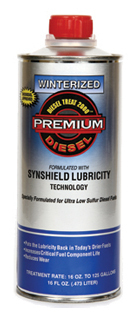
was down to -15 F here last week. Been using this with straight #2 diesel for the last 3 winters, no problems with any of our 7.3L's or my families farm equipment.
Post Fiend
Joined: Sep 2006
Posts: 7,426
Likes: 6
From: Sioux Falls, SD
Here's a backyard test I did a few years ago. Gives a pretty good visualization of diesel fuel clouding & jelling.
https://www.ford-trucks.com/forums/9...schaeffer.html
https://www.ford-trucks.com/forums/9...schaeffer.html
Posting Guru
Joined: Oct 2012
Posts: 1,910
Likes: 2
From: Hat Creek Ca
One of the other main concerns besides fuel gelling and cetain boost is lubrication properties. The ULSD that is required today is not designed for older engines. I don't recall the actual numbers for the "old diesel" but I believe that the sulfur content was in the 100 - 200 PPM range. The new ULSD is like 3 - 6 PPM. Haven't looked for that lab report but my notes show that Opti-Lube XPD has the best lubricating properties of the bunch, and also has a " Summer blend " as well. These and Stanadyne are a little spendy, but what is a couple of extra cents per mile when you are looking at new injectors for no other reason?
Mike
Mike

Senior User
Joined: Jan 2008
Posts: 236
Likes: 0
We plow snow at work during the winter months, and it has been a steady high of less than 10*f for around a month, and we haven't had a gelling problem on 13 machines and four transfer tanks with filters. We have used Howes for the last three years that I have worked there without a single gelling problem. If someone has a breakdown or a problem, I'm the one they call. Before I got there, we used DK white bottle, and had a few issues with gelling, but it defiantly helped. We learned that DK has alcohol, which dries out the already dry ULSD, and Howes does not.

Thread
Thread Starter
Forum
Replies
Last Post