


hood gap


Fleet Mechanic

Joined: Mar 2010
Posts: 1,342
Likes: 1
From: Jamestown, IN
If you are familiar with the 53-56 style trucks if you run one through rough conditions (example a field while loaded 15000 pounds) the twisting and turning and different little movements will cause the hood to walk up in the rear. I have seen several trucks with the military style latches for jeeps on the rear of the hood to keep them down. My 51 f1 does the same thing. It works its corners up as I drive. Also when i close the hood i have to push one side down. I know that it is all in the adjustment of the braces rather than the springs, but just like everyone elses, they are warn considerably and once you get it adjusted close you quit while youre ahead....

Elder User
Joined: May 2012
Posts: 728
Likes: 2
From: North Idaho
As others have already said, there is quite a bit of adjustment to move the fenders up or down, but the hood is pretty much what it is which is to say that it never matched the fender profile.
48 thru 51 hoods have a stamped curve to the lower seam, yet the top of the fenders for the same years is flat. Therefore if you want a even gap between fender top and hood seam you must either re-curve the fender upper profile or add meat to the hood, simple as that.
most fitment problems come from the hood hinge area, and this is a problem that really has no 1 step fix. I have built/re-built several sets of hinges and made them as tight as possible only to find that they had just enough slop in them that the rear hood gap was inconsistant,,life sucks.
case in point: my good friend Jon insisted that he had a standard hood but every time we open or close the top, it is never the same, there is always one corner or another that needs to be pushed down into place, no matter what we do.
48 thru 51 hoods have a stamped curve to the lower seam, yet the top of the fenders for the same years is flat. Therefore if you want a even gap between fender top and hood seam you must either re-curve the fender upper profile or add meat to the hood, simple as that.
most fitment problems come from the hood hinge area, and this is a problem that really has no 1 step fix. I have built/re-built several sets of hinges and made them as tight as possible only to find that they had just enough slop in them that the rear hood gap was inconsistant,,life sucks.
case in point: my good friend Jon insisted that he had a standard hood but every time we open or close the top, it is never the same, there is always one corner or another that needs to be pushed down into place, no matter what we do.

Laughing Gas
Joined: Dec 2007
Posts: 792
Likes: 3
From: Sandy Run SC
I used the original front center bumper and ordered some screw in bumpers from McMaster Carr for the front sides. I don't have any flex in the front end because I reinforced the frame, boxed the frame and bolted the radiator support to the front cross member without the springs under it. 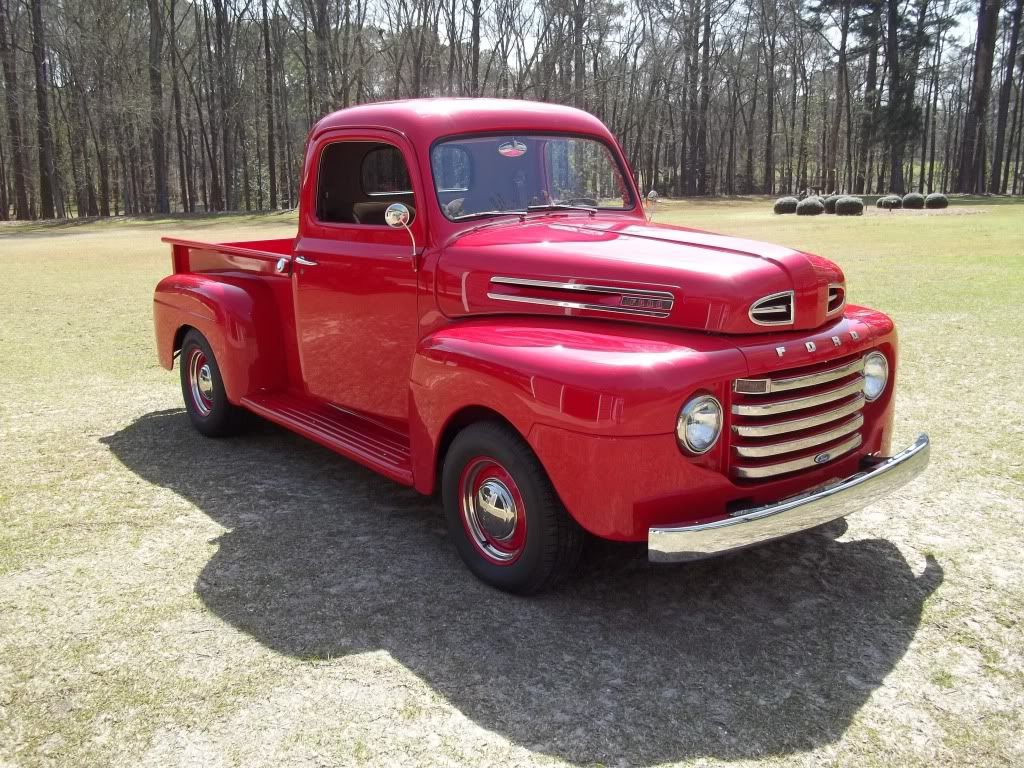

Logistics Pro


Joined: Nov 2011
Posts: 4,685
Likes: 81
From: Northville, MI

FYI - Increasing frame rigidity can be a double edged sword. The body doesn't move but you will increase understeer particularly on wet roads at highway speed and increase tire wear. That may not make much difference if your truck isn't a daily driver or you only use it locally.
Laughing Gas
Joined: Dec 2007
Posts: 792
Likes: 3
From: Sandy Run SC
FYI - Increasing frame rigidity can be a double edged sword. The body doesn't move but you will increase understeer particularly on wet roads at highway speed and increase tire wear. That may not make much difference if your truck isn't a daily driver or you only use it locally.


Thread
Thread Starter
Forum
Replies
Last Post
56panelford
1948 - 1956 F1, F100 & Larger F-Series Trucks
38
Dec 21, 2010 04:07 AM
reamer
1948 - 1956 F1, F100 & Larger F-Series Trucks
9
Nov 3, 2005 02:55 PM


