



injector choice

Thread Starter
|
Junior User
Joined: Sep 2003
Posts: 67
Likes: 0
From: Nixa
Hey Tugly, U say you know of someone that got 1M miles on original injectors? that is amazing. I may have misunderstood but I thought our local diesel shop said 150K is average before they need replaced or rebuilt. I'm original owner and I religiously changed oil every 3-4K, fuel filter every other oil change and I'm not going to hit 300K before have to replace mine and I do mostly hiway driving. Any thought on what makes some last 150K and others go 1M, thanks, Charlie
Post Fiend
Joined: May 2009
Posts: 5,470
Likes: 3
From: Pea Ridge, AR

There is just too many moving parts in a HEUI injector to believe that 1 million miles would be normal(possible sure the norm nope). I would say it would be very rare to have over 300k. Now if that OTR truck was common rail(Which I'm sure it is), that is a little different. As an average of 1/2 the B50 life of the engine or around 160k miles the lower poppet seat will show wear on quite a number of injectors.

Hotshot


Joined: Jan 2011
Posts: 18,849
Likes: 179
From: Puget Sound
OTR truck are configured differently, yes... but they also do a much better job of fuel/oil filtration. I am modifying Stinky with an oil-bypass filter and I already have my fuel filtration in place, with the mods to prevent air from geting in the fuel. Remember - Ford engineers stuff to keep the price of the vehicle reasonable and to make sure they get some service work. After all these years and so many vehicles, the weak links in the trucks are well known on this forum and this is evident by the lists of mods in our signatures. Hutch, FRx, HPX, Air Dog, Oil bypass, fuel/water seperators, 50-cent, etc.... And that's just the stuff that effects the injectors! Do all the fuel/oil mods and learn how the big boys treat their fuel/oil and we can really extend the life of the injectors.
I've read on the forum where many are approaching 300K on original injectors and some with 400K. I have 260K... with many flaws in the system up until now. I whole-heartedly believe I can get much more on the next set after all my planned mods, but we won't know that until I'm retirement age and we will be surfing the web with 3D glasses and gesture control.
I've read on the forum where many are approaching 300K on original injectors and some with 400K. I have 260K... with many flaws in the system up until now. I whole-heartedly believe I can get much more on the next set after all my planned mods, but we won't know that until I'm retirement age and we will be surfing the web with 3D glasses and gesture control.

Senior User
Joined: Sep 2003
Posts: 298
Likes: 0
From: Central Texas
You do NOT need any added mods to run AC injectors, thats the joy of them...
AC's and a single tune and your looking at better HPO pressures, better MPG, and a much more fun truck to drive.
Even with 100% nozzles you dont need to change anything, just tuning to match.
EGT gauge is recommended even on a stock truck.
I have yet to sent an injector in that was not covered for core... Out of 5-6 sets...
AC's and a single tune and your looking at better HPO pressures, better MPG, and a much more fun truck to drive.
Even with 100% nozzles you dont need to change anything, just tuning to match.
EGT gauge is recommended even on a stock truck.
I have yet to sent an injector in that was not covered for core... Out of 5-6 sets...
Fleet Mechanic


Joined: Mar 2009
Posts: 1,856
Likes: 52
From: Sacramento Delta, CA
"But with a few other things I've done I enjoyed 20/26 mpg for 9 years with it dropping a few mpg with they changed diesel 2 to 3 years back. thanks for help I learning from all u guys, charlie"
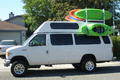
21.96 mpg was the best I ever got. It was in January 2002 just after I picked up my van new, driving 45 to 55 mph on I-5 from Sacramento to L.A. (flat). Back then it had a 3.55 rear differential.
After conversion to 4x4 which included adding a 3.73 front differential and changing the rear differential to 3.73, I only get 13-14 mpg on the flats. I know I have other impediments, like more weight, and a 20" top, and I don't think I have driven 45-55 mph since the break-in period in Jan 02.
I have read on this forum that 13 mpg is normal.
So, could you please describe how, what, when, where and why you are getting twice that mileage?
21.96 mpg was the best I ever got. It was in January 2002 just after I picked up my van new, driving 45 to 55 mph on I-5 from Sacramento to L.A. (flat). Back then it had a 3.55 rear differential.
After conversion to 4x4 which included adding a 3.73 front differential and changing the rear differential to 3.73, I only get 13-14 mpg on the flats. I know I have other impediments, like more weight, and a 20" top, and I don't think I have driven 45-55 mph since the break-in period in Jan 02.
I have read on this forum that 13 mpg is normal.
So, could you please describe how, what, when, where and why you are getting twice that mileage?
Hotshot
Joined: Jan 2011
Posts: 18,849
Likes: 179
From: Puget Sound
I thought someone else would answer this one and I'm not the expert... but I've done my homework.
It's not as simple as dropping in some ACs and driving off.
It's not as simple as dropping in some ACs and driving off.
- ACs get more fuel in there quicker because they don't have the "hiccup" of the stock ADs. The timing and duration of the injection makes the differences in louder/quieter, hotter/cooler EGTs, economy, and power. ACs make it much easier to control all of the above, but ADs were used when they didn't have ULSD to help with emissions. ACs need a radical change to the tuning to work correctly.
- Fuel. If a 160 AC is tuned to go all-out at WOT to the RPM limit, your fuel pump will be over-taxed, so the tuning needs to be moderate - so as not to overdo it.
FTE Stories
Ford Trucks for Ford Truck Enthusiasts

Top 10 Fords at 2026 Carlisle Ford Nationals
Joe Kucinski
3 Best / 3 Worst Parts of Modern Ford Ownership
Brett Foote
10 Amazing Upgrades That Solve Common Ford Truck Owner Headaches
Pouria Savadkouei
Every 2026 Ford Engine Explained
Brett Foote
10 Ugly Ford Trucks That We Still Kinda Love
Joe Kucinski
10 Things Every Truck Owner NEEDS (2026 Edition)
Michael S. Palmer
Rezvani's Latest Post-Apocalyptic Monster Is a Ford F-150 Raptor Underneath
Verdad Gallardo
Top 10 Most Expensive Ford Trucks Ever Sold on Bring a Trailer
Joe Kucinski
2027 Ford Super Duty Buyer's Guide (Every Model, Engine, & Package)
Brett Foote
Postmaster
Joined: Jul 2006
Posts: 4,993
Likes: 2
From: Bend, OR
I thought someone else would answer this one and I'm not the expert... but I've done my homework.
It's not as simple as dropping in some ACs and driving off.
It's not as simple as dropping in some ACs and driving off.
- ACs get more fuel in there quicker because they don't have the "hiccup" of the stock ADs. The timing and durtion of the injection makes the differences in louder/quieter, hotter/cooler EGTs, economy, and power. ACs make it much easier to control all of the above, but ADs were used when they didn't have ULSD to help with emissions. ACs need a radical change to the tuning to work correctly.
- Fuel. If a 160 AC is tuned to go all-out at WOT to the RPM limit, your fuel pump will be over-taxed, so the tuning needs to be moderate - so as not to overdo it.
AC's will NOT over work the stock fuel pump. Not even close.
Stock fuel pump, hell stock fuel system will work fine for 238/80 hybrids...
AC's "can" net a bit better mileage due to the single shot design. It will allow higher ICP pressures and will allow for less pulsewidth for a given HP...
All this amounts to less fuel used at and to maintain a specific HP.
Hotshot
Joined: Jan 2011
Posts: 18,849
Likes: 179
From: Puget Sound
Ford engineered the truck for 140 splits, and the stock tuning doesn't have enough pulse width to get all the fuel out of the injector, so there is not a lot of demand on the stock pump (Bosch 0 580 464 74). I don't have a flow chart on this because Bosch made this pump almost exclusively for our 7.3L, but I have seen cross-reference charts that call for 95 LPH pumps (25 GPH) at 4 Bar (60 PSI). The most optimistic guess I've seen for the pump is 125 LPH (33 GPH)
The math on the injectors:
1000cc = 1 Liter
140 cc per 1000 cycles. Every injector fires once per 2 revolutions, so we can use 4 as a multiplier for the number of injectors (to keep things easy).
140 cc X 4 = 560. That works out to 560 cc (0.56 Liter) per 1000 revolutions. My truck maxes out at 3250 RPM, others get closer to 3400. I'll use a humble 3200.
3.2K X 0.56L = 1.792 LPM.
It may seem silly to go three points to the right of a whole number, but I'm going to multiply it.
1.792 X 60 = 107.2 Liters per hour. That's 28 gallons per hour at WOT with 3200 RPMs... assuming the tuning can get all the fuel out of the injectors. If my research is right (25 GPH pump), the stock pump barely handles a mega-tune without losing pressure. If the optimists win (33 GPH pump), we're almost OK with the stock pump (more on that, later).
160cc X 4 = 640 (0.64 L) per 1K revolutions
3.2K RPMs X 0.64 = 2.048 LPM
2.048 LPM X 60 = 122.88 LPH (33 GPH)
How many here believe their pumps are putting out the same performance as the day they were installed? Understanding human nature, I think the optimists calculated the injector demand and figured the pump would be spec'd out for that. Engineers don't always design for what's possible, they frequently design for what's realistic. The stock tuning will never tax the stock pump on a fully functional system. Pump capacities are determined with zero lift and the measurements are at the pump outlet (perfect world). There are many forces that twist a line on a pump's flow graph - plumbing, filtration, and lift all conspire to grab hold of the pump's ankles while it's just trying to run. Now... let's turn this around for fun - to keep the confusion to a level that doesn't provoke medication, I'll use the 4 Bar numbers (60 PSI).
A popular fuel pump for the chest-beaters is the Bosch 0 580 254 044, which is rated for 250 LPH (66 GPH) at 4 Bar. That's at 12.5 amps (I'll bet the reader forgot about the juice to run these).
A performance pump that we find on the bargain table is the Walbro 392 (not rated for diesel or as reliable as OEM, but it's popular). 235 LPH (62 GPH) at 4 bar, but hang on! 14.5 amps.
I did a little shopping and found an obscure pump... the 044's ignored step-brother: Bosch 0 580 254 979 makes 215 LPH (57 GPH) at 60 PSI. The "charge"? 10.5 Amp. I really hope I can find where to buy this one.
My wiring diagram for the truck shows a 20 Amp fuse for the fuel pump, so there are no issues here.
I never even looked at the uber pumps with ratings like 100 GPH because that's... well... excessive. The fuel line from the pump to the fuel bowl can take no more than 72 GPH without hurting things, and I'm sure the math for 72 GPH works out to some fire nozzles in the place of injectors. Imagine sucking down your tank in 1/2 hour. Yeesh.
Now that you (the reader) know what you know, can you do the math on the pump needed for a 238 injector?
The math on the injectors:
1000cc = 1 Liter
140 cc per 1000 cycles. Every injector fires once per 2 revolutions, so we can use 4 as a multiplier for the number of injectors (to keep things easy).
140 cc X 4 = 560. That works out to 560 cc (0.56 Liter) per 1000 revolutions. My truck maxes out at 3250 RPM, others get closer to 3400. I'll use a humble 3200.
3.2K X 0.56L = 1.792 LPM.
It may seem silly to go three points to the right of a whole number, but I'm going to multiply it.
1.792 X 60 = 107.2 Liters per hour. That's 28 gallons per hour at WOT with 3200 RPMs... assuming the tuning can get all the fuel out of the injectors. If my research is right (25 GPH pump), the stock pump barely handles a mega-tune without losing pressure. If the optimists win (33 GPH pump), we're almost OK with the stock pump (more on that, later).
160cc X 4 = 640 (0.64 L) per 1K revolutions
3.2K RPMs X 0.64 = 2.048 LPM
2.048 LPM X 60 = 122.88 LPH (33 GPH)
How many here believe their pumps are putting out the same performance as the day they were installed? Understanding human nature, I think the optimists calculated the injector demand and figured the pump would be spec'd out for that. Engineers don't always design for what's possible, they frequently design for what's realistic. The stock tuning will never tax the stock pump on a fully functional system. Pump capacities are determined with zero lift and the measurements are at the pump outlet (perfect world). There are many forces that twist a line on a pump's flow graph - plumbing, filtration, and lift all conspire to grab hold of the pump's ankles while it's just trying to run. Now... let's turn this around for fun - to keep the confusion to a level that doesn't provoke medication, I'll use the 4 Bar numbers (60 PSI).
A popular fuel pump for the chest-beaters is the Bosch 0 580 254 044, which is rated for 250 LPH (66 GPH) at 4 Bar. That's at 12.5 amps (I'll bet the reader forgot about the juice to run these).
A performance pump that we find on the bargain table is the Walbro 392 (not rated for diesel or as reliable as OEM, but it's popular). 235 LPH (62 GPH) at 4 bar, but hang on! 14.5 amps.
I did a little shopping and found an obscure pump... the 044's ignored step-brother: Bosch 0 580 254 979 makes 215 LPH (57 GPH) at 60 PSI. The "charge"? 10.5 Amp. I really hope I can find where to buy this one.
My wiring diagram for the truck shows a 20 Amp fuse for the fuel pump, so there are no issues here.
I never even looked at the uber pumps with ratings like 100 GPH because that's... well... excessive. The fuel line from the pump to the fuel bowl can take no more than 72 GPH without hurting things, and I'm sure the math for 72 GPH works out to some fire nozzles in the place of injectors. Imagine sucking down your tank in 1/2 hour. Yeesh.
Now that you (the reader) know what you know, can you do the math on the pump needed for a 238 injector?

Post Fiend
Joined: Jun 2004
Posts: 9,293
Likes: 10
From: Parker, CO
Tugly, the problem is you don't have the actual flow charts from the stock SD pump, and neither do I. However, about 7 or 8 years ago there was some bench testing posted up with stock SD pumps showing them to be capable of 36-40 GPH at 60-70 psi. This used to be posted up on the old "Larry's Dirty Little Secrets" way back in the glory days of TDS.
There is math based on limited information, and then there's real world experience that is repeated over and over and over and over again. Real world has shown us time and time again without fail that the stock SD pump will keep up with 160cc AC's with zero problem whatsoever. The only time it doesn't happen is with a pump that is bad, or on it's way to failure. If the pump works as it should and as it's designed, it will keep up without any pressure drop when running AC's. It has also proven itself to keep up with injectors larger than AC's as well.
There is math based on limited information, and then there's real world experience that is repeated over and over and over and over again. Real world has shown us time and time again without fail that the stock SD pump will keep up with 160cc AC's with zero problem whatsoever. The only time it doesn't happen is with a pump that is bad, or on it's way to failure. If the pump works as it should and as it's designed, it will keep up without any pressure drop when running AC's. It has also proven itself to keep up with injectors larger than AC's as well.
Hotshot
Joined: Jan 2011
Posts: 18,849
Likes: 179
From: Puget Sound
Tugly, the problem is you don't have the actual flow charts from the stock SD pump, and neither do I. However, about 7 or 8 years ago there was some bench testing posted up with stock SD pumps showing them to be capable of 36-40 GPH at 60-70 psi. This used to be posted up on the old "Larry's Dirty Little Secrets" way back in the glory days of TDS.
There is math based on limited information, and then there's real world experience that is repeated over and over and over and over again. Real world has shown us time and time again without fail that the stock SD pump will keep up with 160cc AC's with zero problem whatsoever. The only time it doesn't happen is with a pump that is bad, or on it's way to failure. If the pump works as it should and as it's designed, it will keep up without any pressure drop when running AC's. It has also proven itself to keep up with injectors larger than AC's as well.
There is math based on limited information, and then there's real world experience that is repeated over and over and over and over again. Real world has shown us time and time again without fail that the stock SD pump will keep up with 160cc AC's with zero problem whatsoever. The only time it doesn't happen is with a pump that is bad, or on it's way to failure. If the pump works as it should and as it's designed, it will keep up without any pressure drop when running AC's. It has also proven itself to keep up with injectors larger than AC's as well.
Like you say, the flow data on the stock pump is a mystery, but nothing I've found so far makes claims of anything more than 33 GPH. Lacking this information in writing from the manufacturer, I have two options:
- Take the forum's word for it and install a new stock pump and a fuel pressure gauge, then romp on the right to reveal the BDA of my Buck$Zooka round.
- Buy a pump I have hard numbers on, drive with confidence it's engineered to last for years with plenty of head room, and have the ability to bump the pressure if I choose (new spring on FRx).

Elder User
Joined: Dec 2002
Posts: 797
Likes: 1
From: UT
Tugly, I'll take 238 for $100...lol.
What is:
238cc) 182.78 lph or 48.28 gph
205cc) 157.44 lph or 41.59 gph
175cc) 134.40 lph or 35.50 gph
If what Pocket is saying is correct, 160s and 175s should not be a problem. 205's would be pushing it right to the edge. The 238s would push it past max capacity, BUT if you kept it say 2600rpms or less your talking 39.23 gph.
Airtex OEM Equivalent 35-45 Freeflowing GPH
The 979 pump appears to be $105 more than the 044 pump. Not sure if the price is inflated because its used in sports cars such as the Viper...
What is:
238cc) 182.78 lph or 48.28 gph
205cc) 157.44 lph or 41.59 gph
175cc) 134.40 lph or 35.50 gph
If what Pocket is saying is correct, 160s and 175s should not be a problem. 205's would be pushing it right to the edge. The 238s would push it past max capacity, BUT if you kept it say 2600rpms or less your talking 39.23 gph.
Airtex OEM Equivalent 35-45 Freeflowing GPH
The 979 pump appears to be $105 more than the 044 pump. Not sure if the price is inflated because its used in sports cars such as the Viper...

Lead Driver
Joined: Sep 2010
Posts: 7,793
Likes: 50
bosch 0 580 254 979 | eBay
Lead Driver
Joined: Sep 2010
Posts: 7,793
Likes: 50
year vehicle attributes part description position
1976 Optional Rear
1977 Turbo Rear
1981 Turbo Rear
1982 Turbo Rear
1983 Turbo Rear
1984 Turbo Rear
1985 Turbo Rear
1986 H6; 3.3L; External Pump Rear
1986 Turbo Rear
1987 H6; 3.3L; External Pump Rear
1987 Turbo Rear
1988 H6; 3.3L; External Pump Rear
1988 Turbo Rear
1989 H6; 3.3L; External Pump Rear
1989 Turbo Rear
1991 H6; 3.3L; External Pump Rear
1991 Turbo Rear
1992 H6; 3.3L; External Pump Rear
1992 Turbo Rear
1993 Turbo Rear
1994 Turbo Rear
Porsche 928
year vehicle attributes part description position
1978 To 9/78 Front
Porsche 930
year vehicle attributes part description position
1978
1976 Optional Rear
1977 Turbo Rear
1981 Turbo Rear
1982 Turbo Rear
1983 Turbo Rear
1984 Turbo Rear
1985 Turbo Rear
1986 H6; 3.3L; External Pump Rear
1986 Turbo Rear
1987 H6; 3.3L; External Pump Rear
1987 Turbo Rear
1988 H6; 3.3L; External Pump Rear
1988 Turbo Rear
1989 H6; 3.3L; External Pump Rear
1989 Turbo Rear
1991 H6; 3.3L; External Pump Rear
1991 Turbo Rear
1992 H6; 3.3L; External Pump Rear
1992 Turbo Rear
1993 Turbo Rear
1994 Turbo Rear
Porsche 928
year vehicle attributes part description position
1978 To 9/78 Front
Porsche 930
year vehicle attributes part description position
1978