


Battleship designs

Thread Starter
|
Lead Driver


Joined: Apr 2007
Posts: 5,958
Likes: 105
From: Houston
Same in this comparison between Texas and Iowa. The Captain of the Texas doesn't want to be anywhere within the range of the Iowa's guns or her speed as his fate would be sealed.
Oh, one comment to Rusty_S as I originally missed this but another Rusty didn't. Iowa's design had nothing to do with the Panama Canal at all. She was laid down when the London Naval Treaty was in effect and a limit of 45,000 tons for a battleship. Of course there were a couple of countries that didn't exactly adhere to the Treaty. To see what the U.S. would have built outside the treaty limitations look at the Montana Class.
Oh, one comment to Rusty_S as I originally missed this but another Rusty didn't. Iowa's design had nothing to do with the Panama Canal at all. She was laid down when the London Naval Treaty was in effect and a limit of 45,000 tons for a battleship. Of course there were a couple of countries that didn't exactly adhere to the Treaty. To see what the U.S. would have built outside the treaty limitations look at the Montana Class.
Cargo Master
Joined: Jul 2006
Posts: 3,014
Likes: 91
From: Concord, CA
Not the table I'm looking for. I'm looking for navy documents. Not something typed out.
But based off what's typed out the guns Iowa had wouldn't penetrate Texas 12" thick class A armor. So Iowa would have to move closer to do damage.
This would put the Iowa in range to be fired upon in return. Then there's accuracy issues, at these ranges a ship the size of bismarck has a 10.5% broadside hit chance at 20,000 yards. I'm sure the hit chance would drop to 9% for a ship the size of Texas.
In the end the Iowa with a broadside hit would have to penetrate the 12" belt armor the further penetrate the 12" energy absorbing backing of the belt armor.
But based off what's typed out the guns Iowa had wouldn't penetrate Texas 12" thick class A armor. So Iowa would have to move closer to do damage.
This would put the Iowa in range to be fired upon in return. Then there's accuracy issues, at these ranges a ship the size of bismarck has a 10.5% broadside hit chance at 20,000 yards. I'm sure the hit chance would drop to 9% for a ship the size of Texas.
In the end the Iowa with a broadside hit would have to penetrate the 12" belt armor the further penetrate the 12" energy absorbing backing of the belt armor.
1) The AP Mark 8 projectile was originally designed as the longer, heavier "big brother" to the AP Mark 5 projectiles used for the 16"/45 (40.6 cm) guns carried by the Colorado (BB-45) class battleships. Like the Mark 5, the Mark 8 projectiles were designed to be used in long-range gun actions against Japanese ships ("Plan Orange") and for that reason they were to be fired at relatively low muzzle velocities and high gun elevations. These conditions would result in a steeper angle of fall in order to enhance their deck armor penetration capabilities. In almost all respects the 1939 design of the Mark 8 Mod 0 was very similar to the Mark 5 except for length. However, around the end of 1944 the improved Mark 8 Mod 6 version came out with significantly better hardening techniques which gave a noticeable improvement in penetration at impact angles of 35 degrees or so against thick face-hardened armor. This performance was so much better that BuOrd put out a memo stating that battleships were to return all previous Mods of this projectile as quickly as the Mod 6 became available for loading aboard ship. The Mod 6 had an even blunter, rounded AP body nose (with no point) to further enhance penetration against deck armor at high obliquity. The Mod 8 had a heavier cap, blunter nose and harder body from improved heat treating techniques. The AP Mark 8 has a radius of ogive of 144 inches (366 cm) or 9crh and leaves the barrel rotating at about 4,000 RPM. This round creates overpressures exceeding 50 psi (3.5 kg/cm<sup>2</sup>) close to the muzzle and 7 psi (0.5 kg/cm<sup>2</sup>) at a distance of 50 feet (15 m) from the muzzle. The Mark 21 Base Detonating Fuze (BDF) had a delay of 0.033 seconds. Fuze activation required a resistance equal to 1.5 inches (3.8 cm) of armor at 0 degrees obliquity or 0.375 inches (1 cm) at 65 degrees obliquity. AP projectile bodies are painted black. The nose color indicates burster type, with yellow denoting Explosive D. A narrow colored band below the nose indicates the splash color.
Thread Starter
|
Lead Driver
Joined: Apr 2007
Posts: 5,958
Likes: 105
From: Houston
You're missing something that I mentioned. One note the shell weight used by the two ships. Two, the improved Model 3 AP shell that all other ammo was to be off loaded as soon as the new ones were available. Their design was to improve armor penetration and it seems to have been a hit. That is in the web site mentioned. A plunging 2700lb. Mod 6 AP shell would go right through Texas as this shell was designed for Yamato.
Like wise by 1944 Texas had her projectiles replaced just the same. Texas carried 14inch/45cal Mk 20 shells by February 1944. These new Mk 20 shells were listed by the US Navy as being capable of penetrating 14.3" US hull armor at 24,000 yards and only 12.3" British hull armor at 24,000 yards. At the time England had tougher hull armor than the US warships had.
This is why I base my information off US navy documents, it is accurate to a point where as books written about the subject can be biased.
Cargo Master
Joined: Jul 2006
Posts: 3,014
Likes: 91
From: Concord, CA
Some more info of Iowa design:
Something else I ran across that is over my head a bit
In regards to Iowa's 38mm deck armor
Although true, it was not heavy enough to de-cap large caliber APC, and the inter-space was too small to ensure detonation of time delayed AP before reaching the main armour deck, it was still an essential element to the over all deck protection against large amour piercing artillery shells. In a June 1941 memo from the BoO to to Carngie Steel the true purpose of the 38mm upper deck is revealed. It was a yaw deck. By yawing large caliber APC it required greater velocity for the shells to penetrate the main armoured deck, or in other words by yawing the shells even slightly it increased the effective thickness of the main armoured deck. Yaw created by the spacing above of the upper deck 38mm armour was an essential feature of the US fast battleship deck protection and also had desirable properties against SAP bombs or non AP bombs.
Nonetheless, Iowa Class was designed to handle 16" shells from the beginning. Handling 18" shells was discussed but deemed to cause a problem with weight. So, if I am at 42,000 yards I simply fire my new shells at high obliquity as stated. How long could Texas slowly steam towards an Iowa class BB in order to get to a minimum of 23,000 yards to open. If I am not mistaken the Iowa class guns had better stability control systems than the older classes of BB's. A fire report in the 80's during a gun exercise of the Iowa demonstrated the incredible accuracy of her throwing shells. If I remember correctly it was 2 a minute using the right side gun of each turret.
Armament
With the fixed factors in mind, the first consideration was the main armament. BDAB had four options. Option number one was to match the Yamato (the biggest battleship facing the Americans) gun for gun with the Mk1 18-inch/45 caliber rifle. This monster gun, the largest ever assembled in America, could fire a two-ton shell several miles that could penetrate 16 inches of armor. There were several problems with using this weapon (option number one called for the use of nine Mk1s.) It would slow the ships down to a snail crawl of 22 knots, add six months to construction time, require that some of the armor be shed on the turrets, and most importantly, the beam of the ship would have to be increased to 131 feet in order to accommodate the sheer size of the guns.
Option number two was to have only dual mounted 18-inch guns. While it might have saved some space and displacement, BDAB quickly dismissed this option. It would have required additional design and test work, being that there was no dual mount available.
Options number three and four both considered the use of the smaller 16-inch rifles. There were two types available: the Mk6 16-inch/45 caliber rifle that was used on both North Carolina and South Dakota and the newer Mk7 16-inch/50 caliber rifle. While the Mk6 would make the designer's job easier because it was small and light, the Mk6 would not solve the firepower problem. Option 4, the Mk7 16-inch/50 caliber rifle, was a good compromise of firepower, size, weight, and cost.
The Mk7 had several other advantages over the other options. During a rapid-fire situation, the Mk7 could fire twice as fast as the 18-inch guns and would give the new class a further reach than the older Mk6 16-inch rifles. Additionally, the turrets for the Mk7 could be given sufficient armor to withstand an incoming 16-inch shell, unlike the Mk1 18-inch guns. Fully equipped, each of Wisconsin's triple mounted turrets weighed over 2,100 tons. At 6,300 tons, these three turrets alone made up about 12% of the ship's displacement.
The Naval Gun Factory (Building 76 and present site of the Navy Museum.) at the Washington Navy Yard located in Southeast Washington, DC designed and manufactured the guns. The installation of the nine Mk7 16-inch/50-caliber guns was among the most complicated procedures performed. With the skill of a surgeon, each gun had to be installed within a 1/4-inch of standards. Each gun, not including the gun breech, weighed around 120 tons (considered to be a "lightweight" design) and could fire a one ton shell 24 miles.
World War II battleships had a concern that their older Spanish-American War and World War I counterparts did not have to worry about: air attacks. Despite the modern battleship's classification as "dreadnought" battleships (which meant among other things that the vessel carried an all big gun arrangement), designers equipped their warships with several smaller caliber guns. From the start, these ships were to have 20 5-inch/38 caliber dual purpose guns mounted in 10 turrets. These guns could put up 22 shells per minute per gun in the anti-aircraft role. The Naval Gun Factory designed the smaller guns, but contracted their manufacture to other factories.
Designers initially gave the Iowa-class 20 Mk12 five-inch "dual purpose" guns installed in 10 gun mounts for secondary armament. Even though the keels had already been laid, designers continued to tweak the design. One of the things that made World War II different than most previous wars was that the combatants more quickly learned lessons of the battlefield and applied them to new weapon designs. The first instance was the British use of the antique Swordfish bi-plane in a torpedo bomber role. In 1940, Swordfish knocked out the Italian battlefleet and in 1941 is same bi-plane disabled Bismarck during her famous breakout sortie. The second event was the infamous Japanese air attack on Pearl Harbor on December 7, 1941. Further battle experience, such as the naval fights around Guadalcanal, gained by American battleships only reinforced the need for more secondary guns.
The very real threat of air attacks forced designers to place several smaller AA guns. Additional guns were to be placed to supplement the dual mounted five-inch guns. Twenty Mk2 quad mounted 40mm Bofers, 29 20mm single mounted guns, and several .50 caliber machine guns were added. The problem with adding such an impressive array of guns was that the ship would require an additional 1,900 sailors to an already cramped ship. Despite this problem, the risk of air attack was too great and the additional guns, and sailors, were ordered.
Armor
The second basic factor, after firepower, to be considered was Iowa class armor. The armor scheme was a copy of the armor used on North Carolina and South Dakota, only thicker. This armor could, in theory, stop a 16-inch shell coming in at a 45-degree angle. There was some idle talk about making the Iowa class armor tough enough to stop an 18-inch shell, but BDAB dropped the idea when it realized how much more weight and redesign work it would take.
Nickel-steel was used to manufacture the armor. This type of steel is a kind of stainless steel which has the added benefits that it does not corrode quickly, but bends easily. Nickel-steel was not a new material. From the start, armored warships like USS Indiana (BB-1) used this type of steel. One 17 1/2 inch belt of the nickel-steel ran from the deck to the below water line on both sides of the ship and covered the middle 2/3 of the ship. Eighteen inch plates were used in the turrets and 11 1/2 inch plates were placed on the decks.
It is interesting to note that much of the Iowa class's armor is just as thick as battleships built 50 years earlier. Wisconsin and her sisters, however, benefitted from advances in steel technology that allowed mills to forge the steel at higher temperatures and heat treatment, which in turn produced a much higher quality steel that was stronger and more elastic. Two plants, Bethehelm Steel's main mill in Bethehelm, PA and Luken Steel's Coatsville mill just ouside Phildadelphia, manufactured most of the armor plating. For the turret plate, however, a special forge was constructed just for the Iowa-class at the Charleston Ordnance Works in Charleston, WV.
With the fixed factors in mind, the first consideration was the main armament. BDAB had four options. Option number one was to match the Yamato (the biggest battleship facing the Americans) gun for gun with the Mk1 18-inch/45 caliber rifle. This monster gun, the largest ever assembled in America, could fire a two-ton shell several miles that could penetrate 16 inches of armor. There were several problems with using this weapon (option number one called for the use of nine Mk1s.) It would slow the ships down to a snail crawl of 22 knots, add six months to construction time, require that some of the armor be shed on the turrets, and most importantly, the beam of the ship would have to be increased to 131 feet in order to accommodate the sheer size of the guns.
Option number two was to have only dual mounted 18-inch guns. While it might have saved some space and displacement, BDAB quickly dismissed this option. It would have required additional design and test work, being that there was no dual mount available.
Options number three and four both considered the use of the smaller 16-inch rifles. There were two types available: the Mk6 16-inch/45 caliber rifle that was used on both North Carolina and South Dakota and the newer Mk7 16-inch/50 caliber rifle. While the Mk6 would make the designer's job easier because it was small and light, the Mk6 would not solve the firepower problem. Option 4, the Mk7 16-inch/50 caliber rifle, was a good compromise of firepower, size, weight, and cost.
The Mk7 had several other advantages over the other options. During a rapid-fire situation, the Mk7 could fire twice as fast as the 18-inch guns and would give the new class a further reach than the older Mk6 16-inch rifles. Additionally, the turrets for the Mk7 could be given sufficient armor to withstand an incoming 16-inch shell, unlike the Mk1 18-inch guns. Fully equipped, each of Wisconsin's triple mounted turrets weighed over 2,100 tons. At 6,300 tons, these three turrets alone made up about 12% of the ship's displacement.
The Naval Gun Factory (Building 76 and present site of the Navy Museum.) at the Washington Navy Yard located in Southeast Washington, DC designed and manufactured the guns. The installation of the nine Mk7 16-inch/50-caliber guns was among the most complicated procedures performed. With the skill of a surgeon, each gun had to be installed within a 1/4-inch of standards. Each gun, not including the gun breech, weighed around 120 tons (considered to be a "lightweight" design) and could fire a one ton shell 24 miles.
World War II battleships had a concern that their older Spanish-American War and World War I counterparts did not have to worry about: air attacks. Despite the modern battleship's classification as "dreadnought" battleships (which meant among other things that the vessel carried an all big gun arrangement), designers equipped their warships with several smaller caliber guns. From the start, these ships were to have 20 5-inch/38 caliber dual purpose guns mounted in 10 turrets. These guns could put up 22 shells per minute per gun in the anti-aircraft role. The Naval Gun Factory designed the smaller guns, but contracted their manufacture to other factories.
Designers initially gave the Iowa-class 20 Mk12 five-inch "dual purpose" guns installed in 10 gun mounts for secondary armament. Even though the keels had already been laid, designers continued to tweak the design. One of the things that made World War II different than most previous wars was that the combatants more quickly learned lessons of the battlefield and applied them to new weapon designs. The first instance was the British use of the antique Swordfish bi-plane in a torpedo bomber role. In 1940, Swordfish knocked out the Italian battlefleet and in 1941 is same bi-plane disabled Bismarck during her famous breakout sortie. The second event was the infamous Japanese air attack on Pearl Harbor on December 7, 1941. Further battle experience, such as the naval fights around Guadalcanal, gained by American battleships only reinforced the need for more secondary guns.
The very real threat of air attacks forced designers to place several smaller AA guns. Additional guns were to be placed to supplement the dual mounted five-inch guns. Twenty Mk2 quad mounted 40mm Bofers, 29 20mm single mounted guns, and several .50 caliber machine guns were added. The problem with adding such an impressive array of guns was that the ship would require an additional 1,900 sailors to an already cramped ship. Despite this problem, the risk of air attack was too great and the additional guns, and sailors, were ordered.
Armor
The second basic factor, after firepower, to be considered was Iowa class armor. The armor scheme was a copy of the armor used on North Carolina and South Dakota, only thicker. This armor could, in theory, stop a 16-inch shell coming in at a 45-degree angle. There was some idle talk about making the Iowa class armor tough enough to stop an 18-inch shell, but BDAB dropped the idea when it realized how much more weight and redesign work it would take.
Nickel-steel was used to manufacture the armor. This type of steel is a kind of stainless steel which has the added benefits that it does not corrode quickly, but bends easily. Nickel-steel was not a new material. From the start, armored warships like USS Indiana (BB-1) used this type of steel. One 17 1/2 inch belt of the nickel-steel ran from the deck to the below water line on both sides of the ship and covered the middle 2/3 of the ship. Eighteen inch plates were used in the turrets and 11 1/2 inch plates were placed on the decks.
It is interesting to note that much of the Iowa class's armor is just as thick as battleships built 50 years earlier. Wisconsin and her sisters, however, benefitted from advances in steel technology that allowed mills to forge the steel at higher temperatures and heat treatment, which in turn produced a much higher quality steel that was stronger and more elastic. Two plants, Bethehelm Steel's main mill in Bethehelm, PA and Luken Steel's Coatsville mill just ouside Phildadelphia, manufactured most of the armor plating. For the turret plate, however, a special forge was constructed just for the Iowa-class at the Charleston Ordnance Works in Charleston, WV.
Something else I ran across that is over my head a bit
In regards to Iowa's 38mm deck armor
Although true, it was not heavy enough to de-cap large caliber APC, and the inter-space was too small to ensure detonation of time delayed AP before reaching the main armour deck, it was still an essential element to the over all deck protection against large amour piercing artillery shells. In a June 1941 memo from the BoO to to Carngie Steel the true purpose of the 38mm upper deck is revealed. It was a yaw deck. By yawing large caliber APC it required greater velocity for the shells to penetrate the main armoured deck, or in other words by yawing the shells even slightly it increased the effective thickness of the main armoured deck. Yaw created by the spacing above of the upper deck 38mm armour was an essential feature of the US fast battleship deck protection and also had desirable properties against SAP bombs or non AP bombs.
Thread Starter
|
Lead Driver
Joined: Apr 2007
Posts: 5,958
Likes: 105
From: Houston
Some more info of Iowa design:
Something else I ran across that is over my head a bit
Nonetheless, Iowa Class was designed to handle 16" shells from the beginning. Handling 18" shells was discussed but deemed to cause a problem with weight. So, if I am at 42,000 yards I simply fire my new shells at high obliquity as stated. How long could Texas slowly steam towards an Iowa class BB in order to get to a minimum of 23,000 yards to open. If I am not mistaken the Iowa class guns had better stability control systems than the older classes of BB's. A fire report in the 80's during a gun exercise of the Iowa demonstrated the incredible accuracy of her throwing shells. If I remember correctly it was 2 a minute using the right side gun of each turret.
Something else I ran across that is over my head a bit
Nonetheless, Iowa Class was designed to handle 16" shells from the beginning. Handling 18" shells was discussed but deemed to cause a problem with weight. So, if I am at 42,000 yards I simply fire my new shells at high obliquity as stated. How long could Texas slowly steam towards an Iowa class BB in order to get to a minimum of 23,000 yards to open. If I am not mistaken the Iowa class guns had better stability control systems than the older classes of BB's. A fire report in the 80's during a gun exercise of the Iowa demonstrated the incredible accuracy of her throwing shells. If I remember correctly it was 2 a minute using the right side gun of each turret.
On the accuracy, from the website link that was posted it stated on a 90* angle shot at a Bismarck sized battleship the accuracy of the guns on Iowa was just 10.5% at 20,000 yards. That is well within range of Texas`s main guns at 22,000 - 23,000 yards. Now 10.5% accuracy is bad considering Texas had way better accuracy in 1939, based off the shipboard newspaper of gunner pratice this one crewman was awarded a raise of $20 because his gun had 90% accuracy by hitting the target 8 times out of 10 shots. This was before the more sophicated targeting computers were installed in 1942 before Texas took part in the North Africa landings.
The other thing I dont have time to double check my navy documents since I am leaving for work after this post, I believe the rate of fire for Texas was 2 shells a minute per gun. So that means every minute Texas could fire 20 rounds out of her 10 14inch main guns.
But the point was never that the Iowa would be sunk though, the point I was putting forward is that it would be a slug fest that would end in a draw. Iowa during WWII had poor accuracy which was improved after the war, Texas had poor targeting computers in 1939 but had the highest accuracy out of the whole US fleet even the 5inch guns held records by the marines of being the most accuracte and the fastest firing of 5 shots a minute per gun.

Ford Parts Specialist
Joined: Nov 2006
Posts: 88,826
Likes: 785
From: Simi Valley, CA

Living in TX, especially Houston, located not too far from the San Jacinto battlefield, I can understand your ardor for the USS Texas.
But the facts are...that the USS Iowa (or Wisconsin, New Jersey or Missouri) could stand off, pound the Texas into scrap metal within minutes by plunging fire. The Texas wouldn't be within range of the Iowa to use her 14" guns.
USS Washington sank HIJMS Kirishima within an hour, the Kirishima having like guns as the Texas.
Battle Cruiser HMS Hood, 46,000 tons, 860' long with eight 15" guns (4X2), sank in less than a minute, after a plunging 15" shell from Bismarck blew her to smitherines. The Hood had similar deck armor as the Texas.
But the facts are...that the USS Iowa (or Wisconsin, New Jersey or Missouri) could stand off, pound the Texas into scrap metal within minutes by plunging fire. The Texas wouldn't be within range of the Iowa to use her 14" guns.
USS Washington sank HIJMS Kirishima within an hour, the Kirishima having like guns as the Texas.
Battle Cruiser HMS Hood, 46,000 tons, 860' long with eight 15" guns (4X2), sank in less than a minute, after a plunging 15" shell from Bismarck blew her to smitherines. The Hood had similar deck armor as the Texas.

New User

Joined: Jun 2012
Posts: 14
Likes: 0
Again, Texas is never going to fire a shot before she's a burning, sinking wreck. She will never get in range, so it doesn't matter if Iowa can resist 14" shell fire or not (she can) or if the 16" Mark 7's can penetrate 12" of Texas' old-timey armor..(they can)
The deck armor is what's going to matter at long range, and Texas cannot withstand 16" super heavies. There will likely be an earth-shattering kaboom from Texas.
The deck armor is what's going to matter at long range, and Texas cannot withstand 16" super heavies. There will likely be an earth-shattering kaboom from Texas.
New User
Joined: Jun 2012
Posts: 14
Likes: 0
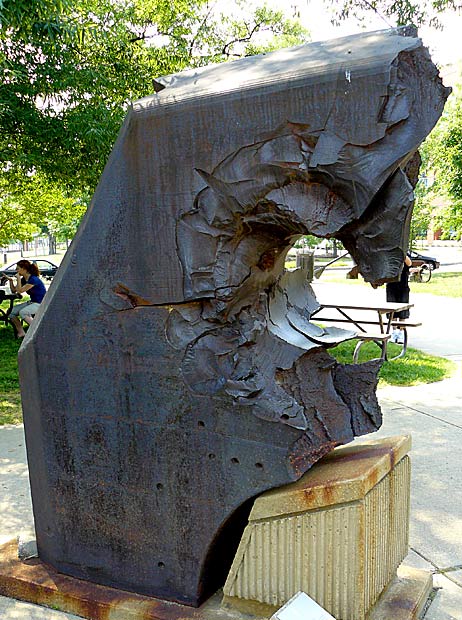
Btw, there is a picture you can find easily of a section of Yamato class barbette armor that we captured and tested a 16" shell against. It's either 18" or 21" thick, but the US shell made a nice hole in it nonetheless.
FTE Stories
Ford Trucks for Ford Truck Enthusiasts

Top 10 Most Expensive Ford Trucks Ever Sold on Bring a Trailer
Joe Kucinski
2027 Ford Super Duty Buyer's Guide (Every Model, Engine, & Package)
Brett Foote
Top 10 Ford Truck Tragedies
Joe Kucinski
AEV FXL Super Duty - the Super Duty Raptor Ford Doesn't Make
Brett Foote
Lobo Vs Lobo: Proof the F-150 Lobo Should Be Even Lower!
Michael S. Palmer
Ford's 2001 Explorer Sportsman Concept Looks For a New Home
Verdad Gallardo
10 Best Ford Truck Engines We Miss the Most!
Joe Kucinski
2026 Shelby F-150 Off-Road: Better Than a Raptor R?
Brett Foote
2027 Super Duty Carhartt Package First Look: 12 Things You NEED to Know!
Michael S. Palmer
Ford Parts Specialist
Joined: Nov 2006
Posts: 88,826
Likes: 785
From: Simi Valley, CA
After losing 4 carriers (Akagi, Kaga, Hiryu & Soryu) at Midway, the Japanese converted the 3rd Yamato class BB to a carrier.
HIJMS Shinano never launched a plane, sunk 11/29/1944 while steaming to a fitting out dock. USS Archerfish (SS-311) slammed 4 torpedoes into her, she sank 7 hours hours later.
HIJMS Shinano never launched a plane, sunk 11/29/1944 while steaming to a fitting out dock. USS Archerfish (SS-311) slammed 4 torpedoes into her, she sank 7 hours hours later.
New User
Joined: Jun 2012
Posts: 14
Likes: 0
I was mistaken. The armor was actually 26 inches thick.
So I think Iowa can penetrate the 12" of Texas' armor just fine.
The place I linked earlier, NavWeaps, states that the 16" Mark 7 AP shells could penetrate 20" of side armor at 20k yards. And the number only goes up the closer in it gets.
17" at 25k yards. So as I said, Texas has NO immune zone from Iowa at all.
And the site also states:
Also states:
Mark 20 is what the New York class would have fired, if they had the most current shells aboard. If they still had the old ammo, the penetration goes way down.
This doesn't even get into the Iowa having better fire control and slightly faster rate of fire. (Texas was less than 2 rpm)
It's really just a non-issue for Iowa. Texas is a very cool old lady that served us well, but she stands about as much chance against Iowa (or South Dakota or North Carolina, for that matter) than Hood did against Bismarck. Probably less, because Hood could not take a hit, and could have put up a stiff fight and maybe even have won had Bismarck not hit her with a lucky plunging fire shot...there will be no "magic bullet" lucky shot against an Iowa, but she could certainly conceivably obtain one on the Texas. And if not, it won't matter, Iowa still runs away with this one.
So I think Iowa can penetrate the 12" of Texas' armor just fine.
The place I linked earlier, NavWeaps, states that the 16" Mark 7 AP shells could penetrate 20" of side armor at 20k yards. And the number only goes up the closer in it gets.
17" at 25k yards. So as I said, Texas has NO immune zone from Iowa at all.
And the site also states:
Note: The above information is from "Battleships: United States Battleships 1935-1992" for a muzzle velocity of 2,500 fps (762 mps) and is based upon the USN Empirical Formula for Armor Penetration. These values are in substantial agreement with armor penetration curves published in 1942.
2) The AP Mark 20 probably had slightly less penetration, as its shorter, less aerodynamic ballistic cap would have resulted in somewhat lower striking velocities.
This doesn't even get into the Iowa having better fire control and slightly faster rate of fire. (Texas was less than 2 rpm)
It's really just a non-issue for Iowa. Texas is a very cool old lady that served us well, but she stands about as much chance against Iowa (or South Dakota or North Carolina, for that matter) than Hood did against Bismarck. Probably less, because Hood could not take a hit, and could have put up a stiff fight and maybe even have won had Bismarck not hit her with a lucky plunging fire shot...there will be no "magic bullet" lucky shot against an Iowa, but she could certainly conceivably obtain one on the Texas. And if not, it won't matter, Iowa still runs away with this one.
Thread Starter
|
Lead Driver
Joined: Apr 2007
Posts: 5,958
Likes: 105
From: Houston
I dont expect the Texas to take the Iowa out, but I also dont expect the Iowa to take the Texas out based off the 10.5% @ 20,000 yard accuracy on a Bismarck sized target. Texas being considerably smaller than Bismarck would make for a hard target for Iowa to hit. Now you pit Iowa post WWII with her more modern targeting computers and sensors against a wartime Texas then sure, accuracy would be supperior. But that would be like comparing apples to oranges in a sense.
For example with the Iowa presenting a 90* broadside to Texas, at 20,000 yards the 14inch round will penetrate through 13.75" of armor, which is thicker than Iowa`s 12.1". Now you have the Iowa coming in at a 80* angle to Texas`s guns then now at 20,000 yards you can only penetrate 13.50" of armor which means, if a warship had 13.60" thick armor @ 90* @ 20,000 yards the 14 inch guns would punch through it. You take the same warship and have it @ 80* @ 20,000 yards, the 14inch round will now bounce off as the angle caused the round to not be heavy enough at that range to punch through armor that thick at such a high angle. The Iowa shells suffer the same problem but at different specifications and until I can locate a wartime (pre 1945) penetration chart for the 16inch/50cal guns I cant say for sure, I would be inclined to stick with my orignal opinion that it would be a slug fest that would end in a draw.
And the site also states:
Also states:
Mark 20 is what the New York class would have fired, if they had the most current shells aboard. If they still had the old ammo, the penetration goes way down.
This doesn't even get into the Iowa having better fire control and slightly faster rate of fire. (Texas was less than 2 rpm)
Also states:
Mark 20 is what the New York class would have fired, if they had the most current shells aboard. If they still had the old ammo, the penetration goes way down.
This doesn't even get into the Iowa having better fire control and slightly faster rate of fire. (Texas was less than 2 rpm)
As far as accuracy goes, must be a damn good crew considering she beat out 14 other battleships during the competition.
It's really just a non-issue for Iowa. Texas is a very cool old lady that served us well, but she stands about as much chance against Iowa (or South Dakota or North Carolina, for that matter) than Hood did against Bismarck. Probably less, because Hood could not take a hit, and could have put up a stiff fight and maybe even have won had Bismarck not hit her with a lucky plunging fire shot...there will be no "magic bullet" lucky shot against an Iowa, but she could certainly conceivably obtain one on the Texas. And if not, it won't matter, Iowa still runs away with this one.
Its like for instance on Iowa, with her angled @ 18 - 19 degree belt armor of 12.1" acts more like 13.1". The problem with this is, for some reason they cheated the Iowa by having the armor reduce in size from 12.1" down to 1.45" below the waterline making a waterline shot a problem. The other problem as I mentioned earlier in the post is with the interal belt armor that is reverse angled it creates a "saddle tank" like opening between the hull and the belt armor. The hull wouldnt stop one of Texas`s rounds but the belt armor being angled most likely would, but what would happen though is water would now flood this triangular shapped tank on one side resulting in a list. I dont have the paper infront of me to provide the math I did but a worse case situation on the list would result in at max elevation for the Iowa to be reduced down to as little as 10 miles. So based off this even if that is all Texas could do, making the Iowa list would be like giving her a black eye. I cant say for sure though since I dont have any penetration charts pre 1945 for the 16inch/50cal rounds so I cant say for sure how Texas would fair. Like wise till we can get a definite answer on how Thick the belt armor ended up being vs orignal design plan I cant do any computing on this to determine exactly what would happen for a "success" situation vs a "failiure" situation.
New User
Joined: Jun 2012
Posts: 14
Likes: 0
Making another ship list isn't a big deal. You can hit a couplenof unarmored areas and do that. POW did that to Bismarck. That's expected in a battle like this. Ships aren't designed to come through without a scratch.
Point is, Iowa is armored against 16" gunfire. Texas has 14" guns, with much shorter range, and is NOT armored against 16" shells. Nearly any real Battleship has at least some range where it will still stop a shell bigger than it was designed to, but that is an unacceptably small immune zone, because the likelihood of surviving long enough to get to that zone is small.
Iowa will simply shoot from just out of range, or maybe just within range. Her probability of getting a few longer range hits in her late-war setup are pretty good. Two Iowas were obtaining straddles on a Japanese destroyer at a very long range in a stern chase before she finally outran them. Straddles on a DD will be hits on a BB, and vs Texas, they won't be coming from 30k yards.
Texas will be hit a few times before she can open fire, then Iowa can close and make quick work of her. Texas' best hope is to simply get a few licks in before going down.
Iowa takes a few hits, maybe ships some water. Counterfloods, and goes on about her business and is still in fighting condition. It's not all about the side armor. Turrets, conning tower, top hamper, steering, etc. Iowa can hurt all of that on Texas, and Texas cannot say the same.
Point is, Iowa is armored against 16" gunfire. Texas has 14" guns, with much shorter range, and is NOT armored against 16" shells. Nearly any real Battleship has at least some range where it will still stop a shell bigger than it was designed to, but that is an unacceptably small immune zone, because the likelihood of surviving long enough to get to that zone is small.
Iowa will simply shoot from just out of range, or maybe just within range. Her probability of getting a few longer range hits in her late-war setup are pretty good. Two Iowas were obtaining straddles on a Japanese destroyer at a very long range in a stern chase before she finally outran them. Straddles on a DD will be hits on a BB, and vs Texas, they won't be coming from 30k yards.
Texas will be hit a few times before she can open fire, then Iowa can close and make quick work of her. Texas' best hope is to simply get a few licks in before going down.
Iowa takes a few hits, maybe ships some water. Counterfloods, and goes on about her business and is still in fighting condition. It's not all about the side armor. Turrets, conning tower, top hamper, steering, etc. Iowa can hurt all of that on Texas, and Texas cannot say the same.
Thread Starter
|
Lead Driver
Joined: Apr 2007
Posts: 5,958
Likes: 105
From: Houston
Iowa takes a few hits, maybe ships some water. Counterfloods, and goes on about her business and is still in fighting condition. It's not all about the side armor. Turrets, conning tower, top hamper, steering, etc. Iowa can hurt all of that on Texas, and Texas cannot say the same.
Besides that though, the zone that you are talking bout is distance. Distance is one aspect, but on hull hits angle plays a bigger part. If Iowa`s shell hit at the right angle the 12" armor of Texas could deflect the larger 16" shell. Thats why like I say I cant say for sure what angles and what distances till I obtain a copy of a wartime penetration chart by the US Navy for the 16inch/50cal guns.
On the listing, I dont think Iowa was designed to counterflood the opposite "saddle" tank between the hull and the bulkhead. I havent seen any information if it was which doesnt mean that it didnt. I just havent really looked into that aspect cause counterflooding takes time and I dont recall any warship counterflooding while in combat. Might have happened but I havent seen any reference to it from all the naval combat books Ive read.
With me still going off that Nav site of 10.5% accuracy on a bismarck sized target, full broadside at 20,000 yards, that works out to roughly 9.5 shells out of 100 fired of hitting.
Bismarck : 823' 5" Length x 118' 1" Beam x 29' 5" Draught
Texas : 573' 0" Length x 95' 5" Beam x 28' 5" Draught
This means Bismarck is 30.42% longer than Texas, 19.14% wider than Texas, and 3.39% deeper than Texas.
So the draught of the two ships has no bearing on accuracy percentage in a full broadside shot. The beam plays some part since the width figures in on the plunging shell at longer distances and length plays into a broadside shot as well.
The math Ive just done out is giving me weird numbers, so I am going to have to eyeball it till I can figure out where the problem is to get a more accurate figure.
I would at this point have to say on estimate that Bismarck is 30.42% longer and 19.14% wider which would make Bismarck on average 24.78% bigger than Texas. Given that on average the Texas is 24.78% smaller than Bismarck and Iowa on a full broadside attack only has a 10.5% accuracy rate at 20,000 yards on a ship the size of Bismarck I would have to lower the accuracy down, and I will be generous and lower it less than I think it will end up being. I would say the Accuracy Iowa would have with Texas would be along the lines of 7.9%. I come up with this as a rough estimate till I can do more accurate math on the matter by subtracting 24.78% of 10.5% from 10.5% which is 2.6% decrease. So Iowa would at 20,000 yards land just 7.9 out of 100 shells.
The 10.5% accuracy was taken from Nav`s website that was referenced that clearly stated.
A Naval War College study performed during World War II estimated that an Iowa Class (BB-61) battleship firing with top spot against a target the size of the German battleship Bismarck would be expected to achieve the following hit percentages.
Range : 20,000 Yards (18,288m) / Percentage Hit on Broadside Target : 10.5% / Percentage hit on End-on Target : 2.5%
That means Texas could fire back at Iowa at 20,000 yards and Iowa can fire at Texas but basd off the Naval War college study conducted, at this ranges Iowa had a 10.5% chance of hitting a target the size of Bismarck. Texas being 24.78% on average smaller than Bismarck which would basically drop the percentage at 20,000 yards for a hit from Iowa to be reduced down to 7.9%.
Range : 30,000 Yards (27,432m) / Percentage Hit on Broadside Target : 2.7% / Percentage hit on End-on Target : 1.4%
This here means at 30,000 Yards the percentage of a hit on Bismarck from Iowa is 2.7%, for Texas being 24.78% smaller this means Iowa accuracy is further reduced by 0.11% lowering a hit on Texas at 30,000 Yards to just 2.59% accuracy broadside.
So at Iowa`s max range of firing out of 100 shots she would have scored just 2.59 hits. Iowa had a barrel life of 290 rounds. This means out of 100 shots Iowa has just used up as much as 45 - 50 % of her barrel life and only got a potential 2.59 hits. If each gun of the Iowa fired 100 shots and reduced barre life down to 50%, that results in 900 projectiles fired (3 barrels per turret with three turrets = 9 barrels), at 900 projectiles shot only 347 of them has the potential to hit. Now this here would effectively wipe out Iowa`s magazine cause she only carried 900 - 950 is the specs I am seeing for wartime service. After 1945 she was carrying as much as 1,250. But I wont compare a post war modified battleship to a battleship that never got the same treatment.
I honestly dont think during war time a captain would wear out his own barrels and force his battleship to put into port for a lengthy barrel replacement to stay out of range of a target and pound it at long range when only getting 2.59% accuracy at that range.
That percentage though would be with a well trained crew that had a lot of experiance under their belt, if the Iowa had a bunch of novice gunners aboard the percentage wouldnt be that good at range. That is basically what Nav is saying based off the Naval War College study. Like wise if this study figured in the two battleships sailing in straight lines along side one another then the accuracy would be better, if one warship takes evasive manuvers resulting in distance, speed, and position changes this throws the guns off and make the accuracy percentage go down. So I would basically have to contact those that did this study and find out what they used as the basis, cause if its two battleships sailing along side one another then the 2.59% accuracy at 30,000 yards would be almost zero if the Texas was to take evasive manuvers changing speed, distance, and position/angle in relation to the Iowa.
There are a hell of a lot of things that plays into this that I am taking into consideration. I am not some nut job claiming one warship is better than another without thinking about it. I am using logic as well as capabilities of these warships of when they were both in service. The accuracy of the Iowa class was in all reguards during WWII vs another ship at 20,000+ yards was absoloute **** if I may say so. Sure she could stay out of range of another warship and pound it if shes lucky enough, but she would exhaust her ammunition stores and wear out her barrels putting her out of action for a month or two as her barrels are replaced. Texas went in for this three times in her life between WWI and the end of WWII last one being in 1945 just after she bombarded Okinawa, each time it took 2 months on average to change just two guns out of each turret.
Ford Parts Specialist
Joined: Nov 2006
Posts: 88,826
Likes: 785
From: Simi Valley, CA
But it was known that Japanese armor was inferior to US armor, the Japanese tried to compensate for the weak armor by going thicker. So I have to respectfully ask how does this have a bearing on the Texas that had Class A belt armor just like Iowa had in the same thickness I might add?
Plunging fire from the Iowa would sink the Texas within minutes, with the Texas hopelessy out of range, so her salvos would fall short.
Instead of doing a comparo with a BB commissioned in 1912 vs a BB commissioned in 1943, how about this:
Compare USS Texas with HMS Agincourt (ex-Sultan Osman I, ex-Rio de Janero): Fourteen 12" guns (7X2), 27,000 tons, commissioned 1914.
btw: All Japanese 'dreadnought' BB's prior to the Kirishima were built by the Brits. Kawachi class & Satsuma class, Kongo class: Kongo built by the Brits, Kirishima, Haruna and Hiei in Japanese yards.
Thread Starter
|
Lead Driver
Joined: Apr 2007
Posts: 5,958
Likes: 105
From: Houston
None of this matters because you're beating a dead horse. You will not convince anyone posting in this thread (that knows their stuff) that the USS Texas could sink the USS Iowa.
Instead of doing a comparo with a BB that was commissioned in 1912 vs a BB commissioned in 1943, how about a comparo USS Texas vs HMS Agincourt (ex-Sultan Osman I, ex-Rio de Janero): 14 12" guns (7X2), 27,000 tons commisioned in 1914.
Instead of doing a comparo with a BB that was commissioned in 1912 vs a BB commissioned in 1943, how about a comparo USS Texas vs HMS Agincourt (ex-Sultan Osman I, ex-Rio de Janero): 14 12" guns (7X2), 27,000 tons commisioned in 1914.
All I ever stated from the begining is that Iowa while a nice battleship was not that much better than the older battleships that was moderized in 1926. As my latest post showed even though she could throw her shells further, her accuracy through the Naval War College study shows that accuracy was still a problem. It doesnt matter if you can kick a football 100 yards if you cant put it on target between the goal post then whats the point. If you can shoot your 16inch/50cal shell 30,000 yards whats the point in that if you only have a 2.49% to hit a target the size of Texas at those distances.
This is exactly how the other discussion went. Except in the other discussion I was accused of saying the barbette doesnt extend above deck when I never said that. It is nice to see a nice dicussion that was voided of name calling is now starting to turn into twisting what other people posted around.