



Intercooler Operation 101

Thread Starter
|
Senior User
Joined: Apr 2011
Posts: 173
Likes: 0
Intercooler Operation 101
There are threads going concerning intercoolers, which made me realize I never thought about their operation, and it looks like I'm not the only one a little foggy on this. So I called some Ford service departments.
Here's the way I understand it: Air passes thru the air filter, then the compressor stage of the turbo where it is "boosted." It passes by the intercooler, then into the manifold and combustion chamber.
I picture the turbo as being like a jet engine. You have the compressor section, which compresses air as it passes thru the blades.
The other end of this spinning shaft is called the turbine section, and it's stuck in the exhaust system, and that provides the power to spin the shaft.
When you compress air, it makes the temp rise, and hot air going into the combustion chamber is inefficient, so an intercooler is used to cool that air, which will also
cause moisture to condense out.
I picture the intercooler as a radiator like device, thru which this hot boosted air passes and is cooled. And it's cooled because inside of it, we have a completely separate air flow system. This airflow enters thru the big hole where the license plate should be, flows thru ducting into this "radiator" and them flows out of it into the engine bay. It is a completely separate air flow system from what goes thru the turbos and into the engine.
I just talked to a Ford service guy, and he said there is a "dryer" in the Ford system, and he's never heard of any problems regarding condensation moisture off the intercooler causing engine malfunctions. I spoke with other dealers as well, and they never heard of the problem either. Keep in mind, I live in Utah, where 30% humidity causes us to start whining.
How much of this did I get right? Can anyone paint a better picture of exactly what the intercooler looks like? I've never looked under the hood and studied one; probably hard to see anything.
Here's the way I understand it: Air passes thru the air filter, then the compressor stage of the turbo where it is "boosted." It passes by the intercooler, then into the manifold and combustion chamber.
I picture the turbo as being like a jet engine. You have the compressor section, which compresses air as it passes thru the blades.
The other end of this spinning shaft is called the turbine section, and it's stuck in the exhaust system, and that provides the power to spin the shaft.
When you compress air, it makes the temp rise, and hot air going into the combustion chamber is inefficient, so an intercooler is used to cool that air, which will also
cause moisture to condense out.
I picture the intercooler as a radiator like device, thru which this hot boosted air passes and is cooled. And it's cooled because inside of it, we have a completely separate air flow system. This airflow enters thru the big hole where the license plate should be, flows thru ducting into this "radiator" and them flows out of it into the engine bay. It is a completely separate air flow system from what goes thru the turbos and into the engine.
I just talked to a Ford service guy, and he said there is a "dryer" in the Ford system, and he's never heard of any problems regarding condensation moisture off the intercooler causing engine malfunctions. I spoke with other dealers as well, and they never heard of the problem either. Keep in mind, I live in Utah, where 30% humidity causes us to start whining.
How much of this did I get right? Can anyone paint a better picture of exactly what the intercooler looks like? I've never looked under the hood and studied one; probably hard to see anything.

Lead Driver


Joined: Jul 2007
Posts: 7,868
Likes: 9
From: Rhode Island
The intercooler (actually, it's technically called an aftercooler) is no different than the radiator for the cooling system. The only major difference is that instead of coolant passing through it, you have compressed air from the turbochargers.
They typically look exactly like normal radiators, but with fatter tubes.
Here is a picture of a typical intercooler, really not much to look at: https://secure.memca.com/ecodetuning...1299_small.jpg
They typically look exactly like normal radiators, but with fatter tubes.
Here is a picture of a typical intercooler, really not much to look at: https://secure.memca.com/ecodetuning...1299_small.jpg

Senior User
Joined: Jan 2008
Posts: 451
Likes: 1
The main purpose of an intercooler is to lower the temperature of air being taken into the turbo. When air is compressed in a turbo it gets hotter, so the colder you can get the air going into the turbo, the better for the engine. When you cool air after it has gone through the turbo (but before it goes into the engine) it's called a charge cooler.
There are actually two main types of intercoolers, air-to-air and air-to-water. Air-to-air is simply using air flowing through the fins of an intercooler to cool air being taken in through the intake piping. It's about as simple as you can get and has no moving parts.
Air-to-water works a lot like a radiator setup. Using a liquid to cool an air charge.
On the ecoboost, ford uses an air-to-air setup. The upside to these is that they're simple, robust, light weight, and inexpensive. The downside is they require a high volume of air flowing through the cooler to work efficiently, therefore they don't work well at lower speeds and don't work at all when you aren't moving.
Air-to-water is what they use on the GT500 Mustang to cool the air from the supercharger. These are more efficient in a wider range of operating conditions, but they're more complicated and more expensive.
As to how they route the piping on an F150, I'm not sure. If it's an intercooler, it goes:
Air enters intake>goes through filter>goes through inside of cooler>goes through cold side of turbos> goes through throttle body and into engine
If it's a charge cooler setup:
Air enters intake>goes through filter>goes through cold side of turbos>goes through inside of cooler>goes through throttle body and into engine
There are actually two main types of intercoolers, air-to-air and air-to-water. Air-to-air is simply using air flowing through the fins of an intercooler to cool air being taken in through the intake piping. It's about as simple as you can get and has no moving parts.
Air-to-water works a lot like a radiator setup. Using a liquid to cool an air charge.
On the ecoboost, ford uses an air-to-air setup. The upside to these is that they're simple, robust, light weight, and inexpensive. The downside is they require a high volume of air flowing through the cooler to work efficiently, therefore they don't work well at lower speeds and don't work at all when you aren't moving.
Air-to-water is what they use on the GT500 Mustang to cool the air from the supercharger. These are more efficient in a wider range of operating conditions, but they're more complicated and more expensive.
As to how they route the piping on an F150, I'm not sure. If it's an intercooler, it goes:
Air enters intake>goes through filter>goes through inside of cooler>goes through cold side of turbos> goes through throttle body and into engine
If it's a charge cooler setup:
Air enters intake>goes through filter>goes through cold side of turbos>goes through inside of cooler>goes through throttle body and into engine

Mountain Pass
Joined: May 2010
Posts: 241
Likes: 1
From: AZ, SSA
This makes no sense at all. What's the point of feeding air though a cooler that is being cooled by air that is the same temperature as the air being cooled?
Senior User
Joined: Jan 2008
Posts: 451
Likes: 1
Looking at some pictures of the Ecoboost engine, it looks like it uses a charge cooler/aftercooler setup, so it's cooling the compressed air before entering the engine.
Lead Driver
Joined: Jul 2007
Posts: 7,868
Likes: 9
From: Rhode Island
Not a single vehicle has the air from the filter running through an intercooler then going to the turbo. That is completely pointless since it requires the same amount of plumbing, and will only drop the temperature maybe 10*F tops before it hits the turbo. You could do the same thing by locating the air box inlet closer to the grille or something.
Intercoolers are used between stages of turbocharging/supercharging. So if you have a sequential turbocharger setup (one turbo feeds the other), the output of the 1st turbo goes through the intercooler before it enters the 2nd turbo.
Now if you have an "intercooler" on the output of that 2nd turbo, it's technically called an aftercooler. It's also called an aftercooler if you have a single turbo, or two turbos in parallel (like an ecoboost).
Air Box/Air filter > Single Turbo/Twin Parallel Turbo > Aftercooler > Engine
or
Air Box/Air filter > first turbo > intercooler > second turbo > aftercooler > engine
But nearly everyone just refers to what are technically aftercoolers as intercoolers now.
Intercoolers are used between stages of turbocharging/supercharging. So if you have a sequential turbocharger setup (one turbo feeds the other), the output of the 1st turbo goes through the intercooler before it enters the 2nd turbo.
Now if you have an "intercooler" on the output of that 2nd turbo, it's technically called an aftercooler. It's also called an aftercooler if you have a single turbo, or two turbos in parallel (like an ecoboost).
Air Box/Air filter > Single Turbo/Twin Parallel Turbo > Aftercooler > Engine
or
Air Box/Air filter > first turbo > intercooler > second turbo > aftercooler > engine
But nearly everyone just refers to what are technically aftercoolers as intercoolers now.

Cargo Master
Joined: Apr 2007
Posts: 2,659
Likes: 2
For the OP: This video has good animation showing the path of intake air and exhaust through the turbo system.
How a turbo works - YouTube
As mentioned in the video, air temperature at discharge of turbo is quite hot (maybe twice the temperature of boiling water). The intercooler is used to cool the air charge before it enters the engine. If you go look at your intercooler then you'll pretty much see the mechanics of it -- It's just a bunch of metal tubes that span from side to side. The turbo charged air is 'hot' and the surrounding ambient air is 'cold'. As the 'hot' air passes through the metal tubes there is temperature reduction by means of heat transfer through the metal tubes and into the 'cold' atmosphere. The reason an intercooler has a bunch of small tubes, instead of one large tube, is to increase surface area where heat transfer can occur from hot air to cold air, and that causes greater temperature drop by the time the air reaches the engine.
I've never done an analysis on a turbo system but I doubt there is condensation on the inside of the intercooler when the turbo is working because the air is probably too warm to reach the saturation point. (just guessing at this) Maybe water can condensate when cruising on highway with the right combination of outside temperature and humidity, but I would not be concerned about that. I would be more concerned about rain water (mist hanging over the road) getting into the turbo inlet and ruining the compressor blades and possibly collecting in the intercooler. If that happened then I could just imagine a puddle of water suddenly being pushed into the engine at full throttle. The design of the air intake and ability to shed and reject water droplets is extremely important.
How a turbo works - YouTube
As mentioned in the video, air temperature at discharge of turbo is quite hot (maybe twice the temperature of boiling water). The intercooler is used to cool the air charge before it enters the engine. If you go look at your intercooler then you'll pretty much see the mechanics of it -- It's just a bunch of metal tubes that span from side to side. The turbo charged air is 'hot' and the surrounding ambient air is 'cold'. As the 'hot' air passes through the metal tubes there is temperature reduction by means of heat transfer through the metal tubes and into the 'cold' atmosphere. The reason an intercooler has a bunch of small tubes, instead of one large tube, is to increase surface area where heat transfer can occur from hot air to cold air, and that causes greater temperature drop by the time the air reaches the engine.
I've never done an analysis on a turbo system but I doubt there is condensation on the inside of the intercooler when the turbo is working because the air is probably too warm to reach the saturation point. (just guessing at this) Maybe water can condensate when cruising on highway with the right combination of outside temperature and humidity, but I would not be concerned about that. I would be more concerned about rain water (mist hanging over the road) getting into the turbo inlet and ruining the compressor blades and possibly collecting in the intercooler. If that happened then I could just imagine a puddle of water suddenly being pushed into the engine at full throttle. The design of the air intake and ability to shed and reject water droplets is extremely important.
Trending Topics
Mountain Pass
Joined: May 2010
Posts: 241
Likes: 1
From: AZ, SSA
Remember that, in most vehicles, you aren't taking in air directly from outside the vehicle (like a ram air setup does), you are instead taking it from somewhere in or near the warm engine bay. Therefore, the intake temperature is already typically higher than the ambiant air. Next, you have a cooling effect from the volume of air moving over and through the metal intercooler.....similar to how the metal finger guard over the blades of a fan feels colder than the ambient temperature.
Looking at some pictures of the Ecoboost engine, it looks like it uses a charge cooler/aftercooler setup, so it's cooling the compressed air before entering the engine.
Looking at some pictures of the Ecoboost engine, it looks like it uses a charge cooler/aftercooler setup, so it's cooling the compressed air before entering the engine.
FTE Stories
Ford Trucks for Ford Truck Enthusiasts

3 Best / 3 Worst Parts of Modern Ford Ownership
Brett Foote
10 Amazing Upgrades That Solve Common Ford Truck Owner Headaches
Pouria Savadkouei
Every 2026 Ford Engine Explained
Brett Foote
10 Ugly Ford Trucks That We Still Kinda Love
Joe Kucinski
10 Things Every Truck Owner NEEDS (2026 Edition)
Michael S. Palmer
Rezvani's Latest Post-Apocalyptic Monster Is a Ford F-150 Raptor Underneath
Verdad Gallardo
Top 10 Most Expensive Ford Trucks Ever Sold on Bring a Trailer
Joe Kucinski
2027 Ford Super Duty Buyer's Guide (Every Model, Engine, & Package)
Brett Foote
Top 10 Ford Truck Tragedies
Joe Kucinski
Senior User
Joined: Oct 2004
Posts: 481
Likes: 3
From: Tualatin, OR
Lady.. I think the air has been condensed by the turbo thus making it way hotter than the ambient air. Going through the intercooler would then cool it down substantially before entering the engine. At least that is the way I understood it. Good posts here!
Mountain Pass
Joined: May 2010
Posts: 241
Likes: 1
From: AZ, SSA
By condensed, I'm assuming you mean compressed. You are correct about compressed air exiting the turbo is much hotter but that's not what I'm referring to. I'm referring to 03 SVT VERT'sassertion of air being sent through the intercooler BEFORE being compressed and pointing out how his arguments don't hold water.

Moderator


Joined: Jul 2011
Posts: 6,513
Likes: 669
From: Sioux Falls Area

Maybe you guys didn't read this one ....
strictly speaking...
intercoolers go between stages
aftercoolers go after all compressor stages
ecoboost uses an air-air aftercooler. but i susupect at some point they may change this to an air-water aftercooler to mitigate the condensation problems they are having in humid environments. (remember what i said about the real world vs. 300hr dyno flogs?)
never heard of a precooler, but i suppose they are out there in some isolated applications.
strictly speaking...
intercoolers go between stages
aftercoolers go after all compressor stages
ecoboost uses an air-air aftercooler. but i susupect at some point they may change this to an air-water aftercooler to mitigate the condensation problems they are having in humid environments. (remember what i said about the real world vs. 300hr dyno flogs?)
never heard of a precooler, but i suppose they are out there in some isolated applications.
Not a single vehicle has the air from the filter running through an intercooler then going to the turbo. That is completely pointless since it requires the same amount of plumbing, and will only drop the temperature maybe 10*F tops before it hits the turbo. You could do the same thing by locating the air box inlet closer to the grille or something.
Intercoolers are used between stages of turbocharging/supercharging. So if you have a sequential turbocharger setup (one turbo feeds the other), the output of the 1st turbo goes through the intercooler before it enters the 2nd turbo.
Now if you have an "intercooler" on the output of that 2nd turbo, it's technically called an aftercooler. It's also called an aftercooler if you have a single turbo, or two turbos in parallel (like an ecoboost).
Air Box/Air filter > Single Turbo/Twin Parallel Turbo > Aftercooler > Engine
or
Air Box/Air filter > first turbo > intercooler > second turbo > aftercooler > engine
But nearly everyone just refers to what are technically aftercoolers as intercoolers now.
Intercoolers are used between stages of turbocharging/supercharging. So if you have a sequential turbocharger setup (one turbo feeds the other), the output of the 1st turbo goes through the intercooler before it enters the 2nd turbo.
Now if you have an "intercooler" on the output of that 2nd turbo, it's technically called an aftercooler. It's also called an aftercooler if you have a single turbo, or two turbos in parallel (like an ecoboost).
Air Box/Air filter > Single Turbo/Twin Parallel Turbo > Aftercooler > Engine
or
Air Box/Air filter > first turbo > intercooler > second turbo > aftercooler > engine
But nearly everyone just refers to what are technically aftercoolers as intercoolers now.
Thread Starter
|
Senior User
Joined: Apr 2011
Posts: 173
Likes: 0
I think we're misreading, or misunderstanding some of what is being written.
The air going thru the engine may start from inside the engine bay as with an old fashioned air cleaner sitting on top of a carburator, or may have an intake in the front of the engine by the radiator as in some more modern engines. From whatever source it starts from, it goes thru the air filter, thru the compressor, which also heats the air.
Then it passes thru the OUTSIDE of the intecooler, which may be internally cooled by another air source or some type of cooling liquid. This cools the air back down just prior to it entering the engine.
Do we agree with this?
If so, then driving in a rainstorm in an F150 EB, and injesting rain water into the big hole where the license plate should be, might allow water to go "inside" the intercooler, but that air flows out of the intercooler, and in no way could this air or water end up in the combustion chamber. The only way this could happen is from condensation from the outside of the intercooler. This is the problem addressed in another thread.
The air going thru the engine may start from inside the engine bay as with an old fashioned air cleaner sitting on top of a carburator, or may have an intake in the front of the engine by the radiator as in some more modern engines. From whatever source it starts from, it goes thru the air filter, thru the compressor, which also heats the air.
Then it passes thru the OUTSIDE of the intecooler, which may be internally cooled by another air source or some type of cooling liquid. This cools the air back down just prior to it entering the engine.
Do we agree with this?
If so, then driving in a rainstorm in an F150 EB, and injesting rain water into the big hole where the license plate should be, might allow water to go "inside" the intercooler, but that air flows out of the intercooler, and in no way could this air or water end up in the combustion chamber. The only way this could happen is from condensation from the outside of the intercooler. This is the problem addressed in another thread.
Moderator
Joined: Jul 2011
Posts: 6,513
Likes: 669
From: Sioux Falls Area
I think we're misreading, or misunderstanding some of what is being written.
The air going thru the engine may start from inside the engine bay as with an old fashioned air cleaner sitting on top of a carburator, or may have an intake in the front of the engine by the radiator as in some more modern engines. From whatever source it starts from, it goes thru the air filter, thru the compressor, which also heats the air.
Then it passes thru the OUTSIDE of the intecooler, which may be internally cooled by another air source or some type of cooling liquid. This cools the air back down just prior to it entering the engine.
Do we agree with this? no
If so, then driving in a rainstorm in an F150 EB, and injesting rain water into the big hole where the license plate should be, might allow water to go "inside" the intercooler, but that air flows out of the intercooler, and in no way could this air or water end up in the combustion chamber. The only way this could happen is from condensation from the outside of the intercooler. This is the problem addressed in another thread.
The air going thru the engine may start from inside the engine bay as with an old fashioned air cleaner sitting on top of a carburator, or may have an intake in the front of the engine by the radiator as in some more modern engines. From whatever source it starts from, it goes thru the air filter, thru the compressor, which also heats the air.
Then it passes thru the OUTSIDE of the intecooler, which may be internally cooled by another air source or some type of cooling liquid. This cools the air back down just prior to it entering the engine.
Do we agree with this? no
If so, then driving in a rainstorm in an F150 EB, and injesting rain water into the big hole where the license plate should be, might allow water to go "inside" the intercooler, but that air flows out of the intercooler, and in no way could this air or water end up in the combustion chamber. The only way this could happen is from condensation from the outside of the intercooler. This is the problem addressed in another thread.
cool air passes over the intercooler and removes some heat from the compressed air flowing through it.
the condensation issue is a byproduct of hot, compressed air being turned into cool compressed air. hot air will hold more moisture than cool air. it is the same condensation you get inside your air tank, only there is no drain.

Moderator
Joined: Dec 2001
Posts: 22,436
Likes: 17
From: Louisville,Ky.
By condensed, I'm assuming you mean compressed. You are correct about compressed air exiting the turbo is much hotter but that's not what I'm referring to. I'm referring to 03 SVT VERT'sassertion of air being sent through the intercooler BEFORE being compressed and pointing out how his arguments don't hold water.
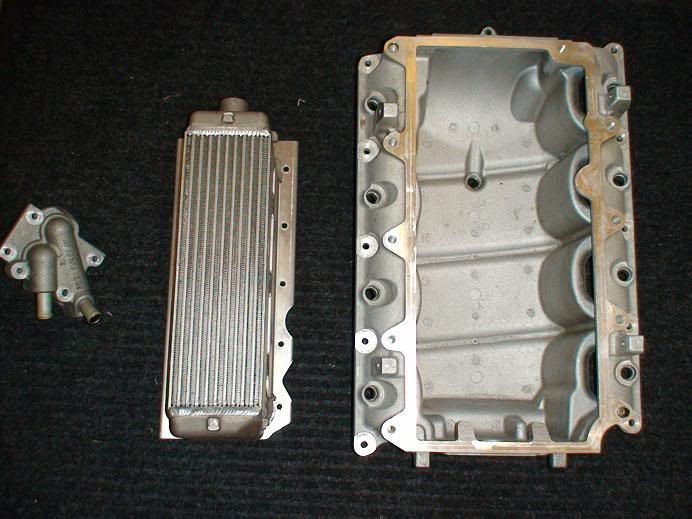
Together
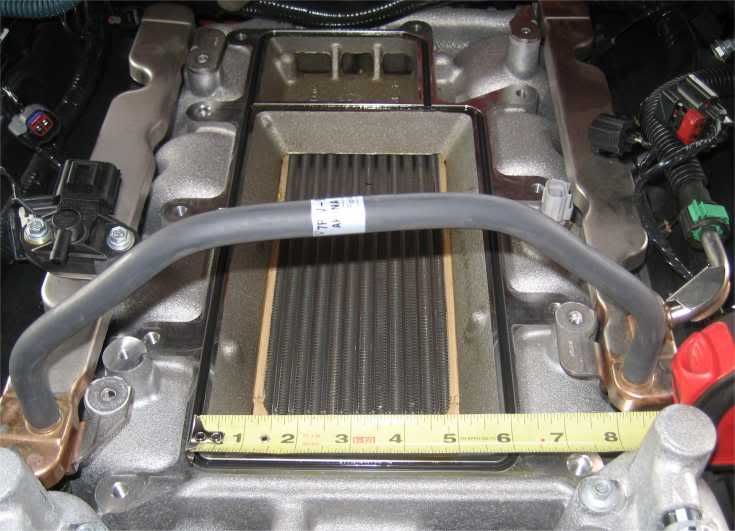
Apart

Tuned
Joined: Aug 2006
Posts: 479
Likes: 1
From: Bartlett, TN

I think we're misreading, or misunderstanding some of what is being written.
The air going thru the engine may start from inside the engine bay as with an old fashioned air cleaner sitting on top of a carburator, or may have an intake in the front of the engine by the radiator as in some more modern engines. From whatever source it starts from, it goes thru the air filter, thru the compressor, which also heats the air.
In the case of the ecoboost see below.
Then it passes thru the inside of the intecooler, which is externally cooled by another air source that comes through the hole in the lower grill area. This cools the air back down just prior to it entering the engine.
Do we agree with this?
If so, then driving in a rainstorm in an F150 EB, and injesting rain water into the big hole where the license plate should be, might allow water to go "inside" the intercooler, but that air flows out of the intercooler, and in no way could this air or water end up in the combustion chamber. The only way this could happen is from condensation from the outside of the intercooler. This is the problem addressed in another thread. Not correct. the air that goes into the system may be very humid and once compressed it must be cooled. This is when the water may/will condense out out of the air and it CAN get into the interal parts of the engine and cause problems. This does seem to be a question in one thread about using the cruise for hours in rainy weather then trying to accelerate.
The air going thru the engine may start from inside the engine bay as with an old fashioned air cleaner sitting on top of a carburator, or may have an intake in the front of the engine by the radiator as in some more modern engines. From whatever source it starts from, it goes thru the air filter, thru the compressor, which also heats the air.
In the case of the ecoboost see below.
Then it passes thru the inside of the intecooler, which is externally cooled by another air source that comes through the hole in the lower grill area. This cools the air back down just prior to it entering the engine.
Do we agree with this?
If so, then driving in a rainstorm in an F150 EB, and injesting rain water into the big hole where the license plate should be, might allow water to go "inside" the intercooler, but that air flows out of the intercooler, and in no way could this air or water end up in the combustion chamber. The only way this could happen is from condensation from the outside of the intercooler. This is the problem addressed in another thread. Not correct. the air that goes into the system may be very humid and once compressed it must be cooled. This is when the water may/will condense out out of the air and it CAN get into the interal parts of the engine and cause problems. This does seem to be a question in one thread about using the cruise for hours in rainy weather then trying to accelerate.
