




Ideal tire pressure?
Thread Starter
|
Elder User
Joined: Jan 2012
Posts: 777
Likes: 2
Ideal tire pressure?
All my stickers on the truck telling me the recommended tire pressure are worn out... I'm running Michelin LTX M/S 265/75R16 "E" rated tires.
Max tire pressure on the sidewall says 80psi. They're at 30psi right now (old owner had them down alot for winter and I had not checked them yet).
I'm not looking for comfort and I do not load it up or tow... I just want the best MPG possible with most even treadwear!
2000 4x4 v10 btw
Max tire pressure on the sidewall says 80psi. They're at 30psi right now (old owner had them down alot for winter and I had not checked them yet).
I'm not looking for comfort and I do not load it up or tow... I just want the best MPG possible with most even treadwear!
2000 4x4 v10 btw
Fleet Mechanic


Joined: Aug 2010
Posts: 1,458
Likes: 156
From: Sedalia, CO

Diesel vs. V10 - Maybe, but you'd have to compare stickers to know. The numbers I gave above are from an '01 PSD 4x4.
Sticker vs. Tire - The sticker shows the pressure required to support each axle's weight rating with the OEM tires. They can be wrong, I suppose, and I generally prefer the ride with a little more air than the sticker says, but that's a personal preference. The tire shows the max weight rating of the tire, and the pressure required to archive it. There's no reason to run that max pressure unless you are putting that much weight on each tire, or just like a really hard tire. When I've done that, even when towing, I found that the front end felt really light on wet roads.
I run 60/70 on E-rated tires when towing, and I'm just under the max legal weight rating of the vehicle.
Mark
Sticker vs. Tire - The sticker shows the pressure required to support each axle's weight rating with the OEM tires. They can be wrong, I suppose, and I generally prefer the ride with a little more air than the sticker says, but that's a personal preference. The tire shows the max weight rating of the tire, and the pressure required to archive it. There's no reason to run that max pressure unless you are putting that much weight on each tire, or just like a really hard tire. When I've done that, even when towing, I found that the front end felt really light on wet roads.
I run 60/70 on E-rated tires when towing, and I'm just under the max legal weight rating of the vehicle.
Mark
Last edited by ScaldedDog; Apr 11, 2012 at 05:53 PM. Reason: Can't type on tablet...
Hotshot
Joined: May 2005
Posts: 13,484
Likes: 42
From: Stevens Point, WI
Tire pressure has a big effect on tire wear as well. Lower tire pressure also causes more heat in the tire.
Trending Topics

Posting Guru
Joined: Aug 2007
Posts: 2,440
Likes: 1
diesel vs. v10...diesels weigh a hell of a lot more than a V10. Therefore, the front tires on a diesel should have more air than the front tires on a V10
FTE Stories
Ford Trucks for Ford Truck Enthusiasts

10 Things Every Truck Owner NEEDS (2026 Edition)
Michael S. Palmer
Rezvani's Latest Post-Apocalyptic Monster Is a Ford F-150 Raptor Underneath
Verdad Gallardo
Top 10 Most Expensive Ford Trucks Ever Sold on Bring a Trailer
Joe Kucinski
2027 Ford Super Duty Buyer's Guide (Every Model, Engine, & Package)
Brett Foote
Top 10 Ford Truck Tragedies
Joe Kucinski
AEV FXL Super Duty - the Super Duty Raptor Ford Doesn't Make
Brett Foote
Lobo Vs Lobo: Proof the F-150 Lobo Should Be Even Lower!
Michael S. Palmer
Ford's 2001 Explorer Sportsman Concept Looks For a New Home
Verdad Gallardo
10 Best Ford Truck Engines We Miss the Most!
Joe Kucinski
Moderator

Joined: Jul 2010
Posts: 12,052
Likes: 1,550
From: Media PA

^ This. Heat kills tires. I ran my Silent Armors at 80 PSI all the time for 20k miles and have seen dead even wear and they run very cool, less than 10 degrees above ambient temps.
Posting Guru
Joined: Aug 2007
Posts: 2,440
Likes: 1
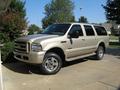
I run higher in the rear because my Excursion is heavier in the back than it is in the front. I have a 2WD with the 5.4 which makes for the lightest possible front axle weight on an Excursion. On the other hand, A 4WD diesel Excursion is probably going to be heavier in the front; if that is the case, I would have a slightly higher amount of air in the front than in the rear if you are going to be driving around with no load. If you add a load to that 4WD diesel though, the rear will again be heavier and the tire pressure will have to be adjusted to compensate for that change.
Posting Guru
Joined: Oct 2003
Posts: 1,198
Likes: 2
From: Tulsa, OK
I run 65 psig front/rear when not towing. When towing our big trailer, I run 80/80 psig. Actually, if I don't want to mess with it and think I'll be towing again within a week, I just leave it at 80/80 psig. 80 is a bit stiff, but the big Michelins are still pretty compliant, even after 50,000 miles.
Hotshot
Joined: May 2005
Posts: 13,484
Likes: 42
From: Stevens Point, WI
A fully assembled sterling 10.5" rear end I bet is about the same weight as a V10 or 5.4.
The other heavy things are 44 gallons of fuel, lots of seats, heat and A/C in the rear, spare tire, and all kinds of metal, glass, carpet, sound deadening, and stuff.
Plus the front tires are closer to the front of the truck then the rear tires are to the rear of the truck. Just the tire positions put more weight on the rear wheels.

Post Fiend
Joined: Mar 2009
Posts: 11,798
Likes: 14
From: Mt. Shasta California
A fully assembled sterling 10.5" rear end I bet is about the same weight as a V10 or 5.4.
The other heavy things are 44 gallons of fuel, lots of seats, heat and A/C in the rear, spare tire, and all kinds of metal, glass, carpet, sound deadening, and stuff.
Plus the front tires are closer to the front of the truck then the rear tires are to the rear of the truck. Just the tire positions put more weight on the rear wheels.
The other heavy things are 44 gallons of fuel, lots of seats, heat and A/C in the rear, spare tire, and all kinds of metal, glass, carpet, sound deadening, and stuff.
Plus the front tires are closer to the front of the truck then the rear tires are to the rear of the truck. Just the tire positions put more weight on the rear wheels.