



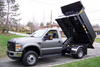

payload weight

Thread Starter
|
Trailering
Joined: Apr 2012
Posts: 23
Likes: 0
payload weight
im new to super dutys. took on a friends cash for cars business with his wife when he passed away. He (i) have an 06 F350 super duty diesel powerstroke. 4 door long bed. bought brand new in 06. He added a Sneeker lift (repo special-wheel lift tow boom) mounted under the truck. I know it weighs 1000lbs. There is also what i think is air ride, i can see bags above the springs and theres a compressor gauge added to the dash. tires LT 275/70 R18.
Heres my problem, i use the truck for construction or whatever is paying. I know its a powerful machine, but I cant figure out how much weight i can put in the bed. Ive gotten all kinds of answers but all different. I assume I have to consider the 1000 lbs of the lift on the frame and suspension & tires. I pains me to make multiple trips hauling when i think i have one of the best trucks out there. also how do i identify the air ride and what are its capabilities. This truck brings home the bacon so I cant risk damaging it. I really appreciate any 2006 advice on taking care of this truck. Thank you Also I know the truck weighs about 9500 lbs, ive had it on the scales at the scrap yard
Heres my problem, i use the truck for construction or whatever is paying. I know its a powerful machine, but I cant figure out how much weight i can put in the bed. Ive gotten all kinds of answers but all different. I assume I have to consider the 1000 lbs of the lift on the frame and suspension & tires. I pains me to make multiple trips hauling when i think i have one of the best trucks out there. also how do i identify the air ride and what are its capabilities. This truck brings home the bacon so I cant risk damaging it. I really appreciate any 2006 advice on taking care of this truck. Thank you Also I know the truck weighs about 9500 lbs, ive had it on the scales at the scrap yard
Last edited by justinelam13; Apr 3, 2012 at 08:06 PM. Reason: forgot details
Thread Starter
|
Trailering
Joined: Apr 2012
Posts: 23
Likes: 0
i posted pics, i hope, to my photos. let me know if they dont show. thank you for your help i appreciate it
Trending Topics

Postmaster
Joined: Apr 2006
Posts: 3,524
Likes: 2
From: CA Bay Area
Read the tire rating right away. Unless you have extreme duty tires, you don't have much capacity to play with.
Some basics about tires -they can take even triple overload at rolling speeds and that is probably how singles could survive on tow truck. But when overloaded tire will start rolling at higher speed, it will overheat and rubber will deteriorate at rapid rate.
No pictures. I remember that you need to have some post count to be able to attach pictures. You can link them from other sites still
Some basics about tires -they can take even triple overload at rolling speeds and that is probably how singles could survive on tow truck. But when overloaded tire will start rolling at higher speed, it will overheat and rubber will deteriorate at rapid rate.
No pictures. I remember that you need to have some post count to be able to attach pictures. You can link them from other sites still
FTE Stories
Ford Trucks for Ford Truck Enthusiasts

10 Things Every Truck Owner NEEDS (2026 Edition)
Michael S. Palmer
Rezvani's Latest Post-Apocalyptic Monster Is a Ford F-150 Raptor Underneath
Verdad Gallardo
Top 10 Most Expensive Ford Trucks Ever Sold on Bring a Trailer
Joe Kucinski
2027 Ford Super Duty Buyer's Guide (Every Model, Engine, & Package)
Brett Foote
Top 10 Ford Truck Tragedies
Joe Kucinski
AEV FXL Super Duty - the Super Duty Raptor Ford Doesn't Make
Brett Foote
Lobo Vs Lobo: Proof the F-150 Lobo Should Be Even Lower!
Michael S. Palmer
Ford's 2001 Explorer Sportsman Concept Looks For a New Home
Verdad Gallardo
10 Best Ford Truck Engines We Miss the Most!
Joe Kucinski
Hotshot


Joined: Aug 2006
Posts: 17,398
Likes: 317
From: Whittier, CA
With all that customization, no one here can tell you what the safe load will be. Tires are a concern as noted. But the one thing that is consistent is the axles. They are still the original, and you do NOT want to overload that rear axle. So weigh each axle individually, and that should give you a good idea of the remaining payload. Then make sure the sum of tire ratings at least match the axle rating.
Your F/R axle rating will be on the cert tag, and that is the one thing that has not changed.
Your F/R axle rating will be on the cert tag, and that is the one thing that has not changed.

SPONSOR
Joined: Jul 2011
Posts: 543
Likes: 0
From: Michigan
The controller and air bag kit is definitely ours. It looks like and should be, kit 57212. Did you have any questions in particular about the airbags?
They do not add any additional tow rating to your vehicle. They can help transfer some of the weight to the front axle, but you would have to hit the scales to know for sure what amount of weight it will transfer at your psi. They are truly to be used to level the truck with a load. This will help greatly in having enough weight on the front axle for braking and steering. It can also improve ride quality when loaded down.
Feel free to let me know if I can help in any way.
They do not add any additional tow rating to your vehicle. They can help transfer some of the weight to the front axle, but you would have to hit the scales to know for sure what amount of weight it will transfer at your psi. They are truly to be used to level the truck with a load. This will help greatly in having enough weight on the front axle for braking and steering. It can also improve ride quality when loaded down.
Feel free to let me know if I can help in any way.

Fleet Mechanic

Joined: Nov 2003
Posts: 1,372
Likes: 14
From: West Cornwall, CT

Those stock tires at full inflation pressure are probably rated at 3650# each. This will carry your full rear axle weight rating. Your truck probably has an 11,500# GVW rating (check the sticker).
These 350's can carry some insane loads. The truck will run at full load without complaint. As long as you are within your rear axle and tire rating, there should be no problem. If you find that more capacity is needed, you might want to remove that add-on to regain the extra 1000# of capacity.
Last week I loaded my F-350 with wet oak firewood logs until it was full - just shy of 2 cords. I figured that the wood ran ~3K or so. I found later that wet oak is heavier than one might imagine. I never noticed the difference. One has to be careful because it is very easy to overload one of these beasts and not notice it.
Lou Braun
These 350's can carry some insane loads. The truck will run at full load without complaint. As long as you are within your rear axle and tire rating, there should be no problem. If you find that more capacity is needed, you might want to remove that add-on to regain the extra 1000# of capacity.
Last week I loaded my F-350 with wet oak firewood logs until it was full - just shy of 2 cords. I figured that the wood ran ~3K or so. I found later that wet oak is heavier than one might imagine. I never noticed the difference. One has to be careful because it is very easy to overload one of these beasts and not notice it.
Lou Braun
Senior User
Joined: Feb 2012
Posts: 219
Likes: 1
From: Cheshire Massachusetts
technically speaking as you increase the ride height of the back its going to transfer some amount of weight to the front. especially if the truck is squatting in the rear a lot under a heavy load, it will be a noticeable difference.
Hotshot
Joined: Aug 2006
Posts: 17,398
Likes: 317
From: Whittier, CA
Shifts the center of gravity. Slightly. Or more than slightly if the load happens to be rearward of the axle.
Postmaster
Joined: Apr 2006
Posts: 3,524
Likes: 2
From: CA Bay Area
I know the bags will slightly shift the center of gravity UP, but how it will move horizontally?