



Office Setup

Thread Starter
|
Tuned

Joined: Jan 2012
Posts: 270
Likes: 0
Office Setup
To those of you who helped me, I really appreciate you taking the time to do that. Send me your name and, when the time comes, a discount will head your way. Supasnipacolyer@gmail.com

Post Fiend
Joined: Oct 2003
Posts: 6,214
Likes: 13
From: New Jersey
1. Time/gas/wear&tear to drive to main warehouse to use free welding equipment
(or)
2. Buying small welder and paying for consumables, electricity, but not having a commute.
You could also factor in consumables for the bigger machines in the main warehouse assuming you have to reimburse whomever is loaning you the equipment.
You could also factor in the value of capability - welding with a bigger machine offers you more flexibility, but has a higher cost in purchase as well as consumables.
Anyway, you get the idea.
Thread Starter
|
Tuned
Joined: Jan 2012
Posts: 270
Likes: 0
Thank you very much. Being that it's my fathers office, he will let me use it(because I'm paying for materials). If it grows too big for me to go over there, I will transfer to the outside shop. Thanks again.

Cargo Master


Joined: Apr 2001
Posts: 2,220
Likes: 26
If you have welding and fab questions, a good resource is the weldingweb forums.
WeldingWeb™ - Welding forum for pros and enthusiasts - Powered by vBulletin
You can get into all the specifics you want there, and can get VERY specific machine, welding and fab advice.
When a Ford question comes up, I send folks right here to FTE, but for welding go to welding sites.
Miller Welding Discussion Forums
Weld Talk Message Board and Online Forum - Hobart Welders
WeldingWeb™ - Welding forum for pros and enthusiasts - Powered by vBulletin
You can get into all the specifics you want there, and can get VERY specific machine, welding and fab advice.
When a Ford question comes up, I send folks right here to FTE, but for welding go to welding sites.
Miller Welding Discussion Forums
Weld Talk Message Board and Online Forum - Hobart Welders
Thread Starter
|
Tuned
Joined: Jan 2012
Posts: 270
Likes: 0
Trending Topics
Thread Starter
|
Tuned
Joined: Jan 2012
Posts: 270
Likes: 0
FTE Stories
Ford Trucks for Ford Truck Enthusiasts

Top 10 Fords at 2026 Carlisle Ford Nationals
Joe Kucinski
3 Best / 3 Worst Parts of Modern Ford Ownership
Brett Foote
10 Amazing Upgrades That Solve Common Ford Truck Owner Headaches
Pouria Savadkouei
Every 2026 Ford Engine Explained
Brett Foote
10 Ugly Ford Trucks That We Still Kinda Love
Joe Kucinski
10 Things Every Truck Owner NEEDS (2026 Edition)
Michael S. Palmer
Rezvani's Latest Post-Apocalyptic Monster Is a Ford F-150 Raptor Underneath
Verdad Gallardo
Top 10 Most Expensive Ford Trucks Ever Sold on Bring a Trailer
Joe Kucinski
2027 Ford Super Duty Buyer's Guide (Every Model, Engine, & Package)
Brett Foote
Token Redneck

Joined: Jun 2007
Posts: 9,339
Likes: 350
From: Breckenridge, TX

The insurance that cover's your **** when you burn down your dad's house while welding in the attached garage. Unless you know how the garage is wired, the wire gauge used behind the walls, the outlet ratings, the breaker ratings, and how the panel is wired, you shouldn't be plugging a welder in anywhere in his garage. It's nice to assume people do things correctly when they build things, but I've seen enough pennies stuck behind fuses and melted extension cords to know that people very rarely do.
Then there's the insurance that covers YOUR **** when the go-cart frame you welded snaps and some kid goes to the ER with a broken arm. Even if they ramped it off the roof of their house and had five kids in it.... you welded it, you're on the line when someone come's looking for money. Liability insurance is one of the things that separates hack-job DIY'ers from turning out crap in their garages from actual professionals. It doesn't matter if you start posturing and hem-hawing that you're a great welder and that would never happen yadayadayada, but it's like Ford having insurance to cover when one of their trucks fails and hurts someone/something; you buy the insurance to protect yourself, but also as a way of standing behind what you make because you're willing to pony up the costs associated with running a business correctly and cover any mistakes you make, and not as a fly-by-night scheister who won't be around when what you made had problems.
Then there's the insurance that covers YOUR **** when the go-cart frame you welded snaps and some kid goes to the ER with a broken arm. Even if they ramped it off the roof of their house and had five kids in it.... you welded it, you're on the line when someone come's looking for money. Liability insurance is one of the things that separates hack-job DIY'ers from turning out crap in their garages from actual professionals. It doesn't matter if you start posturing and hem-hawing that you're a great welder and that would never happen yadayadayada, but it's like Ford having insurance to cover when one of their trucks fails and hurts someone/something; you buy the insurance to protect yourself, but also as a way of standing behind what you make because you're willing to pony up the costs associated with running a business correctly and cover any mistakes you make, and not as a fly-by-night scheister who won't be around when what you made had problems.
Thread Starter
|
Tuned
Joined: Jan 2012
Posts: 270
Likes: 0
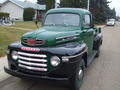
First of all, I have no idea what you are talking about go carts for. Nowhere have I mentioned a gocart or anything related to a go cart. And for your information, I know what I need to know. Besides, my father has been doing this for 20 years and is much more competent than you think you are. Second of all, don't preach to me. I came here asking for information on a welder, not "how many big bad adults can tell me how stupid I am for having drive and initiative?" That bumper on the front of your truck, for your information, is my product. If you are having kids sit on that and letting them jump off the roof, I have no idea what is going through your mind. As far as I am concerned, winch bumpers are not insured. It's an aftermarket product, not an airplane. So please, next time do some research before trying to preach.

Hotshot
Joined: Oct 2002
Posts: 18,488
Likes: 22
From: The Big, Oregon

Things need to tone down here a bit.
People will sue over anything, a go-cart was the example of a small welding job someone brought in. I do not see anywhere you were called stupid for having initiative, I only see where you were reminded of the real world.
A winch bumper is a critical item that can cause severe injury or death if not built properly. At the base of it, there are two welds and four or six bolts up against 8,000-12,000lbs of force, usually in a bad place. If someone's bumper pops apart you could be held liable for injuries, further damage, and the recovery of the truck.
I personally would never weld in an attached garage. Not only is it not a good idea, it's flat out illegal in many places and if your house burns down the insurance company likely will not pay to repair the place. Hot work of any kind in a dwelling is against fire code in pretty much any county in the US, that includes a garage attached to a house.
I have been welding for almost ten years now, professionally. I'm about at the point where I can be called a journeyman. I've been certified to SubSafe standards for x-ray and ultrasound inspected welds on the hull of a sub. In my time, I have seen a lot of guys who could lay a really pretty looking bead that would fall apart if you touched it.
It takes a long time to learn to weld properly. It's one of those things where you can figure out how to do it in a day, but it takes a lifetime to master.
People will sue over anything, a go-cart was the example of a small welding job someone brought in. I do not see anywhere you were called stupid for having initiative, I only see where you were reminded of the real world.
A winch bumper is a critical item that can cause severe injury or death if not built properly. At the base of it, there are two welds and four or six bolts up against 8,000-12,000lbs of force, usually in a bad place. If someone's bumper pops apart you could be held liable for injuries, further damage, and the recovery of the truck.
I personally would never weld in an attached garage. Not only is it not a good idea, it's flat out illegal in many places and if your house burns down the insurance company likely will not pay to repair the place. Hot work of any kind in a dwelling is against fire code in pretty much any county in the US, that includes a garage attached to a house.
I have been welding for almost ten years now, professionally. I'm about at the point where I can be called a journeyman. I've been certified to SubSafe standards for x-ray and ultrasound inspected welds on the hull of a sub. In my time, I have seen a lot of guys who could lay a really pretty looking bead that would fall apart if you touched it.
It takes a long time to learn to weld properly. It's one of those things where you can figure out how to do it in a day, but it takes a lifetime to master.
Thread Starter
|
Tuned
Joined: Jan 2012
Posts: 270
Likes: 0
Thank you for the clarification. My father has been building giant furnaces processing in the millions of btu's of material an hour and the systems to control them. He says a lot of his tine is dealing with the legal mumbo jumbo. My father has the equipment for testing welds as well. His business partner has been wring almost everything for the past 20 years and they have not been broken. The bumpers will have extensive research, testing, and retesting to ensure my design has no flaws. The tests will be on my vehicle to be sure that no problems arise. As for the comment before: i hate being condescened. Yes, I am a teenager, yes, My real world experience isn't extremely extensive. No, I am not ignorant to all of the little things we need to worry about. I, as everyone else, wAnt to be treated as more than a mere child. Speak to me in real world terms not analogies. Again, Ford_6, thank you for explaining it to me as one would explain it to an adult.

Thread
Thread Starter
Forum
Replies
Last Post
Stephen67
1948 - 1956 F1, F100 & Larger F-Series Trucks
17
Aug 4, 2012 11:57 AM