








efi ex manifold
Moderator


Joined: Dec 2007
Posts: 7,987
Likes: 104
From: Boise, Idaho

The EFI manifolds are from an 87 to 96 truck. I don't think there are any differences amongst the years.
Trending Topics

Thread Starter
|
Junior User
Joined: Nov 2009
Posts: 52
Likes: 0
FTE Stories
Ford Trucks for Ford Truck Enthusiasts

Top 10 Fords at 2026 Carlisle Ford Nationals
Joe Kucinski
3 Best / 3 Worst Parts of Modern Ford Ownership
Brett Foote
10 Amazing Upgrades That Solve Common Ford Truck Owner Headaches
Pouria Savadkouei
Every 2026 Ford Engine Explained
Brett Foote
10 Ugly Ford Trucks That We Still Kinda Love
Joe Kucinski
10 Things Every Truck Owner NEEDS (2026 Edition)
Michael S. Palmer
Rezvani's Latest Post-Apocalyptic Monster Is a Ford F-150 Raptor Underneath
Verdad Gallardo
Top 10 Most Expensive Ford Trucks Ever Sold on Bring a Trailer
Joe Kucinski
2027 Ford Super Duty Buyer's Guide (Every Model, Engine, & Package)
Brett Foote
Moderator
Joined: Dec 2007
Posts: 7,987
Likes: 104
From: Boise, Idaho
Yes and no.
The manifolds themselves are a near direct bolt on. They bind a little bit with the stock intake, so some grinding may be required. If you have a good hand-held or bench grinder, it'll take about 5 - 10 minutes is all. Mock them up on the engine before you install them and you'll see where they bind.
The EFI manifolds have 3 extra bolt holes on them for ease of installation (you won't be able to use them since you won't have the 3 extra bolt holes in your head). One of them had to be ground off on mine since it was binding with the intake.
Also, some extra material on one of the runners had to be ground off because it was binding with the intake.
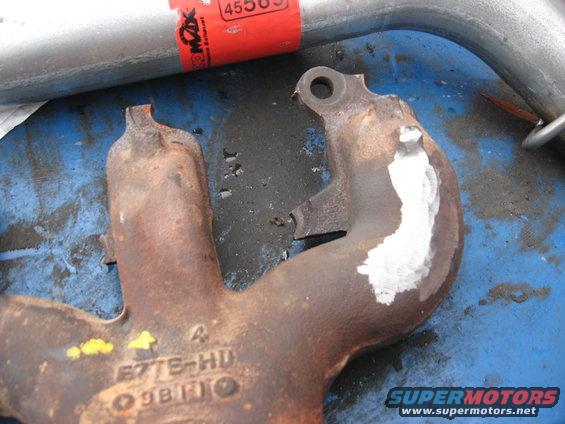
(You can also see one of the extra bolt holes on the manifolds in that picture).
Secondly, ALL of the emissions components tie in with the stock exhaust manifold. If your truck has an EGR valve, AIR pump, etc., you'll have to remove all of it because it won't work anymore unless you want to get really creative.
Lastly, you'll need to keep in mind that the stock exhaust manifold has a provision to provide heat to the intake. This heat helps with fuel atomization and eliminates bogs and lean spots. The EFI manifolds have no such provision.
A common way to fix this is to apply coolant heat to the bottom of the intake. A lot use a plate like this that bolts in place of the exhaust manifold.

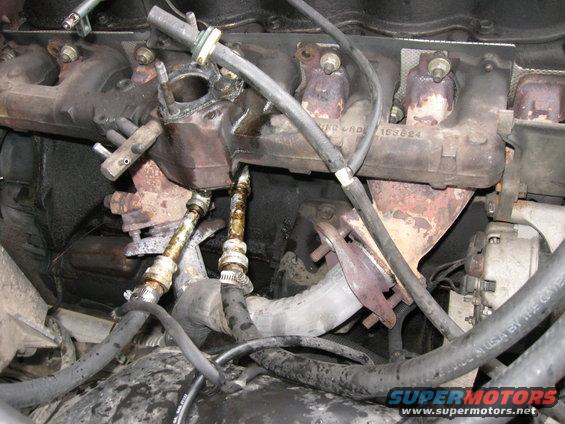
You can make your own, or get them here: Home Page
You CAN run without it, but you may notice some performance loss under certain conditions, especially when its cold outside.
The manifolds themselves are a near direct bolt on. They bind a little bit with the stock intake, so some grinding may be required. If you have a good hand-held or bench grinder, it'll take about 5 - 10 minutes is all. Mock them up on the engine before you install them and you'll see where they bind.
The EFI manifolds have 3 extra bolt holes on them for ease of installation (you won't be able to use them since you won't have the 3 extra bolt holes in your head). One of them had to be ground off on mine since it was binding with the intake.
Also, some extra material on one of the runners had to be ground off because it was binding with the intake.
(You can also see one of the extra bolt holes on the manifolds in that picture).
Secondly, ALL of the emissions components tie in with the stock exhaust manifold. If your truck has an EGR valve, AIR pump, etc., you'll have to remove all of it because it won't work anymore unless you want to get really creative.
Lastly, you'll need to keep in mind that the stock exhaust manifold has a provision to provide heat to the intake. This heat helps with fuel atomization and eliminates bogs and lean spots. The EFI manifolds have no such provision.
A common way to fix this is to apply coolant heat to the bottom of the intake. A lot use a plate like this that bolts in place of the exhaust manifold.
You can make your own, or get them here: Home Page
You CAN run without it, but you may notice some performance loss under certain conditions, especially when its cold outside.

Thread
Thread Starter
Forum
Replies
Last Post