




Someone explain this for me please
Thread Starter
|
Posting Guru
Joined: Jul 2009
Posts: 1,005
Likes: 0
From: Ventura, CA
Someone explain this for me please
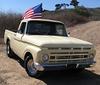
Ok so I am totally confused about my truck right now. As Ive said before i have a 63 styleside with a 302/C4 and 3.50 gears. Well a week or two ago i posted about gas mileage and i guess this is a return to that. Normally when i drive on the freeway i do 50 on my speedo (i know the speedo reads low so its somewhere around 55 in reality) and it normally takes me about 4.5 gallons to get from Ventura to UCSB which is in Goleta (about 45 miles) and about 4 gallons to go back to Ventura (its slightly downhill).
Now what I'm confused about, Friday i had to rush back to Ventura because i had to pick up my little sister to take her to a Dodger game so i did 60 on my speedo (somewhere around 65-70 in reality) and it only took me 3.5 gallons to get home, then to see if it was just a spoof i drove the same speed on my way back to Goleta and it only took me 3.8 gallons to get back. Can anyone explain this difference, i thought gas mileage should diminish with speed not increase...
Now what I'm confused about, Friday i had to rush back to Ventura because i had to pick up my little sister to take her to a Dodger game so i did 60 on my speedo (somewhere around 65-70 in reality) and it only took me 3.5 gallons to get home, then to see if it was just a spoof i drove the same speed on my way back to Goleta and it only took me 3.8 gallons
to get back. Can anyone explain this difference, i thought gas mileage should diminish with speed not increase...
Posting Guru
Joined: Jan 2011
Posts: 2,315
Likes: 0
From: Rossmoor at Seal Beach
Ok so I am totally confused about my truck right now. As Ive said before i have a 63 styleside with a 302/C4 and 3.50 gears. Well a week or two ago i posted about gas mileage and i guess this is a return to that. Normally when i drive on the freeway i do 50 on my speedo (i know the speedo reads low so its somewhere around 55 in reality) and it normally takes me about 4.5 gallons to get from Ventura to UCSB which is in Goleta (about 45 miles) and about 4 gallons to go back to Ventura (its slightly downhill).
Now what I'm confused about, Friday i had to rush back to Ventura because i had to pick up my little sister to take her to a Dodger game so i did 60 on my speedo (somewhere around 65-70 in reality) and it only took me 3.5 gallons to get home, then to see if it was just a spoof i drove the same speed on my way back to Goleta and it only took me 3.8 gallons to get back. Can anyone explain this difference, i thought gas mileage should diminish with speed not increase...
Now what I'm confused about, Friday i had to rush back to Ventura because i had to pick up my little sister to take her to a Dodger game so i did 60 on my speedo (somewhere around 65-70 in reality) and it only took me 3.5 gallons to get home, then to see if it was just a spoof i drove the same speed on my way back to Goleta and it only took me 3.8 gallons
to get back. Can anyone explain this difference, i thought gas mileage should diminish with speed not increase...You can install a vacuum gauge, and try to keep the vacuum as high as possible. At idle your Vacuum is very high, at high RPM vacuum is very low. So try to find a speed that gives you very high vacuum readings. It is a matter of just playing with it until you find that optimum speed to mileage ratio!
Thread Starter
|
Posting Guru
Joined: Jul 2009
Posts: 1,005
Likes: 0
From: Ventura, CA
Some times if a vehicle rear end is over geared the mileage will drop, so putting in a lower rear end gear and bringing the revs up will actually improve mileage. In your case you were probably running a little below the peak efficiency rpm,aka Bogging it, and by gaining 5 mph it put you into that more efficient power band. What RPM are you running at at 55, versus 65. Smaller displacement engines have to run a bit higher revs than big blocks due to a naturally lower Torque rating. Each engine and gear set up is different. You might try 65 next round trip, and see if it get's better or worse. Ultimately the less you change the throttle ie: maintain steady speed the more efficient your truck will be, hence the reason that Cruise controls usually get you better mileage. Fuel injection does not work quite the same way... At lower RPM the O2 sensor will sense the air fuel ratio, and adjust the injectors to the most efficient Air fuel ratio. Your Carb is Mechanical, when you run lower RPM and have to hold the pedal in pretty good the carb will dump in fuel based on the Vacuum draw. Play with your speed for a few days, and you will find the prime speed, The RPM range will be higher for smaller displacements , then it will for bigger displacements.
You can install a vacuum gauge, and try to keep the vacuum as high as possible. At idle your Vacuum is very high, at high RPM vacuum is very low. So try to find a speed that gives you very high vacuum readings. It is a matter of just playing with it until you find that optimum speed to mileage ratio!
You can install a vacuum gauge, and try to keep the vacuum as high as possible. At idle your Vacuum is very high, at high RPM vacuum is very low. So try to find a speed that gives you very high vacuum readings. It is a matter of just playing with it until you find that optimum speed to mileage ratio!
Posting Guru
Joined: Jan 2011
Posts: 2,315
Likes: 0
From: Rossmoor at Seal Beach
the rpm difference is about 3000 @ 60 v 2400 @ 50. im planning on figuring out how far off the speedo is this weekend. im thinking it maybe as high as 20-25% off so i really need to figure that out for sure. and the vacuum gauge idea is an interesting one, i might have to figure out a way to do that
My truck seems to be the most efficient at about 2500 rpm with my current gearing, but I also have a bigger displacement.
Posting Guru
Joined: Jan 2011
Posts: 2,315
Likes: 0
From: Rossmoor at Seal Beach
the rpm difference is about 3000 @ 60 v 2400 @ 50. im planning on figuring out how far off the speedo is this weekend. im thinking it maybe as high as 20-25% off so i really need to figure that out for sure. and the vacuum gauge idea is an interesting one, i might have to figure out a way to do that
If you have a AAA membership check with them , they do free Speedo testing, or at least they used to... You will find the faster you are going the further off the speedo will be, as a rule! You can also use a GPS as most have a ground speed indicator. I use my GPS as my speedo, as it is much more acurate.
Thread Starter
|
Posting Guru
Joined: Jul 2009
Posts: 1,005
Likes: 0
From: Ventura, CA
If you have a AAA membership check with them , they do free Speedo testing, or at least they used to... You will find the faster you are going the further off the speedo will be, as a rule! You can also use a GPS as most have a ground speed indicator. I use my GPS as my speedo, as it is much more acurate.
Trending Topics
Thread Starter
|
Posting Guru
Joined: Jul 2009
Posts: 1,005
Likes: 0
From: Ventura, CA
Im just magic!
No im topping the tank off before i leave Ventura and when i get to Goleta and vise versa on the way back so im just using the gallon readings on the receipts. I dont normally do that but i did the last few times and thats when i noticed the difference
No im topping the tank off before i leave Ventura and when i get to Goleta and vise versa on the way back so im just using the gallon readings on the receipts. I dont normally do that but i did the last few times and thats when i noticed the difference
FTE Stories
Ford Trucks for Ford Truck Enthusiasts

Rezvani's Latest Post-Apocalytic Monster Is a Ford F-150 Raptor Underneath
Verdad Gallardo
Top 10 Most Expensive Ford Trucks Ever Sold on Bring a Trailer
Joe Kucinski
2027 Ford Super Duty Buyer's Guide (Every Model, Engine, & Package)
Brett Foote
Top 10 Ford Truck Tragedies
Joe Kucinski
AEV FXL Super Duty - the Super Duty Raptor Ford Doesn't Make
Brett Foote
Lobo Vs Lobo: Proof the F-150 Lobo Should Be Even Lower!
Michael S. Palmer
Ford's 2001 Explorer Sportsman Concept Looks For a New Home
Verdad Gallardo
10 Best Ford Truck Engines We Miss the Most!
Joe Kucinski
2026 Shelby F-150 Off-Road: Better Than a Raptor R?
Brett Foote
9 ECHO 1


Joined: Aug 2009
Posts: 12,467
Likes: 58
From: Missouri

David the same thing happens to me. It takes me about a quarter tank to get to UCSB (in each vehicle I've driven up there) and consistently takes almost no gas coming back. I think there might be southbound winds off of the hills, which could account for the lower mpg at higher speed if the winds were up.
Posting Guru
Joined: Jan 2011
Posts: 2,315
Likes: 0
From: Rossmoor at Seal Beach
David the same thing happens to me. It takes me about a quarter tank to get to UCSB (in each vehicle I've driven up there) and consistently takes almost no gas coming back. I think there might be southbound winds off of the hills, which could account for the lower mpg at higher speed if the winds were up.
Or maybe your vehicles are just glad to get out of Santa Barbara!


Elder User
Joined: Oct 2009
Posts: 825
Likes: 2
From: Dallas, Texas
Some times if a vehicle rear end is over geared the mileage will drop, so putting in a lower rear end gear and bringing the revs up will actually improve mileage. In your case you were probably running a little below the peak efficiency rpm,aka Bogging it, and by gaining 5 mph it put you into that more efficient power band. What RPM are you running at at 55, versus 65. Smaller displacement engines have to run a bit higher revs than big blocks due to a naturally lower Torque rating. Each engine and gear set up is different. You might try 65 next round trip, and see if it get's better or worse. Ultimately the less you change the throttle ie: maintain steady speed the more efficient your truck will be, hence the reason that Cruise controls usually get you better mileage. Fuel injection does not work quite the same way... At lower RPM the O2 sensor will sense the air fuel ratio, and adjust the injectors to the most efficient Air fuel ratio. Your Carb is Mechanical, when you run lower RPM and have to hold the pedal in pretty good the carb will dump in fuel based on the Vacuum draw. Play with your speed for a few days, and you will find the prime speed, The RPM range will be higher for smaller displacements , then it will for bigger displacements.
If you don't know the answer, just say so.

Posting Guru
Joined: Jan 2011
Posts: 2,315
Likes: 0
From: Rossmoor at Seal Beach
It is the curse of being a aeronautical engineer and a teacher! always a long winded explanation!

More Turbo
Joined: Apr 2011
Posts: 707
Likes: 2
From: Sauk City, WI
This is not uncommon on many vehicles.
Example: I own a '06 Chevy Impala LTZ. When I drive it to work I get tops of about 340 miles a tank, running about 60 MPH on average on the highway. However, when I drove to South Dakota last summer, averaging over 75 MPH on the entire trip, including some 90+ MPH across Minnesota and South Dakota, I was able to get over 360 miles per tank.
Like Jet said, some motors just run better at certain RPM ranges. The 3.9 in my Impala really does well running at about 2400 rpm. But running 75+ in a 55 is a sure way to get a ticket which kind of negates the money saved on fuel!
Example: I own a '06 Chevy Impala LTZ. When I drive it to work I get tops of about 340 miles a tank, running about 60 MPH on average on the highway. However, when I drove to South Dakota last summer, averaging over 75 MPH on the entire trip, including some 90+ MPH across Minnesota and South Dakota, I was able to get over 360 miles per tank.
Like Jet said, some motors just run better at certain RPM ranges. The 3.9 in my Impala really does well running at about 2400 rpm. But running 75+ in a 55 is a sure way to get a ticket which kind of negates the money saved on fuel!