Exhaust Break

Thread Starter
|
New User
Joined: Nov 2010
Posts: 13
Likes: 0
 Exhaust Break
is it standard with the diesel 6.7 motor How can I tell if I have it or where I can find the information that it is standard.
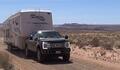
I have a 2011 350 XLT with plow and toe package Thanks I pull a 15,000 pound fifth wheel and it does an awesome job.
I have a 2011 350 XLT with plow and toe package Thanks I pull a 15,000 pound fifth wheel and it does an awesome job.
Senior User
Joined: Oct 2010
Posts: 314
Likes: 0
From: Winfield, WV
Good to know. I tow with mine all the time and have never heard the exhaust brake.

Posting Guru
Joined: Apr 2004
Posts: 1,399
Likes: 1
From: Corinth, TX
actually, there is NO EXHAUST BRAKE standard on the 2011. There is "enhanced *engine* braking", which uses some of the same methods as other exhaust brakes. This has been discussed at length on this forum... many times.
ENGINE braking is NOT the same as EXHAUST braking.
If you are in Tow/Haul and Drive (not Manual), your truck will use its variable vane turbo engine braking mechanism to help slow you down, without using the service brakes. The Hill Descent feature is something totally separate and unrelated.
ENGINE braking is NOT the same as EXHAUST braking.
If you are in Tow/Haul and Drive (not Manual), your truck will use its variable vane turbo engine braking mechanism to help slow you down, without using the service brakes. The Hill Descent feature is something totally separate and unrelated.
Senior User
Joined: Jun 2009
Posts: 136
Likes: 1
actually, there is NO EXHAUST BRAKE standard on the 2011. There is "enhanced *engine* braking", which uses some of the same methods as other exhaust brakes. This has been discussed at length on this forum... many times.
ENGINE braking is NOT the same as EXHAUST braking.
If you are in Tow/Haul and Drive (not Manual), your truck will use its variable vane turbo engine braking mechanism to help slow you down, without using the service brakes. The Hill Descent feature is something totally separate and unrelated.
ENGINE braking is NOT the same as EXHAUST braking.
If you are in Tow/Haul and Drive (not Manual), your truck will use its variable vane turbo engine braking mechanism to help slow you down, without using the service brakes. The Hill Descent feature is something totally separate and unrelated.
If we are bothering you by discussing something that already has another thread please feel free to ignore this this thread.
Trending Topics
Posting Guru
Joined: Apr 2004
Posts: 1,399
Likes: 1
From: Corinth, TX
no need to be a jerk... I'm just trying to help clarify an issue that is very commonly confused. If you want more details, feel free to use the SEARCH function.
FTE Stories
Ford Trucks for Ford Truck Enthusiasts

Top 6 Best Deals Available on New Fords & Lincolns Right Now
Brett Foote
This Hennessey Takes the Expedition Tremor's Off-Roading Capability to the Next Level
Verdad Gallardo
Top 10 Fords at 2026 Carlisle Ford Nationals
Joe Kucinski
3 Best / 3 Worst Parts of Modern Ford Ownership
Brett Foote
10 Amazing Upgrades That Solve Common Ford Truck Owner Headaches
Pouria Savadkouei
Every 2026 Ford Engine Explained
Brett Foote
10 Ugly Ford Trucks That We Still Kinda Love
Joe Kucinski
10 Things Every Truck Owner NEEDS (2026 Edition)
Michael S. Palmer
Rezvani's Latest Post-Apocalyptic Monster Is a Ford F-150 Raptor Underneath
Verdad Gallardo
Senior User
Joined: Jun 2009
Posts: 136
Likes: 1
My apology for my harsh response.
Posting Guru
Joined: Apr 2004
Posts: 1,399
Likes: 1
From: Corinth, TX
I might have been a bit more harsh than intended... I'm in some pretty serious pain due to a botched oral surgery this past weekend. it's made me generally irritable...
my point about the search function was meant to be informational - there is a thread out there with some very good info posted by someone other than myself. It explains the different types of mechanisms that are too commonly grouped as "exhaust brakes", when they are pretty drastically different. What we have could most accurately be described as a "turbo brake"... but that may have been too confusing to put in the brochure. Who knows
my point about the search function was meant to be informational - there is a thread out there with some very good info posted by someone other than myself. It explains the different types of mechanisms that are too commonly grouped as "exhaust brakes", when they are pretty drastically different. What we have could most accurately be described as a "turbo brake"... but that may have been too confusing to put in the brochure. Who knows



Postmaster
Joined: Apr 2009
Posts: 3,839
Likes: 2
now guys...no need to get excited here...pain does make us do funny things...
Whiteline
While djjoshaud is technically correct about not having a true exhaust brake such as the Jacobs exhaust brake on large trucks, the 2011 Ford 6.7 diesel does have the HD pickup industry type of standard exhaust brake. As he stated, it uses the turbocharger and computer programming to create engine braking through the exhaust system.
There has been a large debate over the effectiveness of this system. One complaint with the Ford setup is it has no separate dash mounted on/off switch. The engine brake is only active when the tow/haul mode is switched on. There are some that disagree with this statement but it how I have seen the system work over 8000 miles of fiver hauling. With the tow/haul mode enabled, a tap of the brake pedal switches on the engine brake. Additional brake taps result in lower speeds. Because the tow/haul and engine brake are so tightly integrated, there is some confusion as to whether it is working. My results have been very satisfactory. I have climbed 9% grades that are 3 miles long and descended 3 miles or more down the 9% backside. My fiver weighs 13000 pounds and the entire rig weighs 22200 pounds. I am not overweight on any factory specs. Cresting the hill at 65mph is easy but the descent needs to be below 50 mph. In my experience, 50 mph or less results in a brake free descent all the way to the bottom. Above 50 and the system does not work as well. It is what it is...
The GM and Dodge systems have separate engine brake switches. Tow/haul engagement is not required. There systems have been declared by some comparison reviews as more powerful than the Ford's. While that is likely true, proper operation of the Ford system results in satisfactory operation for my needs. YMMV
Regards
Whiteline
While djjoshaud is technically correct about not having a true exhaust brake such as the Jacobs exhaust brake on large trucks, the 2011 Ford 6.7 diesel does have the HD pickup industry type of standard exhaust brake. As he stated, it uses the turbocharger and computer programming to create engine braking through the exhaust system.
There has been a large debate over the effectiveness of this system. One complaint with the Ford setup is it has no separate dash mounted on/off switch. The engine brake is only active when the tow/haul mode is switched on. There are some that disagree with this statement but it how I have seen the system work over 8000 miles of fiver hauling. With the tow/haul mode enabled, a tap of the brake pedal switches on the engine brake. Additional brake taps result in lower speeds. Because the tow/haul and engine brake are so tightly integrated, there is some confusion as to whether it is working. My results have been very satisfactory. I have climbed 9% grades that are 3 miles long and descended 3 miles or more down the 9% backside. My fiver weighs 13000 pounds and the entire rig weighs 22200 pounds. I am not overweight on any factory specs. Cresting the hill at 65mph is easy but the descent needs to be below 50 mph. In my experience, 50 mph or less results in a brake free descent all the way to the bottom. Above 50 and the system does not work as well. It is what it is...
The GM and Dodge systems have separate engine brake switches. Tow/haul engagement is not required. There systems have been declared by some comparison reviews as more powerful than the Ford's. While that is likely true, proper operation of the Ford system results in satisfactory operation for my needs. YMMV
Regards
Posting Guru
Joined: Apr 2004
Posts: 1,399
Likes: 1
From: Corinth, TX
you think I'm irritable now... tomorrow afternoon I go in for IV sedation to finish the job they screwed up on Saturday. I'll either be a world-class jerk or I'll be loopy as hell. Maybe both 
Lead Driver


Joined: Nov 2005
Posts: 5,247
Likes: 4,267
From: Kaysville Utah
I'm not going to get into symantics, Call it what you feel comfortable calling it. I did have a B&D Exhaust Brake on my 2006 6.0L and a good friend has a PAC exhaust brake and his 2005 duramax. We both pull large GN horse trailers so I think I have some idea of what to expect out of trucks this size with engine/exhaust braking.
An intragal part of the B&D product was the Torque Convertor lock up module. When ever the Exhaust brake engaged, it also maintained in the TC in the lock mode. No coasting in other words. The B&D product maintained the locked TC down to 25 mph. At which time it released. The B&D employeed a butterfly valve down stream in the exhaust that was positioned approximately under the passenger seat. When this valve was closed and you exceeded a certain back pressure you would hear the bypass valve open and hiss as it released the excess pressure.
With the 6.7L the back pressure is created by the Turbo. Since the turbo is mounted directly to the manifold, any excess pressure can not be vented pre-turbo, so the computer basiclly allows it to pass thru the turbo when a certain pressure is achieved. So you don't hear anything much different than normal exhaust sounds. Since all the exhaust is still passing thru the exhaust, DPF and SCR system.
I frequently take my horses up to a trailhead. It has a steep windy road leading out. As I leave I put the truck in T/H and it stays in 1st gear and holds me down the hill at 20 mph. In my 2006 the TC would be unlocked because I was below 25 mph and I would be freewheeling. So the 2011 is better there.
I've also noticed coming on down the road, The city streets are 30 mph limit. I can touch the brake to slow me to 30 mph and roll down the streets at a constant speed. as the grade decreases the truck may slow, I occasionally touch the fuel pedal to maintain the 30 mph speed. the 2011 truck stays in the same grear and just rev's higher. I'm sure if I pressed the pedal harder or maintained the pressure, the tranny would up shift from 2nd to 3rd. But in general it stays in the gear and allows me to set the speed I want it to hold me at. The 2006 truck upshifted very quickly after I applied pedal pressure and I would begin coasting and gaining speed. I prefer the implimentation of the 2011 engine/trany braking for this type of driving.
At 60 -70 mph coming off a 8% grade, I don't think the current sysem is as strong as my previous B&D Exhaust brake was. I suspect the GM or Dodge implimentation will also have strong and weak points, Different drivers will find strong and weak points depending on how the drive. There is a trade off, But in general, I happy with the current implimention of engine/exhaust braking. I've gotten used to how it works. I suggest that each of you play with it and learn it's limits. It does a good job. I don't expect to have warped rotors at 35,000 miles like my 2000 and 2003 trucks did. The exhaust braking helps and reduces how much you use the actual axle brakes
An intragal part of the B&D product was the Torque Convertor lock up module. When ever the Exhaust brake engaged, it also maintained in the TC in the lock mode. No coasting in other words. The B&D product maintained the locked TC down to 25 mph. At which time it released. The B&D employeed a butterfly valve down stream in the exhaust that was positioned approximately under the passenger seat. When this valve was closed and you exceeded a certain back pressure you would hear the bypass valve open and hiss as it released the excess pressure.
With the 6.7L the back pressure is created by the Turbo. Since the turbo is mounted directly to the manifold, any excess pressure can not be vented pre-turbo, so the computer basiclly allows it to pass thru the turbo when a certain pressure is achieved. So you don't hear anything much different than normal exhaust sounds. Since all the exhaust is still passing thru the exhaust, DPF and SCR system.
I frequently take my horses up to a trailhead. It has a steep windy road leading out. As I leave I put the truck in T/H and it stays in 1st gear and holds me down the hill at 20 mph. In my 2006 the TC would be unlocked because I was below 25 mph and I would be freewheeling. So the 2011 is better there.
I've also noticed coming on down the road, The city streets are 30 mph limit. I can touch the brake to slow me to 30 mph and roll down the streets at a constant speed. as the grade decreases the truck may slow, I occasionally touch the fuel pedal to maintain the 30 mph speed. the 2011 truck stays in the same grear and just rev's higher. I'm sure if I pressed the pedal harder or maintained the pressure, the tranny would up shift from 2nd to 3rd. But in general it stays in the gear and allows me to set the speed I want it to hold me at. The 2006 truck upshifted very quickly after I applied pedal pressure and I would begin coasting and gaining speed. I prefer the implimentation of the 2011 engine/trany braking for this type of driving.
At 60 -70 mph coming off a 8% grade, I don't think the current sysem is as strong as my previous B&D Exhaust brake was. I suspect the GM or Dodge implimentation will also have strong and weak points, Different drivers will find strong and weak points depending on how the drive. There is a trade off, But in general, I happy with the current implimention of engine/exhaust braking. I've gotten used to how it works. I suggest that each of you play with it and learn it's limits. It does a good job. I don't expect to have warped rotors at 35,000 miles like my 2000 and 2003 trucks did. The exhaust braking helps and reduces how much you use the actual axle brakes