


I need a 4x4!!!!!!!!!!!!!
Elder User
Joined: Dec 2010
Posts: 501
Likes: 0
From: Morrill, Me
i love my A/T's...these General Grabber AT2's are the best winter tire i have ever had.. and ive had bfg's and all... the secret to good luck in winter is use your head no matter what tire what width height whatever. so good luck to u all this winter and bill go 4x4 anyway. just makes 4 a fun project.... have fun with it bill..
Senior User
Joined: Jan 2008
Posts: 420
Likes: 0
From: New Hampshire

Senior User
Joined: Nov 2010
Posts: 238
Likes: 0
From: Laramie, WY
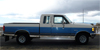
Exactly, it was used in the Big Horns for one of the Forest Service law enforcement officers. He didn't actually drive it much other than to haul a horse trailer out to the mountains.

Elder User
Joined: Aug 2003
Posts: 828
Likes: 0
From: Bellingham, WA
I concede the fact that in the real deep stuff maybe not, but all other times, it is true. In all honesty how often do you have to drive on roads that have over a foot of snow. Out here, the main roads are plowed normallyMore PSI where the rubber meets the road in normal winter driving conditions DOES help.

Senior User
Joined: Nov 2010
Posts: 397
Likes: 1
My work van for example... winter hits it wil slip and slide on a single snow flake(new tires).... I add 1000lbs to the floor over axle and the van tracks straight and predictable even over snow and ice covered roads... The best ice/snow tire in the world won't help if not enough force to keep it on the ground, that is one of the main reasons why front wheel drive and 4x4 go better in snow is the WEIGHT over a drive tire...

Lead Driver


Joined: Dec 2000
Posts: 6,293
Likes: 47
From: South central, Minnesota
Often in the country... plows come once maybe twice if your lucky and then any time the wind blows the drifts can get huge... Weight has more effect than anything else to a specific tire design...
My work van for example... winter hits it wil slip and slide on a single snow flake(new tires).... I add 1000lbs to the floor over axle and the van tracks straight and predictable even over snow and ice covered roads... The best ice/snow tire in the world won't help if not enough force to keep it on the ground, that is one of the main reasons why front wheel drive and 4x4 go better in snow is the WEIGHT over a drive tire...
My work van for example... winter hits it wil slip and slide on a single snow flake(new tires).... I add 1000lbs to the floor over axle and the van tracks straight and predictable even over snow and ice covered roads... The best ice/snow tire in the world won't help if not enough force to keep it on the ground, that is one of the main reasons why front wheel drive and 4x4 go better in snow is the WEIGHT over a drive tire...


Fleet Owner


Joined: Jul 2006
Posts: 20,360
Likes: 820
From: Mi'kma'ki
you could take his comment 1 step further by replacing the last words "snow and ice" with "all surfaces besides "deep" mud".
even then,the wider tire isn't getting better traction,it's just not letting the axle sink as much as skinny tires so you don't get hung up.
tire width and traction is often misunderstood.
wide tires do not help in "deep"(a foot or more) snow either,like they do in mud.your going to sink in a foot of snow no matter what.
so you'll be just as hung up as if you had skinny tires,but with less traction.
if you had a light 4wd car and wanted to try driving in 2-3 feet of snow,in this case wider tires might be the better choice,as your only hope would be to try and stay up on top.again even in this case,it wouldn't be for better "traction" even still,but just to keep you from sinking.
FTE Stories
Ford Trucks for Ford Truck Enthusiasts

Top 10 Most Expensive Ford Trucks Ever Sold on Bring a Trailer
Joe Kucinski
2027 Ford Super Duty Buyer's Guide (Every Model, Engine, & Package)
Brett Foote
Top 10 Ford Truck Tragedies
Joe Kucinski
AEV FXL Super Duty - the Super Duty Raptor Ford Doesn't Make
Brett Foote
Lobo Vs Lobo: Proof the F-150 Lobo Should Be Even Lower!
Michael S. Palmer
Ford's 2001 Explorer Sportsman Concept Looks For a New Home
Verdad Gallardo
10 Best Ford Truck Engines We Miss the Most!
Joe Kucinski
2026 Shelby F-150 Off-Road: Better Than a Raptor R?
Brett Foote
2027 Super Duty Carhartt Package First Look: 12 Things You NEED to Know!
Michael S. Palmer
Elder User
Joined: Nov 2010
Posts: 957
Likes: 2
From: Graniteville
The BIGGEST key in driving on snow/ice is not overpowering the throttle. Tire design can help, but too much throttle and it doesn't matter a bit what tires you have...
Some examples...
Some examples...
- Last week, we got hit in SC with 3" of snow here topped by another 1/2" of ice. Everything basically shut down. I had to run a couple work errands and stop by the fire station and check in. Pulled out the F250 which has 315/75/16 Maxxis Mudders on it, locked the front hubs and tooled on down the road. I engaged the front axle 3 times in a 40 mile round trip... all 3 times were on hills (2 headed to Aiken, 1 headed back) where the back end wanted to try and break loose a bit. Other than that I left in in 2wd the entire time, the only weight in the bed being a ****** strap that I threw in to have just in case.
- 2007 Valentine's Blizzard, I was moving an oversize load and got shut down in Lodi, Ohio at the truckstop. The following morning I woke to 15" of snow on the truck. Around 11am, my pilot car and I pulled out of the unplowed truck stop and left. This was with drive tires with 5/32 left on the tread (minimum allowable is 2/32) and only 4000lbs on the lowboy (empty bag house). While everybody else with full loads on their trailers were busy getting stuck and flooring the throttles, I very gently worked the throttle and up thru the gears to get moving and on down the road.
- 1997 Central Indiana got hammered with 12"+ of snow. Howard county declared a state of emergency and the EMA asked for volunteers with 4wds to help transport medical staff to the hospital and check the back roads so they could get ready to send out the plows. At the time I had a 78 Bronco with a 460 and 40" swampers... the thing was a complete turkey on the light stuff in town, as soon as I got out on the unplowed roads the swampers cut a nice deep path and pulled themselves right thru with no problems, including busting thru several drifts that were 2-3' deep.
- Use only the amount of throttle needed to get the vehicle moving and keep it moving. If you are spinning you are using too much (yes sometimes it can't be helped, but try and avoid it at all costs)
- In light snow, in town, or slush conditions, a skinny tire is the way to go. You will have maximum weight to traction ratio. A dedicated snow tire is even better, but a set of narrow tires with a good tread pattern will do fine the majority of the time.
- Weight can help, but it can also hurt too. Remember the law of inertia an object at rest wants to stay at rest, an object in motion wants to stay in motion. Translation, 500lbs of sand in the bed may seem to get the vehicle moving easier, but its also an additional 500lbs you have to bring to a stop. I have seen many trucks with sand, blocks, etc slide thru intersections because the weight overcame what little traction there was.
- 4wd does not equal 4stop. Every year when I was driving, I saw way more 4x4's in ditches and the medians because the driver thought the 4wd was so great, they could try and cruise like they normally did in dry conditions.
Senior User
Joined: Jan 2008
Posts: 420
Likes: 0
From: New Hampshire
Some people still fail at what they think makes a good tire. Some get it right when talking the difference between a mud tire and a all season/ or just a good winter tire. A tire can be as wide as you wish and still be better than the smaller tire, how this is so is the sipes. Mud tires dont have them, all they have are some big lugs/blocks while and all season and/or a snow/winter tire has blocks too but smaller in size but the whole difference is the sipes that are made into the rubber. So small tire are NOT the better tire and I dont care how much snow you want to talk about. Has anyone ever took alittle air out of the tire when they got stuck in snow, lol well what that does is make the tire/s wider to get the bigger bite.
Senior User
Joined: Jan 2008
Posts: 420
Likes: 0
From: New Hampshire
[quote=L. Ward;9829903]The BIGGEST key in driving on snow/ice is not overpowering the throttle. Tire design can help, but too much throttle and it doesn't matter a bit what tires you have...
Some examples...
Some examples...
- Last week, we got hit in SC with 3" of snow here topped by another 1/2" of ice. Everything basically shut down. I had to run a couple work errands and stop by the fire station and check in. Pulled out the F250 which has 315/75/16 Maxxis Mudders on it, locked the front hubs and tooled on down the road. I engaged the front axle 3 times in a 40 mile round trip... all 3 times were on hills (2 headed to Aiken, 1 headed back) where the back end wanted to try and break loose a bit. Other than that I left in in 2wd the entire time, the only weight in the bed being a ****** strap that I threw in to have just in case.
Elder User
Joined: Nov 2010
Posts: 957
Likes: 2
From: Graniteville
Surprisingly enough, the whole trip I didn't come across anyone in a ditch... by the same token tho, there was almost no traffic out either... I think the majority of folks stayed home and off the roads, considering the majority have no snow/ice experience it was probably for the best too.
Posting Guru
Joined: Dec 2008
Posts: 1,074
Likes: 1
From: Mass.
I remember offroading not that long ago in a Fullsize blazer with the 265's. Did great until this one hill that had a bend in it. What a cluster**** to try to get up it. Finally we got out after letting a good amount of air out of the tires. I know with Ford's dinky little 235's we would've gone nowhere. I think wider tires up to a reasonable point don't hurt you assuming they've got a good tread design and aren't worn out.
Posting Guru
Joined: Mar 2010
Posts: 1,113
Likes: 1
From: Northern MN
Bill, I'm in the same boat as you. I have a '92 F-150 that is only 2WD here in northern Minnesota but I loaded the bed up with 6, 60 pound sandbags, 360 pounds... and put some Firestone WinterForce tires on the back and I rarely slide around like I used to at the beginning of this winter, when I had no weight in the bed whatsoever. Even at icy intersections, I can easily come to a complete stop without sliding in my truck. And my ABS don't even work! I just ease on the gas real slowly when it is icy and I can get going from a dead stop with no problem. I have made it through half of this winter without getting stuck once, but I am still making the 2x4 to 4x4 conversion this summer. I plan on getting a plow for my truck, for next winter as by then I will have 4x4, and the ability to pull people out.