Where to Find a Basic PSD System Description/Operation

Thread Starter
|
Senior User
Joined: Oct 2010
Posts: 407
Likes: 2
From: Mobile, AL
Where to Find a Basic PSD System Description/Operation
These forums are great and there is so much info in here but from a completely newb perspective I can't seem to find basic system description and operation info. Without it I feel kinda silly asking some questions as they are probably obvious to many here but to me are puzzles.
I have searched the site and internet trying to just learn how the PSD works- turbo, HPOP, fuel, exhaust, electrical, etc. My experience with learning complex machines comes from military flight training- "You are a drop of fuel, describe your life from entering the fuel tank to exiting the engine exhaust and leave no detail out."
Are there any such documents/books/articles/etc. available? Thanks!
I have searched the site and internet trying to just learn how the PSD works- turbo, HPOP, fuel, exhaust, electrical, etc. My experience with learning complex machines comes from military flight training- "You are a drop of fuel, describe your life from entering the fuel tank to exiting the engine exhaust and leave no detail out."
Are there any such documents/books/articles/etc. available? Thanks!

Posting Guru
Joined: Feb 2010
Posts: 1,411
Likes: 1
From: Opelika, AL
Thread Starter
|
Senior User
Joined: Oct 2010
Posts: 407
Likes: 2
From: Mobile, AL
I have and use those- good stuff for finding parts on a dirty engine and internal diagrams. I'm looking for more "big picture" descriptions. For example, I can read on the dummies.com site about how diesel engines work and differ from gassers, but they don't explain the PSD HPOP or the EBPV operation or how the wastegate works. Stuff like that...
Thread Starter
|
Senior User
Joined: Oct 2010
Posts: 407
Likes: 2
From: Mobile, AL
I found this site with a bunch of guides and troubleshooting ideas-
Diesel Engine Diagnostic Guide
Not a description, but more info as to how things break.
Diesel Engine Diagnostic Guide
Not a description, but more info as to how things break.

Post Fiend
Joined: Mar 2007
Posts: 26,966
Likes: 50
From: Texas
So let's make our own. This thread seems as good a place as any to get started. We can do it piece by piece with several contributing along the way. If you or anyone else has any general questions about what does what, this would be as good a place as any to start.
We'll start with the assumption you understand the basics of an internal combustion engine. The heart and blood of the 7.3 is oil pumps and engine oil. Oil is sucked up from the oil pan by the LPOP (low pressure oil pump) and sent to lube the engine as well as pump motor up into the HPOP reservoir. The HPOP (high pressure oil pump) then sends this oil under high pressure toward integral galleys built into the heads. Any oil not needed in the oil galleys (or rails) is drained back into the pan at the IPR (injection pressure regulator).
Since the HPOP is a gear driven displacement pump that runs off of engine rpm, pressure is increased by the IPR closing off the drain path to force more oil into the heads. The % the IPR closes off the drain path (IPR duty cycle) is controlled by the PCM (computer) It reads oil pressure in the driver side head from the ICP (injector control pressure) sensor. If that sensor goes bad, you can unplug it and the PCM will assume default values (pressure) based on a pre-programmed table.
Our HEUI injection system needs 500 psi of engine oil to start, and can reach up around 3,000 psi while driving. The high pressure oil is used to actuate parts of the injector to fire fuel into the cylinder. After leaving the injector, the oil is discharged back up under the valve cover and drains back to the crank case from there. The shearing and pressure the oil is put under is why it's imperative to run a properly rated diesel oil with the anti-foaming additive.
When the oil pressure is right inside the heads, the IDM (injector driver module) is used to activate the injectors based on inputs it receives from the PCM.
Oil Flow paths

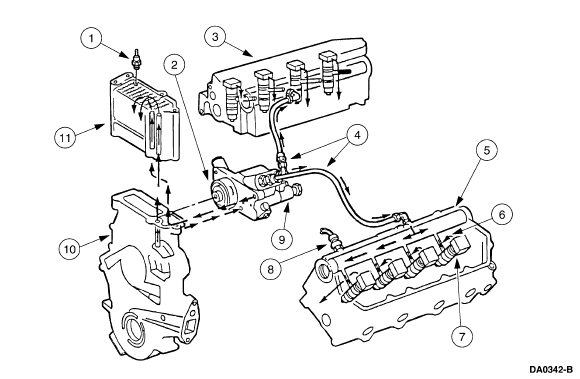
And some sensor locations

Is this the kind of info you're looking for?
We'll start with the assumption you understand the basics of an internal combustion engine. The heart and blood of the 7.3 is oil pumps and engine oil. Oil is sucked up from the oil pan by the LPOP (low pressure oil pump) and sent to lube the engine as well as pump motor up into the HPOP reservoir. The HPOP (high pressure oil pump) then sends this oil under high pressure toward integral galleys built into the heads. Any oil not needed in the oil galleys (or rails) is drained back into the pan at the IPR (injection pressure regulator).
Since the HPOP is a gear driven displacement pump that runs off of engine rpm, pressure is increased by the IPR closing off the drain path to force more oil into the heads. The % the IPR closes off the drain path (IPR duty cycle) is controlled by the PCM (computer) It reads oil pressure in the driver side head from the ICP (injector control pressure) sensor. If that sensor goes bad, you can unplug it and the PCM will assume default values (pressure) based on a pre-programmed table.
Our HEUI injection system needs 500 psi of engine oil to start, and can reach up around 3,000 psi while driving. The high pressure oil is used to actuate parts of the injector to fire fuel into the cylinder. After leaving the injector, the oil is discharged back up under the valve cover and drains back to the crank case from there. The shearing and pressure the oil is put under is why it's imperative to run a properly rated diesel oil with the anti-foaming additive.
When the oil pressure is right inside the heads, the IDM (injector driver module) is used to activate the injectors based on inputs it receives from the PCM.
Oil Flow paths
And some sensor locations
Is this the kind of info you're looking for?
Thread Starter
|
Senior User
Joined: Oct 2010
Posts: 407
Likes: 2
From: Mobile, AL
Exactly the kind of info I am looking for so I can understand what is doing what and why. The other systems that pop into mind are how does the Turbo/air work into the picture along with the fuel. Air, fuel, spark- the basics to engine combustion. And oil for our PSDs!
Post Fiend
Joined: Mar 2007
Posts: 26,966
Likes: 50
From: Texas
The turbo is simple. Just think a big electric blower mounted on top of a carburetor.
The turbo is split into 2 halves. Intake and exhaust. The exhaust manifolds on your truck don't go out the tail pipe. They go up (up pipes) into the back of the turbo housing and blow across a wheel inside there, then exit back down (down pipe) to the exhaust pipe.
This wheel spun by exhaust gasses is connected by a shaft to a wheel on the intake side that sucks air through the filter, pumps it through the big aluminum tubes you see into the CAC (charge air cooler, aka intercooler) and back up into the intake plenums through a splitter mounted to the front of the turbo.
The wheels on the turbo shaft can spin up to 130,000 rpm's, so it's important to let the diesel "cool down" a bit before shutting down if you say pull off the interstate into a rest stop while towing a trailer. You want to give the turbo shaft time to slow down before shutting off since it rides on a film of oil being pumped through there.
The turbo is wastegate controlled, which means if the air pressure gets too high, a bleed off valve opens up a little to keep you from over pressurizing the system.
The turbo is split into 2 halves. Intake and exhaust. The exhaust manifolds on your truck don't go out the tail pipe. They go up (up pipes) into the back of the turbo housing and blow across a wheel inside there, then exit back down (down pipe) to the exhaust pipe.
This wheel spun by exhaust gasses is connected by a shaft to a wheel on the intake side that sucks air through the filter, pumps it through the big aluminum tubes you see into the CAC (charge air cooler, aka intercooler) and back up into the intake plenums through a splitter mounted to the front of the turbo.
The wheels on the turbo shaft can spin up to 130,000 rpm's, so it's important to let the diesel "cool down" a bit before shutting down if you say pull off the interstate into a rest stop while towing a trailer. You want to give the turbo shaft time to slow down before shutting off since it rides on a film of oil being pumped through there.
The turbo is wastegate controlled, which means if the air pressure gets too high, a bleed off valve opens up a little to keep you from over pressurizing the system.
Trending Topics
Thread Starter
|
Senior User
Joined: Oct 2010
Posts: 407
Likes: 2
From: Mobile, AL
So, in terms of the combustion cycle (words from another site mashed with mine)-
Intake stroke -- The intake valve opens up, letting in air (FROM WHERE, HOW DOES THE TURBO FIT IN) and moving the piston down.
Compression stroke -- The piston moves back up and compresses the air (MAKES IT HOT ENOUGH FOR COMBUSTION).
Combustion stroke -- As the piston reaches the top, fuel (AND OIL?) is injected (BY INJECTORS) at just the right moment and ignited (DUE TO HEAT OF AIR ALONE), forcing the piston back down.
Exhaust stroke -- The piston moves back to the top, pushing out the exhaust created from the combustion out of the exhaust valve (AIR EXPELLED RUNS BACK TO SPIN TURBO?).
When you turn the key, the GP heats air in the cylinders to facilitate ignition. The WTS light goes out, turn it over and the starter cranks the turbo first stage to suck air from the filter, compresses it and then puts the air thru the intercoolers? then to the engine. So, via compression in the turbo, it is super heated at injection with fuel and oil? The exhaust from engine combustion spins the turbo second stage to run the first stage and the cycle continues without the starter?
Pretty cool of you to take the time to have this dialogue with me here. I don't know what you do "for a living" but your time is greatly appreciated. Hopefully I am not the only "idiot" trying to figure this out.
Intake stroke -- The intake valve opens up, letting in air (FROM WHERE, HOW DOES THE TURBO FIT IN) and moving the piston down.
Compression stroke -- The piston moves back up and compresses the air (MAKES IT HOT ENOUGH FOR COMBUSTION).
Combustion stroke -- As the piston reaches the top, fuel (AND OIL?) is injected (BY INJECTORS) at just the right moment and ignited (DUE TO HEAT OF AIR ALONE), forcing the piston back down.
Exhaust stroke -- The piston moves back to the top, pushing out the exhaust created from the combustion out of the exhaust valve (AIR EXPELLED RUNS BACK TO SPIN TURBO?).
When you turn the key, the GP heats air in the cylinders to facilitate ignition. The WTS light goes out, turn it over and the starter cranks the turbo first stage to suck air from the filter, compresses it and then puts the air thru the intercoolers? then to the engine. So, via compression in the turbo, it is super heated at injection with fuel and oil? The exhaust from engine combustion spins the turbo second stage to run the first stage and the cycle continues without the starter?
Pretty cool of you to take the time to have this dialogue with me here. I don't know what you do "for a living" but your time is greatly appreciated. Hopefully I am not the only "idiot" trying to figure this out.
FTE Stories
Ford Trucks for Ford Truck Enthusiasts

Top 6 Best Deals Available on New Fords & Lincolns Right Now
Brett Foote
This Hennessey Takes the Expedition Tremor's Off-Roading Capability to the Next Level
Verdad Gallardo
Top 10 Fords at 2026 Carlisle Ford Nationals
Joe Kucinski
3 Best / 3 Worst Parts of Modern Ford Ownership
Brett Foote
10 Amazing Upgrades That Solve Common Ford Truck Owner Headaches
Pouria Savadkouei
Every 2026 Ford Engine Explained
Brett Foote
10 Ugly Ford Trucks That We Still Kinda Love
Joe Kucinski
10 Things Every Truck Owner NEEDS (2026 Edition)
Michael S. Palmer
Rezvani's Latest Post-Apocalyptic Monster Is a Ford F-150 Raptor Underneath
Verdad Gallardo
Post Fiend
Joined: Mar 2007
Posts: 26,966
Likes: 50
From: Texas
[quote=jeronlines;9696982]exhaust valve (AIR EXPELLED RUNS BACK TO SPIN TURBO?).
Yes, exhaust gasses are directed back up through the exhaust side of the turbo to spin the wheel which in turn spins the intake wheel on the turbo. This can create lag when taking off or at low rpm's, but when the exhaust gasses build pressure, you can feel the turbo "kick in"
When you turn the key, the GP heats air in the cylinders to facilitate ignition. The WTS light goes out, turn it over and the starter cranks the turbo first stage to suck air from the filter, compresses it and then puts the air thru the intercoolers? then to the engine. So, via compression in the turbo, it is super heated at injection with fuel and oil?
 Once you grasp how the motor works, it's fun to read the threads and try to figure out the problems. The separation of the internet adds another degree of difficulty, but it beats any mystery novel since you are directly involved in the search for the outcome, and it definitely beats any of that reality TV junk they put out today.
Thread Starter
|
Senior User
Joined: Oct 2010
Posts: 407
Likes: 2
From: Mobile, AL
Reality TV? So many sarcastic comments, when did TV become reality? I'll leave it at I don't even have TV. I have A TV, but I don't have cable, satellite, FIOS or whatever. Internet, yes. Can't remember the last show I watched on "live" TV. Note to self- get invited to a Super Bowl party 
I'm thinking and will have more questions. I'm a helo pilot, so a little slow.
I'm thinking and will have more questions. I'm a helo pilot, so a little slow.
Post Fiend
Joined: Mar 2007
Posts: 26,966
Likes: 50
From: Texas
I've taken many helo trips, but always as a GIB. And almost always over dry land (sometimes friendly).
Reading along here at FTE will give you all sorts of knowledge. Don't be shy about asking questions. I'll check in again tomorrow to see if you have more.
Reading along here at FTE will give you all sorts of knowledge. Don't be shy about asking questions. I'll check in again tomorrow to see if you have more.

Senior User
Joined: Jan 2007
Posts: 193
Likes: 0
From: Van Alstyne, TX
One thing that is different between our diesels and some others is the injection system. A Dodge diesel has 2 fuel pumps, a low pressure fuel pump and a high pressure fuel pump. The injectors on those engines open and close a valve to allow fuel to be forced into the cylinder. If I understand the way our injectors work, the fuel pump supplies enough pressure to fill a reservoir in the injector with fuel. The high pressure oil pump (HPOP) supplies oil that drives a piston in the injector to force the fuel into the cylinder. In both engines the computer can vary the timing and duration of the injection cycle to control the power put out by the engine.

Cross-Country
Joined: Jul 2010
Posts: 89
Likes: 6
From: Mayville, MI.

I don't know about the rest of you, but that was great reading! I love to learn and love this site. I just personally grew in my knowledge of how our PSD's work. Honestly, this forum is the best way I have ever spent money. Thanks guys!
Thread Starter
|
Senior User
Joined: Oct 2010
Posts: 407
Likes: 2
From: Mobile, AL
 Frankly, I sometimes feel like a total dumba$$ bothering these fine folks with my ignorant self. However, good for me I'm oblivious and just want to learn