





Its home

Thread Starter
|
Cross-Country

Joined: Dec 2010
Posts: 88
Likes: 1
From: Central Valley, CA
Its home
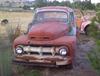
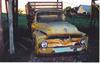
Well over the weekend I went and picked up my new project and added a few more pics to the gallery. Time to prioritize and see if the flathead will still start and try to keep the rust from doing anymore damage. This may start a big debate but what do you all suggest for sealing the bare metal after sand blasting? I was thinking an epoxy primer but had a friend suggest using something like rustbullet, what are your thoughts?
Pictures by tazcliff - Photobucket
Pictures by tazcliff - Photobucket

Laughing Gas
Joined: Jan 2008
Posts: 758
Likes: 0
From: Alabama
I bought a gallon of Rust Bullet but have not used it yet. They have a video on their website where they spray the entire car inside and out just like a primer. It sold me, we will see when it warms up enough to spray. Before I bought the RB I purchased a new bed and sprayed it with EP so far it is doing just fine.
Fleet Mechanic
Joined: Aug 2010
Posts: 1,994
Likes: 3
From: Morgan Hill, CA

A few years ago I had San Benito Sanblasting (in Hollister CA) strip a Mustang body for me. He uses plastic blast media. He uses different types of blast media depending on the the surface and what he's removing. At the end he cleans the bare metal off and immediately moves it to a paint booth for a coat of epoxy primer. So far that car has been trouble free & it was a great surface to start from for the body work.
I'm probably going to see him again for my truck cab, but to answer your question, the EP is a good start.
Dan
I'm probably going to see him again for my truck cab, but to answer your question, the EP is a good start.
Dan

Post Fiend
Joined: May 2008
Posts: 7,641
Likes: 21
From: Poway, Ca.
I'm a big believer in Rustoleum "Rusty Metal" primer.
Every truck I have had, I have ground out the rust and then brush on spot primed with the Rustoleum. After a few days of drying, I sand it smooth and spray on a coat the Rustoleum.
Then, I usually let the thing go through a year or so to see if any of the cancer is going to recurre.
Not once.
Then I sand the rustoleum and prime with good automotive primer and paint.
Great product that you won't pay $30 a quart for but does the same job - if not better!
Every truck I have had, I have ground out the rust and then brush on spot primed with the Rustoleum. After a few days of drying, I sand it smooth and spray on a coat the Rustoleum.
Then, I usually let the thing go through a year or so to see if any of the cancer is going to recurre.
Not once.
Then I sand the rustoleum and prime with good automotive primer and paint.
Great product that you won't pay $30 a quart for but does the same job - if not better!

Postmaster
Joined: Sep 2006
Posts: 4,525
Likes: 1
From: oh
Trending Topics

Senior User
Joined: Aug 2010
Posts: 175
Likes: 4
From: Reno, NV
My plan is to use a good Epoxy Primer and then coat it with single stage Arcylic Urethane. 1000 ways to skin a cat... 
FTE Stories
Ford Trucks for Ford Truck Enthusiasts

AEV FXL Super Duty - the Super Duty Raptor Ford Doesn't Make
Brett Foote
Lobo Vs Lobo: Proof the F-150 Lobo Should Be Even Lower!
Michael S. Palmer
Ford's 2001 Explorer Sportsman Concept Looks For a New Home
Verdad Gallardo
10 Best Ford Truck Engines We Miss the Most!
Joe Kucinski
2026 Shelby F-150 Off-Road: Better Than a Raptor R?
Brett Foote
2027 Super Duty Carhartt Package First Look: 12 Things You NEED to Know!
Michael S. Palmer
10 Most Surprising 2026 Ford Truck Features!
Joe Kucinski
Top 10 Ford Trucks Coming to Mecum Indy 2026
Brett Foote
5 Best / 5 Worst Ford Truck Wheels of All Time
Joe Kucinski
Laughing Gas


Joined: Feb 2006
Posts: 892
Likes: 85
From: Western Massachusetts
I'm sure the new high tech paints are as good as they are reported to be but for me they are a problem because they are not available in rattle cans. My truck progress is slow but steady. I work on small projects one at a time. When the part or piece is done I prime and paint it with a rattle can. The chassis is done in satin black rustoleum and looks pretty good. The motor is done in a couple of high heat colors. Soon I will be moving on to the sheet metal. I will have a local body shop paint body eventually but it will be years before it's ready. Without the means to use the high tech primers myself, does that mean the body shop will only be able to paint my truck with old school enamel?
Lead Driver

Joined: Nov 2002
Posts: 9,669
Likes: 1,249
From: Jefferson City, MO
I'm glad to see others promoting Rustoleum "Rusty Metal" primer. I was researching what to use to paint my frame and opinions are as varied as the number of different products on the market. Rustoleum fits my budget, and I'm not making a show truck. I'll be painting my frame with it in the near future.
Thread Starter
|
Cross-Country
Joined: Dec 2010
Posts: 88
Likes: 1
From: Central Valley, CA
Thanks all for the replies they are along the lines of what I expected, I hadn't even thought about the rustoleum option, I'm mainly looking to prevent further damage as I get things together and repaired so that might be where I start. It will be a long term project for me as well, I still need to get the 2nd flathead motor here and decide to use one of those or pull the 5.0 & T5 out of my 83 GT mustang I have to drop in the truck.

Cargo Master


Joined: Jun 2001
Posts: 2,571
Likes: 22
From: Oxford, Indiana
I think I've used every product mentioned here for one project or another. Each has its place and ideal use, but if you are going to go to the trouble and expense to have it blasted but don't intend to topcoat right away, go for the epoxy primer. Anything other than an epoxy primer (or Rust Bullet/POR-15/etc.) is porous and is designed to be topcoated - preferably soon after application. Regular primers WILL allow moisture from the air to wick through to the base metal eventually and rust will follow. Epoxy primer will not.
Rust Bullet/POR-15 (they're very similar products) is good stuff, but best used over rusty metal as it has the necessary tooth to allow proper adhesion. I think it's great for frames or unseen places that won't require any bodywork later. My beef with it on exterior sheetmetal is that it is SO HARD that it is difficult to scuff or sand later when you're doing the bodywork. I think you'd hate yourself later if you used it.
Rust Bullet/POR-15 (they're very similar products) is good stuff, but best used over rusty metal as it has the necessary tooth to allow proper adhesion. I think it's great for frames or unseen places that won't require any bodywork later. My beef with it on exterior sheetmetal is that it is SO HARD that it is difficult to scuff or sand later when you're doing the bodywork. I think you'd hate yourself later if you used it.