When you click on links to various merchants on this site and make a purchase, this can result in this site earning a commission. Affiliate programs and affiliations include, but are not limited to, the eBay Partner Network.
THE CARPENTRY BUILD -
BASE & BED PLATFORM,
DRAWERS, & SIDE CABINETS
Post 6
12V DC ELECTRICAL SYSTEM
115V AC INVERTER POWER
115V AC SHORE POWER
Post 7
THE WATER SYSTEM
TANK VENTING
OUTSIDE SHOWER &
PRIVACY TENT
(Posts 5, 6, & 7 include links)
Post 8
ORGANIZATION
THREAD CONCLUSION
Disclaimer:
All of the information provided in this threads entirety (outlined in the above index) Is for entertainment purposes only. While I am confident in my own abilities, the reader assumes all risk, including any misprint or errors included in my text and photos, in designing and completing projects of their own. A free “Phonto App” was used to add text to the Photos, which are intended for private use only, forum discussion, and not for financial gain.
INTRODUCTION
Growing up in the 60’s and 70’s, I don’t remember knowing anyone who had a fiberglass top on their truck. We lived in a small rural area. Aluminum camper shells were commonplace, being used by both sportsmen, and contractors.
While doing a little research I was surprised to learn that Snugtop , A.R.E. and LEER all got their start in the 1960’s. By the early to mid 1970’s they were starting to seize a large share of the market. Fiberglass truck caps have been around a long time, and a lot longer than I had guessed.
Called by many names - camper shell, topper, and cap, all basically describe the same thing. The change appears to be attributed to: materials used, region, and era. Here’s what turned up on a couple sites:
Camper Shell - 1950’s - 70’s
Truck Topper - 1970’s - 80’s
Truck Cap - 1990’s to present
Industry, recreation, and style seem to have pushed “cap” to be the more popular name for describing the modern bed cover. I have written this thread for anyone like me, who wasn’t already familiar with the fiberglass caps.
This thread isn’t designed to compare brands, price, or warranties between manufacturers, but what I was able to accomplish with a cheap marketplace find, some elbow grease, and a little ingenuity.
If you are already familiar with truck caps I hope you tag along, and enjoy the pictures as I fix up a LEER cap that had seen its better days.
From my early days of owning several beater pickups with aluminum camper shells…….fast forward 40 years or so 🙂
From being cooped up in a rehab hospital room for nearly four weeks I had a bad case of cabin fever. Facebook marketplace was one way to pass away the days.
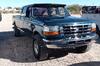
A LEER 180 mid rise truck cap caught my eye. I had been looking for a used one for several years. By the sellers description it was in rough shape, but would be a match to my white ‘02 F350 longed. I quickly made a phone call, and struck a tentative deal with him. The price was $250.00, but he would hold it for me as long as I was in the hospital. And if it wasn’t what I wanted after seeing it he would re-list it for sale.
On the day of my discharge, I had just been given doctor’s orders to “go home and take it easy”.I wasn’t really sure what reaction to expect out of my wife when I would finally break the news to her. Packed up and ready to go home I said, “we need to hitch up the trailer today, and pick up a used truck cap I bought.” Surprisingly, she just smiled and said “OK”.
Upon finally laying eyes on it I couldn’t help but imagine what she must have been thinking, probably nothing good. The seller told me he had recently gotten it as part of a trade, coming mismatched on a Dodge truck he was after.
It had been terribly neglected, and left out in the weather for some time. We got it home, put it in our shed, and there it sat for over a year until I felt better.
RESTORATION OF THE TRUCK CAP
I wish I had taken pictures while hauling it home, but that really wasn’t a priority at the time. Here it is after dragging it out of dry storage to see what I had bought. Wiping off the back corner of the roof with a damp rag showed promise.
Here is a list of the repairs and items needed:
•the outside was absolutely filthy, and dull from paint oxidation
•there were small paint chips in the white gel coat
•the inside was covered in mold and mildew
•the 3rd brake light was busted out
•the dome light and it’s switch were broken
•both sliding window screens were ripped
•the lift (glass) door was locked, but there
were no keys
•both gas struts on the lift door were dead
•the right side window was deeply scratched showing badly on the factory tinted glass
But hey, good news!….no cracks in the fiberglass shell, and no broken glass🙂
Below: Photo quality is very poor, but the mold and mildew was even worse than it looks in the picture.
I placed the truck cap on short stands, and laid a full sheet of plywood underneath it on the ground, to keep myself from getting muddy. The walls of the cap had flexed enough to open the door even with the handles still locked.
Using a scrub brush, concentrated Simple Green, and my electric pressure washer, I spent hours cleaning the deep grunge and mildew that was imbedded in the porous fiberglass fibers, and in the hard to reach corners.
It was not unpleasant work. But, with summer temperatures soaring into the high 90’s, and a cloud of pressure washer mist being held in by the cap, it was like a sauna.
It was always the plan to paint the interior, expecting some stains, and discoloration. I never expected it to come out this clean.
These fiberglass truck caps are super heavy, and are way too awkward for one person to man-handle by themselves. With everyone having busy lives, I needed a way to install the cap by myself.
I made wooden A-frames, slightly taller than the truck bed. 10’ 4X4 posts were used to make forks for my tractor’s front loader bucket.
A pair of 14’ 2x4’s were placed on top of the stands, (flat side down) to span the width of my dually, plus a few inches on either side. The cap was placed on top with the tractor, and the truck was backed underneath it.
Raising the cap one corner at a time I started inserting small 3” blocks (doubled up pieces of 2X4’s nailed together) transferring the heavy load directly onto the bed rails. Once the cap was supported, I slid the long 2X4’s out, and several more 3” blocks were added.This allowed ample room to clean the bottom flange of the cap with a razor blade scraper, readying it for the adhesive side of the rubber gasket. Blocks were removed one by one as I installed it.
I rotated the remaining two blocks back underneath the attached gasket. When finished I carefully removed them and let the cap drop into place. Some very small adjustments were made, matching up the lines of the bed and the cab.
(Note: It’s very important to have the cap close to where you want it when it is dropped into place. Once the rubber gasket is compressed between the weight of the cap and the bed rail it is extremely difficult to shift.)
The 8’ cap is made to use six clamps, three on each rail. The eBay seller I have pictured below has those sets of six. I’ve added a few notes of my own on clamp orientation when installing.
Below: After going around the bed, tightening them down evenly.
With the cap now in place I used polishing compound to buff out the dull surface of the gel coat. Small chips in the fiberglass were filled with touch up paint (Z1 Oxford White), and several coats of wax were applied and buffed out. The finished look made me feel a lot better about my purchase.
It was time to wire up the 3rd brake light. I have seen on Ford truck forums that there is a green wire for this purpose. It is left hanging out of the rear wiring harness near the spare tire.
It was easy to spot from forum photos, and I have included it here below. I verified mine by probing it with a test light, and it only carried 12 volts when the trucks brakes were applied.
After making a splice I ran it, paired with a ground wire, (since the cap is fiberglass) into the truck bed by drilling a hole from behind the left taillight. (for more pictures of this go to the Photo Gallery - Post # 8 SHORE POWER) A 2 pin connector plug was added for removing the cap.
The 3rd brake light fit nicely into the cap, and was very bright. I was disappointed with the adhesive tape provided for its’ mounting.
Located at the back of the recessed pocket where the light goes you will find a small hole in which to run the wires to the inside of the cap. It needs to be sealed to keep the rain out. I removed the light, and the adhesive tape, reinstalling it using 3M 5200 to do both.
Not wanting to remove my 5th wheel rails in the bottom of the bed, I cut a 4’X8’ sheet of Owens Corning NGX F-150 foam board into 3 panels. These in turn were bonded to a full size sheet of 3/8” plywood with Liquid Nails construction adhesive.
The foam board has a compression strength of 15 psi, so you’ll never overload it with weight being distributed over the 32 sq. ft. area. The foam is 1-1/2” thick, and has a R5 insulating factor. During cold weather it will help protect from the steel bottom of the bed.
Wrapping the edges with duct tape first, before bonding it to the plywood prevents it from chipping while moving it in and out of the truck. The two gaps that I left in between the foam drops over the steel rails, resulting in a nice flat surface.
This brought me to a point where I was able to take a few camping trips. It also allowed me to identify what was needed for a more comfortable experience.
In the evening when wanting to close the tailgate, the reach and angle made it almost impossible while staying in the truck. In the early morning dropping the tailgate meant making a loud boom!!…… Adding a rope handle solved that issue.
Getting to spend time with an old friend, and taking him fishing at Rend Lake in Southern Illinois was long overdue.
I ended up spending a couple days at Wayne and his Wife’s beautiful homestead near Harrisburg, IL. As gracious hosts, a spare room with a bunk is always offered to friends. But never being one to want to impose, I enjoy having my own place, even if it is very small. And my truck now fits the bill.
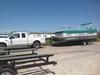
You can see it in the distance, behind my right elbow. The truck cap has opened up many possibilities, and the ease of towing my boat as I travel is a big plus.
In addition to the Leer truck cap, much of my DIY camping build can be found in the Photo Gallery section located under Posts 5, 6, & 7. My goal was to make everything removable. Easily stripped down in a few hours.
The design and construction for my cap and camper was largely a “fly by the seat of your pants” venture. And of course some “trial and error” along the way.
VENTING
Heat: heat build up inside the truck bed would be a concern, especially when parked on asphalt or concrete at boat launches during hot sunny days. Even though I have sliding windows, I want them closed and locked when the truck is left unattended.
Condensate: When nighttime temperatures drop rapidly, condensate on the ceiling would be a concern in a closed space. As would running an electric heater, during cold weather hunting trips, when electric hook up is available.
In the mountains of Colorado I have cold weather camped in a bivy tent. If the zipper isn’t left partially open to vent some of the heat and moisture, it’s like waking up in a rain forest.
I had already been looking at solar powered roof fans. They double as passive vents at night when the fan isn’t running. But for them to work correctly I would need a fresh air supply.
Devising a way, other than using the sliding windows I came across these stainless steel cabin vents that open and close manually.
They would allow a comparable volume of air to enter the space of that being vented from the roof, and still maintain some degree of security with the windows locked.
I removed the factory plugs on the front wall of the truck bed, and began modifying the sheet metal for the cabin vents. Rivet nuts were added for mounting purposes.
When done cutting and drilling I was able to reach in between the bed and the cab with a small brush and paint the exposed metal.
These vents didn’t come with screen wire to keep insects out. I added the screen myself , hot glueing it to the metal flange , and attached self adhesive foam gasket before bolting it to the back of the bed.
Fastened to the truck bed, the vent openings are now lined up with the bed cutouts to allow fresh air to come in when opened.
If the inside of the truck bed had been left open I could have stopped there, but with the building of the drawer base and side cabinets, more work was going to be required. Not only will the side cabinets need to be a passageway for the incoming air, but they will need to be able to vent the extra heat being generated by the electronics that are packed into the left side. Both the DC to DC charger, and the 1100W inverter have heat sinks.
The side cabinet on the right will only require general air flow into the camper space. In the below picture you can see that the cabin vent isn’t blocked by the base platform, but when closing the cabinet lid air flow would be stopped.
To correct this, the side cabinets are vented with louvred grills, three on the side of the cabinet , and four in the lid.
Screen wire was added to all of the louvred grills to keep those pesky Asian Lady Beetles from getting into everything.
I also have a 60A breaker in the engine compartment to turn off the charger when it’s not needed. If however, the charger does need to run in the extreme heat of Summer, I open the lid and crack open the sliding window while driving.
With the Victron App I get to see real time updates, charging history, and current battery condition on my phone. My Orion TR Smart Charger is the “non isolated” model.
When the truck is turned off the house battery is completely isolated from the starting batteries, and there’s no chance of then being ran down to a no start, low voltage state.
I’ll admit, I was a bit confused at first, but by their simple definition, the Victron “isolated”chargers are normally used in watercraft applications where there is no steel frame or chassis in which to share a common ground between the two 12 volt systems. Then it made sense.
The Victron Orion TR only charges with the engine running, and only when the input voltage is met which I have customized in my settings. So that simplifies things a lot as far as when heat is being generated inside the cabinet. Below is a screenshot of my Victron Charger App. It shows that my charger is off (and the reason why),and that the starter batteries for my truck are fully charged at 12.7 volts.
For those of you who already have a battery management system you know how totally awesome they are. Below, is the Victron Battery Management App and shows that the house battery state is 100% at (13.65 volts).
As indicated by the App screenshot I have a very small load running, the current draw is (1.72 amps), power draw is (24 watts), consumed amp hours is (0.1Ah), and if that load were to remain ON continuously, how many days and hours my battery would support it. The LiFePo4 battery I installed is 280Ah.
When there is no draw detected by the negative shunt, the current and power display shows 0.0. next to both current and power. The battery monitor that I have mounted on the wall of the truck cap has the same information, but is retrieved manually through push buttons and is visible by digital display.To make the heat sinks more effective and to help increase air flow inside the enclosed cabinet I added computer fans to both heat sinks.
The below picture is a little out of order, but it shows the final louvred grills, since we’ll be moving on to the solar fan install.
Solar Fan
I ordered a 3-3/4” hole saw on Amazon. Other items used were my drill motor, masking tape, tape measure, a level, sandpaper, and 3M 5200, all gathered here in preparation of cutting a hole……in a perfectly good roof 🤔
The solar fan also needs to sit fairly level. The further you follow the roof to the sides of the cap the steeper the angle gets. This is about the best it gets.
I taped off the gel coat, and took careful measurements to lay out the hole. The fan hood has a 7” outside diameter, extending well beyond the required 3-3/4” hole. I wanted it to stay well within the radius of the center rib of the truck cap. I made a shallow cut from the inside so as not to splinter the fiberglass.
Below, the hole is cut all the way through the roof. I didn’t realize until afterwards that the roof has a corrugated center with fiberglass mat on both sides for structural strength.
While not mentioned in the installation guide I decided to fill the corrugated center with fiberglass resin. While it is highly improbable that a leak would ever occur using the 3M 5200 sealant, it made the freshly cut roof opening completely water proof, in case of a leak.
Both the exterior and interior pieces of the fan have to slip together forming one unit. They were dry fit to make sure they aligned properly before applying the 3M 5200 for the final installation.
The inner piece includes a trim ring which finishes out the ceiling. It also centers up the fan on top, and holds the guard that covers the fan blades. The fan motor is small, and doesn’t have a lot of torque. It is easily stopped by hand.
The clear plastic ring that the slotted guard is attached to controls the vent. Pushed up, the vents is closed off. Pulled down (as shown) and the vent is open to the outside.
For the fan attachment, I didn’t drill or use the mounting hardware (which was optional in the directions) as there was no need with the 3M 5200 adhesive. Here it is installed, located tight in the radius of the center rib. From the ground looking up, the fan is barely noticeable.
During sunny days, the fan does have a noticeable “hum” while running. But when standing by the back of the truck it’s one of those noises that’s hard to pinpoint. This drove me crazy on a couple occasions until becoming familiar with the “auto run” solar feature.
Before the painting began, boards were attached to the raw fiberglass interior with Loctite Power Grab adhesive for the smoke detector, thermometer, and battery monitor, which required screw fastening. The Power Grab performed great for the interior bonding, and is much more affordable than the 3M 5200
Below, the cover is removed.
Window Screens
It was time to tackle the damaged window screens. The stubby screwdriver came in handy for pressing the spline and screen wire into stubborn areas.
At the time, I thought tear resistant window screen would be an improvement. What I failed to realize was it would make the installing of the screen wire that much more difficult.
I cut the screen wire oversize and used duct tape to hold it in place as I began working the spline and screen into the window channel.
Once the spline was pressed in firmly the excess screen wire was trimmed.
After a difficult, but successful install I measured the thickness of the original screen wire.
And, after measuring the thickness of the new screen wire (0.030”), it became clear that the difficulty lay in the additional 0.020” thickness between the old and new wire mesh. Screen spline is also available in different diameters, something I was unaware of at the time.
Regardless, the new screens turned out super tight and looked nice.
I added privacy curtains to the windows on both the back and the sides. Lacking a flat surface on the back wall in which to mount the curtain rod holders to, I made wood pieces to fill in the concave area on both sides of the window.
A couple test runs were required to get the right fit. Close was good enough as they were bedded in the Power Grab adhesive.
Here they are installed high, at both ends of the back window.
CURTAIN RODS
These small diameter curtain rods are available at Wal-Mart. I needed the small diameter to fit the narrow rod pockets that are sewn into the valance curtains.
CURTAIN ROD HOLDERS
I am impressed with these curtain rod holders that I bought on Amazon. I thought that being spring loaded they would be beneficial for securing the curtains on rough roads, that otherwise might be jarred loose, and they do exactly that.
However, they were too large to grip the 7/16” outside diameter of the rods. I searched on Amazon and ordered rubber bushings for them.
Slight modifications were made by cutting a flat that will closely resemble the profile of the curtain rod holder when it was closed.
And now they grip the curtain rods
CURTAINS
My curtains arrived from eBay. I had planned to attach both the top and the bottom of the curtains, holding them at the same angle as the windows. I would need both a top and a bottom curtain rod. Originally, I was going to ask my daughter if she would sew me curtains with double rod pockets.
But, after seeing how affordable these curtains were it wasn’t worth the cost of buying the fabric, or to take up her time. These valance curtains have dimensions of (18” X 54”) and by stringing two curtains on each window they are absolutely perfect for the LEER 180.
The rods needed to be supported in the middle due to sag. I was able to re-purpose the end brackets that came with the rods. A screw from the aluminum window frame was removed, and use to hold the bracket in place.
As light weight as the curtain rods and curtains are one screw is plenty. The channel in the window frame keeps the bracket straight and prevents it from pivoting. The best part is no drilling was needed, other than the one hole for the plastic zip tie to secure the rod.
The other bracket was used to support the bottom rod, but was flipped over, opposite of the top.
Since the valance curtains only had one pocket sewn into the top (traditionally made to hang straight down) I needed a way for the bottom of the curtains to track as well. I made curtain rings from copper wire sold in picture hanging supplies at Lowe’s.
The bottom of the curtains were already hemmed, so I installed small 1/8” grommets, and soldered each curtain ring in place.
Since I already had side cabinets as part of my camper build I was able to mount the bottom rod holders to them. In the absence of cabinets they could have very easily been mounted exactly the same as the top.
You can see here that the curtains follow the sides of the tuck cap, rather than hanging straight down.
When laying out the rod holders with the rods and curtains attached, the distance between the top and bottom was adjusted to leave a little slack. This made the curtains slide easily on both of the rods. If the curtains are stretched too tight they become hard to slide.
LIGHTING
Next was planning the interior lighting. I ordered LED light bars, and used wood to make light rails that would run the length of the cap. They also serve as a raceway for the wires.
After making dado cuts to form a channel, the LED light bars were spaced out evenly and attached. The wires run underneath them, and continue through the channel.
The clips that were provided with the light bars made for a very easy installation and removal. Height is adjustable through a graduation of grooves in the aluminum body of the light bar.
Regarding time spent on custom work, it appears that these light bars are now discontinued, and is why I always re-order a product once I see that it works and that I’m happy with it. I have a full set put away in my cabinet just in case I ever have to replace one.
Here the wood rails are fastened with Loctite Power Grab to the fiberglass. Once they are painted and the curtains are installed they will not be noticeable.
With the wiring done, and the light circuit tested, I put several layers of masking tape over the channel.
The 1/4” split loom fits tightly into the channel, and makes a good transition for the wires as they leave the light track, follow the back window, and over to the track on the other side. I bought white loom for better paint coverage.
For my application, power is supplied by three way switches, up the left corner of the cap near the lift door, and to the track. It makes one big horse shoe shaped circuit.
LED lighting can be harsh on the eyes when looking directly into it, and I wanted indirect lighting that would be reflected off of the ceiling. I used 1/8” X 1-1/2” aluminum flat stock to reflect the light back onto the sides of the shell, and diffusing the light upwards to reflect off of the ceiling.These 12 volt, LED light bars only draw 12 watts and the potential for fire risk when exposed to flammable material is almost non-existent. Still, with the light weight fabric possibly laying across, or maybe even touching the lights, I decided the barrier provided by the aluminum flat bar would be a good idea. The top corners of the plates were curved inward to prevent a snagging point for the curtains.
LED lighting can be harsh on the eyes when looking directly into it, and I wanted indirect lighting that would be reflected off of the ceiling. I used 1/8” X 1-1/2” aluminum flat stock to reflect the light back onto the sides of the shell, and diffusing the light upwards to reflect off of the ceiling.
These 12 volt, LED light bars only draw 12 watts and the potential for fire risk when exposed to flammable material is almost non-existent. Still, with the light weight fabric possibly laying across, or maybe even touching the lights, I decided the barrier provided by the aluminum flat bar would be a good idea. The top corners of the plates were curved inward to prevent a snagging point for the curtains.
PAINTING THE INTERIOR
Even though the fiberglass had come out super clean during the initial power washing, I still gave the interior two coats of KILZ primer, and two coats of egg shell white, acrylic latex paint. The porous fiberglass sucked it up like a sponge.
At night while camping, and with no other light source but the LED’s reflecting off the ceiling, it’s crazy how much light floods the area behind the truck with just the tailgate and lift door open.
If you ever need to look up information on a used LEER truck cap, mine had the manufacturers ID plate located here at the black arrow, in the below photo.
This cap was manufactured for a 2008 F350 8’ bed. Every source that I have read says that the Super Duty bed and cab dimension’s (of comparable models) from 1999 through 2016 are the same. With the only exception being : The 2011 through 2016 had a change in the rear fenders and bodylines.
I had a slight gap between the lift door and the tailgate saver, when the door was closed. With holes along the inside of the bottom window frame I’m guessing a piece was missing. I searched the plastic trim at our local Lowe’s store until I found some with the characteristics of TPU plastic.
Thermoplastic Poly Urethane is a bridge between rubber and plastic where flexibility is needed, and isn’t prone to cracking or breaking. I cut it to size, and pop riveted it to the aluminum door frame.
It makes a very good seal now. Not as straight as I would have liked it, but the plastic was soft enough to cut by hand with a utility knife.
GAS STRUTS
It was time to address the dead gas struts. I measured the factory ones, and noticed their 17” length” was still legible on the cylinders. I removed the struts and raised the door until I could feel the hinge just starting to bind. Measuring between the two ball studs in that raised position I came up with 19”.
Then I measured between the ball studs with the door closed. I checked the specs (opened and closed), provided when buying new ones, and found 18.5” struts that would fit. The door now lifts really high. I’m 6’-2” and reaching the door is a real stretch. It still closes well with plenty of travel left on the rod.
KEYS
That left me with the issue of not having any keys. A web search brought up this Company: easykeys.com
By speaking with their customer service I was able to order new keys. For security reasons I well simply recommend that you contact them directly, and they will walk you through the process.
GRAPHICS
I had been wanting to give my truck cap a personal touch. I ordered vinyl graphics from several different sellers. By cutting and removing small parts of the vinyl decals I was able to adhere them to the glass without vinyl overlapping itself.
Whatever had deeply gouged and scratched the right side window glass had left it very unsightly. The glass is factory tinted which made it much more noticeable. I had the size of this vinyl decal increased to solve that issue, and it covers up the damage.
The sliding half of the window travels underneath a tight fitting rubber seal attached to the stationary glass panel. I don’t think a decal would hold up there, but I did have room at the very end where it stops for a small image to help with balancing the window.
While the truck cap is far from perfect I have gotten compliments on its fit and look.
Buying the used cap saved me a ton of money, and came at a good time, when solo camping seemed to make the most sense with looming health issues.
It turned out the way I had it pictured in my mind, for my love of the outdoors these past 55 years, instilled by my Father.
I put in an email inquiry to TRUCKIN’ AMERICA in Rochester, Minnesota who is an authorized LEER dealer. The salesman quickly replied back:
“Yes, you can still order a new LEER 180 mid rise topper for a 2002 F350, which includes being color matched to your trucks paint code. The factory wait time is 4 to 5 weeks out. The base price of the cap is $3,662.00”
I looked up the sales tax for Rochester, MN. which is 8.125% = $297.54
My whole idea was to have a comfortable rig that I could boondock in for 3 to 5 days. The truck cap made that happen. While still quite primitive, and with an outside shower and toilet, it may not offer all of the creature comforts that some people have come accustomed to when camping.
It’s been difficult to cover items only pertaining to the truck cap, without also covering the camping build, as that was my intended purpose in finding a cap in the first place.
When our family was young, my wife, myself, and our children tent camped, but now most of my outings are now a solo adventure. Old bones require a more comfortable surface to lie on. Provisions for a CPAP, a 12V heated car blanket (which when covered up by two wool army blankets will roast you), on demand water for a hot shower, and the occasional 115V AC inverter power are now welcomed comforts.
The big 12V 280AH Litheum battery, along with a 20lb. propane cylinder lets me get off grid. My hat is off to my friends over at “Wander the West” who were both supportive and instructive.
They lended the help and knowledge I needed when I found myself in uncharted territory by learning how to figure out loads in Ah, Wh, and depletion rate of different sized AH Lithium batteries. Further understanding of Victron’s Energy equipment, and the use of a negative shunt for battery management sure taught this old dog new tricks.
They say “if you don’t have pictures, it didn’t happen” so here they are:
I had a string of Christmas lights laying around and plugged them in to test the 115V AC inverter outlets.
I wish our youth had the same opportunities that I had in High School. I was involved in every industrial class that I could lay my hands on…wood working, commercial art, drafting, machine shop, and a two year vocational welding program.
I’ve always drawn out my projects first, whether doing building construction, welding, plumbing, or electrical.
Getting a clear working model in my mind and on paper before starting a job helps tremendously. Not to say that trial and error doesn’t sometimes have its part to play.
While on a Victron Energy forum and mentioning my plans, a few of the members said “wait and set up the Orion Smart charger after it is installed in the truck”
While they meant well, that’s not the way I do things. I ran a 6/2 umbilical cord from the winch power off the front of the truck to the camping unit remotely.
End caps were loosely bolted together and connections were made for both electric and water. I wanted every single system checked out before installing it in the back of the truck box: Items checked were:
•280AH battery and blue sea fuses working
•Negative shunt working correctly
•280AH battery management through my smart phone app
•First time set up of the Victron Orion Charger, serial # and code, downloading the Victron App to my smart phone, and Bluetooth connection.
•Custom settings entered and making sure I had communications with the BMT-712 wall monitor.
•115V AC Inverter power and outlets tested
•Cooling fans checked
•all 12V DC circuits tested
•12V water pump and gpm pressure
•microcomputer temperature controllers had switch power (previously bench
tested)
•Pressure filling the water tank with 25 psi regulator and anti back flow valve.
•Venting and gravity water flow, verified no leaks
•Jumper wires were ran to the truck cap to test the lighting.
•I’m glad I did it this way, there were no surprises after installing it.
Heating circuit for the water
tank in extreme cold weather
Here’s a really good laugh: I tried a couple brands of temperature controllers (made in China) to turn my heating circuits on and off. I would drop the thermal probe into an insulated glass of ice to fake out the probe.
The first brand I bought didn’t work. I put in a request by email to “contact the seller” explaining the issue and my testing method. He emailed back “oh, that won’t work, install it, and when it gets cold outside it will turn on”
🤣🤣🤣🤣🤣🤣🤣🤣 are you kidding me!
Below is the microcomputer thermal controller I am linking, and with the same test set up as shown, and of course it is working😉
In the above notes on my water box, using red for positive (instead of white) for the tank heater would have been a better idea, but since I kept hand drawn schematics and photos I can double check my work.
See below - the relay terminal 87 has a red wire going to ‘C’ on the junction block. Junction block ‘D’ has a white wire (+) going to the tank heater and there is a red jumper wire going from ‘D’ to ‘F’
Then referencing my photo of my water box control panel I see the same thing (only in a color photo) The junction block ‘C’ has the incoming 12V+ red relay power, and ‘D’ has the 12V+ white wire, and also the red jumper wire going to ‘F’.
The relay is being used since the wires of the microcomputer temperature controller are so small. I didn’t want to take a chance by running a large load through them.
Here’s a comparison of the microcomputer controllers wire size next to 16 gauge wire that I’m holding in my hand. It didn’t give me that warm fuzzy feeling, and I decided they were more fit to control coil power in a relay.
The sellers details said the controller was rated for loads up to 10A - There isn’t a snowballs chance in “….” that those wires would withstand that.
Please read for your safety: If buying a cheap overseas inverter like I did, check the outlet to see that it is properly bonded. Mine was not…. here’s how I fixed mine (next 11 pictures).
But upon further investigation the neutral and ground are not bonded between both (no continuity). IMO the provided ground wire, and power cables were too small as well.
Without the bonding plug being plugged into the inverter, (as sold on Amazon) the Ames tester is showing a fault, (open ground) since the neutral isn’t bonded to ground.
With the bonding plug I made now plugged into the inverter the Ames tester shows that it is correctly wired.
And here it is showing “correct” at the end cap, as all receptacles on the circuit are now bonded.
It’s a good thing the corners of the box were square, the tank was extremely tight. It also serves to give the plastic tank more strength as the sides will flex with increased column pressure as water fills the tank.
TANK VENTING
See my set up below for filling the tank, and the vented standpipe.
The stand pipe is removable (to clear the door opening) before loading and unloading the base unit with the shop crane.
The 1-1/4” nylon reinforced tubing is very thick (quarter for size reference)
The strainer and mesh screen fits snugly in the end of the inverted ‘P’- trap.
This shower tent also doubles as a privacy room for the outside toilet and as a changing room. I have a heavy 3X5 rubber mat for the floor that extends part way outside past the zippered flap. Notice the folding chair sitting behind the door. At seven foot tall the tent is a very comfortable height, with a 4ft X 4ft manageable floor space.
A 5$ suit case from goodwill contains the shower unit, PVC pipe for the ‘T’ ,two large carabiner clips, propane fuel supply hose, shower head w/ hose, water supply hose, and extra D-cell batteries for the flame ignition power (no other external power source needed)
The lower PVC cross, at the bottom of the shower unit allows the ratchet straps to pass through side to side creating a X pattern making the pole extremely rigid. It also serves to steady the bottom of the unit. The PVC ‘T’ at the top, with a smaller diameter PVC pipe slipped through it, and large carabiner clips holds the shower unit secure.
What holds the shower unit pole securely to the ground before being tethered? A steel fork and tang, that’s some RedGreen ingenuity right there. “remember, If the women don’t find you handsome, they should at least find you handy” 🤣🤣🤣🤣
After a big rainstorm, the CRP grass fields can get pretty soggy. Traditional tents stakes would pull out. Even in storms, and heavy winds the augers and ratchet straps hold the tent and outside shower unit firm.
The wide foot print of the Dually and 4WD really shine when traveling across these wet grass fields on our family farm.
Stored items from farthest to nearest in the right side cabinet:
•privacy / shower tent
•green suit case (holding augers, ratchet straps, and pitch fork tang)
•Not Shown - toilet seat w/lid for bucket
•organizing boxes
•RV water hose for filling the tank
Not Shown: After the addition of my pillow, and sleeping bags the PVC shower pole still has room to lay on top.
If there is a downside to such a compact storage system (plus the use of zippered tool bags that hide their contents) it is trying to remember where I last saw it.While used primarily in manufacturing,I have found certain principals of the 5S system to be very helpful. Organizing, Labeling, and putting items back where they belong, so that others can find them (including myself)😉 There’s a lot to keep track of, and maybe a little forgetfulness involved.
In the below pictures every drawer compartment, or side box is numbered….. and has an index of its contents. It is kept on my smartphone for easy referencing.
Too many times I’ve been on a trip, unable to find what I wanted, only to have it materialize when I got home, from some forgotten place.
Using the index, I find the description of what I want, and go to that numbered drawer. I have one index made for hunting, and one for fishing, as items are swapped out between the seasons.
My truck and my boat are also integral parts of the combined storage, and are included. Once the initial matrix is built, adding, editing, modifying, or deleting is real simple. Here’s a few pictures of what that looks like, and a text of how the indexes are laid out.
The index is also helpful in putting things back in the right place, as well as identifying missing items.
While the side cabinets aren’t divided into individual compartments, like the drawers are, I have them separated into zones to help pinpoint items in the 8’ long cabinets.
Pictures like this (only a partial index is shown) helps remind me of small details that I might otherwise forget. As an example, #7 is a 150A negative bus bar fed by a larger cable on the back side of the water box for grounds (water pump, heat pad, heat control, etc.) so that I don’t have so many small wires running all the way back to the Blue Sea fuse panel.
Below, (A) is the glove box , (B&C) is under the front seats, (D) is the center console, (E&F) is under the rear seats, (G thru K) is behind the rear seat and is sectioned into zones:
My boat is separated into 3 sections:
•Bow / Front Deck •Helm •Rear Deck / Transom
Some features such as the windshield, motor, port, and starboard are used to navigate to the correct location.
This picture shows the transom lid flipped open, with contents 24-30 fastened to it, and contents 31-43 located down inside the transom box:
To me the beauty of this is if my family, or a friend along on a trip wants something out of the camper, truck, or boat, (and I am away) I can forward this to their phone, so that they can easily find what they’re looking for.
Great post! The great thing about owning our era trucks is all the cheap accessories that show up on marketplace. I laughed when I read "as bad as the photo is, its actually much worse with the mold and mildew"!
I was given a fiberglass cap soon after i got my first vehicle ('89 f250). It certainly wasnt in nice a shape as yours (after scrubbing). It didnt matter. I kitted it out as best I could with just barely 2 nickels to rub together. And had the time of my life with it. There is alot to be said for just having a simple cap on a truck. Freedom and flexibility.
Those vents are next level. I never thought to do anything like that. Relied on the side sliders with screens, but it never allowed the roof vent to reach its full potential.
Post Edit: (changed this from a question to a solution “if it helps others”)
I was adding Links and it kept showing up as “blocked” See the (X) at the Red Arrow in the below photo…..
When the “X” is there the URL box still has an address in it. Click on it (X) and it disappears, showing that the URL box is ready to paste another address……
I guess it’s a good thing I checked all my “documents” before deleting them …… I had like ten edited versions and these two pictures didn’t make it into the 8 photo albums I had set up. They are now added .. but here’s a copy…
Added to the build “Lighting” :,it’s crazy the light that spills over into the campground at night with just the tailgate down and lift door up
And added to “Organizing” why I need an index to find stuff
Rezvani's Latest Post-Apocalytic Monster Is a Ford F-150 Raptor Underneath
Slideshow: Called the Fortress, the 850-horsepower pickup combines Raptor underpinnings with military-inspired features, survival equipment, and a starting price of $285,000.