When you click on links to various merchants on this site and make a purchase, this can result in this site earning a commission. Affiliate programs and affiliations include, but are not limited to, the eBay Partner Network.
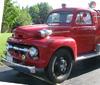
Last spring I picked up this 49 F1. It had bee about 75% restored so I spent most of the summer and early fall trying to finish it up. Flathead six, 3 speed on the floor, still has the six volt pos ground system. Biggest problem that I have had is the charging system. I have had the generator rebuilt to spec. Same with the starter, changed out the battery, had heavier cables made for it and replaced several regulators. It seems that they will charge but will not cut back when they are supposed to, Turn off the truck and sometime go into a discharge mode so I have to use the battery disconnect switch. I am considering changing over to 12 volt system with an alternator. I have spoken with techs at Romain Electric and their suggestion would be if I change ove to stay with the pos ground system. Anyone have any feed back on this or suggestions?? Thanks in advance. Truck is in winter storage right now so just trying to get ideas for the spring
Last spring I picked up this 49 F1. It had bee about 75% restored so I spent most of the summer and early fall trying to finish it up. Flathead six, 3 speed on the floor, still has the six volt pos ground system. Biggest problem that I have had is the charging system. I have had the generator rebuilt to spec. Same with the starter, changed out the battery, had heavier cables made for it and replaced several regulators. It seems that they will charge but will not cut back when they are supposed to, Turn off the truck and sometime go into a discharge mode so I have to use the battery disconnect switch. I am considering changing over to 12 volt system with an alternator. I have spoken with techs at Romain Electric and their suggestion would be if I change ove to stay with the pos ground system. Anyone have any feed back on this or suggestions?? Thanks in advance. Truck is in winter storage right now so just trying to get ideas for the spring
I still have 6v pos grd in my 48 and 53. The big change I made is using a 6v alternator. Seems much better. An alternator will charge a t lower RPMs.
Best advice is don't convert. There are few good reasons for converting a nice stock truck to 12V. A well maintained 6V system is just as good as a well maintained 12V system. It seems possible you may have a simple wiring issue or the wrong style regulator; So lets start there and get that all sorted out.
A 12V conversion can get involved. I'm sure I'm missing a few items from the list... None of this is insurmountable, but it all adds up.
*Will need a 12V Generator/Alternator and all the necessary brackets
*Will need a 12V Voltage regulator compatible with the generator/alternator
*Will need voltage reducers for the instrument cluster
*Will need to reverse the AMP gauge
*Will need to deal with coil, ignition resistor, and potential bypass
*Will need 12V equivalent lamps for the headlights, tail lights, parking lights, instrument cluster etc etc etc
*Will need to consider isolation and heavy duty voltage reducers for any Radio, Heater and similar accessories
*Will need to consider impact on starter solenoid and starter motor
*Will need to consider impact on horn & horn relay
*Will need a 12V Battery
*Will need to consider battery cables and grounding strap strategy
*Will need to consider entire new wiring harnesses - headlight, dash, engine, tail etc etc etc
*Will need to consider adding a distribution panel
*Will need to consider adding relays for lighting
Almost all 12V adoptions use a negative ground. There are few reasons to do a 12V conversion, even fewer to do a 12V positive ground conversion.
When the generator was rebuilt, did the shop test the regulator with it? There is a fair bit of issue with out of the box quality for the new units. The house that rebuilt my last one asked me to bring more than one regulator - which was needed - as one couldn't be adjusted.
Converting to 12 volt doesn't diagnose the root issue. These are simple beasts that need troubleshooting on occasion.
Last edited by FortyNiner; Feb 11, 2026 at 08:16 PM.
Great advice above! Bmoran and Fortyniner are right on the money.
It sounds like the battery is discharging for some reason after the truck is shut off? Assuming your charging system is working correctly it appears to have some kind of current drain running down your battery. Charge your battery up good, start the truck up, make sure you give it some 1500 RPM+ throttle as the voltage regulator will need that spin up to close it's cut out relay which will now connect the generator to your battery allowing the charging system to kick in. While the truck is running check your battery voltage. Should be over 7 volts, hopefully approximately 7.5. If all of that is good shut the truck off.
Now lets check for current draw with the truck not running. It could be the cut out relay on the voltage regulator is not opening for some reason, which will discharge the battery as current is finding its way to ground through your generator windings, or you have some kind of parasitic current draw like from a bad hydraulic stop light switch which keeps them on when the brakes are released. If you have to, make yourself a 6 volt test light by soldering on some test leads with some alligator clips at the end or better yet to an actual bulb socket. Connect it to your battery cable that you installed your battery disconnect on. One lead on the battery side, the other on the battery cable side. In essence you will be shorting out the battery disconnect switch with this test light. Now open the disconnect switch. Is the light now on? If so its showing there is a current draw somewhere. So next we start to track it down by disconnecting various circuits. Start with the voltage regulator. I would disconnect the Battery Terminal. If the light goes out you found that is where your problem is. If the light stays on, you'll need to temporarily disconnect other circuits to find out where the discharge is such as maybe a bad brake light switch, bad ignition switch or ignition switch mis-wiring keeping the coil energized, but not showing up as a draw consistantly as when the engine stops, the points could be open, then other times when an engine stops they could be closed. So its just a matter of disconnecting various circuits, and watching the light go off to track the the problematic circuit or part.
Hope that helps!
PS, Its worth the time to make a good 6v test light.
It could help with setting initial timing when changing points, and troubleshooting your charging system by connecting one lead to the ARM terminal of your voltage regulator, and the other to the Batt terminal. It would work like the old fashioned GEN lights we used to have in the dash cluster:
Light ON, no charging. Then start you engine, Rev it up and if your charging system is working the light will go OFF.
Note: All those blindly suggesting alternators are missing the troubleshooting steps to verify that the effort put into the alternator replacement will actually address the root cause of discharge symptoms.
Best advice is don't convert. There are few good reasons for converting a nice stock truck to 12V. A well maintained 6V system is just as good as a well maintained 12V system. It seems possible you may have a simple wiring issue or the wrong style regulator; So lets start there and get that all sorted out.
A 12V conversion can get involved. I'm sure I'm missing a few items from the list... None of this is insurmountable, but it all adds up.
*Will need a 12V Generator/Alternator and all the necessary brackets
*Will need a 12V Voltage regulator compatible with the generator/alternator
*Will need voltage reducers for the instrument cluster
*Will need to reverse the AMP gauge
*Will need to deal with coil, ignition resistor, and potential bypass
*Will need 12V equivalent lamps for the headlights, tail lights, parking lights, instrument cluster etc etc etc
*Will need to consider isolation and heavy duty voltage reducers for any Radio, Heater and similar accessories
*Will need to consider impact on starter solenoid and starter motor
*Will need to consider impact on horn & horn relay
*Will need a 12V Battery
*Will need to consider battery cables and grounding strap strategy
*Will need to consider entire new wiring harnesses - headlight, dash, engine, tail etc etc etc
*Will need to consider adding a distribution panel
*Will need to consider adding relays for lighting
Almost all 12V adoptions use a negative ground. There are few reasons to do a 12V conversion, even fewer to do a 12V positive ground conversion.
Thank you for your advice, you have never steered me wrong in the past year the we have chatted. I do agree with everything that you have brought forward as I would prefer to keep the truck as stock as I can. As far as the regulator goes do you have a specific brand that you would recommend??
When the generator was rebuilt, did the shop test the regulator with it? There is a fair bit of issue with out of the box quality for the new units. The house that rebuilt my last one asked me to bring more than one regulator - which was needed - as one couldn't be adjusted.
Converting to 12 volt doesn't diagnose the root issue. These are simple beasts that need troubleshooting on occasion.
Unfortunately, there is no one in my area that rebuilds this stuff anymore. I ended having to send it out to another state to have it rebuilt. The other problem is you can't even find a regulator that is made in this country anymore. I am willing to do whatever it takes to keep the truck in original condition, so I am very open to any advice. Thank you for your response
Through the chain stores, your options generally will boil down to the following:
ECH VR401
STANDARD MOTOR PRODUCTS VR10
BWD R135
As you experienced, NEW could mean "Never Ever Worked". Don't be surprised if a new one may need some adjustments.
Regulator adjustment is covered across multiple pages in Part 3, Chapter 1, Section 1 of the typical shop manual with pictures and whatnot... you should double check your adjustment against that process to ensure you are spot on.
Also make sure your wiring is correct for a type B system and flashed/polarized accordingly:
Great advice above! Bmoran and Fortyniner are right on the money.
It sounds like the battery is discharging for some reason after the truck is shut off? Assuming your charging system is working correctly it appears to have some kind of current drain running down your battery. Charge your battery up good, start the truck up, make sure you give it some 1500 RPM+ throttle as the voltage regulator will need that spin up to close it's cut out relay which will now connect the generator to your battery allowing the charging system to kick in. While the truck is running check your battery voltage. Should be over 7 volts, hopefully approximately 7.5. If all of that is good shut the truck off.
Now lets check for current draw with the truck not running. It could be the cut out relay on the voltage regulator is not opening for some reason, which will discharge the battery as current is finding its way to ground through your generator windings, or you have some kind of parasitic current draw like from a bad hydraulic stop light switch which keeps them on when the brakes are released. If you have to, make yourself a 6 volt test light by soldering on some test leads with some alligator clips at the end or better yet to an actual bulb socket. Connect it to your battery cable that you installed your battery disconnect on. One lead on the battery side, the other on the battery cable side. In essence you will be shorting out the battery disconnect switch with this test light. Now open the disconnect switch. Is the light now on? If so its showing there is a current draw somewhere. So next we start to track it down by disconnecting various circuits. Start with the voltage regulator. I would disconnect the Battery Terminal. If the light goes out you found that is where your problem is. If the light stays on, you'll need to temporarily disconnect other circuits to find out where the discharge is such as maybe a bad brake light switch, bad ignition switch or ignition switch mis-wiring keeping the coil energized, but not showing up as a draw consistantly as when the engine stops, the points could be open, then other times when an engine stops they could be closed. So its just a matter of disconnecting various circuits, and watching the light go off to track the the problematic circuit or part.
Hope that helps!
PS, Its worth the time to make a good 6v test light.
It could help with setting initial timing when changing points, and troubleshooting your charging system by connecting one lead to the ARM terminal of your voltage regulator, and the other to the Batt terminal. It would work like the old fashioned GEN lights we used to have in the dash cluster:
Light ON, no charging. Then start you engine, Rev it up and if your charging system is working the light will go OFF.
I agree with the advice from Bmornan and fortyniner, and with what you have to say. The truck is in winter storage now and I won't have it back until the end of April so I am doing my best to figure out some of the problems now and seek whatever advice I can.. I can tell you that when the truck is running I have tested with a battery tester and I am getting 7.5 volts from the system. Turn the truck off and sometimes it will go into a discharge mode of which the regulator is stuck. If I use the battery disconnect switch that will reset the regulator, wait a couple minutes slide the disconnect back on and everything is back to normal and will stay that way until the next time I go to use the truck. The brake light switch is new so I know that is not the problem. When I get the truck back from storage I guess I will just take my time and test everything one by one. I would like to keep the truck as original as I can. In 1964 I had a 1950 almost the same as this one so I have to rack my brain abit to work on it. Thank you for your advice, and I am willing to do whatever it takes to get this right