When you click on links to various merchants on this site and make a purchase, this can result in this site earning a commission. Affiliate programs and affiliations include, but are not limited to, the eBay Partner Network.
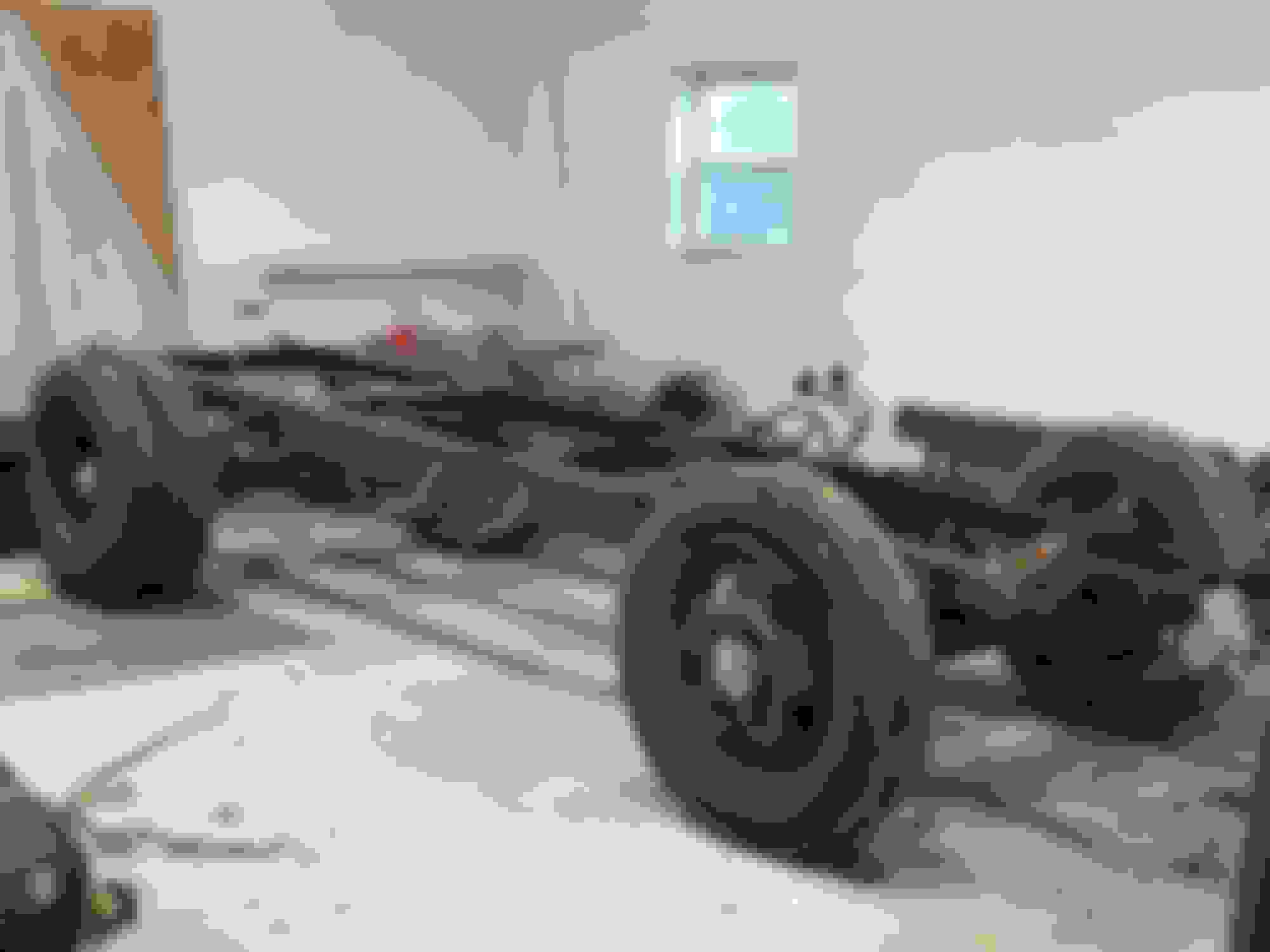
I am currently doing a frame off restoration of my truck. Blasted the frame today and took the rims in to have the tire removed so I can blast them. Another problem has arose. The rims need to be replaced, any suggestions where to go.
Why do the rims need to be replaced? Are they damaged with severe rust, or bent? Or has some tire shop told you they can't be serviced? If the latter, I'd suggest you look for another shop. The two piece rims of the 1930s are still serviceable at real truck, agricultural, or similar shops.
If you have damaged wheels it would be good to know which wheels you have on the truck. Probably they will be Budd products and will have Budd part numbers stamped into the concave side center discs. If you can find numbers I can look them up.
Well, yes the shop took 2 days of soaking to get the ring off and is scared. They service all trucks and timber equipment so they have the knowhow (GCR). Where the rivets are has corrosion going on and has swelled the two pieces apart some. Now we only have one rim apart but one rivet has come loose. I am going to a machine shop and seeing if they can run a bead around the joint to help the rivets. Looks like plenty of metal just not sure about the heat? If I could find new rims I might just go that way. The truck is in good shape for the age. I bought it sight unseen and overpaid some. The previous owner just did not go far enough and now it has to be done again, I say I bought a pig with lipstick on My avatar is the truck when I rolled it in to the barn a couple of weeks ago.
Okay, that describes severe rust damage. Do you see that rust swelling along the center disc/rim seams of all the wheels? It'll be a crying shame if they all have that amount of damage. It will be, as I mentioned above, good to know what wheels you have. While I assume yours are 20s rather than 18s, there were different rim widths, back spacing, and rim/ring designs. I have some wheels from that era that I have rescued from yards, as hopefully do other forum members. But I suspect yard searches will also become a part of your life. Many old yards around the country were wiped out a few years ago during the period of high salvage steel prices. Please post your Budd numbers so I can help identify what you need. Stu
Edit - also as I think on it, you might start a conversation with the 1941 dually member that is planning a frame swap. Stu
My tire size is 7.5x20. I bead blasted the affected area last night for the machine shop to be able to see clearly today. Ill take a picture and post. The rust can generate up to 600 psi and that is what is pushing the rivets out. Some places the joint is metal to metal and other spots there is over 1/8" gap. I can have some new one piece rims made for $450.00 each, ouch.
My tire size is 7.5x20. I bead blasted the affected area last night for the machine shop to be able to see clearly today. Ill take a picture and post. The rust can generate up to 600 psi and that is what is pushing the rivets out. Some places the joint is metal to metal and other spots there is over 1/8" gap. I can have some new one piece rims made for $450.00 each, ouch.
You've probably answered one of my questions. A 1936 era truck with 7.50 x 20" tires will probably have 4.33" wide rims (or 6" measured across the lips) rather than the narrower 3.75" variety. The below picture shows the information that will allow us to match what you need. This wheel is a Budd 34860. That number is stamped into the metal on the flat of the concave disc. The numbers might also be stamped on the rear rim lips. If you find no numbers it probably means your wheels are Kelsey Hayes. This wheel has a 4.33" wide Goodyear LW type outer rim/ring design and 7.25" of backset when measured from the disc to a straight edge placed across the rear rim lips. If you want to find good used wheels that are a near match to your originals the info I listed will help us.
There are several good companies that can remount your original centers into new outer rims at perhaps less cost than you mentioned. But finding narrow new rims might be a major challenge. We can make a list of companies if that is what you want. Stu
Edit - I'll restress that this might be a good source for replacement wheels. If this member is swapping his entire chassis its wheels should be rescued by somebody if they are in good shape. Stu
Went by the welding shop. They said until we remove all the rust between the two we are waisting time. They want to remove the rivets and blast and then weld the two together. I was unable to see any stamping on the rim so I took some pic for you to see.
Ouch. That is a 3.75" rim using the current industry standard. The industry standard in use in 1936 called it a 5" rim measuring across both rim lips. Much too narrow for a 7.50" tire. Probably a 6.50" is more like it.
I agree that rivet removal, rust removal by blasting or electrolysis, then welding is worth considering. A concern, though, is rim wall thickness (i.e. impact on remaining wall strength) after rust removal. I've had an unwelcome rim separation (BANG!) that was the result of unseen rim rust. I have one similar wheel available if it would get you started on a good replacement set. Stu
Edit - your number is between the two upper lug holes in your picture. Looks like 34809, but a quick look in the books I didn't find that number. After you blast it please confirm or correct the 34809. Stu
Maddening. I have 1930s and 1940s references coming out of my ears but no 34800. No reason for it. But the same applies to my own Budd 37510. My number, like yours, clear as day. This is the wheel that I think closely matches yours. Stu
Rezvani's Latest Post-Apocalyptic Monster Is a Ford F-150 Raptor Underneath
Slideshow: Called the Fortress, the 850-horsepower pickup combines Raptor underpinnings with military-inspired features, survival equipment, and a starting price of $285,000.




 My avatar is the truck when I rolled it in to the barn a couple of weeks ago.







